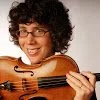
Rupert Guenther: The Art of the Unwritten: Creative Pedagogy and Improvisation
This transcript is linked to the podcast, video and show notes.
Rupert Guenther:
I kind of reverse engineered that I went into some self-inquiry and I realized what happened was I was listening. I was listening because I was creating music and improvisation is all about listening to the sound and how it makes you feel. So where do you go next? Or more of that or we've done enough of that. Let's move into something that's got a different shade, different emotion. So I realized that I was listening 200%. I was just listening all the time very, very deeply. And I was also very affected by what I was hearing coming out of my instrument.
Leah Roseman:
Hi, you're listening to Conversations with Musicians with Leah Roseman, which I hope inspires you through the personal stories of a fascinating diversity of musical guests. Rupert Guenther is an Australian improvising violinist and pedagogue. Some of the music you’ll be hearing is excerpted from his 5 albums commissioned from the ABC. You’ll hear stories from his varied career in both Australia and Vienna, and influences and mentors from Melvyn Cann, the Rolling Stones, Terje Moe Hansen, Igor Ozim and Allan Zavod. Rupert shares his approach to creating fully improvised music as a classically trained violinist and how he teaches his students to ground their playing with his reflective approach. You can watch the video on my YouTube or listen to the podcast and I've also linked the transcript. Have a look at the show notes of this episode on my website where you'll find all the links relating to Rupert and also different ways to support this podcast and other episodes you'll enjoy.
Hi Rupert. Thanks so much for joining me here.
Rupert Guenther:
Yeah, thanks Leah. Thanks for having me on your program. It's really lovely to be able to participate and I'm looking forward to this.
Leah Roseman:
You're joining me from the future because you're in Australia and you got up early to make this work, so thank you. For our listeners in Australia, what region are you in?
Rupert Guenther:
In Western Australia. We're about a couple of hours out of the city of Perth.
Leah Roseman:
So there's so much to get to and you've had such a fascinating creative life, but I don't like starting at the beginning. I just have an aversion to that. So I'm going to kind of start in the middle and I know there's many important points in your life and we'll get to lots of things, but I actually wanted to talk about in your mid - 40s you went to England, to Guildhall after you'd been on a journey of improvisation and had a career in music. What was that like?
Rupert Guenther:
My journey had started, as you said, before I went to Guildhall and it was really at the invitation of one of the professors there who had a specialization in the classical music improvisation. I think the thing is as with all areas of the arts, everybody has their own unique take on things and their own unique way of working. And it was very interesting for me to arrive at Guildhall and see such a different approach from what I'd developed myself. And although I already had a career in classical improvisation, I was curious to find others who understood that way of working and also to find a community of people. I guess to some extent, Leah, I was looking for acceptance in a world where there wasn't always a lot and that they had this big academy which had a focus. Part of the focus was on improvisation as a classical art.
That's what initially drew me. And I learned a lot and I made some fantastic contacts there. But in the end, my approach and where I was going with it, the way that I was interested in classical music was much more, I guess, along the lines of what I was already doing. Because if I'd started doing this when I was about 18, I might not have had such a clear picture of where I was going. But by the time you're 40, you've usually got a pretty good idea of where your boundaries are, what's going to be part of your life and what isn't. And so as it turned out, the focus that I was on was really much like a painter, a visual artist. They have a blank canvas and they paint their imagination onto the canvas or their observations, their interpretations of life and situations and themes onto that canvas.
And for me, that was just a very natural disposition towards improvisation. And as I discovered when I was at the Academy in London, the Guildhall, there was much more of a focus on extemporization, which was playing the Beethoven or playing Mozart or Haydn or Bach, and being able to improvise fluently within that framework as a part of those works that perhaps because I'd already gone so far, I'd already done eight albums, complete albums of my own improvised recitals and works. I've done the five albums for the ABC, which is like the BBC in London. I was a long way down that road of working as an original artist. (Music: clip of track 2 from New Letters to Esterhazy Sonata I )
And so with the focus on extemporization, although I could see the value of it and I did enjoy that, it really wasn't where I was headed because I had already made the departure into the land of making my own original art.
Leah Roseman:
It's been so interesting to listen to your recordings and I listened to some of the very earliest ones you did in Vienna. So we'll get into your music, but there's this language, Rupert Guenther, for sure, recognize your way of expressing. So you know what, maybe that was not a good place to start. I thought because I wanted to ask about, I can't pronounce his name, Terje Moe Hansen, the Norwegian, because you had posted about him.
Rupert Guenther:
Yes, yeah. No, it's good. See, Terje Moe Hansen, I consider a great colleague and ally and friend in all of this. He wasn't actually teaching at the Guildhall. I was enrolled there in a Master's degree. There was a conference on which we were both invited to present out of. He was a phenomenal artist in that respect as well. But his focus was really on undoing our whole notion of the kind of Carl Flesch approach to violin playing. Because if you know anything about Terje's story, and I really love this about him, he didn't start violin till he was 19 and he knew he only had a very small window to get it together. And I think this is an indication of a creative mindset. And I think he learned from his father, if I'm right. And he realized he couldn't go through that whole system that takes years to get there.
So he devised, he looked at playing and he realized the real problems that set in for players were the irregular intervals. And so he focused on what he now calls in hindsight, the all interval system of playing. And it's really quite ingenious. In that process, one familiarizes oneself completely with all intervals. So scales in all intervals, double stops in all intervals. The whole fingerboard becomes, the top becomes just as familiar as the bottom with all these extraordinary, extraordinarily unusual, in the old-fashioned sense, intervals. And so within six months, he was in the Sibelius Academy. So the proof of his method is in his success. And within a couple of years, he was in the front desk of the symphony orchestra. So whatever he's doing works. And so my interest was twofold because you see, I have to rewind a little bit to give you a context of why I'm so interested in this.
I grew up in a musical family and my first violin teacher, well, my very first violin teacher was a friend of my sister, an elder sister, this young blonde girl who the world now knows as Elizabeth Wallfisch, the great early music specialist, violinist.
But she was just a teenager at the time. She taught me violin for a year. But then my next teacher had learned from Carl Flesch in Paris when he was a young boy. And what was fascinating for me about this journey was that I was well taught and well prepared, but no one that I'd had as a teacher could explain why the things that weren't working weren't working. So I was struggling and my teacher would say, "Just do it like this." And I went, "Well, when I do that, it's not working." He said, "Well, just do it again." So I was a little bit, I guess I had a big vision and a passion for music, but I was very hindered by my understanding of how things worked.
Leah Roseman:
All of this is so interesting and I want to talk about it, but before we leave Terje, just because I brought him up, he does play opposite. He plays lefthanded.
Rupert Guenther:
Yes. Yeah, that's right as well. Yes. Yeah, he does. And I think that's a phenomenal accomplishment in itself. So yes. Okay. Well, I'll track back to Terje. I'll pick that little bit up in a minute. So my interest in Terje was really on the basis of my own journey of having struggled with things. And I got a lot of that sorted out with Igor Ozim in school in Europe that was the how to, that all got sorted out, fortunately for me. But Terje had done all that himself in his own way. He'd come up with his own solutions. But as an improviser, he's a wonderful example of another uniquely identifiable voice in classical music. And this is what really interested me about this, Leah, was that both Terje and myself had this passion to tell our own stories through our own flavor of the art.
So I took to Terje like a duck to what we became very respectful and admirers of each other's art.
Leah Roseman:
You mentioned that ABC commissioned these five recordings. So were they five individual concert nights that were recorded? How was this done?
Rupert Guenther:
They were simply recording sessions during the day at the big ABC studios in Melbourne and in this beautiful auditorium. And I was invited to come and record these four sessions and the five sessions. And what transpired was I had two solo violin sessions. I had two sessions with my pianist who also works in this creative way, very special artist, Melvyn Cann.(Music: clip of track 3 Sonata I The Moxbournienna Sonatas)
And I also did some amplified soundscapes within that as well. And there was another album as well, which was with an ensemble of improvising classical musicians who we all had quite different approaches, but we managed to work together. So there were actually six albums, but I don't have control over the ensemble one because there's still some questions there for everybody. So the ones that I'm really in charge of are the ones that the ABC commissioned for me personally and the ones with my pianist. And so these were much as a recital in a sense that the microphones were turned on. We started playing as we always did, if I'm talking about myself and Melvyn, my pianist. And we played and then we finished what became the first movement. And then we started playing something more and then we played more and then we felt like that was it.
So that was the first three movement Sonata. And then we did another session where we did the same thing. And so there were two of these quite substantial 32 or 35 minute sonatas for violin and piano in three movements each. And I'm very happy with them, very proud of them. I think they work as a three movement sonata each respectively. And it was a similar process with the solo violin works, which the solo violin works were the first Sonata is five movements. The next one is six movements. And they go for about, I think about 45 or 50 minutes each and for the entire collection of each of those. And so that's how it happened. There were no overdubs, there were no retakes. There was no, "Oh, can we do that one again?" It was just, that's what we did. We tell our stories through our music and we came into the studio in those days and did that.
So I had the two solo sessions plus the ones with my pianist and then I did the soundscapes another day as well, the amplified soundscapes. So it was very much akin to a recital. It was nonstop. There were no retakes. And in fact, that is the way I perform my recitals. And so I actually record wherever I can professionally my recitals. And they're no different because I'm just telling my story and there's people there and that's no different for me. And that's a story I can talk about if we have time. This whole journey I've been on with healing stage fright to a point where I actually enjoy playing in front of an audience. And to me, it's like sharing photographs of some beautiful place that I've been and listen to this, look, we saw this waterfall or there's this eagle. And so for me, performing has become like that.
Leah Roseman:
I'm hoping we'll get into that and I definitely want to talk about your teaching. I also improvise and I have found it's helped me a lot just to get up and play from the heart like that. It's helped my classical playing, which is much more high pressure. I did want to ask about Melvyn Cann. I see that he died this year.
Rupert Guenther:
Yeah. Sadly, only a couple of months ago in May, Melvyn passed away and I was obviously disappointed to have lost a beautiful friend.
Leah Roseman:
I'm so sorry for your loss. I was reading a little bit about him. He seemed like quite a fascinating guy. What do you want people to know about him?
Rupert Guenther:
The word that pops up when you Google Melvyn is he was a polymath. And I think in many ways he and I would both be amused by that, giving it a title, but he truly was. And as you would look research, he has a degree in philosophy from Oxford University. He's been the concertmaster for several orchestras, substantial orchestras and a complete creative genius. He's been doing improvisation. He'd been doing it a lot longer than I had. It was a lifelong thing for him and he was a very unusual and delightfully unusual, I should say, fellow, and I miss him very much.(Music: clip of track 1 from Sonata I The Moxbournienna Sonatas)
Leah Roseman:
You had mentioned also that your, I think it's your contemporary violin album where you have more percussive tracks like Sticks and Branches. That was part of those same sessions.
Rupert Guenther:
That's all done on amplified violin. So it's actually, you probably see in the background, there's some instruments here. It's a bit hard to see, but they're basically acoustic instruments that have electronics ingeniously designed to work amplified. And it means that I can do extended techniques, which under normal circumstances, you wouldn't really hear much of the beauty and resonance that the magnified sound, which is essentially what amplification is, it's like a magnification. You can get all these wonderful textures and tones and details that on an acoustic instrument for an audience would've been pretty much inaudible. And so I was able to, as you observed, use percussive techniques and different ways of producing sound for those stories in those tracks, which I think were, again, in this way of making art where we start to reach for elements of sound, whether it's melody or extended techniques, which are closest to the story that we're trying to tell.(Music: clip of Sticks and Branches from Amplified Soundscapes for solo violin)
Leah Roseman:
Yeah. Yeah, I really like the textures and the way it was picked up. It was really cool. Do you want to talk about your years in Vienna or should we go back to your childhood in Australia first? What do you think would be better?
Rupert Guenther:
One thing I'd like to pick up on that you brought, Leah, was your comment. I couldn't help noticing your comment about your experience with improvisation and how that's opened doors. The impression I could hear was that it's opened doors for you musically and it gives you access to something very close to your heart about music. And I would agree with that in terms of my own musical development when I started improvising my own classical music was very much akin to what you've described. I felt like I reached musical maturity finally. I found my own voice. I started to hear me when I listened back to a recording go, oh, that's what I was trying to say. Whereas prior to that time, obviously I was playing repertoire. I was playing traditional repertoire of course, but I never heard what I really wanted to say in those times.
And it was now when I go back to repertoire, and because I don't perform it these days, I still teach a lot. And of course, and I found it's gone through the roof in terms of the expressive capacity and the ability to find my way into the story that the composer might've had as the inspiration to be able to catch that tenderness or that vigor because we started talking about the Guildhall School and I don't in any way want to sound unimpressed with what was happening there. This was the whole purpose of the improvisation at the Guildhall School, exactly as you described, spot on, that it was an avenue for musicians to actually dream a bit bigger, feel more, explore and find their own connection with the music, with not only the art of making music, but the particular music that they might be attending to at the time.
And so I'm very interested that you had that and have that experience with improvisation yourself. And that in some ways confirms my belief and experience that it's a wonderful thing for classical musicians to at least engage in, even if it's only part of what they do. I'm sure it has enormous value. And that's what the Guildhall course was really all about.
Leah Roseman:
Yeah. Yeah. Well, improvisation is a special interest of mine and I've had many improvisers from many different traditions on the podcast. And yeah, I've met some of my heroes like yourself, so it's been really great to make these connections. And I was actually the first, I think the very first guest from Australia I had was Linsey Pollak.
Rupert Guenther:
Oh yeah.
Leah Roseman:
Yeah, maybe four or five years ago. And I got the day wrong because I didn't understand about the time. I felt so badly.
So I was curious about your years in Vienna. So after you graduated in Australia and you were a young man. So the guy you studied with, Helfried Fister, he was a student of Igor Ozim, but you also had lessons with Mr. Ozim as well?
Rupert Guenther:
Yeah. The sequence was when I was studying at the Victorian College of the Arts, which was a dedicated performance academy in Melbourne as my undergraduate degree, in the middle of that degree, Professor Igor Ozim turned up on a world tour and we had the extreme fortune of two weeks of lecture demonstrations and masterclasses with him. So we had these two weeks, it must have been in the holidays, I presume, because everything else was put aside. We had all morning, you can imagine this with someone of his caliber. He was really the Galamian of Europe. He kind of reset the whole framework of being able to articulate and explain and account for everything about violin playing. And so he would spend the entire morning lecture demonstrations about how he approached everything. So he was very methodical, so we covered an awful lot. And the afternoons would be a masterclass where people would get up and play.
And I took advantage of that. And I also had a private lesson with him one-on-one, which was extremely fortuitous. And he introduced me to a young Australian who I didn't know who'd just come back from five years with him in Cologne in Germany where he was one of the academies that he taught at. And this was Brian Finlayson. So he was an Australian from my hometown in Melbourne. He'd been over and studied for five years with Ozim in Cologne. And so Professor Ozim said, well, I said, well, I'd like to learn more. Obviously this is one day I got a lesson. And he said, yes. He said, you did very well with what you have. Have lessons from Brian Finlayson. He can show you everything that I've shown him, which is what we did. So for the rest of my degree, I took some extra years to assimilate all this.
We went back to open strings and all this and did a lot of corrective work. So I really owe my ability to have a career playing to that. And so after I graduated, some years later, I decided I really wanted to take my playing further. So I hopped on a plane to Vienna and studied with Ozim's other protege who I knew who was actually his assistant in Cologne for 13 years. So you've got to understand with a lot of these virtuoso teachers, they don't just teach in one academy, they teach at three or four or five academies. So he would spend a week here and a week there on this circuit, but he had to have someone at each academy who could carry on his work in the other three or four weeks when he wasn't there. And so he had an assistant teacher who he trained and specially chosen to do that.
And Helfried Fister, this lovely man with a beautiful attitude of encouragement, but also very acute observation, he'd just retired from Cologne to come back to his home country of Austria to have a family. And so I had the fortune of learning from him for several years as well. And I continued to attend masterclasses when I could with Professor Ozim. So this was a huge influence on my ability to play the instrument and ultimately to express myself better later on with all the improvisation, of course. So that was what Vienna was really all about from an official point of view. But of course, as you would know, the musical culture in a place can be, and I think should be, hopefully, as informative as anything that happens in the teaching room. And so I had the opportunity to play. I had a position in the Vienna Chamber Opera, which was one of the good operas in Vienna.
And I did a lot of casual work in other orchestras and touring with orchestras that would have tour orchestras would go around Europe as an orchestra from Vienna. And it was mostly the Vienna Philharmonic players and a few others from the symphony and people like myself. And we would all be playing it together. So being in the pit and being on stage in these different ensembles and Baroque ensembles, et cetera, there was an enormous amount that one absorbs and it's quite distinct. We know this from music history, but it's alive today as well, the different traditions in playing and sound. Nuance and phrasing and the whole ambience of how the British players or the London players are or the Viennese or the Paris orchestras in France. So each nation, and then you've got the Boston Phil, you've got the New York Philharmonic, all these different orchestras that have their own particular flavor.
And so it was very enriching and wonderful for me to spend time. It was as enriching as the lessons had been to be immersed in this culture and these sounds. The first opera I played in was the Magic Flute of Mozart. And you're sitting next to people whose teachers, teachers, teachers, teachers, teachers played with Mozart and Beethoven and Haydn, and you were in the halls that Mozart, Beethoven, Haydn gave their first performances of works in. These sort of things, it's like some kind of spiritual magic that happens. It's everywhere, of course. It's in forests. This is why lands are so precious to the people in those lands because they nurture something in us. And I think the human culture with music and museums and these things, it's like a forest. It's like an environment that nurtures something very special. So that was what I found so enriching and so important in that pilgrimage to Vienna was to have.
I didn't really anticipate even that cultural thing. I just felt this intuitive, we need to go there. So to not only polish up and play with Professor Fister, but also to experience that beautiful enrichment that kind of rubs off on you in those environments. I'm sure you've had similar experiences in all sorts of contexts as well. So thank you for asking because this was life changing, of course.
Leah Roseman:
And did you already know German?
Rupert Guenther:
My great-great-grandfather came from Germany on my paternal side, and he was a young aristocrat who, for reasons we don't know, ended up in Australia, probably some kind of disgrace perhaps, but we don't know for sure. But anyway, he was an amateur pianist in the high European sense, which meant he was actually quite accomplished and he could play all of the Schubert Lieder and this sort of thing with people. And then my father's father grew up in that household, and so he also played piano. And so my father grew up with that, and my mother also had a love of arts and music. So this was a big part of the house. And because it was a German family, Guenther is a German name obviously, for some reason we kept that language going. We didn't speak at the home, but we all learned German at school just because that's what we did.
We all played instruments, we all learned German.
Yes, I already spoke at least school German, which was pretty adequate. But again, language is a cultural window as well. And so the sounds, and I remember when I arrived at Vienna, probably in the first year, I remember going to an evening of Goethe, Goethe, the great German poet. And even though a lot of the language was very much beyond my rudimentary German, the magic of, again, I guess as being a musician, we can hear things, don't we? So the magic of the sounds and the poetry was quite a powerful experience. If I hadn't had that background, I don't think it would've been the same if I hadn't had the language. And I think, look, it's interesting, there's all these crossovers in between music and language because it's a similar thing. If we're not exposed to music, then how do we have a relationship with it?
If we're not exposed to language, how do we have a relationship? If we're not exposed to culture ideas, how do we have a relationship with them?
Leah Roseman:
And the decision to go back to Australia, you always intended to return?
Rupert Guenther:
I really didn't have any particular design with that. It became logistic. In Australia, there is no limit on when you can audition and join an orchestra. So in my mindset, there was no consideration of time. Now, I arrive in Austria and I'm there for a few years in Vienna and some auditions come up. And by that stage, see, after my undergraduate degree, I'd taken, before I went to Europe, I took 10 years of teaching in schools. So I went to Europe quite late. I was in my late 20s when I did that. I was 30 when I arrived and the cutoff was 35 to get a job in the orchestras. There was no audition if you were 35 and up.
Leah Roseman:
I'm so shocked to hear that.
Rupert Guenther:
Oh, it's quite traditional. It's probably always been the way. And so I was there and I think I was 33 and the auditions came up and I though, right, I've been here for long enough. I love it here. I've got other Australian friends who have made their lives here. I could do that. So I was getting ready in my mind to do these auditions. And then it was announced that the age had dropped to 30. There's a bit of a business investment plan behind all this from their point of view that they've got to pay. You've got to understand that in these countries when you retire, you retire from an orchestra on a very generous pension, or if you're teaching at an academy or university, they're very well looked after as I think is appropriate. And so I think they want the years of service to get value.
There was no possibility of me staying after that because I couldn't live long-term. As a student, you get by, but long-term, you need to have a bit more security than that. And so I was unable to remain there as far as I could see. So I took the opportunity to return to Australia and find my life back here.
Leah Roseman:
Okay. Yeah. I mean, that's interesting. And in North America, in Canada, we're in the same union as the States, and your pension is based on how much you earned. So whenever you started, whatever gigs you did. Yeah, it's weird. I mean, the people getting jobs now are often in their 40s or even older. I know some amazing players have changed orchestras in their 50s and it's not that unusual. And I find a lot of the younger players, they've already been playing for maybe 10 years, maybe they have a doctorate and then they come into our orchestra. It's a completely different way of thinking about it. Yeah.
Rupert Guenther:
Yeah. Well, it's the same in Australia. There's no age limits. But the other thing I would say about this that I think pertains to this culture of this very intense incubator of classical music that Europe has been for so long, the expectation is that you would get a job as concert master when you were 22 years old or younger. I have a colleague who actually has been in America for a long, long time. He learned from Szymon Goldberg, who was a very famous German violinist. He was the concertmaster with the Berlin Philharmonic when he was 18 years old. And then with all the disruptions in the 20th century that happened with some rather unsavory characters, he and a lot of others immigrated to safer havens like the States and fortunately had a fantastic future in passing on all his wonderful knowledge and culture and abilities.
And my friend James, my colleague, Simon James, he started with Goldberg. And so these expectations are still there. Most of them, it's not unusual for someone to be 22 years old and get the position in the first chair.
Leah Roseman:
Now, you had spent years busking, after you'd done this very classical route. You made a choice to leave that world?
Hi, just a quick break to let you know which episodes I’ve linked in the show notes for you, with Stephen Nachmanovitch, improvising violist and author of “Free Play” and “The Art of Is”, Kavisha Mazzella the Australian songwriter and singer who has won both an ARIA award and an Australia Day Honour, Linsey Pollak the improvisor, instrument builder and community music advocate, Bukhu Ganberged the Mongolian-Australian who is master of both the Morin Khuur and Mongolian Overtone Throat Singing, the renowned trumpeter Nadje Noordhuis and Philip Griffin a fascinating Australian improvisor, composer and educator. These episodes are linked along with my catalogue of over 250 episodes since 2021. Sign up for my newsletter, where you’ll get exclusive information about upcoming guests, consider buying me a coffee on my Ko-fi page, or buying some unique podcast merch. You can also review this podcast, share it with your friends, and follow on your podcast app, YouTube, and social media. All this helps spread the word! Thanks. Now back to my conversation with Rupert.
Rupert Guenther:
Well, I saw it more as augmenting that world. I'm going to give you a bit more background because I grew up, I was born in the early 1960s. So culturally, yes, I grew up in a family of seven kids who all played classical music and I wasn't the eldest. So by the time I was in utero even, there was cellos and violins and pianos going on in the house. And as I said, my parents loved music and they were very encouraging, but I was also a kid in the '60s and '70s. And so I was in environments outside the home where I heard a lot of different music and I really enjoyed a range of music. I always loved pop music. I loved listening to Joni Mitchell or Neil Young or the Beatles or whoever, the old blues players, Muddy Waters, these sort of people.
There's something about that music. And it came to a turning point. And this is one of the things that fascinates me as much as the music itself is how situations happen in your life that change your life forever. And they're such simple little things. The Rolling Stones were playing at a tennis stadium just near my family home. I was 11 years old and kids didn't go to those things in my family. But what we did do, I was there with my 11-year-old mates on our bikes, on our bicycles, and we though we were pretty tough hanging around outside the stadium. And a man came up to us and said, "Look, we've got a spare ticket here. Our friend just isn't here and it's time to go in. Would you boys like the ticket?" And we said there were three of us and we had a little rock band together.
I played electric guitar a bit because I'd studied classical guitar as my second instrument. And so we thought, okay, there's three of us. We could take any turns to go in. You get the pass out, you can go in. And this is how fate works, isn't it? I said, "I'll go in first and then I'll come out." And I went in and there were the Rolling Stones playing and I looked up, there's a big sign at the gate saying no pass outs.
So I had an ethical dilemma. Do I stay in or do I go out and none of us can come in? So I felt in the bigger picture was of more value to me to stay in than for all of us to lose. It took me weeks to explain that to my friends afterwards. But anyway, so what I want to say about this is that seeing the Rolling Stones were a very high energy group of performers and their music was very individual. And I think for me, this sowed a seed of people doing their own thing in music. It sowed seed of people telling their own stories through music in their own way. And I'd never seen that before. I'd never seen a live rock band, not a real one. I'd seen at the local school at my sister's schools, their brothers had come down and played something, but this was a real world-class act.
And I think that sowed a seed that one can have something to say that can be so personal and unique. And so I think that just sort of sat in the background. And so as I got older, after I graduated, by that stage, I had to really knuckle down on my playing. If I wanted to be a violinist, I did. I put in the time and I didn't really do anything else. But after I graduated, I then started to, again, explore different music. And you understand that Melbourne was a very multicultural city. We have a lot of Greeks, Italians, Turks, Iranians. We have much of the world gathered there. Vietnamese, we have Chinese, Japanese, Afghani, we have African. So I was exposed as a student, of course, going to university and to the cafes nearby to the music that would be playing in these restaurants and cafes.
And then there would be live shows with these artists as well, people from those cultures. So I grew up with a very, as a young adult, very broad musical palette, that aspect of being exposed to that range of music in such a personal way, meeting the artists, going to their concerts, talking to them and hearing and seeing the children that would come to the African band, the two and three-year-old, five-year-old kids that already got all the rhythm embodied. They already had that special African rhythm feel, which is quite unique and very special. So it was just an eye-opener for me. And of course, some of the music I found very, very attractive. And so I would start exploring that. And then when I got into improvising seriously later in about 2003.(Music: clip track 2 The Moxbournienna Sonata I)
At the age of 41, I was then drawing on a lot of these sounds. It was like a sound library for me. I had this fantastic sound library. I had all my experience in Vienna and all the learning from Carl Flesch's student and all this stuff. It was all in there, plus all this rock and roll and blues and all the multicultural influences. So in terms of the busking, I didn't really busk a lot. When I was at university, I used to go busking with my girlfriend who was also a violinist at the time, and we'd play Vivaldi double concerto or something on the street, get dressed up and earn quite a lot of money doing that. But that wasn't really my interest.And over a couple of years when I actually moved into the Central Business District and got a small apartment there for the final two years before I got invited to come to London, I was in that subway tunnel every morning. That was the final sort of development phase for that where I really learned about playing for people, playing to their hearts and from my heart and that sort of sincerity of connection. And I formed some really interesting relationships there just from people who hardly ever spoke, walk past.
Sometimes they'll say something like, "Thank you," and they put some money in my violin case. But when I finally got the invitation to Guildhall, and there was a big article about it because here's this guy busking, suddenly getting invited to one of the world's top academies. It's like the Julliard of Europe. This was a big deal. It was in all the big arts pages and the newspapers and stuff. And those people who'd been in the subway, some of them made the connection, they'd seen it. And one guy came along and gave me $500 that morning towards my trip. And so it kind of gave me a message that also about the society around me, that people do listen to things that are real and they do care about things that they feel are worth caring about. And that was also a really nice affirmation about some parts of humanity still that we have that would be so appreciative and generous like that.(Music: clip “Meeting Lao Tau from New Sacred Music vol. 2)
Leah Roseman:
So do you still have the School of Creative Arts or is that in the past?
Rupert Guenther:
I have a premises, a very nice premises, a very big auditorium that I can teach and have concerts in and hold about 60 people and we have a nice grand piano and lounges and things. The school is a place for what I would call a holistic education. And so I often had lapsed players who'd done a degree, had a family and really wanted to pick up playing again and felt very disconnected with time and where their energy had to be in those years. And sometimes it was people coming to do auditions for the professional orchestras to get some help with the sight reading all these things or the concerto. And so it served a kind of broad traditional platform in that way. But the special emphasis was that I was teaching the art of improvisation as a classical art form. And so it was a great place, a kind of identification, a place and identity where that could take place as well.
But also in terms of the traditional classical music as well, Leah, because of all these things that have affected my playing so much and my approach and my relationship with myself musically and personally and in the music, I felt that it was an opportunity to, even in the realm of traditional training, to bring something that was very rich and deep. And you would've seen this, I'm sure with many players and teachers.
We can have opportunities where someone has a lot of experience and depth, whereas someone else may not have that. And it's a very different environment to be coached in and to learn in. And so I felt I was able to bring that in the traditional realm of classical playing, but also to offer these other avenues. And so that's been a very fulfilling project. And one of the big keys that I found was that having started improvising, I went on my first tour of Australia back in 2003 and I got home that year and I said to my partner, "I forgot to get nervous this year. I wonder what happened." I just spur at the moment, I was like, "Hang on, I didn't get nervous this year. What happened?" So I kind of reverse engineered that I went into some self-inquiry and I realized what happened was I was listening.
I was listening because I was creating music and improvisation is all about listening to the sound and how it makes you feel. So where do you go next? Oh, more of that. Or we've done enough of that. Let's move into something that's got a different shade, different emotion. So I realized that I was listening 200%. I was just listening all the time very, very deeply. And I was also very affected by what I was hearing coming out of my instrument. And that showed me a lot how much we can get trapped in playing traditional repertoire where we're doing what we're meant to be doing, we're following, we're doing a lot of things. We're playing the dynamics, we're playing the phrasing, but are we actually listening and are we being affected by the music as much as the audience? And so I realized that through the improvisation, and this is I think keys into your observation earlier about how that can change our experience of classical music.
I felt that I was truly listening for the first time and I was truly being affected by my playing. So if my playing was under par, I was immediately opposite that I wasn't engaged enough emotionally so I would do something about that because with the improvisation, that's all I had. I couldn't rely on Bach, its beautiful structures or Beethoven's or a beautiful way of changing the dynamics of the emotion of the music in such a dramatic way. And so as an improviser, I had to find all those things in myself and that made me very sensitive as to when I was engaging emotionally or not when I was feeling all the effect of those sounds. And so this thing of listening and letting myself be affected by the music in a very deep way, I think was the key. I was absorbed in that. There was nothing else.
I didn't think of being nervous because it was so beautiful. So that was the turning point where, and whether I'm playing repertoire, sometimes I have to perform in a masterclass and should demonstrate for a student, it's the same experience. This is this beautiful run up to the top of the violin with this exquisite pianissimo at the top. How can I not be affected by that and be in love with that when I'm doing it? So this was the journey that got me on to realizing that if I could help people have that experience with their playing, they could suffer much less from performance anxiety. And this has proven to be the case. And so I've got a kind of seven step program of things to orientate to, to start to orientate, to orientate, to orientate to more and more and more. It's not an overnight thing.
It's not a pill. Literally, it's a change in orientation. And that to me, and what I've seen passing that on is the key to, I call it healing stage fright, but it's just a reorientation where we're not even involved in that kind of competitive mindset of if people are liking it or not, or if we're good enough, we're simply so absorbed. And I liken it in my brochures to, if I go somewhere, I take photographs of this beautiful place I've been to with my family and I'm showing it to my friends and workmates, I don't feel anxious showing them the beauty of what I saw. And so I think it's this reorientation to the beauty of the music. And so that's been a big part of my teaching as well. So the academy stood for that. It's continuing in a new form.
Just this week, I'm about to launch the website and the whole new, we're actually setting it up as a Conservatorium. So it's going ahead now. I can say it with you here. It's the Conservatorium of Intuitive Music. And this allows me to have a platform for obviously creative improvisation, but also approaching traditional repertoire in just the ways that we've been speaking about because that is, to me, creative self is intuitive self or spiritual self or whatever words we use, it doesn't matter. But that place, if we just leave that to chance and say, "Well, that person's got talent and this person hasn't," what if we didn't leave it to chance? What if we really put focus on ways that people can nurture that relationship with themselves, just like they nurture their technique or their interpretive understandings? We nurture our allocation of our attention to having a relationship with that part of ourself.
What then if we put that on the map as an important part, then I think we can have a much more fruitful experience And we can hopefully offer a more fruitful training for people who have put their trust in us to come learn the art of music.This is such a beautiful, beautiful gift, this area of life, isn't it? And I understand because until I had that breakthrough myself, I did it the same way. But I see now, if this is the most important thing that makes an artist is their kind of humanitarian disposition relationship with their self where that's really on the map as part of themselves, I guess you could say it's like philosophical orientation. Why aren't we making that? This bigger part of the headline when we talk about talent or genius, surely our ability to feel empathy and compassion and wanting to bring something to people's lives in such a way and our ability to do that must surely be as important as our virtuosity.
And obviously in these times it ties in with other terrible tales. We've just seen what's surfaced with the academy in Michigan with the abuse, nearly 50 teachers over 50 years, that's a lot. Yet these are regardless highly talented and gifted individuals. So what are we doing when we have education that doesn't take care of or help people or nurture them or even set boundaries in their minds for themselves even, that these things are not okay? And to be able to become more healed in ourselves as part of education, I think this is what it's really about is where people don't then grow up to be so desperate and end up behaving in such destructive ways that we can have a culture that really puts human development very much as important in all our training. And that's really the philosophy of where I'm going with this.
So the School of Creative Arts lives on with a slightly different orientation, again, much more focused on the intuitive music side, yet still taking care of anybody who wants to deepen their traditional classical experience.
Leah Roseman:
And has your teaching of technique changed over the years? You've talked about embodied music making and I know you had really amazing teachers, but with time has that changed?
Rupert Guenther:
Oh, absolutely, Leah. Yeah, look, that's a great question. The initial thing was from when I was young, as I said, just being shown things and then going home and doing them over and over again, hoping it would get better, to being shown real teaching, which was what Ozim's method was and through his assistants that I learned from, that there's a way to do everything. And so you practice that and that's where the progress comes from. So of course I've been able to pass on those things. But again, in terms of I guess what I would call the emotional and musical development side of it, I said that technique, I describe it as technique for tone, expression and phrasing so that everything we do, whether it's better bowing or better shifting or better string crossing, it's all got a musical purpose. And so I see that every aspect of technique, fast playing, there's a certain emotion when something goes quickly, isn't it?
You just can't do it with anything else. That fabulous virtuosic stuff, it just makes your hair stand up on end with joy. And the slow, beautiful, lyrical music moves us in another way. So all these facets of music, I've become much more conscious of this kind of emotional power that music has, but also having had the blessing of a really thorough training in the background and now realizing with my own development, my own maturation that of course all these things are the steps of how to pull that off in practice to make that crescendo with the phrasing with the bow speed and the bow length and all these things in a special way. And I think that's a terribly important part of how I see that with the teaching. But also we need to have a relationship with our human self so that we understand and we actually feel the emotion.
So in some ways we get to be like an actor. An actor has to be able to, and they're not faking at the good actors. They have to be able to access. They're not just putting it on. In the early days of acting, you can see that with the students. They take on a role, but with the good actors, they really embody it. And I think the art of now where we're going is embody the emotion, embody the sort of spiritual story that's unfolding in the music. And to do that, that part of us, that emotional self, whatever we want to call it, spiritual self, that needs to be on. We need to be in touch. And we've all had the experience where sometimes we're more in touch with our feelings than others. As things can draw us out of that, things can be a bit threatening and we tend to shut down or whatever.
Two, I think it's a big part of the teaching of the art for me is helping people have that relationship and practice that whether they've got the instrument or not. So we're practicing being in touch with ourselves. That flows out into our music because we're creating real emotion. We're not just following the instructions in the music. We are contributing. And that's why it becomes such a unique experience for each artist because everybody has a different flavor. And so when we really contribute what's really being felt in here or sadness or joy or introspection or something very emphatic, we all have our own flavors of this. And without exploring that, without putting that in on the table is all the things that we're dealing with in music, I feel that we're leaving such an important part out. So yeah, this is the way that it's certainly affected my playing and teaching.
Kind of why I get up in the morning really.(Music: clip of track 4 New Letters to Esterhazy Sonata I)
Leah Roseman:
Did you want to talk about, you met Allan Zavod at a gig and he was your early improvisation coach.
Rupert Guenther:
It's a very funny story with Allan, because my family was very classical. Apart from my elder siblings who were then getting on to be late teens and they had Beatles records, which my parents frowned on, it was all classical music in our house and we'd go to concerts. I'd go to a friend's place whose family wasn't in that culture. And one of the records this friend of mine from school had was a violinist called Jean-Luc Ponty. This was his album. It was called Enigmatic Oceans, and it was a double album of this fantastic electric violin jazz stuff. And I'd hear this and it was violin, but it was not classical. So this was 1975, right? When I came back from Vienna in 1999, I was flipping through the phone book and Allan's name was there in the. We have these business pages and they put you in by profession.
And those days, our names were all in the paper book. And I saw his name and I remembered from that album, he was the keyboard player in Jean-Luc's band for seven years. I rang him up and I said, "Hi, Allan. It's Rupert here. I've just come back from Vienna. If you want any studio session work." And he said, "Hey man, I've played with some pretty good violinists in my time." And he hung up. And anyway, a couple of years later, I was at a Sunday morning market in a car park somewhere in Melbourne and there was an Austrian man selling all this old records, vinyl records. And there was Jean-Luc's album from my friend's place, this double album of Enigmanic Ocean. It was $1, I bought it and I took it home and I started putting it on the record player and I played it and I played it all day, every day.
I just had it on while I was doing things around the house. And this is kind of one of these stories on the 10th day, the phone rings and it was Allan Zavod.
It's almost like this mystical invocation. So the phone rings on the 10th day of playing this album with Jean-Luc Ponty and the keyboard player is Allan Zavod on the album. And he rings me up on the 10th day and says, "Hey, I've written this piece for violin and jazz trio and orchestra, like a concerto, would you come and record it? Somebody gave me your name." He couldn't even remember that I'd rung him a few years before, but someone in the industry had given him my name. So I went and recorded the concerto with Allan in his studio and that was a great experience. And they were mostly written out some of it was improvised and he said, "Okay, I can pay you for the sessions." It was a lot of work. "I can pay you for the sessions or if you like, I can give you improvisation lessons because your improvisation sucks, quite frankly."
And after I got over the initial impact of being told the improvisation wasn't very good, which is true, it wasn't on the violin. And so I said," Well, yeah, thank you. I'd love to take the offer of the lessons. "So he taught me his approach to improvisation, which is world-class. He taught at Berklee and everywhere. He's a giant. But I wasn't really into jazz, but I understood I was being shown something very important. So I took it in, took it on board, I practiced it at home a bit. And then I got really sick of just jazz and it's not my thing. And then I realized that my soul loves classical music. That's who I am. And then I thought, " Hey, I could use all the things he showed me, all these beautiful modes and altered scales and all sorts of harmonic constructs, I could use that.Why don't I just start playing my own classical music? "And so he was that funny thing of going to that market and buying those records and him ringing me. And I owe the last 25 years of my career to one of these funny happenstance things. And this has happened a lot in my life in different areas. I won't go into it all now. So his sort of beautiful vision, because it wasn't a theory for him, he was living it, and that was what was so special. And if you listen to that album, you'll hear that in his improvisations. They're just divine, really. And so that was Allan's role in bumping my life onto a slightly different compass heading, which has been the most incredible journey for me. So I'm very appreciative of that.
Leah Roseman:
I wanted to ask you about some of your more recent recordings, like the Cosmos, that was the one you did with the photographs, right?
Rupert Guenther:
Oh yeah. Cosmology. Yeah.
Leah Roseman:
Yeah.
Rupert Guenther:
That was the show called Cosmology. Yeah.
Leah Roseman:
So I'd seen it on YouTube and I'm trying to. Do you have some audio that I can cut in?
Rupert Guenther:
Unfortunately, at this stage, I don't. It was only filmed on a video camera. It wasn't done with any proper audio. So the sound quality on the camera's very poor. And I apologize for that on the video too, because it's very hard to hear the magic that was taking place in that room because the instruments were very special, these semi-acoustic electric instruments that I use for those big public spaces like that. But unfortunately I don't, but I will be re-recording all of that as a studio. There's four concerts I did at that big museum, the public museum here, and I'll be releasing them in the coming year as I get to them as a proper audio track with the amplified violin and looping, use a looping pedal for that so I can get more textures and also my own narration because each one was quite a story.
It was a real kind of journey, quite a meditative journey about, oh, are we really a viewing platform, a stable viewing platform and all the cosmos is out there, which is how we talk about it. When you think about it, that's not the case at all. We're a very unstable planet going around a sun that's also going around a galaxy in the universe and it's not out there. We are out there. And that's what I was trying to. The purpose of that work was to, with the narration, was to attempt to displace this very self-centric view of life and the cosmos.
Leah Roseman:
Yeah. We're not at the center of anything.
Rupert Guenther:
Exactly right, Leah. Yep. Thank you. Yeah.
Leah Roseman:
Well, when you give masterclasses or private lessons on improvisation, do you kind of tailor it to each player where they're coming from or do you have exercises you like to do?
Rupert Guenther:
I have a basic framework which is very adaptable. So my take on improvisation, because this was the thing, when I did that tour that first year, I was playing all these concerts. It gave me a chance to explore lots of things because it was quite a busy year with tours. I'll come back to my earlier classical playing. We'd often get phone calls from recording studios to come and play. They said, "Hey, can you bring a string quartet in? We've got an ad for the airlines or the Kentucky Fried Chicken or something. We need a string quartet." And they'd all be scored out. All the composers for the advertisements, they're all retired rock and roll stars, most of them. They're very talented individuals and writing these advertisements. And so they'd get a string quartet in and they'd often book me and I'd book the players. And invariably at the end of the session, because they were all self-taught musicians taught by ear and listening to records and learning guitar, et cetera, keyboards just by ear, to them improv, making stuff up was second nature.
So they'd say, "Oh, can the cello player just stay behind for 10 minutes? We just want you to make something up or the violin player. We just want something here." And everyone would freeze and go, "I don't know what to do." That was the classical player putting the spot to improvise something. And so I realized that that was the problem was we felt like we didn't know what to do. So what was it when we go to improvise and it's successful, why is it successful in the times that it is? And I really pondered this and I came up my answer to it, and I'm sure there's many other answers. My answer was there seem to be certain parameters that if we make a decision in some or all of each of those parameters, we do know what to do. So it might be, okay, let's look at the key signature or the scale system that it's built on.
It might be a Dorian mode or a phrygian mode and it might be a D major scale. So we know what notes we can use. So we know one thing, so that gives us confidence. We're not just making stuff up. We're making stuff up built on something already in our vocabulary. So I call that the tonality. I say, "Well, what tonality? Is it major or minor? Is it some of these modes that have got flat seconds and things in them and flat fifths or whatever? Or is it completely synthetic mode? Or it can be completely free choice. It can be no rules." So you could say atonal, but it's more than that. It's more like free improvisation. So these are all possibilities. So that sets us free to some extent to go, "Yeah, I know how to play just randomly if I want that, or I can play in one of the modes, et cetera.
Or I can use a scale from the Indian system of playing with certain other notes thrown in." So having a tonal palette like that, a palette of tonality, I though, well, that's helpful. And then I was wondering, well, the other thing is there's things like the rhythm. Is it in two or four or is it in a six, eight, or is it free time? If it's a drone and if someone's recording and they want us to play, they've got this sort of drone sounding a bit like Indian or Middle Eastern music and they want an Arabic scale, well then there's no timing that we're not counting one, two, three, four. It's just this meditative drone and we are just lingering on notes and rushing on other notes. So the timing, so I call that the metrical aspect. So that was two parts of suddenly knowing what to do more than we did when we just threw our hands up and went, don't know what to do.
We've got a tonality. We've got a metrical aspect. It could be what time signature it's in. So the feel of the way it moves, is it in one, two, three, one, two, three, or is it one, two, three, four? So that's helpful. Does it have accents and with a bit of a Latin feel or something? So all these parts of the metrical construction give us some kind of confidence because then, well, I know how to play with a six-eight feeling or a four-four. Yeah, I know how to do accents. That's good. And then I've got me pondering further, well, just like we've been talking about, oh, this sounds a bit like Haydn. Okay. I know what Haydn sounds like I can make it sound a bit like Haydn, or it sounds a bit like Stravinsky. Oh yeah, it's got some of those rhythms and the clashing notes, the dissonances.
We start to get into what I call the stylistic zone. If it's blues, "Oh yeah, okay. Yeah, I grew up listening to blues, so like a pentatonic scale with a flat fifth thrown in as well. Okay. Yeah. And I know the feel of the blues things. I can kind of fake my way through that enough to feel comfortable. So we've got the tonality system, the tonal system, we've got the metrical system, we've got a stylistic guideline. And then last but not least, what's the ambience really got to feel like? And I often describe it as being like, if you're doing music for a movie and there's a love scene, you've got to bring a certain kind of sensitivity and atmosphere to that. You want to capture the personal nature of the scene, or if it's a army march into battle in the Middle Ages on their horses in their armor or that sort of thing, you're playing with probably a bit more emphatic tone and energy.
So this ambiance or the feeling of the music to get that right. And these are all things we've had to do in classical music. It's not new. There's a time signature, there's a key signature. So we know the tonality, we know the way it moves metrically. We know whether it's a tango or it's a sonata movement, or we know if it's Beethoven or it's Schnittke. All these things inform us and we know it might say Dolce or Pesante. So all of these things are already we've been doing it. So what I realized was this was a way by, I call these the four parameters of music. There's more parameters I'm sure we could talk about, but they're the main ones that I find useful. So tonality, the metrical or the meter of the music, the stylistic consideration and the ambience or the special feeling that we want to get.
And remember feeling on a string instrument, any instrument really, it's all translated through touch. It's just like communication. Someone, you see a relative, you have dinner, you might squeeze their hand, say goodbye, thank you. It's great to catch up. It's been ages. That tenderness of touch is different from if I'd done something, behaved badly as a kid and I was being marched off to my bedroom, my parent might grab me by the hand. That's not a tender touch, that's a commanding touch. And so everything that we do on an instrument, we transmit from here through touch. And so there's this very, yes, it's very embodied part of the process. So the improvisation, I'm trying to help people feel confident by giving them this framework of four parameters to consider. And also that we need to embody, we don't have Beethoven in the back of our mind anymore.
It's not his score. I don't have the dynamics written in. I'm going to have to make sure I play with dynamics. Where do they need to be? And so we explore that and let that become more fluent. And of course, getting back to where we started talking about Guildhall with the wonderful program there, that's what it was all about. It was all about bringing online all these sensitivities that all great artists have, whether they realize it or not, whether they've acquired them or not consciously. And so this was just a way of making it very out in the open and conscious by any music. And that's why I say it's improved my repertoire playing enormously because it's taken me onto this journey.
Leah Roseman:
There was one early experience I did want to ask you about. People know that you're known as a meditation teacher and it's a very important part of your life. You had an early meditation retreat in, I think it was Kashmir.
Rupert Guenther:
The connection with the music as well I'd like to make here. Actually, the first thing that happened was when I was 14, I learned a really deep style of Indian meditation. And I put this story up on social media, somebody may have seen it, but I went on my first meditation retreat when I was about 15. So I'd been doing meditation for a few months and I had this profound experience of just being at one with the universe. I hadn't read about it. No one told me about it. It just happened. And I noticed when I came back home and I was playing my violin, everything had come to life in some beautiful way that it wasn't before. And I went to my lesson four days later on the Thursday, because Monday, Tuesday, Wednesday, Thursday after the weekend away, and I played the Haydn G major violin concerto for my teacher, the first movement.
And he stopped me after about three lines and he said, "Let me see that violin." And picked it up and he played it and he couldn't believe that it wasn't a different instrument. So that was my innocent experience of, "Wow, something's going on here. This connection here is starting to make a difference." So that was at 15. And then when I was at university, I had this opportunity to go off to the Himalayas to Kashmir. I was 19. I was in the middle of my second year at university, and I just felt it was a knock at the door I had to listen to. So I went and yes, I sacrificed a semester. I had to repeat the semester. But again, it was a very profound and deeply connective sort of experience for me in this way. Again, innocently, nothing to do with religion or there was no doctrine or anything.
It was just meditating, just sitting there having these experiences in these old traditional ways. And I came back to Australia and my violin teacher was furious, of course, because I'd been away and hadn't been practicing and I'd failed my semester anyway. And I understand, he wanted the best for me, so I totally get where his heart was coming from, but he was very cross. And he said, "Oh, you can do meditation when you've become a violinist son." And of course, he was another generation that had a different life. And so I understood that. But for me, that was so important that I had done that because all of these experiences have really come out of those kind of moments, this whole thing with improvisation, creativity and creative self. What is that when we're just playing intuitively and we come up with something that's even moving for us?
Where does that come from that some part of us is accessing something? Has to be, that's science. Everything comes from somewhere. So there's some part of us that seems to come online in this way. And again, why wouldn't we want that as part of our teaching? So I offer that. I offer. I don't insist on, of course, that wouldn't be right at all, but I offer always when people come and say, look, I also teach a lot of how to regulate yourself emotionally if you need to. So if you're having mental or emotional or physical stuff going on, you can land yourself safely so that you feel safe and comfortable. And also the meditation just sort of opens up something else that's also quite magical. And some people go, "Well, yeah, that sounds great." Some people go, "No, it's not really my thing." And that's good.
We have a great time anyway because of course we're still working towards the same goals, which is making music as bigger and profound experience as possible.
Leah Roseman:
Beautiful. And you teach online as well?
Rupert Guenther:
I teach online as well. So this new conservatorium, this private conservatorium which starts this week, your timing's very good Leah. Interesting that you brought this up. So this new Conservatorium, the Conservatorium of Intuitive Music, of course, teaching in person, I will be traveling with that and we're partnering with other universities and academies and conservatoriums where they don't have the time in their structure or they don't have the funding and we can partner with them so that they can outsource to us to do that. And also online, yes. So I teach both individually, but also classes. We have taught university classes online as well with them.
Leah Roseman:
You'd mentioned at the beginning that I think your first teacher was Elizabeth Wallfish?
Rupert Guenther:
Yeah.
Leah Roseman:
The music world is so small. I met her in California when I was young and I played in a festival with her and played in a masterclass for her.
Rupert Guenther:
Wow.
Leah Roseman:
Yeah. But I've never been to Australia.
Rupert Guenther:
Yeah. How's that? This is what I mean. And there's small things. Of course, she was a 16-year-old kid and I was a seven-year-old. She was just a friend of my big sister who's a cellist. And she was Elizabeth Hunt back in those days, so nobody knew what was ahead. But isn't that wonderful? Because that's an example where obviously events in her life, look what happened. So just following the breadcrumbs, so to speak, part of the magic, I think. And look at your experience. I'm sure that and probably many others led you and look what you are doing now as well as your music and your teaching. You got this beautiful series of podcasts. So wonderful, Leah.
Leah Roseman:
And one of the episodes I'll be linking to yours is with, I think you're friends with Kavisha Mazzella, right? The singer?
Rupert Guenther:
Yeah. Yeah. Well, we know each other. We've only met briefly in person when she came over to Perth, which is the nearest city to here. But she's been in my airwaves for many years. I've heard about her for so long because we were both Melbourne people. So we were crossing over, but we never actually met in that time. But we did meet here when she was over doing some concerts. Lovely person, lovely artist. Wonderful. Yeah. And I think you've spoken with Kavisha.
Leah Roseman:
Yes, yes. She was on the podcast maybe four years ago. So thanks so much for this today, Rupert. Really appreciate it.
Rupert Guenther:
Thank you, Leah.
Leah Roseman:
I hope you enjoyed this episode. Keep in mind, I've also linked directly several episodes you'll find interesting in the show notes of this one. Please do share this with your friends and check out episodes you may have missed at LeahRoseman.com. If you could buy me a coffee to support this series, that would be wonderful. I'm an independent podcaster and I really do need the help of my listeners. All the links are in the show notes. The podcast theme music was written by Nick Kold. Have a wonderful week.