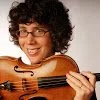
Guthman Musical Instrument Competition Highlights with Trombonist Jeff Albert
This transcript is linked to the podcast and video versions, with the complete show notes with many important links!
Jeff Albert:
All of this thread of this idea that music can be available to everyone as a way to express ourselves or have fun or deal with emotions or whatever, all of the variety of ways that we all use music. The creativity of these inventors really pushing us to make that available to more people is fascinating. That was a real sort of bringer of hope in this year's competition.
Leah Roseman:
Hi, you're listening to Conversations with Musicians with Leah Roseman, which I hope inspires you through the personal stories of a fascinating diversity of musical guests. Trombonist Jeff Albert joins me for a two-part conversation. The beginning of this episode explores the unique Guthman Musical Instrument Competition at Georgia Tech, which celebrates musical inventors from around the world. You'll be hearing some of these instruments from this year's competition, and you'll find that information linked in the show notes. The second half of this episode is about Jeff's life as a trombonist, improviser, music technologist, and professor. You'll hear about his many years playing and recording in New Orleans, across many styles, and how digital media pairs with his interest in experimental music. All the music excerpts you'll hear are linked in the show notes for you from several of Jeff's albums. Whether you play in a laptop orchestra or have only the vaguest idea what that means, you'll enjoy Jeff's great stories and insights.
I've been following the Guthman competition for a couple of years because I think new musical instruments are so interesting and varied. And I've also linked several previous episodes for you with musical instrument inventors, as well as some of the other trombone players I've featured. You can watch the video on my YouTube or listen to the podcast, and I've also linked the transcript. It's a joy to bring these inspiring episodes to you, and I do all the many jobs of research, production, and publicity. Have a look at the show notes of this episode on my website where you'll find all the links, including different ways to support this podcast. Hey, Jeff, thanks so much for joining me here today.
Jeff Albert:
It's lovely to be here. Thanks for having me.
Leah Roseman:
So we're going to do this in two parts, because there's two big parts to this episode, and the first part has to do with the Guthman Musical Instrument Competition at Georgia Tech in Atlanta. And the second part is you and your creative practice.
Jeff Albert:
Sure.
Leah Roseman:
So if people want to use the timestamps, they can go to one part or the other. Hopefully people will listen through.
Jeff Albert:
In self-deprecating trombone player mode, the Guthman stuff is much more interesting. Stay with this part.
Leah Roseman:
Well, I've been following this competition for a couple years. I'm really fascinated and I have featured various instrument makers on this series. It's definitely an area of interest for me. I have to say the first one I want to talk about actually, he was not in the finals because he wasn't able to travel Andrew McMillan.
Jeff Albert:
Yes.
Leah Roseman:
In New Zealand, his USAWI accessible wind instrument. So beautiful. And do you want to speak to that a little bit?
Jeff Albert:
Sure. So when we opened the submissions in August, so sort of the way the competition works, from roughly the middle of August through early October, there's online submissions are open. And then late in the fall, a group of Georgia Tech faculty and some Atlanta community members go through and select the finalists. And part of that process, when submissions are open, some of our students who work on our communications team just kind of scour the internet and look for interesting things and invite people and like that. And so one of our students had communicated with Andrew and came to me and said, "There's this guy in New Zealand and he can't really travel. He wants to know if he should enter." And I always say, "Well, just enter and we'll see what happens." Because a lot of instruments don't make the cut. And so he entered and when we were discussing and our sort of pairing down to the finalists meeting, several people mentioned his instrument.
And so I realized like, okay, we do need to do something. Although the part of the finals that is ... Part of the judging is the judges touching the instrument and being able to play it and whatnot. So we decided we would do a special recognition for Andrew, but it's a really fascinating instrument. And curiously, like he didn't tell a whole lot of his story. He just said, "I used to play saxophone and then I became disabled and so I made this instrument so I could keep making music." And it's a fabulous instrument that caters to all of the things he's physically capable of doing and I think allows him a real expressive nature with the instrument. So it was real fun communicating with him. He's a super guy. Yeah. There was sort of an accessibility theme this year. We had a bunch of submissions that had some sort of accessibility angle, which maybe tells us something about the current state of society.
I'm not sure.
Leah Roseman:
Don't you guys have a department devoted to accessibility at Georgia Tech?
Jeff Albert:
There is the Center for Inclusive Design Innovation, which is in the College of Design. The School of Music also lives in the College of Design. Yes. And they do all sorts of things, both research and providing services. They do lots of braille services for campus and actually the whole university system of Georgia and have lots of other clients. Yeah, that's a fascinating thing. CIDI is their sort of acronym.
Leah Roseman:
Well, what we're going to do, we're going to play some clips from the trailer that Georgia Tech put out and for the music competition. And then I'm going to link that in the show notes so people can see the whole thing.
Jeff Albert:
Cool.
Leah Roseman:
So people are going to hear a little bit of Andrew's instrument. So people listening to the podcast version, if they want to see it, they can click on that link and do that.(clip: USAWI)
So you mentioned that the music department at Georgia Tech is within the design-
Jeff Albert:
The College of Design
Leah Roseman:
College of Design. Yeah. So it's definitely not a performance program. It's quite different what you guys do. Do you want to speak to that a little bit?
Jeff Albert:
Sure. We have all of our degrees are music technology degrees. We have a Bachelor of Science, a Master of Science, and a PhD, all in music technology, which doesn't mean we don't have people making music, but it does mean you can't come here and take clarinet lessons. The state of Georgia has lots of places where you can go take clarinet or trombone or whatever that are quite good. But so our students work on creative systems, some very kind of commercial computer science, music applications. We have students who graduate and go for work for Bose and Dolby and Shure and industry companies like that, but many of them also have strong creative practice that is technologically based in some way. And we do have a quote unquote normal music program. We have four choirs and two orchestras and two concert bands and two jazz bands and a thousand combos, no, like five or six jazz combos that are represent students from every major on campus are playing those ensembles, but our actual music majors is a very tech focused.
Leah Roseman:
Yeah. So let's go back to the competition because the first prize went to Masterpiece, which is an accessible instrument by Brian Culligan. So I'm going to read the description on the website. So the Masterpiece is an open source electronic instrument developed for accessibility and musical expressivity designed in collaboration with Daniel's music foundation. It features nine pressure sensitive zones on a continuous surface, allowing users to control polyphonic synthesis and looping through varying physical pressure. So my first question is, did you get to try it?
Jeff Albert:
I did, and it's super cool.
Leah Roseman:
Okay.
Jeff Albert:
And what's fascinating about the competition, the original submissions, we see videos and read about them, and sometimes the experience of actually touching it is so much different. So when Brian's video is like, "Okay, this is cool. We should invite it. " But when it got here, you realized that this instrument has this range from people who have very limited use of their hands can play this instrument. If you can just touch it in any way, you can make it play to like hearing Brian play it on the concert, you can really play heavy, deep music on this thing. The range of it is fascinating and the way it deals with changing timbres and the sort of textures of the overlays that you use to change the timbres. It's both conceptually and technically fascinating. And I have one of my PhD students is working on a device that uses some similar sensors to what Brian used in there.
And it was funny, he came to our meeting after the competition and said, "Oh yeah, the Masterpiece guy turned me onto this thing if you put a little piece of silicone on the ... " So they got into this very technical explanation of how to make the FSRs do the force sensitive resistors do what he wanted to do. (clip of Masterpiece)
So often this competition is presented as a celebration of creativity in a concert, but it's actually a real learning experience for our students too, because they get to go talk to all these inventors and exchange ideas. But the masterpiece was great because it had that range of really anyone could play it in a way that was enjoyable. And if you spent time dealing with it, you can be very good at it and make very sophisticated music with it.
Leah Roseman:
Yeah. Yeah, this is certainly something that's come up. By the time this is released, my second interview with Gaelynn Lea will come out and we're talking about one of the ensembles she performed with, and I forget the name of the instrument, but it was like a cube and the people playing it I think had Down Syndrome and they were like just color coded. So it was like very just tactile for different chords would be programmed. And a few years ago I had Jesse Stewart on, he actually teaches at Carleton University here in Ottawa and he developed with Pauline Oliveros and other people, this adaptive musical instrument. So it's just-
Jeff Albert:
I've heard Jesse play in Guelph a few years ago.
Leah Roseman:
Yeah, he's a really wonderful creative person. Anyway, back to Daniel's Music Foundation supported the development of this. So I looked them up. That's pretty cool. He had suffered this brain injury and they have this very robust foundation in New York that seems to support all kinds of stuff. Had you heard about them before?
Jeff Albert:
Only through Brian's submission and he teaches at a music school that specializes in providing all sorts of accessibility to music education. And he showed part of his presentation was a video of several of the students at the school playing the instrument. So that was actually the first I had heard about it, but it's great work. All of this thread of this idea that music can be available to everyone as a way to express ourselves or have fun or deal with emotions or whatever, all of the variety of ways that we all use music, the creativity of these inventors, like really pushing us to make that available to more people is fascinating. That was a real sort of bringer of hope in this year's competition.
Leah Roseman:
Yeah. Maybe you said before, but the total number of submissions?
Jeff Albert:
It varies from year to year, anywhere from sort of 50 to 150, and we bring 10 finalists to Atlanta, usually 10. Sometimes it's eight or nine, sometimes it's 11 depending on how we have to make those decisions. And part of that process is figuring out what's going to make a good concert also.
And instruments tend to fall into categories. Like every year there seems to be some sort of electromagnetic field instrument. This year it was the demon box. Last year, the winner, the Chromaplane was also one of those instruments. And sometimes we'll get three or four submissions that are super cool, but all deal with similar things, electromagnetic field or stringed instruments or whatever. And so sometimes who gets into the finals is a little bit influenced by that, how we balance the kind of different types of instruments and what will be interesting over the course of a concert.
Leah Roseman:
Yeah. You mentioned the Demon box, capturing electromagnetic signals, one of the finalists, and that was a team of people. And Alexandra Fierra on the team, I did notice she was the only woman in the finals. So how do you guys encourage more gender equality?
Jeff Albert:
That sort of varies. There were two women on that team. A couple of people did point out to me that those were the two women in the finals. (clip of Demon box)That is a real issue that we can encourage. And when the students go and look for people to ask, you know, to encourage them to submit, that can be a factor in that. Sometimes it's the luck of the draw, it's who shows up. I ran an improvised or an experimental music series in New Orleans for a long time, and there was not the racial diversity on that series that you would expect there to be in New Orleans. And we realized part of it was because a lot of people in New Orleans were making a living, playing music for tourists, and they didn't have time to come play experimental music because they were making too much money, presenting it to the outside world, so to speak.
Yeah. So I think there are a lot of factors about why people do or don't participate in certain things.
Leah Roseman:
Okay.
Jeff Albert:
Some negative and some positive.
Leah Roseman:
Yeah. And for the competition next year, so the Guthman does pay for people to travel to Atlanta?
Jeff Albert:
There's an honorarium for everyone to travel that doesn't really cover the full travel cost, but it helps.
Leah Roseman:
Okay.
Jeff Albert:
So everyone gets a little bit of money and then the winners get there are prizes also. It's 10,000 total. So it's 5,000, 3,000, and 2,000 for one, two, and three.
Leah Roseman:
Okay. Just in case people are listening who are interested and figuring out if they can do it. So the People's Choice, I did vote because I watched this live.
Jeff Albert:
Oh, excellent. Good.
Leah Roseman:
I also voted for the Letheliam. So Lateef Martin, I have to say in Canada where I'm from bicycle parts, 24 strings, it's like a hammered Dulcimar hybrid, but I should read his description here.
Jeff Albert:
Sure. Yeah, but you can bow it. You can do lots of other things with it too.
Leah Roseman:
Yeah. It's beautiful aesthetically to look at and to listen to. And I have a preference for acoustic instruments, so I think I was really drawn to it.(clip Letheliam) So he writes that it's a 24 string chromatic instrument built from bicycle and guitar components featuring a rim-mounted resonator made of overlapping skill cups and a dual gear tuning system modeled after the piano keyboard layout. Tuned across two octaves, it can be played with sticks, fingers, bows, or picks, and mounted on a symbol stand for flexible positioning and rotation. Its modular design allows for tuning, customization, part replacement, and diverse performance setups. So he performed ... Actually, what we didn't say is that in this concert for the finals, people were always playing with somebody else. And in this case, it was one of your faculty members, Jeremy Muller, I believe.
Jeff Albert:
Correct. And last year, Jeremy also played with the People's Choice Award winner. So I might have to be careful who we put Jeremy with next year. Then we might be giving it away. No, actually, I think that is part of the thing. Jeremy's an amazing percussionist, and so this instrument really comes alive in his hands because he said when he and Lateef were rehearsing, he was like, "Well, what if we do this? Well, what if we do that? " So that's one of the reasons we pair everyone with an Atlanta musician is, one, it gives a sense of what the instrument can do in a sort of social context with another person. Sometimes the local musicians will play the new instrument, or sometimes it'll be a duet with whatever. For instance, Alexandria Smith, one of our faculty members, is a trumpet player. So she played trumpet with the demon box.
But in this case, when Jeremy and I were talking about it, and after he talked to Lateef, he was like, "I think I'm just going to ... Lateef's going to bring two of them and I'm just going to play the other one." I'm like, "Oh, that's great."
They had a lot of fun. Sometimes at the rehearsal, you tell them like, "Guys, you have to come back. There's another activity." And they're like, "No, we're still playing. It's too much fun!"
Leah Roseman:
Yeah, that's great to see. And I have to say, as a viewer, it bothered me that there was no description, like the way you had the concert format. In past years, have you guys done more at sort of letting the audience know what this instrument is?
Jeff Albert:
Yeah, we go back and forth with that, like how the flow of the concert works. There's also, I do a little bit lean into the idea of not giving it all away, letting there be some mystery. I'll take that into consideration though, because also we've spent the whole weekend with these instruments and on Friday, seeing them present and explain the whole thing and give the presentation to the judges. And then we've had everybody who's present on Friday during the day has time to go up and see them and touch them and talk to the inventors and ...
Leah Roseman:
Well, there was a lot of people watching live and I noticed the video from last year has got a lot of views afterwards. So there's a lot of curious people accessing this.
Jeff Albert:
I think it gets more views after than live even.
Leah Roseman:
That is the case with YouTube in general. So let's move on to number two, the Fiddle Henge, Ross Whiteman. Actually, it really reminded me of this instrument. If you ever go to Utrecht in the Netherlands, they have this automated musical instrument museum, and actually in his description, which I'll read, he says it was inspired by these old automated instruments, and I saw the original, so that was kind of cool. So it's a robotic sound sculpture featuring four violins, I have to say they're green, mounted on a 26 inch bass drum, bowed by a rotating acrylic disc inspired by early mechanical instruments. It uses modern materials and midi control to produce sustained tones and dynamic textures. Each violin is mounted on a pan tilt system powered by, oh, servos. Does that make sense? Yeah. Enabling precise string targeting and variable bowing speeds. And the judges, when they awarded the second prize, said they enjoyed the whimsy, unpredictable nature of the instrument.
Jeff Albert:
And Ross performs with it in a fascinating way. He wears the overalls and there was a spot where it got real droney where he sort of went devo style and just stood very still and let it ... So the performative aspect of it is super cool and it makes amazing sounds and it was great to me watching him play it as he's programmed it. So he plays a keyboard like if you want to hear a G, you push the G and then the fiddle that is tuned that way will turn so that that particular string hits the wheel and leans in harder or softer to make it loud, pushes harder or softer to control the volume. And there was a very cute thing he did. I don't know if it made it on the video where the fiddles all bowed at the end of the performance
Leah Roseman:
Yes. That was very cute.
Jeff Albert:
I love that. (clip of Fiddle Henge)
Leah Roseman:
So the Gajvina, so Debjit Mahalanobis from India, I was very moved to see this because it reminded me of Mark Deutsches Bizantar. I don't know if you ever heard about Mark Deutsch or his Bazantar.
Jeff Albert:
I don't know. I don't know that instrument.
Leah Roseman:
So Mark Deutsch died a few months after I interviewed him and he had developed this instrument. It's a huge double bass with all these many, many resonating strings and he played it. And he was an incredible creative spirit and we did a really in depth, deep dive into his instrument development and construction. So people should check that out. So just to hear this Gajveena reminded me a bit of that in terms of its resonating and the way it's played. So I'll read his description of it. It's huge. It's over almost seven foot, nine stringed acoustic bass Veena that combines features of the double bass and Rudra Veena with a 42 inch fretted fingerboard, dual resonators, and a mix of bowed and plucked techniques. It offers microtonal control, deep drone textures, and real time string bending. Its sound travels from the lower body through a hollow neck conduit to an upper tumba resonator near the ear supporting nuanced articulation across a wide dynamic and frequency range.
So this was shipped all the way from India.
Jeff Albert:
And there was a whole, you could make a whole novel about just what it took to get that thing here because when he shipped it, it was right around the same time some violence erupted in the world and so shipping ... The instrument just barely got here. The presentations were Friday and it arrived Friday afternoon.
Leah Roseman:
Wow.
Jeff Albert:
Yeah, it was a little stressful, but it got here and it was fun and it sounded great. (clip of Gajveena)
And that was another situation where pairing a local musician, I think made the concert more fun. Anthony Cammarota, who played with Debjit is a grad student in our program, a PhD student, and he's a guitarist, but he lived in India for a while, lived and taught in India. So I thought it would be fun to put them together because there's probably some common musical influence. And so the idea of them both playing it at the same time, I think came out of their rehearsals. And to me, that was my favorite part of the concert. I thought that was going to win the people's choice because the groovy double playing with Anthony playing the drones and Debjit playing the contrabass strings, I love that. I would have voted for that, except I was on stage while y'all were voting. Next year I'm going to pull out my phone and vote, I think.
Leah Roseman:
And number three, Verto by Michael Doron from Berlin. I really enjoyed that. It's the spinning tone wheels and are activated by magnetic gloves and he improvised with Klimchak, who I had to look up, this musician. So before I actually read the description of the instrument, do you want to talk about Klimchak?
Jeff Albert:
Klimchak is one of the longstanding members of the creative music community in Atlanta, and he's played with almost everyone in a wide variety of contexts. I had known him for some time as a creative musician when I found out he actually played drums in a funk band with RuPaul at some point in the 80s also. But he's been around Atlanta for a long time and plays things ranging from what looks like a traditional drum set to literally a kitchen sink with pickups and percussion elements on it. He's just a fascinating, creative person and great supporter of the experimental music scene here too. Not only does he play a lot, but he shows up at other people's concerts and it's lovely to have him around and it was fun watching them play together.
Leah Roseman:
It really was. And Klimchak, I mean, he was doing blowing and things and singing, and then he had like this garland of maybe coffee pods that he was like-
Jeff Albert:
Yes. He will make interesting sounds with pretty much anything you put in front of him.
Leah Roseman:
Yeah. So the VERTO, the instrument, the description is, it's a fully analog electric instrument made of rotating tone wheels played by wearing fingertip mounted pickups that detect electromagnetic signals as the hands move near the wheels. Pitch and volume are shaped by the number of teeth on each wheel, their rotation speed and the player's proximity. VERTO offers real time tactile control, enabling a wide range of expressive gestures and techniques. (clip VERTO Michael Doron)
Jeff Albert:
Yeah. It's sort of if you took the player interface of a Theremin and put it on a Hammond organ.
Leah Roseman:
Yeah. Yeah.
Jeff Albert:
Because the sound's created really in the same way as a Hammond organ. It's just these spinning tone wheels. But instead of having the sensors attached to a key, they're just on his fingers and then the volume as you get closer to it or farther away. So it does have these very sort of theremin-like aspects to how it plays. And it sounds great.
Leah Roseman:
Did you get to try all the instruments?
Jeff Albert:
That one I did not play. I didn't go fully put the gloves on and play it. Unfortunately, as the director of the competition, a lot of times when the demo sessions are happening, other things are going on that I need to be attending to. So I don't always get to play them all, but I get to play a lot. That one was fun to check out, but I did not like put the glove on. I watched other people do it.
Leah Roseman:
So I want to give a shout out to Krzysztof Cybulski from Poland, because you said he'd submitted many instruments over the years.
Jeff Albert:
And it's funny, I'm relatively new at Georgia Tech, so I've paid attention to the competition before I was here, but when we go through and pick the finalists, sometimes the people who have been here for a while are like, "Oh yeah, he's been here before." And somebody said that, and we got to talking about it when he got here, because I made some comment like, "Oh, you seem to know your way around." And he was like, "Yeah, I've been here a few times." And then we realized he has been here more than anyone else. There was a period some years ago where the semi-finals were on Friday and the finals were on Saturday, so more people traveled to Atlanta. And so a couple of those times he was a semi-finalist, not a finalist, but he's been in town. I think this was his fifth time.
Apparently he has lots of great ideas.
Leah Roseman:
Yeah. So his post-digital sax, I have to say my husband was watching the finals with me who's also a musician and he was going to vote for that for People's Choice. And also, before I read the description, Krzysztof was playing with a really fine pianist. There were a couple of really great pianist improvisers on this concert.
Jeff Albert:
Yes. İpek Eginli, is a local Atlanta artist improviser who was trained, came out of the sort of traditional classical music, like kind of contemporary new music world, but does a lot of probably mostly improvised music now. And she also has a practice with modular synthesis and stuff too. She's got a wide range of creativity happening.
Leah Roseman:
Okay.
Jeff Albert:
And then the other pianist on the concert is one of our PhD students. Tristan Pang is a PhD student here who's studying spatial audio and things, but is also a great pianist.
Leah Roseman:
Yeah. So before people hear this instrument, I'll just read the description from Krzysztof . The post-digital sax is a hybrid instrument that produces sound acoustically through a vibrating reed and wooden horn while digitally controlling pitch via electromagnetic actuation. It eliminates tone holes and instead uses custom continuous keys, a thumb operated octave switch and joystick for realtime manipulation. (clip Post-Digital Sax with Krzysztof Cybulski)
Well, I think we should move over to Jeff Albert trombonist. So let's talk about New Orleans. I mean, you were there from 1988 to 2023, most of your very broad playing career.
Jeff Albert:
Sure.
Leah Roseman:
Hi, just a really quick break from the episode. I wanted to let you know about some other episodes that I’ve linked directly to this one in the show notes, with Jesse Stewart, Mark Deutsch, Brendan Power, Linsey Pollak, J. Walter Hawkes and Hillary Simms.In the show notes you’ll also find a link to sign up for my newsletter, where you’ll get exclusive information about upcoming guests, a link for my Ko-fi page to support this project directly, where you can buy me one coffee, or every month, and my podcast merchandise store with a design commissioned from artist Steffi Kelly. You can also review this podcast, share it with your friends, and follow on your podcast app, YouTube, and social media. All this helps spread the word! Thanks. Now back to my conversation with Jeff!
I listened to some of the albums you put out when you're there, so I wanted to ask you, could we play clips? Do you have rights?
Jeff Albert:
Sure, yeah. Which ones are you talking? Yes. I think everything that has my name on it.
Leah Roseman:
So New Normal.
Jeff Albert:
Yeah, totally.
Leah Roseman:
In 2016?
Jeff Albert:
Yeah.
Leah Roseman:
So with Dave Capello on Percussion, you've done different projects with him and William Parker on both Bass and Flute. I picked a track called Sidereal Will. So what we'll do, Jeff, we're not going to play the whole track and we'll play a clip and then your Bandcamp will be linked in the show notes.
Jeff Albert:
Okay, great. (clip Sidereal Will from New Normal, album linked in show notes)
Leah Roseman:
Do you want to say anything about that album or that project?
Jeff Albert:
Sure. So that project came about. Dave Capello and I played together quite a bit in New Orleans. Dave's an amazing improviser and great drummer. And he had lived in New York for a long time before he moved to New Orleans, and he played quite a bit with William Parker. And so William was in New Orleans for something. I don't even remember what it was. And Dave and I had been doing a duo thing and we're like, "Oh, we should see if William wants to come record something with us." And he did. So we showed up at the studio at Loyola University where I was teaching at the time and we improvised that whole record. We didn't really have anything laid out. William's a great storyteller, so he sort of regaled the students with stories while we were setting up. And then he would pull out a flute or something.
If he didn't want to do what we had been doing, he's like, "All right, well, I'm going to play flute now." And so we would sort of move to that. But playing with William's a beautiful experience. All of those really high end improvisers have a way of taking whatever you do and making it sound good, and William's very much like that.
Leah Roseman:
Yeah. I found your blog, which you started in 2005.
Jeff Albert:
That was a post Katrina thing. That was a, "Well, I'm not going to be playing music for a while and I want to keep my brain working." Actually, I guess it started a little before Katrina. It did. The idea was there's interesting things happening here that people don't know about, so I'm just going to stick them on the internet and see what happens. And it got more active after Katrina because what else were we going to do?
Leah Roseman:
Well, I have a quote from one of your first posts here. And the internet's changed so much, right? Everything's changed so much. So you wrote, "A large portion of the most adventurous and moving art being made will never be written about in your local newspaper or most music magazines. News of this art spreads from person to person and through local scenes of open-minded people and adventurous listeners, readers, and art fans." So first of all, we don't have local newspapers writing about art and music anymore.
Jeff Albert:
Sure. They were hardly writing about art and music then. They're definitely not doing it now. Yeah. I mean, fortunately living in Atlanta, that's one thing I can say for our city is the Atlanta Journal-Constitution still sort of deals with local issues, although it's not a small town. And they have also, they don't make a print version anymore. All online, but they do ... I can still find out what my local government's doing by reading my local paper, which I realize is a bit of a privilege right now, sometimes.
Leah Roseman:
That's great. Well, I mean, this whole thing about blogs and what they were and what they meant, as opposed to now with social media and the algorithms dictating what people actually see.
Jeff Albert:
There was an algorithm then. The algorithm was somebody found my thing and they liked it and they told somebody else.
Leah Roseman:
Right.
Jeff Albert:
Right? It was like a really great system. And it's funny, early on in that I wrote a couple of, just reviewed a couple of records that I'd heard that I liked.
And then all of a sudden I started getting these CDs in the mail People were sending me things to review and I was like, "I'm not a journalist. I'm just a dude writing stuff on the internet." And there was one particular publicist who I ended up hiring later because he was really good. And I asked him, I'm like, "Why are you sending me this stuff? Why doesn't anybody care?" And he said, "Oh, well, you're on the blog role for Do the Math," which was the Bad Pluses blog at the time, Ethan Iverson's thing. And I was like, "Well, okay." But he's like, "Well, that's where all the jazz people go. " It was just this weird little interconnected thing that was actually person to person. There wasn't a sort of fake algorithm in the middle of it. It was just like when you hang out with a friend and they have a friend there and you get along and you're like, "Okay, cool.
We're friends now too." And I feel like early Twitter was a little bit like that. They're people I connected with on there that I wouldn't have had a chance to connect with otherwise.
I would have an exchange with Dave Holland and I'm not hanging out with Dave Holland in real life, but we had this exchange on Twitter. And it was funny, I was playing a festival in Finland with Hamid Drake and Dave Holland's band was there and Dave had posted something on Twitter that will be at Tampere. And I was like, "Oh, I'm going to be there with Hamid. I'm looking forward to hearing your band." And before our show, we were in the dressing room and Hamid came in with Dave and Dave looked over and saw me and said, "Oh, hey, Jeff, how are you doing?" And the whole band looks at me like, "Dude, how do you know Dave Holland?" And I'm like, "Well, we're Twitter buddies." But I didn't really know Dave Holland, but that era of the internet allowed those sort of interactions.
Leah Roseman:
Yeah. And despite all the garbage with social media now, I mean, you can still break through and make real connections as I have with this podcast. I mean, most people I've met, that's the way it's happening.
Jeff Albert:
Yeah. Although I wish more people would engage with having their own website. I'm part of a group that books an experimental music series here and sometimes all you get is their Instagram page, just like the entirety of their internet presence. And I'm like, "Can you give me something I don't have to sign up for so I can hear your music?" So everybody who's listening, just go get a cheap website host and put your stuff there. It'd be great.
Leah Roseman:
It's very important to have a website. And I get, of course, people are sending me music all the time and I get very irritated when they send me a Spotify link. I don't use Spotify and surely that's not the only place your music is listed.
Jeff Albert:
Sure. Yes. Well, it's interesting and I've dealt with that in class of like, how do I share music with the students or links so that we know we're all listening to the same recording because especially I teach a fundamentals of musicianship class that deals with some classical music. So you can say, okay, go listen to Beethoven's third symphony, but there's lots of versions of that out there. So if we want to make sure, if we're talking about things at timestamps or whatever, it helps to have the same recording. And I'm the same way. I really don't want to use Spotify. My personal listening I do on Apple Music because there's a lossless version and it's just bundled with the rest of my life, but I don't assume that they all do that. So we've really ended up, I'm using like YouTube music links that they can listen to for free if they don't pay for it.
It's sort of still not ideal, but I guess it's better than in the old days when we had to go to the music library and pull out the LP and only one of us could listen at a time.
Leah Roseman:
Yeah. Your album Alone Time from 2020 and Improvised solo miniatures, really nice little miniatures, you have this Grocery Run track.
Jeff Albert:
And that during the lockdown, that was the exciting time. It's like, "Ooh, I get to put on my mask and go to the grocery store. I'm going to be out of my neighborhood for 45 minutes."
Leah Roseman:
Yeah.(music: Grocery Run from album Alone Time, linked in show notes)
So how did you deal with that time?
Jeff Albert:
Well, making that record was part of it.
I just decided ... I was spending a lot of time practicing because we're stuck in the house and I was teaching remotely and doing those things, but just sort of felt like I needed to do something. So I said, "Okay, I'm going to make a solo trombone record in 24 hours." And I started like on a Saturday morning and just spent a couple of hours recording things, some of which ended up being very short, some a little longer. And then I spent the evening sort of mixing and mastering it and I put it on Bandcamp the next day as just kind of as almost like a proof of life, like we're still here, there's still stuff.
Leah Roseman:
And the image for that album cover is painted by Emily Albert, I assume it's a family -
Jeff Albert:
That's my daughter and she was, let's see, 2020, she was 13, 14, and part of her like, I can't leave the house was, I'm going to start painting. Yeah. So we had a bunch of those little canvases and she would sit at the kitchen table and paint them. And I was like, "Oh, that one looks kind of cool. I'm going to use that for the album cover." It's hanging in our house right now and she still sort of gives me some grief about it. She's like, "Could you put something else there? Could you take that down?" I'm like, "No, you're stuck with it. " It's immortalized on that album cover.
Leah Roseman:
Well, I really love the trombone and I've had a lot of trombone players on the series. I'm a violinist, and I do love brass instruments, but I think the trombone's my favorite brass instrument.
Jeff Albert:
Well, good. I'll tell my wife that, because she had a rule no trombone players until she met me. There's a great Barry Rogers story. Barry Rogers was a great trombonist in New York who played with lots of salsa bands and things. And after he passed away, someone said to his wife, "Oh, Barry must have really loved the trombone." And she said, "No, he hated the trombone, but he couldn't get that sound from anything else."
Leah Roseman:
That is a great story.
Jeff Albert:
And that's sort of the sound is what we have going for us. Playing lots of notes isn't really our thing, but there's sounds that we can make that have a sort of elegance and majesty that's hard to get to in other ways.
Leah Roseman:
Yeah. Your album, Unanimous Sources, it's a six-piece band. You have different people playing, and I understand a lot of these were recorded live. I love the lower registers because you have Bari Sax on there with the trombone, bass. There's this tune Oregano with Intent ?
Jeff Albert:
Actually, there's a great story behind that title. I'll talk about that band for a second. Our plan was to make a studio record in the summer of 2020, and that didn't happen. And then over that time, I realized we had multi-track recordings of enough live gigs that we could still sort of document what we had been doing over the previous couple of years. There was a point in my life where I sort of had these competing notions. I wanted to have a band with multiple horns that I could write kind of like jazz style harmonies for. I wanted to have a free improvising trio with bass and drums, and I wanted to have essentially a funk band, like a Meters cover band, so to speak, although maybe not actually playing Meters tunes. And so at some point I've realized, well, what would happen if I just tried to do all of those at the same time?
And so that's sort of what Unanimous Sources became. The song Oregano with Intent was written for a friend of mine named Paul Gowder, who's on the faculty at Northwestern Law School now. At the time when we were living in New Orleans, and I wrote that song years before that band got together, but it just first never really got recorded until that band. Paul had gone to Harvard Law School, but was living in New Orleans managing a band I was playing in. And he got pulled over one night and Paul does not smoke weed. And the cop said he found a roach in Paul's ashtray and Paul's like, "Well, that's impossible because there wasn't a roach in my ashtray." And so he demanded that they have it tested and it turned out that it was oregano, I think it had been planted, although I can't imagine a police officer in New Orleans would do such a thing.
Anyway, so then we all joked that Paul had oregano with the intent to distribute, which became the title of that song. And the poor surprised police officer who did not realize the guy with the funny accent was a lawyer. (clip Oregano with Intent from Unanimous Sources, album linked in show notes)
Leah Roseman:
What was it like being a musician in New Orleans, playing across genres? You mentioned before the tourist scene, those more traditional ...
Jeff Albert:
New Orleans was ... What I loved about playing in New Orleans was it was big enough that there was a lot happening and small enough that lots of people could do it.
I had situations where I would go sit in the pit and play an opera, and then when that was over, go to a different neighborhood and play in a reggae band. Or I'd play extra with Louisiana Philharmonic and the saxophone player who was playing extra on that concert, we were on a free jazz gig together the night before or two nights later or whatever. So even the people ... The people who played in any scene also played in other scenes. So if you go to someplace like Chicago, like there's a great say salsa band scene, and those people mostly do that.
And there's a great group of musicians who play in the pit for the shows, and they mostly do that. And there's people who play weddings and stuff, and often ... There's some overlap in those scenes, but in New Orleans, there was a lot of overlap in those scenes. So it was great. I got to do a lot of different things, and all of those things informed the creative music. Getting to play with George Porter and all of those great sort of New Orleans R&B legends makes my creative music different, because those things are still in there. I feel a need for that sort of deep groove in ways that I kind of can't let go of. I'm like, "Oh no, you're stuck with that. At some point we're going to get groovy tonight" because I crave it in a way.
Leah Roseman:
Yeah. It's interesting listening to your improvisations because you can hear that. You can hear the different influences coming through.
Jeff Albert:
Yeah. It's definitely real for sure. And also I would do weird stuff on George's gig sometimes too, which maybe he liked it, maybe he didn't, but ...
Leah Roseman:
And you did a PhD in experimental music and digital media. You did that a little later in your career.
Jeff Albert:
Every time I finished a degree, I thought I was never going back to school. I finished my bachelor's degree and I'm like, "Great, I'm going to go be a trombone player," which I did for a while. And then at some point thought, "I need to get better. I should take lessons from someone." And at the time, the University of New Orleans had a really great jazz studies program and I realized the cheapest way for me to go study with great people was just go do a master's degree there with no intent of becoming an academic or even I didn't even really care if I finished the degree. I just wanted to go take the lessons and it was cheap.
So I did that and then when I finished that, and so it had been six years or so since I finished my bachelor's degree. When I finished my master's degree, somebody said, "Oh, well, you have a master's degree. Do you want to do this adjunct teaching thing?" And at the time my kids were small, so I was doing the Mr. Mom, staying home with the kids during the day, playing gigs at night, started doing some adjunct teaching and did that for seven or eight years and at some point thought, "Oh, this college thing's fun, but if I want to get a real college job, I probably need to go get another degree." So I went to LSU with the intention to get a DMA in trombone.
When I got there, I realized there were reasons I didn't have classical trombone degrees. I'd been trying the last 20 years to play it differently every time, not the same every time. But they had just started this experimental music and digital media program. So I sort of talked my way into that, had no computer coding skills to speak of. I could kind of hand roll a website, but that was about it. But I had made a couple of records at that point. I had some music tech chops sort of on the production side, but the experimental music aesthetic I very much had. So they let me in. I ended up being the first graduate of that program. I sort of tell people it sounds fancy, but it's really just code for how to make weird noises with your computer. And I've been making weird noises with trombone for a long time.
So adding the computer to the palette just seemed like more fun. And switching to that was the right move because it served me really well, both as an educator and an academic, but also in my own creative space.
Leah Roseman:
And on a personal level, that must have been kind of rough in terms of your energy level to be taking care of small kids during the day and then going out at night to play.
Jeff Albert:
It was, but the good news was they would go to school and I could take a nap.
Leah Roseman:
Okay. They were school age.
Jeff Albert:
By that point, I guess when I started my PhD, my youngest one was in preschool. So yeah, there was a time where, yeah, but you know at some point they'll grow up and you'll get to sleep and it'll be fine.
Leah Roseman:
Yeah. I have a couple of kids who are now well into their 20s, but I remember that deep fatigue of playing at night and having ...
Jeff Albert:
Yeah. But also the fun of like, they're so cute when they're that age and especially the way they would engage with music. I remember I was practicing actually for an orchestra audition. I was taking a bass trombone audition and I was playing a Wagner excerpt and my youngest daughter who's now 20, Emily, the one who made the painting, she was like three at the time and was pushing her fake grocery cart around the living room, doing her fake grocery shopping with the little plastic things and whatever. And she just stopped by the room to the music room and the open door and she looks in and she goes, "Dad, too loud and keeps walking." And I'm like, "Okay, well maybe that was the right response for this excerpt. Maybe I'm doing this. " But that experience with them was so great. I feel really lucky that I got to spend that time with them when they were little.
Leah Roseman:
I've been a professional orchestra player for over 30 years and in our orchestra, we have pretty big audition committees now, like 12 people. So although I'm a violinist, I was on our bass trombone audition committee. So I listened to probably that same Wagner excerpt.
Jeff Albert:
Lucky you. Yeah.
Leah Roseman:
So you were a founding member of the Laptop Orchestra of Louisiana?
Jeff Albert:
Yes. That was a group that was at LSU. So when I started there was right at the beginning of the experimental music and digital media program and sort of the ensemble that was the center of our learning at the time was laptop orchestra, which was great because it let us explore performative aspects of electronic music. It let us explore programming for laptop ensembles and we used various different controllers and things. There are a few different traditions sort of in laptop orchestras. Like I had a friend who wrote lots of pieces for Wii Motes, we would connect the Wii video game controllers to the computer and use those to play. My thing was sort of mini controllers or like the joystick, the flight simulator joystick. I made a piece where that was the instrument interface. My professor Steve Beck plays shofar in his synagogue and I play conch shell just because that's a nerdy thing that trombone players do.
So he actually wrote a piece for shofar conch shell and four laptops, which we made the joke it was the oldest and newest musical instruments.
Leah Roseman:
That's good. So are you still doing any of that kind of playing now?
Jeff Albert:
I do stuff with laptops performing sometimes, usually with the trombone and the laptop, some sort of interactive system. Although we just did, I just played at this great festival in Missouri called Mock Sonic and I did a piece where I only played laptop and my wife Alexandria Smith played trumpet. So I thought I was getting away with something that I would program a piece where I didn't have to travel with my trombone, but she got me back the next thing we're going to, she wrote a piece where she plays laptop and I play trombone, so I still have to bring the trombone. But so sometimes I do that, but a lot of times it's more of an interactive thing where I do both.
Leah Roseman:
So how much do you guys collaborate creatively, you and your wife?
Jeff Albert:
We both have things going that don't involve the other, but we usually have at least one thing going that we're both on.
Leah Roseman:
Okay. It must help. I mean, I'm married to a violinist, so I think it's helped so much that we really understand each other's-
Jeff Albert:
It's funny. She's a trumpet player,
So it's a little different, but the brass player thing's very similar. And it's funny when I think I'm getting away with something, I'm like, "Oh, what do you think about this new mouthpiece?" She's like, "No, the other one sounds better." Like, "You sure I really like this new one?" She's like, "No, it's that one." So it's nice to have some uncompromising ears when making gear decisions and things. And we sort of got to our form of improvised music from different sides. I came from the jazz world, have a couple of jazz degrees and when I was 18, really thought I wanted to be JJ Johnson before I realized I really wanted to be George Lewis, but she comes from the sort of virtuoso new music classical world. So it's great that we have these kind of different sides that meet in our collective artistic expression.
Leah Roseman:
Yeah. I'm in an improvising ensemble and a couple of the guys come from the jazz side and it's very interesting. Yeah, that kind of-
Jeff Albert:
And I find the real thing I notice is when we hit a thing where there's sort of not an idea in play and someone falls to their kind of default stuff, that's where you hear it. Like her default stuff is different than my default stuff, but when we're really in a dialogue, I think the sort of musical interaction is very similar. It's just when we have to have a new idea, mine sort of pull from this side and hers pull from that side.
Leah Roseman:
This phantom trombones, it's not an album, right? It's just like some videos you put out?
Jeff Albert:
Yeah, that's mostly some videos. That's a piece of software that I still use. Essentially, I have lots of friends who are really good at circular breathing. I can't circular breathe, but I can make MaxPatches. So I made a MaxPatch that would let me sort of do droney things and build and layer things. And part of it was a way to allow myself to do solo performances that sort of kept some sound happening. Maybe I should make the joke if I could turn a trombone into a bagpipe, that's what it would be. But it's a Max interface with a mini foot pedal that sort of has four buffers that I can fill with things and turn on and off. So I can have things that I played in the past continue to happen while I play other things. And so the concept of phantom trombones was that I'm sort of time shifting myself.
There are very versions of me from the past that keep showing up in the present. Well, just that the thing I played five minutes ago can come back.
Leah Roseman:
Oh, okay. Right. Yeah.
Jeff Albert:
Yeah. Not too far in the past. Mostly just the past from the performance we're still at, but short term past.
Leah Roseman:
Yeah. Well, are you finding it hard to keep your chops up because you're doing a lot of admin work now?
Jeff Albert:
Yes. Teacher chops is a real thing. Administrator chops is a real thing. I started playing in a local sort of amateur semi-pro trombone choir, mostly as an excuse to go really have to play one night a week. In trombone choir, you play all the time. It's not like in an orchestra where if you're a little out of shape, you still like ... I sit there for 45 minutes listening to the strings sound great. Trombone choir, you got to play. So that makes me practice because I know I'm going to embarrass myself if I show up and my stuff's not working. And also being relatively new to Atlanta, and once we got here, I sort of fell into an admin thing pretty quickly. I'm just now getting to the point where I'm starting to meet more people and do more gigging here. So that helps with the chops. I mean, I'm old enough that my stuff works.
It's endurance that becomes the problem.
Leah Roseman:
Yeah. Makes sense.
Jeff Albert:
When I'm not really on it. And in New Orleans, I was doing a lot of long, loud gigs. So the endurance wasn't a thing because I was always testing that. So yeah, you just sort of have to suck it up and get through. When I know something's coming, I can be ready.
Leah Roseman:
And in terms of your teaching, like you mentioned you're doing a basic musicianship course and then you also have graduate students. So different strands. What do you most like about mentoring and teaching?
Jeff Albert:
Oh, all of it's fun. So I teach, right now we have a four semester sequence called Fundamentals of Musicianship, which given the nature of our undergraduate major is a sort of weird like theory, history and rep music tech mashup. We kind of try to teach them all together. I teach the third semester of that sequence. That's really fun because it lets me catch students earlier in their career and have a little influence about how they think about things, which I find very exciting. I try to ... Everybody comes in and we have like our little thing that we know and I try to help them push that out. One of my favorite stories from that class actually comes from a curriculum meeting at a former institution. The guy who ran the jazz program, we were talking about things that we need to teach and what's relevant.
And he said, "I was a jazz major and I had studied the Erlking three times before I got to Charlie Parker."
And we were in New Orleans and there was a great blues guitarist and songwriter named Earl King. And I said, "Well, we should teach both Erlking and Earl King," which they did not think was funny. But when I got here and Erlking was on the curriculum for this third semester, I'm like, "I'm going to teach Earl King too." So we listened to the art song and then we listened to an Earl King tune called Mother-in-Law. And I asked the students, "What do you hear? What do these have in common?" And they came up with great things like, "Oh, they're both built on a repeating rhythmic motif." The narrator sings in multiple voices across the song. There are all these real things that these two pieces of music have in common. And so sort of my goal in that class is to help them see, you think this music you study at school is different from the music in your normal life and it's not.
It might be separated by time, but there are commonalities. And when we find those commonalities, there's better meaning in all of them. And we try to do similar things like with the tech stuff in that class, the theory in the tech, like,
Okay, this is a major scale and here's how you write it on a staff. And if you want to write it in web music notation, here's what that array looks like. And if you wanted to make Max MSP play that back, here's how you would build that, so that the people who have some coding experience can use that to lean on learning the music and the people who have the music experience can use that to lean on learning the code. So all of that sort of integrated way of thinking about it is a lot of fun and it's exciting to plan that. And then also teach the music recording and mixing course and then advise some grad students. The grad student advising is lots of fun because it's like you get to have the interesting thoughts of new research, but someone else has to go do all the work.
I have my own research, but if I meet with a student, it's like, "Oh great, think about this and this and this. And okay, good. Now you go figure it out and come back next week and we'll see what it looks like. " Sort of like a friend once at the International Trombone Festival was buying a new trombone and he asked me to come help him. He's like, "I want to hear somebody else play them. So you play them and I'll listen and I'll play them and you listen." And it was all the fun of buying a trombone, but he had to spend the money. I didn't have to spend the money. So I find grad students are kind of like that too. It's a lot of fun, but then I don't have to spend the whole week tearing apart the ideas. They get to go do that work and then come back.
Leah Roseman:
So what kind of research are you doing?
Jeff Albert:
Right now I'm mostly doing research on improvising systems. I'm doing some stuff with Somax2 software, which is an earcom software that there's an AI model, an underlying AI model that's trained on essentially like all of the public domain Western music they could find in MIDI format. And that underlying model influences interactions between a live performer and what it plays back of, we're using mostly audio corpus. So you load an audio recording in and it slices it up and then listens to the live stuff and finds good fits from the sliced up audio in the corpus. So we're doing some research with that, both making some new pieces for that system, like I've used it on a spoken word thing, but also doing some analysis of like we've recorded trombone and guitar duets like in real time just we recorded and then we put those into the computer and see does the computer match the things that we matched in real life.
So we're sort of interrogating the system in some ways. It's a lot of fun and we all ... Yeah. So at this point, what I'm doing is getting to know that system. Ultimately, what I would like to do is build an autonomous layer to put on top of it so I could just turn it on and have it play duos with me.
Sort of the way it was designed and intended, someone plays ... There's someone tending to the computer and someone improvising with it. So I'm trying to see if I can automate the tending to the computer part.
Leah Roseman:
Okay. I was thinking about the intersection of creative disciplines and also where you are at Georgia Tech that there's the technology with the music. And it was inspiring to hear that there's so many ensembles across the college of people doing different -
Jeff Albert:
Well, and you know, all of those people that we sat next to in Allstate who were like really amazing violinists and they're like, "Well, I'm going to be an electrical engineer or an architect or whatever." They still want to play when they're in college and they do. Like our orchestra and the jazz band and the choirs, they're all quite good because it's really smart students who love music and want to keep playing and singing. So it's fun for them. And a lot of times it's the place ... They come to orchestra rehearsal because they don't have to think about their differential calculus class for an hour and a half.
Leah Roseman:
Yeah. Yeah. And I think the important thing is not stopping.
Jeff Albert:
Yeah.
Leah Roseman:
It's much harder to come back.
Jeff Albert:
Yeah, for sure.
Leah Roseman:
Well, thanks so much for this today. Great to meet you.
Jeff Albert:
Yeah, it's my pleasure. It's been lovely talking to you.
Leah Roseman:
I hope you enjoyed this episode. Keep in mind, I've also linked directly several episodes you'll find interesting in the show notes of this one. Please do share this with your friends and check out episodes you may have missed at Learoseman.com. If you could buy me a coffee to support this series, that would be wonderful. I'm an independent podcaster and I really do need the help of my listeners. All the links are in the show notes. The podcast theme music was written by Nick Kold. Have a wonderful week.