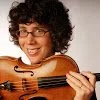
Max ZT of House of Waters Interview: Hammered Dulcimer, Manu Delago Collaboration & Improvisation
This transcript is linked to the podcast and video versions with complete show notes.
Max ZT:
To be honest, I was really turned off by it for when I was applying to colleges, multiple places were like, "Oh, those are fine, but what about vibes instead?" Because it was also earlier, I think now I don't think I would have the same hesitation from music departments. I think they're a lot more open than they were 20 years ago. But at the time it was like, "Yeah, yeah, yeah, yeah, yeah, that's just some folk instrument. Can you do something more legitimate?" And so it instantly turned me off to the whole thing. And I was like, meanwhile, I'm thinking like, oh, I can maybe translate Milk Jackson stuff onto the Dulcimer. What couldn't I do some really cool things here? And it completely turned me off to it. So I'm not against the instrument, but it kind of made me be like, "Oh yeah, I swear this instrument has value.
It's not just some novelty thing. It's also not just like any other instrument. It needs to be thought of as its own unique, beautiful thing, just like every instrument. It shouldn't be pigeonholed to some side."
Leah Roseman:
Hi, you're listening to Conversations with Musicians with Leah Roseman, which I hope inspires you through the personal stories of a fascinating diversity of musical guests. Max ZT is a superb, Grammy nominated, hammered Dulcimer player. I'm really inspired by his broad and deep musical approach, improvisation skills and virtuosity. You'll be hearing inspirations and clips from his recent album with the handpan virtuoso, Manu Delago. And in fact, this was recorded during their album released tour of the UK and Europe. Max explained fascinating details about his approach to building hammered Dulcimers with the guidance of David Lindsey. If you're a fan of Manu's handpan playing, you'll also be gaining more understanding into his creative approach to performing. You'll hear the inspiring stories of how Max came to be a student of both the Cissoko Griot family in Senegal and the late Pandit Shivkumar Sharma in India. Max has also shared with us clips of House of Water's Grammy nominated album "On Becoming", as well as some great behind the scenes moments in the recording studio.
Among Max's collaborators, you'll hear about the brilliant Moto Fukushima, the six string electric bass player in House of Waters, and Max's wife, the wonderful singer and athlete, Priya Darshini. I feel that Max's insights into mindfulness and creativity applied broadly to all of us. You can watch this video on my YouTube or listen to the podcast, and I've also linked the transcript. It's a joy to bring these inspiring episodes to you, and I do all the many jobs of research, production, and publicity. Have a look at the show notes of this episode on my website where you'll find all the links, including different ways to support this podcast and other episodes you'll enjoy.
Hey, Max, nice to meet you. Thanks for joining me.
Max ZT:
Pleasure. Pleasure. Thanks for making this happen.
Leah Roseman:
I found out about you through Joel Styzens.
Max ZT:
Amazing. Amazing.
Leah Roseman:
Yeah.
Max ZT:
Yeah. He's a good friend.
Leah Roseman:
And it actually came up because of the instrument builder. So we'll get into that actually, but I do want to start with your tour now because you're doing this awesome tour. Now, does he pronounce it Manu or Manu?
Max ZT:
Yeah, Manu.
Leah Roseman:
Manu Delago.
Max ZT:
Yeah.
Leah Roseman:
Okay.
Max ZT:
So we're on tour now. I'm in London now. We just did our London debut last night at the Barbican, sold out, which is pretty cool. But then before that, we were about, I guess, 13 or 14 shows in Europe throughout Slovenia, Austria and Germany. And we're going to do another week or so here, I think six more shows in the UK. And then there's a small gap. I have a separate tour with my band, House of Waters coming out to Czech Republic, Slovakia, and then a show in Vienna, and then back again with Manu for about another two weeks. So it's going to be a pretty long run this time.
Leah Roseman:
Yeah. Well, we'll get into the touring life, but I want to dive into your new album, Deuce.
Max ZT:
Sure.
Leah Roseman:
It's so beautiful. Really enjoyed listening to it.
Max ZT:
Amazing. It's an honor. Thank you.
Leah Roseman:
So I thought we could include a few short clips with your permission.
Max ZT:
Sure, absolutely.
Leah Roseman:
I think track five Inhale is one of my favorites.
Max ZT:
Yeah. That was our first single and that's definitely a very uplifting piece for sure.(music: excerpt of Inhale, track 5 "Deuce")
Leah Roseman:
So how did you guys meet? What was the first jam session like?
Max ZT:
A jam session is a good way to describe it. We have some mutual friends and he was on tour with, I guess, our friend that was playing in New York and we just knew we had to kind of meet. He was on tour with Anoushka Shankar, who's this great sitar player, has a project called, or an album called Land of Gold, which Manu and Anoushka wrote. And it's one of my favorite of her projects. And through her, I think they played at City Winery in New York and I went backstage and got to meet him there and was like, "This is insane. This is amazing, what you're playing." He plays the handpan, but also he's very much a drummer. So on that show, he was doing a lot of other stuff. He plays with Björk. He's a miraculous musician. I've got to say, playing with him has been incredibly inspiring.
And we basically just kind of knew that these instruments had to, that they would sound good together. It's both pitch percussion. Even though they both have a lot of similar range, which sometimes can cause trouble, it was actually really natural. When he was in New York, we just sat together, we played, we just improvised and was like, "Oh, I don't have to be worried about blending too much together. I don't have to ... " You know it very well. If you're playing with another musician that's very much in your space, it's very easy to all of a sudden get a little jam and step on toes and not be sure who's doing what. But it was so natural. We just kind of shifted roles from somebody doing more chordal and basslines, the person doing more melody, somebody doing more rhythmics, somebody ... It was just so easy, actually.
So we met in New York, improvised there, and then I met a couple times when I was in the UK when he used to live in London, and we would just sit and improvise together. And he had the great idea of recording all the improvisations. And then he parsed through all of the, I think it was like almost 10 hours of recording and was like, "Oh, these 10 moments are really awesome. Let's develop these into pieces." And so then we sat with those moments and changed the composition, changed the form and little detail work that makes it so special. And that's what made to the record and that's what we're touring with now.
Leah Roseman:
Yeah. I love the juxtaposition of textures. And I knew about Manu because he's super famous on the internet for handpan, but I was interested to read into his history as classical percussionist, jazz, composition, all the stuff he's done obviously feeds into his creative life. And you recorded in this beautiful Bernardisaal in Stams, this 300 year old ornate space, the gorgeous album cover. We see this, right? Yeah.
Max ZT:
The space was 300 years old, but the monastery itself is 13th century, which is as an American, what? You don't see a lot of buildings like that in the US, but it's actually, now that we've spent so much time in Europe and the UK, it's like, oh yeah, so many places are like that here. For him, he says it's kind of just like a building in his backyard because he grew up five minutes from there. And he's like, "Oh yeah, it was just a place." And for me, it's like, this place is insane. He sent me about five or six options. We wanted something other than just a recording studio, something a little bit more, something that would contribute to the recording as well as not just be a place that we did the recording. And so the resonance and the reverb, all that you're hearing of that, there's nothing added.
It's all just ... I mean, when I hear the record, I hear a note and it's like it flies to the ceiling and it's like so magical. So that place had a deep impact and the inspiration for how we performed these songs, for sure.
Leah Roseman:
Yeah. A number of years ago, I was on tour with my orchestra and we played in Salisbury Cathedral, which is very near Stonehenge. And I was walking around the village and one of my colleagues pointed out, "Notice the windows, a lot of them are blown glass because they're so old. It's before they had plate glass and that kind of blew my mind."
Max ZT:
That's crazy. Yeah. I mean, in the US, we just don't see a lot of that. I mean, obviously there are structures and there are things that were old, but nothing really survived or was destroyed over the years. So this is kind of amazing to see all this stuff since being out here.
Leah Roseman:
And your recording engineer for those sessions was Michael-
Max ZT:
Reisigl. Yeah, I think that's how you pronounce it. Unbelievable. I mean, we brought everything. There was nothing.That room was empty. And because it's a portrait room from 1800s, there was no heat allowed as well because I would destroy all of the paintings. And so it was like this massive empty room, super cold because we did it at the end of October, early November, and he just brought everything. And then we shot it and these videos look amazing. And another guy that came in who also was, I think he lives in Austria, I think he's in Gratz in Austria. And he came in as well. And this team was like, it blew my mind how talented they all were. I kind of went in unknowning not really sure what was going to happen, but this was mind blowing.
Leah Roseman:
I was curious about this tour you're doing in terms of the micing and the sound tech for each venue. Is anyone traveling with you?
Max ZT:
Yeah. So we're traveling with a tech and he's a longtime collaborator and tech person with Manu for ... I think they went to high school together. So he's been working with Manu for years and we actually are doing it without monitors. We're doing everything, at least acoustic on stage. I have these two small microphones that are attached to the instrument that are theirs that we used to record the record. And we're like, "This sounds amazing. I think we'll just try that. " And we use the same microphones for that we recorded on the record. And so we travel with everything. So we show up at a venue and like nothing is really needed. And we even bring our own screens and projectors and we do this whole big stuff. Some of my socials might show it, but we do a whole light and projection thing as well.
Manu was very interesting about this stuff. He thinks very much in like a show type of experience as opposed to just a concert. And so he went back to the recording studio or the recording studio, went back to that room that we recorded in and filmed the room for I think 24 hours straight to get the light moving across the room. And then we project that. Obviously like not 24 hours, but we like condense it into an hour and not so it doesn't look so super sped up and dumb. He probably found like a nice moment where you could speed it up over like a 80 minute show and you can slowly see the light moving from one to the other. And it's really, it's quite impressive while like right behind us. And so seeing photos and videos for me, I'm just playing the show and I see this projection here, but seeing photos and videos from the audience, it almost is like we are inside that room again.
And so it feels really much like a theater type of set, because we're in this space, but it's not just a set because the set is dynamic, it's moving, the light is moving because of this time lapse video that he shot.
Yeah, I'm very impressed with his vision for this.
Leah Roseman:
Yeah, I have been following your socials and I was curious, I was going to ask about that because that's neat. Yeah.
Max ZT:
Yeah.
Leah Roseman:
And I understand sometimes you've shown Manu's film "From the Alps to the North Sea" about sustainable touring and this tour he had donea couple years ago.
Max ZT:
I think he's doing it again coming up maybe later this summer or the spring. For those that don't know, I think he called it the recycling tour where he would put everything on ... His whole band would, they get on bikes, they have a trailer, they put all their instruments in the trailer, and then they bike venue to venue. And he was basically asking the question like, how can ... If you've been on tour, you know that it's really hard to do this sustainably. It's just like so much gas is spent, so much carbon footprint is done, but there has to be some route to make this better. Obviously a lot of these now everybody's like, "Okay, no plastic water bottles. Everybody has to do your own water bottle." And they, sure, but he was trying to ask the question, "Is there something beyond that?" And so this is a bit extreme. I'm not sure I could do that, but I think he did, I think he's going to go to Amsterdam from Innsbruck, which is like a pretty far distance on a bike. I can't remember what his exact totals were. I'm sure we can find it online somewhere, like how many kilometers he biked with his whole band. But he said something, because we talked about it a couple times on this tour.
When you're in Germany, you're on the Autobahn and you're just going a hundred miles an hour, essentially. And you don't see ... For you, it's just a highway when you're just on the road, like, okay, whatever. Same in the US. When you're on the road, you're just flying through and you just go from one place to another, you're trying to go as fast as you can to get there as efficiently as possible. But when you're on a bike, you can't go on the highway, obviously. So you have to do a lot of river roads. And he's like, "I couldn't believe how many streams there were, how many mountains there were." Because also you feel them and your legs when you have to go up a hill and go down a hill for us on a car, we don't notice that gradation, but for him, he saw everything.
So he said his relationship with the country was just so much deeper because of that experience going from one place to another like that. As naturally, of course it would be. So I would like to figure out a way to do that at some point, but probably should train a bit beforehand. Not an easy thing to just do.
Leah Roseman:
So back to the album, so track four Break, you're using some extended techniques, you're muting the string somehow.
Max ZT:
Yeah. So for the Dulcimer, I have callouses even from, I mute with my left hand and I also, there's a muting technique that I've been working on where you can get this kind of buzz sound almost sounds like a sitar actually, like the buzz of the sitar, how there's that string at the way bottom to give you that kind of boaw (singing) sound. And so I'm really trying to get that. And that's basically the really, really, really soft touch of your skin here. And it really gives this kind of, it extends the note longer than the natural decay. And so a lot of that type of stuff, and then on the live show, I'm doing plucking as well, and the rolls, of course, and all these different techniques that allow for the instrument to sound like 10 different things. But a lot of that on that song on Break, it's very much in the muted worlds because this instrument has so much resonance.It's very hard to get it to stop, so that some techniques have to be developed for that. (Music: clip from "Break" track 4 on album "Deuce")
Leah Roseman:
But Max, how are you extending it in that situation? The sitar sound, you said, physically, how does that work?
Max ZT:
So I hit the string and if I am barely touching with this area, then it basically starts to buzz against my hand. And so then if you get it really in the right spot, which took me a long time to kind of like get the touch for, it can last like very long, like a single note. And the timbre changes, everything changes. Obviously it's hard to do when I'm not showing it to you in person, but it really is, it's just a touch of the instrument. Probably, I wouldn't be surprised if it's similar to violin where like based on a certain touch, if you get the instrument moving or the string moving, the vibrations kind of start to give a different texture interacting with your finger. So I'm not sure exactly how that'd be done on violin, but it's-
Leah Roseman:
Is it like a harmonic? I'm wondering if it's a harmonic?
Max ZT:
Yeah, there's a harmonic involved for sure, but there's a harmonic aspect when you can really just divide the string in a ratio and you can get the third, fourth, fifths and all that stuff. And that I have a slightly different technique for that. But this one is really, there is a harmonic ringing, but the point of it is to really just get that kind of nasally brightness that's there. So if you listen, definitely you can hear, I think probably you can hear octaves and fifths for sure, but the goal of it is not really tonal actually, it's really just to give this kind of texture, which took some time to kind of figure out. It was kind of an accident at first and I was like, "There's something here."
Leah Roseman:
And have you ever used a bow for a different sound on your dulcimer?
Max ZT:
I have. The problem with the bow on the dulcimer is that because all the strings are generally even, I can really only do the top and the bottom. Maybe I can get a couple notes here and there. I've tried Ebow stuff too, but it's similar. I can't really get in there at least quickly. So bowing is, it would have to be more of an arc probably involved to give me that 3D possibility, but I'm into it.
Leah Roseman:
And on that track Break, we were just talking about, so Manu's playing actually other percussion instruments.
Max ZT:
No.
Leah Roseman:
No?
Max ZT:
Yeah. So that's what's crazy is he flips the handpan over, so it's upside down, and then he's drumming on the handpan. What he also does is he takes these magnets and puts them on the bottom of the instrument so that when he takes like a jazz brush, so he'll have one hand playing open hand and another hand using the brush, and then he'll put these magnets that when you hit the magnet, it has a different texture, different sound, so that when you hit the handpan, that's one sound, you hit the magnet, it's a different thing. And then this other kind of rattle type thing that's also on the hand, it's a magnetic rattle that he puts on the handpan. So he modifies the handpan slightly. So I guess in that sense, it's kind of an extra instrument, but really it's just all in the same instrument.
And I mean, listening back, I know I'm like, oh yeah, it sounds like he has four or five different pieces of percussion here, but it's just the one pan, which makes it easy to tour. It's a lot easier than traveling a bunch of other stuff.
Leah Roseman:
Yeah, that was my next question. So that's super interesting. Okay.
Max ZT:
It's crazy. I mean, yes, we both are really trying ... The goal when we developed the project, it was like, okay, we don't have a lot of low end, so a bass should be a thing, right? Okay. We don't have the ability to have long notes, so a reed instrument or a violin or something to give that longer sound. And the more we were thinking about it, it was just like, let's use the limitations of our instruments as a source of inspiration really and try to find the sound we're hearing with the instrument that we have. And that's something that can really build innovative things when you kind of are forced into that thing. I deal with it all the time. I'm sure you've also had this experience of students that kind of want it to ... For the dulcimer, the arrangement is a very unusual pattern compared to a piano, which is all chromatic.
But they'll say, "Okay, why can't we just tune everything chromatic and then as a pianist be able to play it very easily?" But the problem is that means you're going to have, there's no dampers, there's a resonance that lasts forever, so you're going to have so much dissonance. And so there's going to be difficulty there, but more importantly, I think you miss out on the assets of the instrument. What makes the dulcimer so unique is its limitation because it's a special type of limitation. The same with a violin, the same with a kora, the same with a accordion, the same with any instrument has some limitation. And you can try to find a quick fix, but if you're able to utilize the thing that it has going for it and then innovate, that's the hard part, sure, but that's at least my favorite musicians are the ones that are able to do that and make something completely new out of something without a quick fix, but it's this kind of balance of tradition and growth that you kind of have to always be thinking about.
And we thought when we were developing this project that we shouldn't try to find that quick fix. If we want that sitar sound, if we want that buzzy thing, let's figure out how to do that. If we want something that's a little bit more drum set-y or percussiony, let's take a magnet. And what happens when I hit a magnet on the tone? Now all of a sudden it becomes more of like a thud as opposed to a tonal note. Maybe that thud can be used instead of a kick drum. So it's like these types of difficulties or conflicts of what we're trying to hear and what we can actually play, if we can address those while still doing it, I mean, that's the cool stuff. That gives us so much energy.
Leah Roseman:
Yeah. I'm curious about how you, you must have different tunings you use?
Max ZT:
I try to, I mean, on the record and actually for the live show, the dulcimer's natural, and I have some modifications based on what is normally how it's tuned. So I do a lot more of A flat, B flat stuff, but the E flat is a note that is rarely even on the instrument, but there's four pieces that we use that heavily use that scale. And so I tune before the four song block and then right after the fourth line block, but I just tune my Es to an E flat and it's just two of my notes because sometimes I need both E and E flat in the scale, but I just tune it really quickly and I'll allow myself a little geographically easier thing because I have an E flat, but it's like way over there and I want to be able to play it over here.
So the instrument is very much dependent on these types of inversions. And so to be able to have it more close to where I am geographically, that's going to be helpful. So I do some tunings to help for that, but generally it's one main tuning except for this one note.
Leah Roseman:
So is the string order, you said it wasn't chromatic, so how does it work?
Max ZT:
Normally, and I've modified it from this normal position, but it's whole step, whole step, half step vertically, and that repeats. And then you go fifth over and the same thing, and then you go fifth over again and the same thing. So if you're starting on D for example, it'll be D to E, E to F sharp, F sharp, half step to G, and then it's G to A, A to B, half step to C, C to D, D to E, E to F. So now I have my F and my F sharps, but so I have all of the notes, but they're just in this thing. So you take that entire thing, move it over a fifth, take that entire thing, move it over a fifth again. And then I've modified since from there to allow for more drammatic elements without having to constantly retune because there are, once you would look at this on a piece of paper, you'd be like, "Oh yeah, there's a lot of duplicate notes in the same octave." So if I wouldn't have modified it at all, I have I think like three or four places where like A4 is just there and it's just like in all these places and it's like I don't need four places where I have the exact same note. So I've changed those so that I can now make A flats or B flats easier to find and these types of things. But that's my own kind of tuning version that I always tell my Dulcimer player or friends to do. Sometimes it happens
Leah Roseman:
Yeah, That's very interesting. I must have taken a certain rewiring of your brain.
Max ZT:
Yeah. I've been playing a long enough time where you dream in it and so I can practice with my eyes closed as kind of thinking about stuff and kind of doing that a lot. And so then at that point you can change a note. And then I've been doing this alternate tuning for quite a while that it's there now. But these types of extra tunings allow for me to play scales, stuff that are not standard for the instrument and that can fit more into, I guess, contemporary context, especially if you're doing jazzier things or things that basically have more chromaticism outside of like the folk tradition.
Leah Roseman:
Yeah. So if we could go back to February 2020, right before the pandemic hit, and you had a very special apprenticeship. So you want to tell us about that?
Max ZT:
Yeah. So I've been actually, it started before February 2020. Are you talking about with David Lindsey?
Leah Roseman:
Yeah.
Max ZT:
Yeah. So I've been building ... I met David Lindsey in 1995. He's an amazing builder of hammered dulcimers based out of Oklahoma, just north of Dallas. I think at the time he was in Texas, but now he's in Oklahoma. And I met him in 95. At that point, to be totally honest, I'm not sure I've mentioned this much, I was ready to kind of give up on the instrument, to be honest. I had this like a kind of beginner's model. I kind of saw it's limitations. I didn't really ... I was at that point like 11. I've been playing for four years or five years at that point, four years. And I was kind of like, okay, I'm 11, I want to do something else now. And then I heard his instruments and it's very loud because his was like so much louder and much more full bodied.
It wasn't just volume. It was, I had this like this resonance and this richness that was like so inspiring and that's through a lot of construction techniques that we can definitely talk about if you'd like, but it really made me be like, oh, okay, there's a lot more to this instrument. And then I got his instrument in 96 and then in 2007, I basically was like, "Hey, I have all of these things I want to do. At this point, I'm in my 20s. I want to have all this chromatic element. I want to have tuning stability in these types of ways. I want to be able to do all these extended techniques easier. I want to be able to have it light, but also still not losing any of its body, but also I travel a lot. Will it fit in the overhead?" These types of details that I really wanted to develop.
And I went down in 07. At that point, I'd already known him for a long time. And I started building instruments with him in 07 up until I think March of 2020. I think it was the last time that I went down there, and if you remember, something happened around that time internationally. So it was really hard to travel, but literally I left, I think March 4th of 2020, I left David's spot and then everything shut. But that was my last time building. And I think that's the instrument that I'm on tour with now. Is that true? Is that my last time building also? I think this is the one that I built ... Yeah, the last time I was down there. I think that was then. Wow, it's already been six years. That's crazy. Yeah. And we really threw a lot of ... I used to go down there every year or two Through a lot of trial and error, we found a really nice space where the tuning stability feels really good. The chromaticism allows me to get the range that I'm looking for.
I still have one or two little things here that I want to fix. So there's probably going to be a new version of the ZT model, but I feel like I'm at a 95% on it. So I feel pretty good about it. And actually, to be honest, the Manu record was the first time that I used this instrument, my smaller instrument for recording. Normally I have these much larger instruments that are impossible to fly with, to be honest. And I was a little hesitant because I really loved that sound, but then hearing the Manu record and the material that we wrote for basically this instrument made me be like, oh, there's actually a lot. This small one has a lot of value here and there just need to be small little fine tuned stuff and I think we're pretty close. So this record really kind of basically opened my eyes to this specific instrument. Before that, I was really focused more on the much larger ones, but those are like 70 pounds to fly with. It's like not going to happen.
Leah Roseman:
Well, of course, your website's linked in the show notes for people and there's a part of your website where you have the photos of you at David and Annette'ss and the workshop is actually quite huge and-
Max ZT:
Huge.
Leah Roseman:
Yeah. It's
Max ZT:
Amazing.
Leah Roseman:
And it shows the floating soundboard. Am I correct about that?
Max ZT:
Yeah. That's something that he does. I think he might be the only one that does it. That allows for me to take the soundboard off, which I've had to do a number of times to do some fixes on the inside. And that is not fun. There's like a hundred strings going all over the place. But the more importantly what it does is because it's not glued down like all other dulcimers, it resonates fully. It really moves. And sometimes that's difficult with tuning. I'm not sure if it's any harder or easier. I've been playing his instruments so long that I'm not sure if different companies are easier to tune or not, but the sound is quite unique. And it gives this warmth that I haven't found it in others, to be honest. And I don't mean to throw shade on any of the other companies. They're all like friends.
I know all of them very well, everybody. It's a small community, but there's something that's really unique to his instrument and that construction allows for that. And that's something that just spoke to me as a 12 year old or 11 year old, and it still speaks to me now.
Leah Roseman:
So cimbalom is much ... There's more octaves, right?
Max ZT:
It depends on the tradition. The Romanian one I believe might be actually smaller than this one, but the Hungarian one where you're sitting and playing with the, has a pedal and everything and it's like iron bracing, that probably has more octaves, but there are models that are more and less, depending on the company that's building them. And of course, I'm sure they have extended ones and shorter ones for beginners and this and that.
Leah Roseman:
Yeah. And you tell a story that I think you were a toddler when you first encountered a dulcimer. What was the context for that concert?
Max ZT:
Yeah. I mean, my parents only told me this years later, not so long ago, that they were like, "Well, wait a minute." I started playing when I was around seven and only recently in the last few years or so, they kind of remembered. They're like, "Well, wait a minute. Actually, when you were two, my dad is a museum exhibit designer. And so he did an exhibit on, I think, Northeast lighthouses, Maine and all Canada, Cape Breton lighthouses and stuff. And there's a big dulcimer tradition actually of that kind of folk world. And so either he or the museum hired a dulcimer player
To play sea shanties and folky Irish things. And as a two year old, apparently I crawled over to the ... I guess I might've been walking then. I walked over or crawled over to the instrument. I just sat down underneath it and stared up at the instrument for hours. And that's kind of rare for a two year old to sit in one place. Usually it's chaos all over the place. And so they kind of were blown away by that, but they didn't remember that until not long ago. So it's kind of weird. And actually, I was thinking about it recently. I'd love to find out who that was. Who did they hire? And very likely that person had such a massive influence on my life that we both didn't even know about at the time. And if I never had that experience and then I saw it again when I was seven, would that have made me still continue anyway?
It's possible, but both these things happened. So I'm really curious to see who this person is and try to track them down.
Leah Roseman:
There might be archives somewhere.
Max ZT:
I know. I should really just focus on that because this has become such ... I mean, this is my life. I've been doing this for 30 something years and my whole job is centered on this instrument and they have no idea the impact. They might not be even alive right now. I have no idea. I got to find that. I got to talk to my folks and be like, "Hey, okay, enough's enough. Let's figure this out. Who was that? "
Leah Roseman:
So one last track from Deuce I wanted to feature is track six Rally.(music: clip of track 6 "Rally" from "Deuce")
Max ZT:
Yeah, that one's a pretty energetic piece as well. Yeah, that is actually, that came about in this improvisation. It's so cool that just it happened, but what's interesting about it is it's based around an Indian classical raga called Shivaranjani, which is a penatonic scale where I do like a minor ... It's a minor scale, but with a major six for all the music dorks that are listening. And what that does is it gives this tension, but it's like so beautiful of a scale that is one of my favorite scales for sure. And then coupled with what Manu's playing where he's not sticking to that scale, it's a really fun thing. So then we can start to shift that scale around and move it. So I move it up to a fourth and moved it. So I move it around to give it like a light classical feel, but it was born from this Indian classical raga, and it definitely has this energy for sure.
Leah Roseman:
Yeah. So actually this would be a good time to go over to your travels in India with the Santoor Master, Pandit Shivkumar Sharma.
Max ZT:
Yeah.
Leah Roseman:
Hi, just a really quick break from the episode. I wanted to let you know about some other episodes that I’ve linked directly to this one in the show notes, with Joel Styzens, Maya Youssef, Kala Ramnath, Sophie Lukacs, Shirley Kazuyo Muramoto, and Derek GripperIn the show notes you’ll also find a link to sign up for my newsletter, where you’ll get exclusive information about upcoming guests, a link for my Ko-fi page to support this project directly, where you can buy me one coffee, or every month, and my podcast merchandise store with a design commissioned from artist Steffi Kelly. You can also review this podcast, share it with your friends, and follow on your podcast app, YouTube, and social media. All this helps spread the word! Thanks. Now back to my conversation with Max!
Max ZT:
For those that don't know, the Santoor is probably the earliest forum of the Dulcimer, one of the earliest forms, if it's either Persian or Kashmiri. And in India, he's Guruji Pandit Shivkumar Sharma is the widely recognized as the, I guess, the pioneer of this instrument. Before him, it was mostly thought of as a folk instrument and was actually, he was shunned quite a lot. It was probably some classes stuff. I'm not sure what it was. Probably the same way that Bela Fleck dealt with the banjo, where now the banjo, he's playing with Western orchestras and stuff and he's a pioneer of that instrument into a modern context. And so similarly, Shivji, as he's known, took this instrument, did some construction changes, technique development out of this world, and then basically made it a mainstay in the Indian classical scene. So if you think about Indian classical music, he's the probably top three, if not worst case scenario, top five asked about the legends of that music.
And so it'd be like Ravi Shankar, Shivji, Zakir Hussain, Hariprasad Chaurasia on Bansuri, Amjad Ali Khan on Sarod.
But for each of the instruments, there's like one kind of main master and pioneer. And for Santoor, he's the guy. And I got to meet him in 2008. I actually just emailed him from his website on his contact page and he gave me his number. And then I studied with him for years before he passed away, I guess during COVID in 2022, I guess. I'm forgetting the year exactly, but it's been a few years now. It's been three or four years since that happened. It was a rough moment to lose a guru or a mentor in that way, but so much of Indian classical music is philosophical in nature and it's improvised music based on these scales and these rhythms, but in order to ... There's a lot of different avenues about improvisation that he can go for. But one of the things that he really preaches, I guess, maybe that's too strong a word, but that he teaches in his music is not really clinging to anything, even if it's good, even if you like it, even if the audience likes it, because at that point, that's not a experience of the present.
That's an experience of ego, saying this was great, or if something that you didn't do well, similarly, it's ego, it's fear. So his mentality was to constantly just try to be like a conduit and observe and just kind of like observe things happening and not cast judgment and just let it be like, "Wow, this is a thing that is flowing through me and sometimes it works, sometimes it doesn't doesn't even matter actually." And so after he passed, I mean, I was wrecked for a while and then I started thinking more and more about his teachings and realizing that it's like the same thing with emotion. I shouldn't be clinging to this feeling. I should observe it. I should acknowledge it.
I should let it affect me. But if I kept holding on to this grief, it's going to do like no good. I'm just going to constantly be in this place of the past or this place of ego and not actually in the moment. If you're in the moment, then you can just have the fascination and the curiosity and the excitement of like, "Wow, I spent so much time with him. I spent so much time." He gave me so much. That's what I should actually be focusing on. And so these teachings obviously go well beyond notes.
I think I like to say that India and studying with Guruji really ... I was already playing for decades at that point, but he really taught me like with improvisation, like how to make choices as opposed to just doing muscle memory, how to do active choice, how to make yourself vulnerable. It's okay. There's no such thing as good, bad. It's just like the process itself is the reward. And so that, yeah, that was a life changing in many ways I experienced well beyond music. I wouldn't even consider music the top 10 reasons why my experience with Guruji was so profound. Music is like low on that, on that list, even though he's my music teacher.
Leah Roseman:
So would you be able to spend months at a time or weeks? How did that look?
Max ZT:
I was there for about two years straight and I got a grant from the American Institute of Indian Studies. It was supposed to be nine months, but I was in my 20s, so I lived poorly. I lived in a tiny, tiny, tiny little place and spent bucket showers and squat toilets and all the things, and I spent the nine month fund over two years. I kept getting extensions, kept getting extensions of visas and this and that. And then after the grant finished and I came back to the US, I mean, I would go every two, three times a year at that point. And sometimes the classes were sitting with him at home and sometimes the classes were in a taxi where we talked about the mountain that we were passing by and it wasn't really just music as anybody who has a guru in the Indian classical world would tell you it's ... Music is just the language that they're using to discuss.
It's the medium, but really it's something much more profound than just sounds.
Leah Roseman:
Yeah. Well-
Max ZT:
We can talk about that forever. So I'm sorry.
Leah Roseman:
No, no, no. I was thinking, I had Kala Ramnath on the series last year and also a wonderful Bansuri master, Milind Date. And I think with both of them, it was very easy to connect. Sometimes it's hard to connect with musicians. It's hard to get through, but yeah, sometimes it's true just a contact form on a website will actually do it.
Max ZT:
It was so crazy. I was thinking like if I wrote to like YoYo Ma on his website, there's no way I would get a response, no way. And then him giving me his phone number, that wouldn't happen. There's no way. So I can't believe that it worked out how it did. It really is ... Yeah, I feel very, very, very lucky to have been alive at the same time and for him to be open to that. And I was able to work with him for so long.
Leah Roseman:
So maybe we could get into House of Waters.
Max ZT:
Yeah.(music: clip of track 1 Folding Cranes, On Becoming"
Leah Roseman:
It's such a beautiful collaboration that you have with Moto Fukushima and of all these different percussionists and people. So you were Grammy nominated for On Becoming.
Max ZT:
Yes.
Leah Roseman:
Fantastic album. Really great.
Max ZT:
Thank you.
Leah Roseman:
I'm curious how you met Moto, because you've been playing with him for a long time.
Max ZT:
And we talked about this earlier, the first time that I went to build in 07, the Dulcimer, I had like a regular weekly gig with this band at a place that I think is closed now called Jules, which was in the Lower East Side, this French bistro. And when I came back, the normal bass player was gone and Moto was there as a sub. I think really just probably just for the sub for that one week and that was it. I was like, "Oh, you are amazing." And I think he had not been in New York for that long at that point, maybe a few years, but then we just basically have done so many records together. I've lost track about how many it's been. It's probably almost 10, if not more, albums since 2007. So we're coming up on ... We just passed our 19 year anniversary, so next year we got to do something, maybe a big show.
I'm not sure. We're working on another record right now, so maybe we'll try to time it with that first Jules gig. I think we found the date somewhere, like February something of 07, right when I came back from Oklahoma,
But he's amazing.
Leah Roseman:
Was Moto playing six string bass at that point?
Max ZT:
I think he ... I only know him as a six string player. I think it wasn't always six for him, but I think he's been for a long time, I mean, at least these 20 years or so. And he's developed this really, I think, just magical style of playing. I almost think of him as like a piano player, to be honest, because he's doing so much chordal stuff that also allows for House of Waters, which is essentially a trio of bass and myself, and then a drummer to sound so full, even though it's just three of us, because of the way that he and I are both playing much more orchestrally than the instruments would be normally played. And because he's able to switch, because of the range, he's able to switch so effortlessly between a bassline to a harmony player to a melody player.
And then I can either go with him on a melodic thing or I can go back to bass and we can switch roles constantly, which is really exciting to me. Yeah, to play with somebody who has that type of versatility is a dream.
Leah Roseman:
Yeah. I was really blown away to discover his playing, I have to say. And track two, Avaloch
Max ZT:
Yes.
Leah Roseman:
You had gone to the retreat, the Avaloch in 2022. So you want to tell us a little bit about that?
Max ZT:
Sure. Avaloch Music Farm Institute or Avaloch Farm Music Institute, I think is what it is, is this retreat in New Hampshire and I think Boscowen, I think is the name. And it's been going on for a long time, but the person who runs it is a college friend of mine now at least. And she, I think either through socials or maybe just through like our networks kind of reached out and said, "Hey, this is something that's a really cool thing that I'm involved with now. You should check it out and see if there's something that would speak to you. " And I think I've gone there maybe three times, maybe four, but I can't remember which time it was when I went up there, I guess right before the album came out, while we were writing it. And they have all of these basically, they set you up there, you get in there and they give you like a rehearsal space or recording space or some sort of practice space where you can just kind of be unbothered about the outside world and you can just focus on creating music, whether it's rehearsing or composing.
But there's this farmhouse that is like in the middle of this field, there's no electricity and it is just this kind of cabin up in the hill and I was like, "Can I go there instead of be air conditioned with electricity rehearsal space?" And so I got my instrument up there and just sat up there and stayed there for a week. And there's a variety of things that I wrote there, but it's one piece there, I got stuck there because there was this big massive lightning storm with rain that I hadn't seen in a long time, like monsoon style rains, and this was August. And so it was like ball lightning was all over the place and it was hot and I couldn't get out. It was like I missed dinner because either I'm going to get completely and totally soaked or I just have to wait it out.
And so I sat there on this chair and just kept writing music and all seeing this massive storm kind of like fly through me and then go away. And this piece was kind of born from that. And so a lot of the imagery that I'm trying to create with the piece has that type of like a big storm that happens, but then there's kind of big breath to go down and then back up again to a lot of these different types of swells that I was experiencing from this storm being stranded at this cabin in the woods.(music: clip of "Avaloch" from "On Becoming" House of Waters)
Leah Roseman:
So I'll be linking the Bandcamp link for House of Waters in the show notes and I was so taken with your band. You have a deal where you can buy the discography digitally.
Max ZT:
Oh, beautiful.
Leah Roseman:
Yeah. So it's such a great way to support artists, so people should consider that.
Max ZT:
Yes.
Leah Roseman:
Yeah. And the way you recorded this album, I understand you would alternate improvs with compositions.
Max ZT:
Yeah. We had an amazing experience doing this record because we had six compositions that could have been enough for the record, to be honest. I think it was at around 45 minutes or so roughly of that. And that's an LP, that's two sides of an album, so that could have been enough. But we had this really interesting recording technique that, to be honest, wasn't really used to make songs. It was more to kind of just ground us. When you do improvisation, ideally, you're at a place where you're not kind of caught up on the data of the music. So many times, at least I'll speak for myself when I go into a session, I'm so focused on not messing up the B section or getting make sure that hit is correct, or I do all the little compositional techniques that are definitely important, but like how many times have you been to a concert and you're not paying attention to that.
The ones that are the most moving are the ones that you just moved. It doesn't matter about anything other than the experience that you have being in that space, listening to that concert. So I started realizing that that is actually what was the most powerful aspect of music, at least for me at the time, was that experience. And so we decided to, as like a palate cleanser, to kind of get us out of the data driven kind of mindset, I would do a take, I would do a second take. It's not of a song, it's not really working. I'm missing something like, "Oh, I forgot a thing." Or it wasn't flowing that naturally. And I'd say, "Okay, stop, put a break in it. We're going to come back. We're going to do Avaloch take three after we do this improvisation right now. Let's do an improvisation." We do three to five minutes of what are we doing ears open.
And we noticed later that every single take of the six songs, the actual compositions that we chose immediately followed an improvisation. Because of course it did, because up to that point, all we're doing is listening to the group sound and how to be interesting and inspire the other person to make something unique and interesting so that this little improvisation could be kind of self-fueling. So then when we go back to the composition, we're still in that same head space. We're not worried about the B section. We're not worried that, "Oh, I did it five times, not four times." Those aspects aren't important anymore, actually. And so we did 20 improvisations over these two days in addition to the six songs, and only afterwards we listened back and we're like, "Oh, some of these are actually awesome. These improvisations are amazing." And so I think we put three or four on the record On Becoming, and then a year later or eight months later after the Grammy nomination, we were like, "Well, wait a minute, we have 20 more improvisations.
Are they any good? Let's listen to them again." And we were like, "Actually, these are awesome. We really like a lot of these as well." And so we put out an album that I think was just digital only and physical in Japan only of House of Waters On Becoming the Improv Sessions. And we just did the improvs and just released only improvisations. And that was like a ... We literally didn't even name them. It was like improv two, improv six, improv 14, and that was it. And I actually liked that record a lot because the purpose of this was really just about listening. It really wasn't about anything else other than just trying to be in the moment, which is really exciting. And the title of On Becoming is related to that. It was inspired by a Vonnegut letter that he wrote to, I think, a college class that had asked a bunch of writers to give advice to young writers what to do.
And he was the only one that responded apparently to this college asking other writers. And in his response, he gave, it's a long letter, but he gave a homework assignment and he said, "I want all of you to write your best poem that you could possibly do. Don't show it to anybody else. Forget about your partner, forget about your parents, forget about even your teacher. Don't show it to anybody. Just write the best you could possibly do. And when you're satisfied and think that you cannot make this poem any better, rip it up and throw it away." And he says that you'll have already experienced the reward of the poem.
And he says, he calls that process becoming. And so that's what we named the record on because the whole purpose of this was not about the data, it was not about good, bad, or whatever. The reward itself was the creation and the results is irrelevant. And that's the irony, that's the one record we get the Grammy nomination for. It's like one that's the completely opposite of result oriented mentality. That's the one, of course, that gives us the outside kind of judgment. So that was something that we really care a lot about and still is affecting our next record that we're working on now.
Leah Roseman:
Yeah. I really loved listening through to the album of just the improvs. And I thought we could play a clip of improv 13.
Max ZT:
Cool. I don't even know which one that is. (music: clip of track 8 Improv 13, On Becoming: the Improv Sessions, House of Waters)
Leah Roseman:
I'm very interested in improvisation. I do some myself and as an orchestral player, I'm often on stage before a concert improvising because it really does free me up in a different way to just go over the notes I have to play.
Max ZT:
Absolutely. Yeah. If you were totally focused on the piece that you had to play and that, oh, don't mess up that one line, don't mess up that one figure, do it, do it, do it, do it yet. You also have to do that too, but it's going to make you too inward. You're not only going to be thinking about this one thing and not groups out necessarily, not the experience that you're having making it, which means the emotional component might not be in line with what the composer intended. So there's all these things that are well outside of the notes on the sheet that if you don't have that, if you don't improvise beforehand to kind of like, okay, what is this about? What are we actually doing? Don't forget. Then it could be quite dangerous. Yeah.
Leah Roseman:
Recently I had on this series, the producer Ian Brennan, and he's coming back on, he's recorded over 50 albums in some of the most remote areas of the world and he does so much great work. And he's written some great books about music too and some of these stories. And he said he's never heard non-Western musicians start something again because they made a quote mistake. They'll always just play the music. They'll make it work as opposed to like, "Oh, I have to start that again on a recording session."
Max ZT:
Interesting.
Leah Roseman:
Yeah.
Max ZT:
I'd love to hear it. I can't wait for that to come out.
Leah Roseman:
So back to On Becoming, you feature great jazz guitarist Mike Stern on one track, track four, Hang in the Air. Have you played with him in other contexts? Was it Moto who brought him in?
Max ZT:
Yeah, Moto's played with him a bunch. We met him at the now closed 55 bar, which was this amazing place in the West Village that shut after like 108 years, which is crazy. But they might be opening up at some other place later, which is exciting. We were opening for him once and he just walked in and was like, "What is this? " And so we kind of stayed in touch and then Moto played with him a lot. And Mike's wife, Leni, is also a close friend. And so we've all done a lot of stuff together over the years. And then for this record, Moto wrote this piece, Hang in the Air, which is actually what Mike would say. When he say, "How are you doing?" He says, "I'm hanging in there," but it sounds like hanging in the air. And so he wrote Hang in the Air and then obviously it was very natural to have him come on as well. It was this piece that was kind of written for him.(music, clip of track 4 Hang in the Air, On Becoming, House of Waters)
Leah Roseman:
So the vocalist Priya Darshini, is she your wife?
Max ZT:
Yes.
Leah Roseman:
Okay.
Max ZT:
Yeah. So Priya and I have been married for quite a while now. What year are we? But we got married almost 10 years ago, I guess. And yeah, I've been playing together for years. She's on another record of ours as well, our self-titled House of Waters, which came out in 2016 as well.
Leah Roseman:
So on this album that we're talking about, track eight, The Wall.
Max ZT:
Yeah. That one's an intense one. That features Priya on there. And she's doing something that's really exciting where there's this very, very fast melodic line and kind of really just fast melodies in general. And she's doubling. Normally I would be playing that when we do it instrumental, but she does it herself. And so we do a lot of parallel stuff, or then I switched to harmony and it's really awesome what she was able to do. And then she layered some vocals at the end to give this kind of big kind of swell sound.(music: clip of track 8 The Wall, On Becoming, House of Waters)
Leah Roseman:
And she's an ultra marathoner and started an adventure racing company.
Max ZT:
Yeah, she's incredible. She is a first Indian woman to complete the Himalayan Hundred, which is a hundred mile race in the Himalayas at around 12,000 feet. I think she was the youngest woman at the time to do it in general, not just Indian. And there's a lot of breathwork that goes involved in that. And so being a singer, she says has been helpful for sure. But obviously running into Himalayas, the inspiration is all around you. So she's not as interested in running in New York compared to being in the gorgeous mountains. But after coming to the US, it's been hard for her to maintain the company there. So they might create something else later, but as of now, it's kind of on a pause.
Leah Roseman:
Yeah. And is she on this tour with you at all?
Max ZT:
No, she's not. This is just Duo, but she's in India right now with her family. So I came from India to Europe right after, and then they stayed back to be there while I can do this run on my own. But getting to Europe was hard from India because there's the Middle East in the way and it was really tricky because I had a flight through Abu Dhabi and that obviously didn't happen. So I had to go around to Ethiopia and to Milan. It was crazy, but amazing time in Ethiopia, honestly. I had an incredible time.
Leah Roseman:
Well, actually, we didn't talk about your time in Senegal yet. So do you want to speak about that?
Max ZT:
Sure. In college, I befriended a member of the Cissoko family, Fode Cissoko, which is like a social cast, the Griot, social cast of people there, musicians, storytellers, history keepers, dancers, singers. And I guess during college, twice in college and then twice after college, I went out there to stay with them. And some of them were long trips, some of them were shorter, but there was a lot of time with them. And it really changed the way that I play for sure. Up to that point, I was playing single line, my kind of melody music, which is mostly how the instrument is used in the US, as well as most of the cultures. And it's very into even some tour or cimbalom. It's all single line stuff. There's very few times where it's going to be outside of that. There's obviously outliers for sure, but most of the time it's melodic focused.
And the kora, the West African harp, the way that they play the instrument, they divide roles, like basslines and harmonies and melodies and improvisation to different fingers. And so I thought, could I do that with my instrument? Kind of like piano, to be honest. On the piano, the left hand mostly is doing basslines in harmony while the right hand is doing the melody or improvisation. That's mostly true. Obviously not super strict always, but that's generally what they'll be doing. Since the high notes are on my left side, it's like switched from piano. So my left hand is doing melody and improvisation of our right hand is doing the comping or the basslines in harmony, but the kora is arranged the same way. The left side is the high notes and the right side is the lower notes. And so I was able to kind of translate what they were doing sometimes one to one on my instrument and then other times taking that inspiration and then eventually finding what fits more naturally.
So that really changed how to play, to be honest. I mean, it really opened up everything. Without that, I would be a very different player right now.
I've always thought that like if India taught me the like why, of like why to play what, because so much of it is about choice. I think Senegal taught me like how, like how to actually do this stuff and then what to do. So that was really obviously a very important step in any sort of development with this instrument.
Leah Roseman:
Yeah. Very early in this podcast, I had Sophie Lukacs on, and she actually demonstrated the kora and talked about how she became obsessed with that and had to go -
Max ZT:
Yeah. I met her actually in, I think Folk Alliance years ago. That's funny. Yeah. I haven't seen her in years, but yeah.
Leah Roseman:
And I've also had Derek Gripper on who just kind of learned the music of the kora for guitar and then collaborates with kora players as well.
Max ZT:
Yeah, I think it's somewhat similar, like using kora music and the tradition there and all of the content that's made for that, learning that on the dulcimer and then using that as a jumping off point for my own compositions. And then of course really it completely, totally changed how I played. So now very much my right hand is really just focusing on harmonic stuff and chordal stuff where my left hand is doing melodic. It's really separated and then of course intermingled, but I can't speak enough to how important that was for my development. It really completely, it basically made me play like two instruments at the same time.
Leah Roseman:
Yeah.
Max ZT:
Really changed everything.
Leah Roseman:
And I'm curious, have you tried other mallet-based instruments like Marimba, vibrophone, balafon?
Max ZT:
Yeah. I mean, I have a balafon. I did some stuff in college. To be honest, I was really turned off by it for when I was applying to colleges, multiple places were like, "Oh, those are fine, but what about vibes instead?" Because it was also earlier, I think now I don't think I would have the same hesitation from music departments. I think they're a lot more open than they were 20 years ago, but at the time it was like, "Yeah, yeah, yeah, yeah, that's just some folk instrument. Can you do something more legitimate?" And so it instantly turned me off to the whole thing. And I was like, meanwhile, I'm thinking, oh, I can maybe translate Milt Jackson stuff onto the dulcimer, couldn't I do some really cool things here? And it completely turned me off to it. So I'm not against the instrument, but it kind of made me be like, "Oh yeah, I swear this instrument has value.
It's not just some novelty thing. It's also not just like any other instrument." It needs to be thought of as its own unique, beautiful thing, just like every instrument. It shouldn't be pigeonholed to some side.
Leah Roseman:
So where did you actually go to college?
Max ZT:
I went to Bard, upstate New York, and Bard was probably the only school that was like, "Oh, you have passion about something?" And that was their focus.
It wasn't about anything else. It was like, "Oh, you want to do a thing? Okay, how can we help?" That was their intention, which now they have a conservatory there, so I'm not sure if it's still the same, but at the time at least, it was very much like, how can we support your vision as opposed to how can we tell you what your vision is, which I think is quite, at that time especially was the only school that did it, the only school that opened up in that way. And there might have been others out there I didn't know about, but they were the one for sure that supported that. And then eventually introduced me to, that's where I met a Senegalese kora player that then changed the whole trajectory of my music. So I'm very grateful for their influence.
Leah Roseman:
So it must be hard for you to teach with your touring schedule.
Max ZT:
Yeah, for sure. Sometimes I'll be in a hotel room like now and put up a little camera and hope the internet is okay and sometimes it is and sometimes it isn't. And what are you going to do? Touring a lot makes that hard. There also aren't that many players, to be honest. So I don't have that many students, but I have a few for sure that whenever it makes sense, I try to make it work.
Leah Roseman:
Yeah. Well, it's been such a pleasure getting this chance to talk to you and getting to know your music. It's just-
Max ZT:
Oh, it's an honor.
Leah Roseman:
Can't wait for the next album. And this episode will be coming out in late April. Do you want to talk about any upcoming things in ... I mean, people look at your website, but ...
Max ZT:
Yeah. In May, let's see. I'm doing another Europe run in May from like the 13th to the 24th, I think, if that makes sense. We could talk about that in the US. What am I doing in the US? I have a show in Upstate New York in June and a couple things here and there. My website, I've kind of forgotten a lot, to be honest. I just put it on there and then I remember a little later, but I think I have an upstate New York thing in June. And then I have some stuff in the fall in the US as well, but I'm trying to take the summer off as much as I can. It's been a heavy touring. It'd be like four months on the road. So I'll try to take a little bit of time to be with the family, but we'll see how that goes.
But I'm happy to talk about in the end of May, I'll be back in Austria and Germany. I think it's just those two countries for about 12 dates. And then in the fall, again, I'll be in the US, touring in the US with House of Waters, as well as with Manu. So that'll be really exciting to come back to the US with this project, for our debut there.
Leah Roseman:
So Max, was there anything we didn't talk about you wanted to talk about before we close out?
Max ZT:
No, I think this was beautiful. We talked about the instrument building, and Senegal and India and this new project and House of Waters. And it's been really a treat to be able to kind of have this conversation and get to know you as well.
Leah Roseman:
Okay. Well, I'll just say thanks for this and people should check out all the links in the show notes.
Max ZT:
Oh, it's an honor and thanks for taking the time. I'm really happy that we got to share it together.
Leah Roseman:
I hope you enjoyed this episode. Keep in mind, I've also linked directly several episodes you'll find interesting in the show notes of this one. Please do share this with your friends and check out episodes you may have missed at Leahroseman.com. If you could buy me a coffee to support this series, that would be wonderful. I'm an independent podcaster and I really do need the help of my listeners. All the links are in the show notes. The podcast theme music was written by Nick Kold. Have a wonderful week.