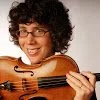
Gaelynn Lea “It Wasn’t Meant to be Perfect” Memoir, Music, Disability, and Connection: Transcript
This transcript is linked to the podcast, video and show notes with all the other important links!
Gaelynn Lea:
Oh, society's telling me this or my parents are telling me this, but that's not how I feel inside. So it doesn't mean that that outside view is true if I feel differently on the inside. And that's another thing about disabilities. A lot of people, you realize the way they see you does not match your inner experience of how you see yourself or how you see your place in the world. And just kind of recognizing that you can honor the version that you actually identify with and you don't have to take on society's messages. I think that's a really good part about the movie "Crip Camp". I thought they did that really well is kind of letting people finally define themselves for themselves.
Leah Roseman:
Hi, you’re listening to Conversations with Musicians, with Leah Roseman, which I hope inspires you through the personal stories of a fascinating diversity of musical guests.I’m delighted to welcome back Gaelynn Lea, the disability rights advocate, author, singer-songwriter, and fiddler. If you missed my first conversation with her last year it’s linked in the show notes. I really enjoyed reading her memoir “It Wasn’t Meant to be Perfect”, and if you haven’t ordered it yet we hope you will after listening to this episode. Gaelynn goes into some of the themes in the book and you’ll be hearing great stories that didn’t make it into the final edits. In fact, you’ll hear about the editing process and about her new book project as well! We start with the documentary “Crip Camp” which focuses on Judy Heumann and disability rights. You’ll also hear about Denis Huna and inclusive music making, the importance of ASL and other sign languages. We got into the importance of improving communication with medical professionals with people living with disabilities and also why Gaelynn chose to write about love, sexuality and marriage in her memoir. We also did a deep dive into motivating and encouraging music students. We’re including clips from 3 of Gaelynn’s music videos and the full videos on her YouTube are linked in the show notes. You can watch the video on my YouTube or listen to the podcast, and I’ve also linked the transcript.It’s a joy to bring these inspiring episodes to you, and I do all the many jobs of research, production and publicity. Have a look at the show notes of this episode on my website, where you’ll find all the links, including different ways to support this podcast, and other episodes you’ll enjoy.
Hey, Gaelynn, thanks so much for joining me here again. So great to see you.
Gaelynn Lea:
Yeah, thanks for having me back. That was pretty fun, so I'm glad this worked out.
Leah Roseman:
I really, really enjoyed reading your memoir, "It Wasn't Meant To Be Perfect". I enjoyed the beginning, the middle, and the end, and I look forward to rereading it when I get my hard copy from my local bookstore very shortly.
Gaelynn Lea:
Oh, yay. I'm so glad you liked it. It's so weird to finally start sending it out in the world and then really soon to have it be out in the world.
Leah Roseman:
Yeah. I thought we could just start even just with the dedication, which is so beautiful. Do you actually want to read that instead of me? Do you have it handy?
Gaelynn Lea:
So the dedication of the book reads, "I dedicate this book to everyone who is working to build a more loving, beautiful, creative, just, and welcoming world for all. Never give up hope that a better future is possible."
Leah Roseman:
So great. Thanks for reading that.
Gaelynn Lea:
Yeah.
Leah Roseman:
And people will be able to access the audiobook as well with you reading it.
Gaelynn Lea:
Yeah. Yeah. On the 14th, same day as the book comes out, which is pretty exciting.
Leah Roseman:
So I thought we could talk ... I don't want to give away your book, obviously, so just touch on a few things and of course talk about disability rights and music and all the things. It might be cool to start with the attitude of your parents, the way your childhood bedroom was set up, which I found quite interesting how the differences caused great innovation.
Gaelynn Lea:
Yeah. Yeah. I remember writing about that when I was writing that part and I was like, "Is this even relevant?" But I forget that we all kind of go through life with our own lens and even just how my room was set up was specific to my body. So I didn't use my electric wheelchair in the house very much as a young kid, mostly just because, well, I've destroyed everything, first of all. And then second of all, it was just good for me to move around on my own physically. And so I had my whole room set up down low. So I had the bottom bunk of our bunk beds and I had stairs that I could crawl up to get into there. And then my favorite spot of the room was ... Well, and then I had lower shelves and the bottom dresser drawer and all that stuff.
And then the favorite part was this little bedroom nook. We had this weird corner at the bottom of the bunk bed that just was like an empty space. And so we put a bookshelf in there and I had a little low art table that I think is like a lap table usually for people who want to read in bed or whatever, but it was my perfect height. And I had a little lamp and books and stuff, and I would hang out behind this curtain. We had six people in my family, so there wasn't a lot of private space. So that was my little cozy nook. And then, yeah, and I would kind of get around like that all over the house. Even in our living room, we had a step that I would crawl up to get to the couch and stuff. And I don't think of it as weird because that's just how I grew up, but you forget that describing the world you live in is such a big part of writing a memoir because you realize nobody's got the exact perspective you do.
So if you're picturing something in your head and you realize it's not translatable, then you have to take time to explain it. So it's funny that that stood out to you because it was a part that I was like, "Is this even relevant to the overall story?" But it does demonstrate what growing up with a disability for me was like anyways.
Leah Roseman:
Yeah. And I found it quite chilling. Actually, somebody who's quite close to me told me how their child was born with a disability and the reaction of the doctors at the time and how the mom wasn't told anything and the dad was whisked away and it was like, yeah, not very good communication.
Gaelynn Lea:
One of the main themes of the book, it wasn't intentionally going to be anything about medical trauma or the medical system, really, because I really wrote it about just disability broadly and then music obviously tied in there, but it kept coming up. And so I obviously had to write it. And so I hope that people start to realize that when people describe medical trauma as a disabled person or as a person with chronic illness who didn't get their needs met or taken seriously, that this is not actually ... So unless you're like an ambulatory, non-chronically ill person without any disability. If you're like very typical, I think the medical system can work for you, but so many people fall outside of that range. And I think the misconception among medical professionals is that if you have a bad experience, it's the exception, not the rule. But I really believe that it's the rule, not the exception, because a lot of times disabled people aren't either valued or taken seriously or listened to. And all of those things are evident in different parts of the memoir where different things go wrong in the medical world. And I've had great doctors too, and I do talk about those as well. So it's not that every doctor is horrible at dealing with disability, but it's obviously not taught well enough. It is a pretty big part of my life story. And I think it's important to share because it's something we can fix.
Medical school doesn't have to teach the same thing 20 years from now about disability that it's teaching now. And I would really like to help push those narratives forward a little bit and change the way we talk about it in the medical industry and stop telling people like, "Oh, it's exception to the rule. It's too bad you had a bad experience." But usually that's not how it goes. When the reality is we have to do some real soul searching about how we approach disability in the medical world, because I think it's failing a lot of people.
Leah Roseman:
Now, this book is full of charming, funny stories, and it's a real page turner. So I don't want people to think it's all so serious because it's really not.
Gaelynn Lea:
Yeah.
Leah Roseman:
And maybe do you want to share a little bit about your parents' dinner theater, maybe some memories that aren't in the book or ... Yeah.
Gaelynn Lea:
Yeah. Well, I grew up in this world that used to drive me bonkers because we were always at the theater and it was such a big ... It's like, oh, the world was dominated by theater. But I looked back, even in my 20s, I realized that was a pretty cool way to grow up. So my parents started a dinner theater when I was 10. My mom was the spearhead, but they both did it together and they did three shows a year at this little theater that was upstairs in a shopping complex in the downtown area of Duluth. It was like maybe a hundred seat theater or something like that. And we lived there. I'm trying to think of my favorite memories. I mean, so basically we would go to rehearsals because it was cheaper than getting a babysitter. And so we would be at every ... My little brother and I in particular were at every single rehearsal until we were older.
And they would just kind of leave us unattended. So we would roam in the shopping center way past our bedtimes as little children and stuff, but they were attentive parents, by the way. But this was one instance where we had a lot of free rein. So I remember when I was learning French in seventh grade, my friend and I would go and shop in French to pretend that we were from France, which is so dumb because I was literally there every ... Everybody knew who I was and that I was not French. And I don't know why in my prepubescent brain or whatever, I thought that we were getting away with being mysterious, which we were not. And it was silly. But I spent a lot of time there and got to see theater from behind the scenes at a young age and be just kind of part of this weird little family unit that did all this stuff together.
It was really cool. I mean, went to all their plays, obviously, multiple times, ushered and everything, and it was just kind of neat to see how to create something from scratch. And maybe that is part of the reason I like being an entrepreneur now. I mean, a musician, yes, but I really like being self-employed specifically. And I think part of it is because I got to watch my parents do this thing, build something that didn't exist before and put it on and have other people come enjoy themselves. And it's a big part of how I grew up.
Leah Roseman:
It strikes me, Gaelynn, that story about you and your friend pretending you were French. I mean, you were kind of mirroring the theater happening upstairs because you were playing a role and also you were improvising and you're known as an improviser, right? Yeah,
Gaelynn Lea:
Actually that's a good point. I mean, I loved French even as a little kid. I don't know why I'm so obsessed with it, but the musicality of the language is so fun and just the different way that you put a sentence together. So yeah, I mean, there was some of that going on. I don't know if I ever connected it to music specifically before, but that's been a really big side interest. It's never been my main focus, but I really do love languages and especially French actually.
Leah Roseman:
Yeah. Well, speaking of languages, so you were exposed to deaf culture very young through Access Theater, which was a great opportunity, and your friend Jeff. So do you want to talk about that a little bit?
Gaelynn Lea:
Yeah. So when I was really young, and I think this is not typical of most of the United States, so I don't know why my town had some really cool things for disabled people and deaf people, but we had this thing called Access Theater, which was a community theater, but it was integrated. So usually about half the cast was disabled and the other half wasn't, but they had ASL interpretation at every show, but then they also made it open to deaf people to be in. So there was always interpreters at the practices too. And so one of the people that I met was named Jeff. He's still a mentor like an uncle kind of figure today for me, but he was maybe 40 and I was 10 or something. And he had gone deaf at the age of 20 from a surgery, but just suddenly he was deaf.
And so he lipread for 20 years. And when I met him, he was just learning ASL. And I mean, he met his future wife at work and she didn't believe that he was deaf because he was so good at lip reading. And it took her a while to even, because she never told her. And so he started gaining more pride, I think, in his identity and learning ASL. And so as he was learning, because I love languages, got pretty obsessed with ASL and tried real hard to learn through the interpreter, gave me a book and I would practice and work with him. And he taught me just kind of like, or showed me, not like intentionally taught me just the value of ASL and sign language. And so it comes back later in the book because in college we were able to advocate for a deaf studies minor at my university as college seniors, but I was part of a group that really pushed for it.
And it was eventually adopted, which is really cool. But I just know that there's people, unfortunately, tragically as I was editing the book, they cut the program, which just guts me. But it ran for 16 years, I think. And it was still popular. It's a funding thing, and I have secret plans to try to revive it someday, but at least I know that it was there for a really long time. And a lot of students learned ASL that wouldn't have been able to say that they were able to communicate with deaf people. And I just think it's important, which is, that's probably part of the reason that I have tried really hard to make captions part of all my live events on YouTube. And whenever I can possibly do it, I have captions in ASL at my show. It's just because meeting Jeff and getting to see the importance of communication, it should be a no-brainer, but it is not educated very well in our society. And so when you see it firsthand, I think it helps you to understand why it actually matters.
Leah Roseman:
Yes. Yes. That's very important to me. And I make sure all these interviews are properly captioned. I go through all the transcripts to make sure they're proper and I publish them to my blog and so that the YouTube doesn't have garbage captions because otherwise- Yeah,
Gaelynn Lea:
Because they do sometimes. I mean, technology's cool. And I would say for a Zoom call, if nobody requests ASL or captions, I'll do that because for Zoom it's relatively okay. But if you're trying to put out a podcast, I think it's really important and technically legally required in the US to have access for hearing and deaf and hard of hearing people, but a lot of people don't do it. And so I think it's really cool that you ... What made you interested in pursuing that or do you have a reason that you're invested in it yourself?
Leah Roseman:
Yeah. It's interesting you asked that. When I was a child, my mom gave me a book about Helen Keller that made a big impression on me, so I was always very interested in that. And then my mom actually, she worked, she ran, it was called the Developmental Center at the time. So it was for kids with different kinds of disabilities, and that was like 1974. And also in her work at the Children's Hospital, she was very interested and involved in the changes in legislation to allow for access. And then she became disabled towards the end of her life. And so it was always a conversation I had with my mom.
Gaelynn Lea:
That's really cool.
Leah Roseman:
Yeah. And ASL, I started learning kind of at the beginning of the pandemic and I found an online teacher who actually lives in the States. And so we've had this ongoing thing. I'm too shy to go to a deaf event in Ottawa, but one day I will get there. But yeah, I love ASL and I just find it so beautiful. And I just think if more ... I was disappointed to learn that there were so many regional sign languages all over the world that are completely unrelated because I thought, oh, I'm going to know this universal language, but of course it's not the case.
Gaelynn Lea:
No, yeah. It's not quite universal, but it is pretty awesome. I mean, I got to say, I'm glad to know that Canada has the same sign though, because I actually wasn't sure about that. I know when I go to England, I got to remember to say BSL and look for British sign language interpreters. So yeah, that's a big part of it.
Leah Roseman:
In Canada, in Quebec, French speakers have a different sign language and I don't know how related it is, but from what I remember, and you maybe know this history more, when they were developing ASL, the guy developing British sign language didn't want to help. And then there was a French guy who traveled to the state. So I think that's why some of the signs come from the French.
Gaelynn Lea:
Oh, that's interesting. It wouldn't surprise me because Gallaudet university has obviously got to be a French word. I don't know. I mean, you know more than me about this. That's interesting. I'm going to have to research it. The history of sign in -
Leah Roseman:
I'll fact check this part, and if I'm wrong, I'll leave this out of the interview.
Gaelynn Lea:
You're like, "Well, then we won't include it. " But yeah, that's interesting. Yeah. I mean, there's so much I don't know. So I definitely, I hope in the book, I don't think I am an expert in any ways in this. I just want to be an ally in sort of the way I do shows and the way I promote education and stuff, I don't personally actually ... I never got to take the minor that we made because I left. So that's a dream too, is to someday get back into sign because it's been a thing that I really wish that I knew. So it's cool that you're taking classes.
Leah Roseman:
Yeah.
Gaelynn Lea:
That's awesome.
Leah Roseman:
And I have to say, as a musician, I've always been terrified of losing my hearing. And I have hearing loss for sure after all these years of working professionally in music and some other things going on. So it kind of gives me a sense of solace to think, well, there's this beautiful deaf culture through signing that you can access. That's pretty neat.
Gaelynn Lea:
No, that's true. That's a good point. I have hearing loss too, and I have a hearing aid in my left ear when I perform. I don't usually wear it otherwise. But yeah, it's always a question because people with my disability, about half of them eventually lose pretty significant portion of hearing. So far, I mean, I'm 42, so it's pretty stable, but it is always a thing that you're like, "Well, there's a whole nother world." And that's the thing is adapting to the life you have right now is a good life skill if you're disabled, but also just for anyone. Yeah.
Leah Roseman:
Like a crowded loud bar. You can talk to your friends, right?
Gaelynn Lea:
Yeah. Yeah. Yeah. We went to a conference right after my senior year to talk about making the minor. And it was a deaf organization conference, so I don't remember exactly which one it was, but it was so interesting to just be the minority and everyone else was signing and it was really, really cool. And I was like, I wish I could experience this more often. So yeah, it's a whole other culture that I have a lot of respect for. And I think disability culture and deaf culture, they're not the same, but they're kind of aligned in a lot of principles and stuff. So I'm trying to myself learn more about it too.
Leah Roseman:
Well, before we get into more about disability culture, I'm going to include a video clip of the version of "I Wait" that you filmed in London with David Mehling on guitar and vocal harmony. So this is a song about disability rights. And what I'll do in the show notes, the three videos I'm going to excerpt, they're all on your YouTube channel, so those will be linked for people.
Gaelynn Lea:
Cool. That's awesome.
Leah Roseman:
So do you want to speak a little bit about the song and that performance?
Gaelynn Lea:
Yeah, so "I Wait" was a song I wrote in, I believe it was 2018. It was the year that they were really heavily ... We're here again, it feels very deja vu in a terrible way. Medicaid, which is the healthcare program in the US that covers most people with disabilities or a very large percentage of them. And they were talking about getting the system. And at the very last minute, Senator John McCain ended up voting against his party lines and it didn't end up happening, but it was getting a lot of coverage because Medicaid also covers families who are lower income and pregnant people, I believe, and infants and children and stuff. And so obviously all of those are important and it makes sense why people were covering that, but there wasn't a lot of coverage on how seriously impacted the disability community was going to be.
And it was very frustrating to kind of know. I mean, for me, for example, without Medicaid, my husband is right now my main caregiver. But before we were married and we both had separate jobs and we weren't on the road together and everything, I had personal care attendants who would help me get ready for work and help me get ready for bed and just do all the personal care stuff that I can't do myself. And that's the only program in America that covers that. So otherwise you're out of pocket. And so it's not like a some, oh, darn ... It's like either that or a nursing home. You know what I mean? And it's just really not a good idea for disabled people to take away support that not only allows them to live at home, but I mean, you can't have a job if you can't get ready for work.
It covers so many different situations, but it was really frustrating. So I wrote the song as this was happening, and then luckily a bunch of pretty radical disability advocates got arrested in their senator's offices and it started to get more coverage. And eventually the conversation slowly kind of started to turn, but it was feeling like we didn't have a seat at the table. And that's what "I Wait" is about, kind of the frustration. And yet, being mad is part of it. It's okay to be angry, but to get people to listen to you, you can't just be yelling. You have to make it work in the confines of a society you live in. And so that's sort of where the tension in that song comes from, I think, is this feeling of really being rightfully so angry and indignant, and yet knowing that somehow you have to still be operating in this world that isn't really that supportive of disabled people, and yet that can't be the whole story, you know what I mean?
For you. So that's what that song is about. And I played it with a full band on the album that was fun because it's almost got like a disco vibe on the album. And then the live version is more subdued and lots of layers and stuff. So yeah.
Leah Roseman:
Yeah. Not that subdued pretty strong.
Gaelynn Lea:
Well, yeah, I suppose. What's the word I'm looking for? It's a darker feel, I guess. The one on the album's got more energy. You're right. You're like, not really subdued. That's correct. (clip "I Wait", video linked in show notes)
Leah Roseman:
So from your book, I actually learned about Judy Heumann and just so inspiring. And then I went and watched "Crip Camp", which people should ... I've been telling everybody to watch this film. Actually, my friend said her son watched it in his high school class, which I was gratified to hear. That's great.
Gaelynn Lea:
Yeah.
Leah Roseman:
So Camp Jened didn't last for very long, but it just seemed like such a utopia and that this precious footage they have from the early '70s, it would've been a great documentary without that, but that really makes it, I think.
Gaelynn Lea:
Yeah. "Crip Camp" is ... I mean, I didn't expect ... I knew I was going to love it, of course, but I literally cried ... I'll probably cry now. I cried from the beginning to the end of the entire thing. So good. But I think part of it is they did a really good job of capturing the joy and youthfulness because of that footage, I think you're right, of these people and also kind of this awakening of like, "Oh, society's telling me this or my parents are telling me this, but that's not how I feel inside." So it doesn't mean that that outside view is true if I feel differently on the inside. And that's another thing about disabilities. A lot of people, you realize the way they see you does not match your inner experience of how you see yourself or how you see your place in the world and just kind of recognizing that you can honor the version that you actually identify with and you don't have to take on society's messages.
I think that's a really good part about the movie Crip Camp. I thought they did that really well, is kind of letting people finally define themselves for themselves. And then to me, the beauty of that movie is just how cool the 504 Sit-in movement was and how just super supported it was from all these different directions and just intersectional as they could make it at the time. I mean, I think we're continuing to make progress on that front, but I mean, considering where and when, and the fact that it was clearly inspired by the civil rights movement and Black Panthers were there. There's just so many cool ... I watched it and I thought, why didn't I learn about this in high school? So I'm really glad to hear actually that it's being shown in classrooms because I think that would've been a game changer.
As a kid growing up with a disability or as any kid just in a school system to recognize that disabled people were the main movers and shakers of them getting rights. It wasn't like a charity case that came in and told them that they needed to stand up for themselves. It was very self-led, which is really, really cool. So I thought that movie was great. And I'm really grateful that I got to know just a little bit, I mean, in a small way, Judy in her adult life, because she was awesome. And we owe a lot to her in America. And I think around the world, honestly, she did a lot for disability rights.
Leah Roseman:
Yeah. Really inspiring. And there's some wonderful stories about her in your book, which people need to read if they haven't already. Also, in Crip Camp, there's archival footage of Ed Roberts, who's ... I was interested to learn about him. So he was the founder of the Center for Independent Living.
Gaelynn Lea:
Yeah. Yeah. I think they told him he couldn't go to school because he needed a lot of care. And then he ended up fighting and he was able to attend ... You should double check this part, but he was kind of one of the first disabled students who needed accommodations who made it through the school, the college system, and then went on to form this Independent Living Center, which is sort of the model that we have today in a lot. I mean, it's a mandated thing in every state, which is really cool. Independent living centers are pretty awesome.
Leah Roseman:
Yeah. And I forget which person it was in that movie said he was told as a kid, you need to be outgoing because people aren't going to come up to you. Oh, I know. It was the guy, the sound engineer guy.
Gaelynn Lea:
Oh, Jim LeBrecht.
Leah Roseman:
Yeah.
Gaelynn Lea:
Yeah. Yeah. I mean, it's interesting because I think it's a bummer when parents have to give you that kind of messaging or whatever, but it probably did serve him well. I mean, my parents were both theater people, so I did not have a choice in being outgoing, but I do think you have to learn how to navigate or not have to, but it helps if you can. And it's a bummer that that's just the message he told himself. I think a lot of us with disabilities have different messages that we were either told or that we grew up to believe that we ... I think the push to do really, really well and excel to prove people that you are valuable is pretty prevalent. I mean, hopefully that's going to go down, right? But that push, I mean, in the same way that any minority or oppressed group, I think, feels this drive to push beyond what is expected of them sometimes, or that's a common thing anyways. I think that that's a message that I've still probably have to keep dismantling. And I know other people with disabilities, you end up carrying these messages that you're like, "Is this really actually useful or true?" Or you can be valuable just as you are without having to perform a certain way. But obviously in a society that's not educated about, again, I really think it comes down to education so much. The more kids learn about disability, the better they are at responding to it in their peers and the less the person with the disability has to pick up the slack. But when Jim was growing up, for sure, he had to find a way to navigate that system.
Leah Roseman:
Yeah. And you talk in the book also about founding RAMPD with Lachi, who's legally blind. And I saw that beautiful Lift Me Up video tribute to Judy that a bunch of you put together. It's really nice.
Gaelynn Lea:
Yeah. I was glad that while she asked me to be involved, she knew Judy really well. They lived both out on the East Coast and I think they saw each other quite a bit and talked a lot. So it was a really big loss when Judy passed away, not just for us, but for so many people. And so finding a way to honor that with music was pretty cool. And so I'm glad they made that and that I could be part of it.
Leah Roseman:
So one of the stories, I think it was one of not your first trip overseas, but when you played with Tabula Musica in Switzerland, Denis Huna, a violinist who's formed this orchestra with adaptive instruments and it's a truly integrated ensemble. So do you want to talk a little bit about that experience in meeting them?
Gaelynn Lea:
Yeah, that was a really monumental thing for me to see and be a part of. So I did a little bit of work with the State Department a couple times, and one of them was this event in Bern Switzerland with that orchestra. And I was like a guest artist. I had five songs that they had composed or arranged for a chamber orchestra and they learned the music and then I came out there and played with them. But what he did, he was a really good violinist. He went to Julliard and did all that. He was really exceptional, but he didn't want to do professional violining, and so he got interested in adaptive music. And so what he did for the people in that ensemble, he would make it work for whatever the disability or adaptation you needed. So there was a guy with autism who was, the noise was too much for him.
So he would have noise canceling headphones essentially on this guy but then pipe just a little bit of the orchestra sound into his ears so that he could hear the ensemble, but not feel overstimulated. My two favorite instruments, I had never seen adaptive instruments before this trip, which is kind of weird to think, but it's true. I hadn't been exposed yet. And so there was one called a Skoog, which is like a cube, and it's squishy and you squish on the sides, there's six sides or whatever, and when you push down, it makes a different note. So you know there's six notes that it can play basically. And so he created this way for people with Down syndrome who had limited dexterity and also they couldn't read sheet music in this particular program. I'm sure that some people with Down Syndrome can, but they couldn't.
And so he had these cards and he would be conducting with his hand and he would hold up a card with the color that they were supposed to play. He would write a score for them. He would put it into the music so that the six notes, wherever they were, were blending into the music and then he would put it down and then he'd pick up the different color card. I don't know how he was so coordinated, but it was awesome to see because I really don't think anyone in the audience probably even knew that it was happening because it was so seamless. And yet then these people who would not have been included in a traditional classical ensemble got to be integral parts. They were real parts that he made for them. And so that was really cool. And then there was a instrument called the Sound Beam, which is like, I don't like the theremin.
It's about the closest definition like it. But you put your hand different heights away from this little transducer and it raises and lowers the pitch. And he had a gentleman with cerebral palsy who did not have fine motor skills, but he obviously could do this. And so he wrote him a solo in the end and also had parts for him throughout the night. And it was just really cool to see because again, it's somebody that traditionally ... And I mean, same with me, right? Traditionally, a lot of music teachers would look at you and be like, "Well, maybe you can do choir." And then that's about as far as they get. Or in a lot of countries, including the US, I'm sure percussion is maybe about as imaginative as people get. And so I thought it was really cool to see these electronic instruments that maybe would seem scandalous to some classical artists being incorporated because it didn't change the overall sound, and yet it made it so much more welcoming and inclusive.
It was just such a cool thing. And I know that Denis isn't the only person to have ever done this sort of thing. It was just my introduction to that world and his attitude and just the respect. He was just a really, really cool person. So it was nice to be able to write about that memory. It meant a lot. And it kind of helped me recognize that disability adaptations and disability culture and disability in music have value above and beyond just like, oh, it's inclusive and end of story. It was a really cool event and I think it was because it was so inclusive, so the inclusivity made it more than it would've been otherwise. And I think that's something that maybe is you have to be there to see it kind of, but it was neat. And hopefully people in the book feel like they were there, so they know what I mean by the end of the chapter.
Leah Roseman:
Yeah. In the early days of the pandemic when we were all home, I was involved in this study and it was through people at Carleton University here in Ottawa. So actually both Jesse Stewart and Ellen Waterman were on this podcast and Jesse helped develop this adaptive musical instrument. So this program we did was actually, some of the first improvising I ever did with other people was with people with various disabilities and it was online.
Gaelynn Lea:
Cool.
Leah Roseman:
Yeah. It was very meaningful because everyone was, we were all isolated in our homes and it was a beautiful project that's
Gaelynn Lea:
So cool
Leah Roseman:
continued. I think they're doing more with it. Yeah.
Gaelynn Lea:
Yeah. I'm glad to see people just kind of branching out and just want to see it bust into the mainstream basically as their next step, right?
Leah Roseman:
Yeah. So we were talking about Crip Camp earlier, and that movie talks a lot about intimacy and sex and people expressing their feelings. And you also talk about this in your book.
Gaelynn Lea:
Yeah. I was like, well, it's a memoir and there's a few reasons I wanted to write about sexuality and one of them is just I think it's really misunderstood. My husband doesn't have a disability and I do, and I think that's misunderstood sometimes. And the story of medical trauma, I couldn't have told it without the sexuality part of it. I mean, it was all kind of intertwined. And I had, as you'll read in the book, I ended up having to get a hysterectomy at one point, and that has a whole lot of baggage in terms of eugenics and disability. And so there was just a lot of different things where, yeah, it's funny when you set out to write a book, I don't think you always know all the areas, but you're going to end up being like, "Well, I'm going to have to explain this." But I was glad to be able to talk about it. Sexuality is one of those areas where there's not a whole lot of discussion or if there is discussion, to me it feels a little voyeuristic a lot of the time. Not always. I'm not going to call anyone out because ... So I was like, I wanted to walk a fine line between owning the story and not giving away more detail than was necessary, but on the other hand, not ignoring the reality that people do have a lot of misconceptions about sexuality and marriage and just like all of raising children and all the things that come up. So hopefully it was dealt with in a way that felt like educational, but not like oversharing for no reason, if that makes sense. Do you have any specific questions about it? Because I'm curious, I mean, this has not come out yet.
I mean, the book will be out very shortly, but it's weird to know that all of a sudden a lot of people are going to be reading a book with very personal details.
Leah Roseman:
Well, your high school friend, Elliot, is that his real name?
Gaelynn Lea:
No, it's not his real name,
Leah Roseman:
Ok.
Gaelynn Lea:
Which I will not tell you. But yes, no, he read the chapter, which was cool and he was really totally fine with it. I was the one that changed his name because I just felt like it was for the best or whatever, I think he's the only changed name in the whole book. Yeah.
Leah Roseman:
And I'm assuming your husband, Paul, had to be on board with - You talk about how private and introverted he is, and I was thinking probably that's more of a contrast in your marriage even than your different ways of being in the world.
Gaelynn Lea:
Yeah, it is.
Leah Roseman:
Hi, just a really quick break from the episode. I wanted to let you know about some other episodes I’ve linked directly to this one in the show notes, with Ian Brennan, Gaelynn’s first episode with me, Kavisha Mazzella, Daniel Ramjattan, Jean Rohe, Chuck Copenace, Carla Patullo, Destiny Muhammad, and Darol Anger . In the show notes you’ll also find a link to sign up for my newsletter, where you’ll get exclusive information about upcoming guests, a link for my Ko-fi page to support this project directly, where you can buy me one coffee, or every month, and my podcast merchandise store with a design commissioned from artist Steffi Kelly. You can also review this podcast, share it with your friends, and follow on your podcast app, YouTube, and social media. All this helps spread the word! Thanks. Now back to my conversation with Gaelynn!
Gaelynn Lea:
Yeah, he read it and he really liked it, but you could tell it's funny because he did not read it until recently, very recently. He didn't want to, didn't want to, and then finally he did want to. And so he read it in a couple of days and he really liked it. But I think, I mean, the reason a lot of the marriage discussion is obviously centered on Paul, but a lot of the early sexuality stuff, he would not have wanted to put that in the book. And so that's another reason that Elliot was such a big part of the middle of the book is just because I did want to talk about it, but I wasn't going to violate Paul's desire to be private or whatever. But yeah, our introvert, extrovert thing and the fact that he always kind of was the dude who blended into the background.
And now together we're this unit that just by default, I mean, not just my career, because even before I was doing music like this publicly or whatever, it is kind of still a noticeable thing when one person has a disability and one doesn't. So he started standing out kind of by default and he had to kind of make peace with that or get comfortable with that, I think. Now it feels normal. But there was definitely a time where I'm sure that was kind of a big ask and I'm glad that he was able to do that because he is a lot more private than me.
Leah Roseman:
Yeah. I was just thinking, you have that official video of "The Long Way Around" with the visual artist, Lee Zimmerman. I want to ask you about that. So I was thinking when I saw that, I thought that's not Paul, but you have-
Gaelynn Lea:
No, it's not Paul. He didn't want to be in it. Yeah, it's so funny. And an actor playing Paul because he was like, "No, nope, nope, don't want to be in that. " But it's kind of funny because on Facebook, of course, and everywhere, social media, Instagram or whatever, he's in plenty of my pictures. So people recognize him sometimes, which is hilarious because that is not his usual MO. But he and I both really, really have enjoyed the traveling and meeting people. So he's not shy to the point of not wanting to get to know people. So we actually work really well together in that way. It was a big change that neither of us saw it coming, to be honest. So yeah, he's gone along with everything so gracefully, I think, considering that that wouldn't be probably the path that he would've imagined for himself on any planet.
Leah Roseman:
Well, in my first episode with you last year, we did include a short clip from your living room sessions version of The Long Way Around, which I think is one of my favorite songs of yours. So maybe we'll include a clip of this version because it's so beautiful.(clip "The Long Way Around", video linked in show notes)
Gaelynn Lea:
(singing lyrics) When two souls meet and the whole world feels new, shared moments sweet, all covers bright and true and there is laughter and there are good things growing...
Leah Roseman:
So this artist, Lee Zimmerman, do you know him personally? How did that happen?
Gaelynn Lea:
Yeah, I do know him personally. He's from Duluth, Minnesota, where I live, and I got to know him first because he does this really cool ... I don't think he does it as much anymore because it's a lot of work to set up, but he stretches silk on these big, huge eight, maybe like, I don't know, four by eight frames and he stands behind them and does silk painting. So you can't actually see him at all and all these colors just appear. And he did, and it's really gorgeous. And he usually has some twist at the end where a fountain becomes an angel or something cool. He was really, really good at it. And so he did a whole show with me and Alan Sparhawk as The Murder of Crows where we were off to the side and this whole beautiful visual kind of appeared.
I mean, it was really, really cool. I loved it. And so obviously we've only done that once. It was kind of a special night, but we've kept in touch ever since then. And he offered to get involved in that music video, which I thought was really cool because I think he's a great artist and he's really supportive of just music in general and visual arts. And then of my music in particular, he's been really, really cool person to keep in touch with. So his book club is reading the book as we speak.
Leah Roseman:
Nice. And back to this high school friend, Elliot, we'll call him Elliot. I found it very inspiring that he was encouraging you in these early jam fiddle jams when you were not sure what to do, that he said, "Just play open strings." And that kind of opened the door for you to be expressive in a simple way.
Gaelynn Lea:
Yeah. Yeah. I mean, I'm sure you can relate, although you stayed in the classical world, obviously, and I did not, because you do still play classically quite a bit, don't you?
Leah Roseman:
At the moment, I'm still working full-time as an orchestra musician.
Gaelynn Lea:
That's what I thought.
Leah Roseman:
But I do do free improv and I have a group Collected Strands, so we have-
Gaelynn Lea:
Yeah. So you do lots of things, which is really neat that you've branched into these other areas. But at least in my high school days, I felt like music was very high pressure. Classical music especially, everything has to be perfect and you have to master a piece and you have to be able to play it again and again, right.And then there was the whole issue which I wrote about in the book of chairs and where were you ranked in your orchestra? And I thrived in a weird way in that environment. I am a go- getter, so it was motivational, but I hadn't realized the trade-off until I got exposed to fiddle music. Because yes, I was comfortable in that world of competition and super striving for everything, but it kind of did squish some joy and it added a lot of fear and a fear I didn't even know I had until I was watching people jam and be like, "Oh, they're not feeling really tense about this music. They're just having fun." And so the idea of improvising was terrifying. And it's cool that you do it too. Now, some people don't know what that feels like. So it's an interesting thing when you meet someone who never improvises, it's a little hard to talk about.
But for me, it was just trusting your ear and just also not knowing what came next and the whole idea of it doesn't have to be perfect. You can make a mistake and keep going on the song. And there's just a lot of baggage that I didn't realize I had been carrying, was exposed through fiddle music, but then it also released a whole well of creativity. However, unlike some people that I have met, I don't hate classical music. I appreciate that to me it kind of felt like doing a math problem or something. It was clearly good for my brain because at the end of practicing, my head would hurt at the top, right here or whatever. So it's a good skill, but balancing it with a little bit of perspective of perfectionism the aim necessarily and that everybody has access to music and you don't have to be a virtuoso.
So to be valuable as a musician, there's a lot of messages that I wish I had received a lot earlier that would've probably helped to undo some of the anxiety that I brought in. I mean, even my first recording, all that anxiety came back, I played with our symphony in 2017, and lo and behold, there it was again the like, "Oh, I'm not good enough to play with these people. " I had to do a duet, I had to. She was amazing. She's so nice. That's the thing with the first chair, we did a fiddle trade-off and she was so nice, but I couldn't believe that those messages were kind of still there latently. So I don't know how you correct that. I mean, I do know how, but I'm probably not going to be the person that revolutionizes the way they teach classical. And maybe it's changed.
I mean, I haven't played classically in a long time. Has it gotten better?
Leah Roseman:
I don't think so.
Gaelynn Lea:
Okay. Darn. Okay. That's too bad, which I think can be a barrier to be totally frank with disability inclusion. I was never, as I think I made it clear, I had one teacher or one musical director, I guess, who was not very encouraging and didn't see a lot of future for me. And it was definitely because of my disability. And so it's like looking outside the box, you have cool people like Denis Huna doing amazing things, but a lot of the typical classical world, either you feel like you have to be 7,000 times better. So I know some classical musicians with disabilities that just work so hard. And again, they can and they should if they want to, but you wonder if they feel some of the pressure because they have to prove themselves in an industry that's not very, that really values conformity and uniformity and a certain ideal of perfection that I think unfortunately, sure, it can sound good, but it also really limits who feels welcome to participate. And that's kind of a big problem, I think, of classical music, no offense to the music itself, but
There is some structural problems. And I'm sure it's not just disabled people who feel that way. I'm sure there's other minorities and groups that feel the same kind of pressure to conform or something that maybe isn't very healthy, but I don't know. So I mean, I haven't done classical in a long time and I've always thought, wouldn't it be fun? And I think I still will someday take lessons again just for fun because the music is really cool, but then there's all these other ... I don't think I'll ever go into an orchestra. I'd be surprised. You never say never, but yeah.
Leah Roseman:
So actually let's talk about your teaching because it might be interesting for people that you play violin differently than most people, but you teach people who play in the usual setup.
Gaelynn Lea:
Yeah. So I taught for three years. I don't teach right now, but maybe someday. I mean, I always leave it open. When we decided to tour, I was like, "I don't want to try to juggle." I mean, I know there was Zoom lessons, but man, that felt overwhelming. So I taught for three years and because I had a good friend that kind of introduced the idea, "Why don't you think about teaching?" I never would've thought of it otherwise. I really don't think I would've. But I kind of at the very beginning, if they were brand new beginners, never held a violin, I had pictures in some fiddle books that I had found and a bow hold closeup and I could kind of approximate it, but I couldn't do it exactly the same way. And then sometimes there were videos, usually it was pictures for the most part. And then I invented, not invented, but devised this color and number system for the very beginner beginners with their four tapes or whatever, and then worked on bow hold more by talking and using them as the demonstration than me saying, "Copy what I do."And so I was able to teach that way. And then if they weren't brand new beginners, I kind of learned on the job of what made bowing sound good and bad from their perspective, because I know mine, but there is something to be said by the direction your elbow goes. It's not something I'm ... We're just doing it so differently that some of it was trial and error at the beginning. But that's why I taught Celtic fiddle on purpose because I didn't want to do classical because I don't know if the methods I was teaching really conformed. I mean, they were loose approximations to classical technique probably, but I didn't want to claim to be some person that you could go and then join an orchestra. But I had a lot of fun because it was so many different ages, like six to 65, basically all over the map, different reasons people wanted to do it.
And a lot of them still play today. I rehoused them all with different teachers, but I mean, almost all of them still play, which is really, really cool because it's something that I just don't quit. That's basically my motto is like, do not quit. I do not care if you practice. I mean, I did care. But as you will see in the book, I really tried to make it like even if you just play at your lessons and you don't put it in a closet for 10 years, you're making progress in a way that you won't if you decide you don't have time for this and put it away forever.
Leah Roseman:
I love that, that you wrote about that.
Gaelynn Lea:
Okay, cool.
Leah Roseman:
I've been teaching for over 30 years and I have the quote here, you said, "Don't make practicing a power struggle or barrier and never suggest anyone quit." And I thought, that is great. I wish more teachers had that attitude.
Gaelynn Lea:
That's cool to hear because again, as someone who kind of was winging it, learning, if I ever taught again, I think I'd like to take a training on how to teach. I mean, I obviously did it, but it was very, I'm not a classical musician and there's a lot of things I felt like, wish I knew a little bit better how to talk about this, but we made it through. And the whole point for me was really keeping people engaged and enjoying it so that they would just keep doing it. Because you don't know when someone's going to have that little spark come alive and then they just practice all the time because they love it. You have to get to that point. I don't know anyone, I mean, it's certainly not myself that was instantly like, "I love this. I want to practice every night." That's not how it went for me.
And you kind of have to get to a certain point of proficiency or a music genre that you like. There has to be something that sparks that real interest when it turns into a passion, and you just got to get them to that point. And if they quit before then, they're never going to keep going. So that's always kind of been my goal. But I'm glad to hear another teacher not rip the book up at that point because I was like, "This is very much just my philosophy and I don't know. " But if somebody had told me to quit, that would have ... I mean, I feel like disability really is universal, right? So if you're not going to tell disabled people that they can't do it, if you're going to encourage them, you should also be encouraging kids without disabilities to keep going and to try what works.
Leah Roseman:
It is about goals too. I mean, certainly ... Yeah. So I mean, people have to realize where they want to go and why they're doing it and maybe keep having these conversations. But the traditional idea that you prepare, it's almost like a performance for the lesson and then you prepare material, you perform it for your teacher, they critique you. And I've talked to many, certainly older colleagues that would just send people home if they hadn't prepared, right? As opposed to let's place and duets, let's give you some strategies to, why are you feeling overwhelmed? But with this, there's so many things we can do as teachers, I think.
Gaelynn Lea:
Yeah. And to me, it's like music is one of those really special things, but it's like a direct connection to creativity. And it's like, I think if you're not really, really careful to foster that in someone, you can just shut it down and then they miss out on so much. I had a friend, luckily, who has gotten involved in other ways through music, but she majored in flute and never touched her flute again because it was so stressful and she was done. And I'm like, oh crap. What teacher wants to be ... I mean, maybe some of them do, but I don't want to be the teacher that was like, "I made that soul wrenching that they put away their instrument and never touched it again." And maybe teachers don't think they have that much influence. I have to wonder that because I doubt it's malicious usually when a teacher says something like, "Go home then because this is a waste of your time or whatever." But people, especially when you're opening yourself up to lessons and to learning from someone, you're very, very vulnerable.
And so you got a lot of power as a music teacher. And so to not be gentle in the way you use it or at least nurturing or explaining your reasoning even. I know there's more than one approach, but I think maybe some music teachers have underestimated how damaging their messages can be and how that lasts forever. I literally had a student in her 60s
Be like, "I never did music because my music teacher in elementary school told me I couldn't carry a tune. That was it. And then later in her 60s, she was like, "Maybe I should explore that messaging and not let it stop me. " But dude, she missed out on 55 years of music, which is so sad. So yeah, I'm glad that you saw what I was going for there because it's not just disabled kids that get shut down. Obviously we do, but it's definitely also any kid who's got a teacher that doesn't use that power wisely, in my opinion.
Leah Roseman:
Yeah. And you also wrote music as a fundamental tool for human expression, which you just talked about. We all need these expressive outlets, these creative outlets.
Gaelynn Lea:
And it doesn't have to be professional and it doesn't even have to be good. It really just is there to help us process the world. And some of my favorite fiddle students never performed for anyone. They wouldn't even do their recitals. Some of them would. I really tried to get them to do the recital because they were pretty low key affairs, but some people absolutely did not want to do it and I'm not going to force them to ... Again, it's not a power struggle. It doesn't have to be anyways.
Leah Roseman:
So in terms of you talked quite a bit, we talked last time too about the challenges of touring and problems with accessibility. You're doing a book tour now and coming into May, I believe, as well. So if you made sure all the venues are fully accessible for you and the audience?
Gaelynn Lea:
Yes. So for this book tour, it was really important to me. I remember waking up in the middle of the night actually and being like, "Holy cow, I got to get ASL at all these shows." Because it's not automatically built in, unfortunately, to most venues. So ASL and wheelchair accessibility are just not the norm. And so for this book tour, I was lucky that the events planner, publicity person, Marisol, she's really great at Hashet was totally on board. So every venue she reached out to, she actually is the one for this tour that got all the specs and we would talk about them and make sure that the venues were accessible. And then I'm hiring all the ASL people right now, basically, actually, so that all the shows are accessible that way. But I think it's one of those things that the only reason it feels like extra work is just because it's not something people are used to doing, but it's not actually that hard.
There's a short list of questions of this is what we need and sometimes there's some follow up, but if the venue is open to being a welcoming space, a lot of times they do meet the requirements or they're willing to rent a ramp or whatever it is that they need to do. So yeah, I was lucky that the book publishing company did recognize that was an important thing to me and were eager to make sure that the shows felt really welcoming.
Leah Roseman:
That's great. I meant to talk about ... Oh yeah. There's a third video I wanted to include a clip of Lost in the Woods, your official music video, which is so fun.(clip "Lost in the Woods", video linked in show notes)
It's also on your album, learning how to stay. And I was thinking this video has well over 300,000 views, which is great, but financial challenges, right? Like you really laid it out in the book how hard it is to make it as an independent musician.
Gaelynn Lea:
Yes. YouTube is not my primary income stream. Yeah. So that music video was done by a really cool company out in Fort Collins, Colorado. I don't think they're together anymore, but it was this pair that were just really great to work with. They had a really reasonable price. I had some friends out there, Kalyn Heffernan. The other person in a wheelchair with the blonde hair is a rapper actually from a trio called Wheelchair Sports Camp that I love. So it was really special that she was in the video with me and stuff. And so that was a really highlight moment. And then to see it get a lot of views was really neat. That happened during the pandemic, and I don't even know what sparked it, to be honest. All of a sudden I was like, holy cow, how did that get 300,000 views? But the reality of being an independent musician is that you are really working hard to make your income.
Whether or not you have a disability, it is a challenging career choice in terms of attendance, especially if you don't have a booking agency that's got contacts, that has venues that are reputable and will actually work to promote the shows. A lot of venues, the ones that you don't want to book all your shows that are the ones that barely put it on their website, you kind of get all over the board. And a lot of it's like you being organized to promote them and make sure people know. But it's a fun challenge, but it's not a walk in the park. And then with the added accessibility, I mean, it got harder when I decided to just start playing accessible venues because part of the issue with not talking about disability and accessibility enough in our societies, a lot of people don't really know what you mean.
So there would be some things like, "Oh yeah, we have a ramp." And then I would get there and it would be practical, like a 70 degree angle. You know what I mean? Really unsafe for a snowmobile or something. And so having to understand, okay, I got to be really specific and I got to follow up and I got to make sure that everyone's on the same page. It's just more work behind the scenes. However, I will tell anyone that is on the fence, do I put this kind of time into it? It is really cool when you see an audience of all different types of people. It's worth it because there are shows where I'll look out and my music is kind of weird in that there's not one age group that tends to like it. So it's pretty diverse in age and race and gender.
And then you add in people with different kinds of disabilities and you make the show accessible and suddenly someone's using the ASL. It's a really positive feeling to be at a show like that. And so I maybe didn't emphasize that enough in the book because it is a lot of work and it shouldn't be this much work because then you should just be accessible at this point in 2026. But when you do put in the effort and it works and people come and it's just like the energy in the room is really good. So it's totally worth it. And I want to see more people kind of experience that. Sort of the same feeling that I had at Tabula Musica with that integrated orchestra, that's how a lot of my show, like the energy in the room is really cool when you make it welcoming because not only are there more people of different abilities and disabilities and communication, and not only are there just more people like that, but everybody knows that they're wanted there.
Do you know what I mean? It's not even really tangible, but it's like, I think everybody knows that they're been meant to be there. And I think that's something that is underestimated when you make it welcoming, the whole room feels better.
Leah Roseman:
Yeah. And you opened the book with such a beautifully written piece on the joy of creating music for people and the joy of performing. It's really, really gorgeous. And I remarked that one of your early reviews was from Ian Brennan, who I now know because he's been on my podcast and he's coming again for part two. Oh yeah, he is. Have you met him in person or?
Gaelynn Lea:
Ian, apparently. So I have not yet met Ian in person. We have done a lot of communication over email. He's in the recording academy, and so am I in the States and he is really invested in world music, but also amplifying music that just doesn't get enough attention, which includes disabled and deaf artists. And so he kind of reached out that way and he's just kind of a cool ally person. He's really neat. I mean, well, you already interviewed him. He does all these field recordings and I just think he's really cool. I hope I do get to meet him. He lives in Italy, so we don't live near each other or anything.
Leah Roseman:
But you knew about his sister, Jane?
Gaelynn Lea:
I did after we started to get to know each other more and it became a little more evident that he was actually personally connected to the disability experience. What I didn't know until more recently is that he met Judy Heumann as well, which I think is really cool. So the last time we talked, it was a really nice conversation. And then he's always pitching stories. So he's interviewed me a few times for different freelance articles and stuff, but he's cool. I really, I'm glad I know him. I wish I knew him in person, but he is a neat person. I'm really glad you're connected to him.
Leah Roseman:
Yeah, I think he's doing such important work. So when we were just chatting before we started recording and you mentioned, I think I saw that you'd put this on Substack that you started a Zumba class.
Gaelynn Lea:
Yep. Yes. I really like dancing and I knew that. I took ... Actually, what didn't make it in the book is kind of sad. I wish that it was a little overword count and something had to go and I kept access theater basically instead of this. But when I was a little girl, I loved dancing and there was this respite worker who would come once a month and take care of me and my little brother so my parents could go do something, or usually we would go to her house actually. But when I was very little, I told her I wanted to do ballet. I wanted to be a ballerina. And so she's like, "Well, then you'll have to take classes." And she took it upon herself to make a ballet class in Duluth that was taught by the lead ballerina and the Minnesota ballet.
I don't understand because I was very, very young, but she was just like, "Nope, you need to have a class for disabled kids now." And they did it and it's still going. I mean, it's been like 30 years. So that's pretty amazing that she spearheaded that. And so I took ballet for five or six years as a kid and then she started a gymnastics class. I mean, she didn't teach them, but she pushed them into doing it. So I took gymnastics for a while. And then I kind of just thought I hated working out after that. And I forgot I actually liked to dance. So for some reason, Zumba piqued my interest and I love it now. I'm pretty obsessed actually. So yes, I'm going to keep doing that.
Leah Roseman:
Fun.
Gaelynn Lea:
Yeah.
Leah Roseman:
So how about your next book?
Gaelynn Lea:
That is a great question. I actually do have a thing I would like to write. So I named my Substack Creative Living for Everybody because of this idea that I ... So I don't know if you've ever seen, I did a TED Talk on enrichment back in the day and this idea that disabled people very, very frequently, and I think older people too, so not just disabled people, but get left out of the wellness and personal development sphere. Or if it is brought up, it's usually in the most horrendous context. Thank goodness you're not disabled. You know what I mean? Very negative messaging. And even in spirituality texts,
It's not good the way disability is addressed. And it's as somebody who really has benefited a lot personally from reading those kind of books and yet at the same time wants to chuck them against the wall sometimes. I feel like there's just not a big understanding of what it means to simultaneously accept your body and your disability and honor that, and yet still want to strive to be the whole well person that you can and creatively fulfilled and pursuing what you want without maybe such a capitalist or drive success model. There is something else. And I would like to write that book. So I want to write a book that's sort of holistic creative living for people with disabilities. And to me, it kind of includes universal concepts of spirituality and stuff because I think one of the things that's helped me a lot is this idea of, I mean, at the end of the day, being kind and loving and welcoming is the only path that's really going to get us to where we want to go.
And so to me, spirituality is a big part of my framework, but I don't think it has to be exclusive to one religion or anything. So it would be a book that kind of rolls wellness and psychology and spirituality and creativity into one, but it would be for disabled people or older people or anyone who just kind of feels like I'm not served by the mainstream idea of what being successful looks like.
Leah Roseman:
That's beautiful. It's a great place to end this, but I was thinking, you mentioned the word count, and I mean, I would've been so happy if your book had been longer your memoir, but I understand that the editors know what they're doing.
Gaelynn Lea:
I know. It was 126,000 words when I started editing and they wanted it under 80 and I got it to 89. And so sometimes I'm like, did I maybe shouldn't have cut that story about ballet? And maybe I shouldn't have. However, what I do like about the editing process and what I was grateful for is that everything in there now has a point. And many of them kind of reflect the later chapters, reflect the earlier chapters. And I feel like it feels pretty balanced. And so as much as it was sort of painful, and I'm really happy to hear that you weren't like, "Thank goodness this book is over," because that's what I did not want to have happen. I think the edits that I made did hopefully make it feel more like a painting or like something that was meant to be there instead of just me rambling on.
I mean, there were like seven versions by the end. It was so many edits. I can't even, I'm kind of glad I didn't know what I was getting into because it was extreme. It's an extreme process to write a book. I feel like this time I'll be better prepared, but I did not know. Have you written a book or anything?
Leah Roseman:
No, I have not. Okay. It
Gaelynn Lea:
Is crazy. Yes. Yeah.
Leah Roseman:
My sister has worked as an editor and she had told me about the numbers of drafts that was considered normal. And yeah, I think if it's going to be a well-crafted piece of writing, it needs that process. And it's such a beautiful book. And like I said, I'm looking forward to reading it again when I get the hard copy.
Gaelynn Lea:
Well, and I will tell you that the thing that I was most surprised by, and I don't know if we talked about this in the last one, but the same creative energy that I get performing, I occasionally was able to access in writing. And so it kind of reaffirmed the belief that we all have this access to creativity and you poke through sometimes and you get to access it, but it's always there. And I was surprised to find it in writing at all because I really thought they would feel different. But especially, so the book ends, the very last chapter kind of comes full circle with talking about Judy and her impact when she passed away. And I hadn't figured out how I was going to end the book yet. I remember thinking, well, maybe I'll end it on Macbeth on Broadway and on opening night or something.
And then all of a sudden I remember the night I was sitting, kind of just sitting in my chair writing and all of a sudden it was like it was a weird goosebumpy moment, which is really how it feels when you write a song usually. And it was weird to be like, "Oh, that's how I'm going to end the book." And it felt very otherworldly, which is how I feel about songwriting and sometimes performing. The energy is not the same energy that you walk through your day with. It's a heightened energy, I think. And that was cool to find that in writing when I didn't really expect to feel that way.
Leah Roseman:
So the actual publication date is ...
Gaelynn Lea:
It's the 14th of April in the US and Canada, and then the 30th of April in the UK and Ireland, and then June 14th ... Or no, it's June 16th in Australia. So I'm excited. It's going to be in a few different countries.
Leah Roseman:
Okay. So since this podcast has listeners in all those places, people can certainly pre-order the book, which is good.
Gaelynn Lea:
Yeah, super ideal. If you want to pre-order, it really helps apparently. I'm learning about the publishing industry as I go. And the best place to find the pre-order links for the other countries especially is I have a Linktree. It's kind of like in the profiles of all my social media and it's also on my website where it says more links. It's right on the top of there.
Leah Roseman:
I will link your link tree in the show notes.
Gaelynn Lea:
Yeah, that'd be awesome because it is a little confusing because they're not all from the same ... They all have their own ordering place or whatever, but they are going to be available in all those countries, which is really fun.
Leah Roseman:
Wonderful. Well, congratulations.
Gaelynn Lea:
Thank you so much. And thanks for chatting with me. This is really fun. I'm super excited and I appreciate you taking the time to talk to me again.
Leah Roseman:
My pleasure. I hope you enjoyed this episode. Keep in mind, I've also linked directly several episodes you'll find interesting in the show notes of this one. Please do share this with your friends and check out episodes you may have missed at Leahroseman.com. If you could buy me a coffee to support this series, that would be wonderful. I'm an independent podcaster and I really do need the help of my listeners. All the links are in the show notes. The podcast theme music was written by Nick Kold. Have a wonderful week.