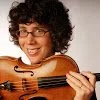
Scott Nygaard: Acoustic Guitar, Peghead Nation and a Lifetime in Music
This link takes you to the podcast and video versions of this episode and the show notes. The transcript is below.
Scott Nygaard:
Part of my idea was going to camps, you see these people who come to these music camps over and over every year, maybe they go to one camp. They come back every year and they may play a different instrument or take different classes. So I wanted the setups sort of for those people who had like one week a year of this musical experience so that Peghead Nation was kind of like that, was sort of at that level. You could jump from class to class if you wanted to take different kinds of courses or different instruments, things like that.
Leah Roseman:
Hi, you’re listening to Conversations with Musicians, with Leah Roseman, which I hope inspires you through the personal stories of a fascinating diversity of musical guests. You may know Scott Nygaard from his career as a guitarist in the bluegrass and acoustic scene for more than 30 years, his work as former editor and writer with Acoustic Guitar Magazine, or as one of the co-founders of Peghead Nation. You may not know his novel Evergreen, based on his transformative first year at Evergreen College in 1973. I love a coming of age story, and this is very much a tale musical growth and about the loss of innocence during a time of societal changes . We also explore Scott’s most recent album, Flown South which was recorded after a serious accident, when Scott had to relearn to play guitar. You’ll also be hearing music from his wonderful album Rosco with the Swedish guitarist Roger Tollroth, best known as a founding member of Väsen. Another collaboration you’ll be hearing about is Crow Molly, which features mandolinist Joe K. Walsh (a previous guest of this podcast). Scott shared his experiences recording with Chris Thile, touring with Joan Baez, and his move to Chile. I really enjoyed this opportunity to hear Scott’s wise observations on what really matters in a creative and connected life well-lived. All the music you’ll hear is linked in the show notes and the track names are listed in the time stamps. You can watch the video on my YouTube or listen to the podcast, and I’ve also linked the transcript.It’s a joy to bring these inspiring episodes to you, and I do all the many jobs of research, production and publicity. Have a look at the show notes of this episode on my website, where you’ll find all the links, including different ways to support this podcast, and other episodes you’ll enjoy!
Scott, thanks so much for joining me here today.
Scott Nygaard:
Oh, thanks for having me. This is a treat.
Leah Roseman:
I read your novel, Evergreen. So I'd love to talk about it, although there's so much to talk about, I'll have to manage it. So first of all, people should know that they can access it on your Substack because the publishing industry is kind of a hard thing, right?
Scott Nygaard:
Yeah. I wrote it and I made a little bit of an attempt to find an agent, which is what you have to do. But at 70 years old, or well, I guess I was 68 when I finally published it. And after a life in the music business, I was not about to try and start a whole new career in a completely different business. And then Substack came along and I realized I actually started a Substack and wrote some things about music and things and I realized, oh, I could publish this sort of serially almost, which kind of appealed to me in a way too.
Leah Roseman:
Yeah. I mean, in the 19th century, that was very common, right? People would-
Scott Nygaard:
Right, right.
Leah Roseman:
Yeah. Well, I did enjoy it. I love a coming of age story and it's coming of age on so many different levels, particularly musically actually.
Scott Nygaard:
Right. I think that was the main inspiration, although there were a couple other things that popped in. I got the idea. I started the book, I'd been writing some short stories and poetry and I'd actually finished another novel and I started with just the first, what ended up being the first chapter. I wrote about half of the first chapter and that sort of set the scene. And as I was thinking about it, I had this idea, it's a coming of age novel, it's a sort of loss of innocence novel. And then I had this idea of incorporating Watergate as sort of a loss of innocence for the country politically in a way. And then Ted Bundy, and there's a personal connection in the novel with Ted Bundy, and not me personally, but there's a connection. We can get into that if you want, but it also sort of seemed like maybe a little bit of a loss of innocence as he was maybe like the first kind of famous serial killer, that sort of just lurking danger that seemed to appear.
For instance, in the novel, I and my friends get around from by hitchhiking a lot by the end of, maybe by two years later, we weren't doing that anymore because of just that sort of general fear of those other possibilities.
Leah Roseman:
Yeah. Yeah. When I was reading it, I was disturbed that these chapters kept popping up with this character, Ted, and then I realized who it was. Yeah. So yeah, disturbing, but people should ... No, so this isn't semi-autobiographical novel or inspired from your life, but it's not a memoir.
Scott Nygaard:
It's not a memoir. As I mentioned in the intro, a memoir of that year would be much less interesting. My actual life was spent practicing and reading and all those things that you do in your life, but it is based on a lot of events and a lot of things that happened actually did happen. And I was lucky enough to find an online archive of all the Evergreen State College newspapers. So I quoted some things about things that happened, and I had this whole kind of outline of an entire year chronicled and for me to draw some events from that I probably wouldn't have thought of otherwise. And I did try and make things as sort of true to life, for instance, like what movie I would have seen in Vancouver BC in October of 1973, even though I couldn't remember. And I did make up a lot of things.
And the characters, the main character is based on me and then a lot of the other characters are based on real people, but it's all fictionalized and there are some fictionalized total made up characters as well.
Leah Roseman:
Yeah. And before we get into the music, I was just curious, the Matt Groening, so he was at Evergreen with you?
Scott Nygaard:
Yeah, he was. I didn't know him. Of course, he started writing for the paper and he was ... And I used a bit that he wrote in that book.
Leah Roseman:
Okay. So I was curious in terms of the racist origins of old time and bluegrass that that character's becoming aware of it and people weren't talking about that back then.
Scott Nygaard:
No, and they're starting to talk about it now, but even I tried to talk about it a little with my friends about, well, let's say 2016 or thereabouts, and people did not want to talk about it. I wanted to present this sort of thing. Did it ever occur to you that we mostly play music for white people and made by white people? And is this as kind of liberal people does this ever bother you? And people just like they hadn't thought of it. But I went away to Evergreen in my first year of college and I had just become interested in bluegrass. I just really started playing the guitar about a year before and I was going to Doc Watson concerts. I was learning all this old time music and I went home for Christmas and I was telling my father about it and he said, "Why would you want to play the music of Southern racists?" And I kind of made up something like, "Well, they're not all racists." I mean, I hadn't dealt with this at all, but the year before I'd gone to a majority black high school, basically in the ghetto and for that one year, and I had been really interested in politics, civil rights, the Watts riots happened about five, six miles from my home when I was 10 years old.
I mean, it wasn't something way over there. It was near and my parents were always very, very liberal civil rights supporters. And I had written some ... I wrote a report in my last year of high school on the Black Panther Party, researched that and read a lot. And so then to go from that to playing this music that was by all, as far as I knew, and at the time, the music that I was hearing was all white Southerners. I didn't really know ... It wasn't a strong part of that year for me, really, but a lot of these things I kind of incorporated in that year that had happened maybe a little bit later.
And for me, a lot of it was the knowledge that a lot of this did come from Black musicians was not really talked about back then. I started thinking about it in terms of some of the fiddle music I was learning that was very syncopated in a way that they tell you, "Well, this music is from Scotland, Ireland, traditional music, but it's like if you start then learning about Irish traditional music, you realize these rhythms don't exist in Irish and Scottish music." And then that sort of piqued my interest to some degree. And I remember thinking about the fact that you sort of read some things about the Antebellum South, that the slaves would have obviously been playing the music of that their owners wanted them to play. And it could have easily been, "Well, these are some of the melodies that we know from Scotland, Ireland," and then the slaves were playing it and then sort of incorporating their own influence.
Rhiannon Giddens has looked at this a lot recently from the banjo side of it, and I don't play the banjo, so it wouldn't have really occurred to me. But I had thought about this in terms of just the rhythmic aspect of Southern Appalachian old time music. I mean, not all what we call old time fiddle music has those rhythms. And the other thing I thought about was the blue notes, the slides, the kind of thirds and seventh sometimes that are like a little bit in between a flattened seventh or flatted third and a major third. They have that untempered third sound. And so that started me, I'm not sure when, but at some point when I was really trying to learn this music, it started ... It made sense to me that this would have come from Black and white southerners. Yeah.
Leah Roseman:
I was interested to read that you did quite a bit of fiddling early in your career because you're known as a guitarist.
Scott Nygaard:
Yeah, that was really the ... The first thing that I got good at was old time fiddle. And it was partly from playing ... Well, it was entirely from playing square dances. There were these weekly square dances at the college, Sunday nights, and I started by just going and playing rhythm guitar along with it. And then there was sort of a band, but anyone could come and play if they knew the tunes and could keep time. And the band sort of grew larger and I had started fooling around with the fiddle and I just let someone else play the guitar and I just started playing along with the fiddle and then just followed that. That was really ... For a couple of years, that was the main thing I was doing. I was playing old time fiddle. I loved it and I played for Square Dances all the time and it really ... I think it influenced ... There was so much that I learned from doing that.
A lot of it was just sort of the nuances of how you approach a note, how you phrase a note. The fact that when I started out, I was sort of at the back and with this big group, but then I started playing with bands where I was the lead fiddle player. I was playing square dance and you realize you're playing the same tune over and over again and you have to play the melody because you can't really improvise the way, say bluegrass musicians think about improvising these days, but you improvise by changing the melody slightly. But you also, you're trying to get people to dance, right? You want to get them excited about dancing. And you realize there are certain things you can do, certain anticipations that sort of lift the dancers off the floor. They get excited when they hear those things, the anticipations especially.
And so that just becomes part of the style because you're playing these dances, you have to improvise to a certain degree because to just keep your sanity just instead of playing the same thing over and again. And also that sort of rhythmic thing, which in a lot of ... When I later started playing a lot of bluegrass, especially in the guitar, that syncopation in old time music kind of disappears a lot of the times. And I'm not sure why, except I can always tell when someone has come to this music from old time music because they have those anticipations or if they hear them, they don't throw them. A lot of people who aren't used to those things, they're expecting the tune to start on the one instead of on the four, for instance, and with sort of a syncopated phrase into that. And I always just loved that, and I kept it in my guitar playing when I was playing bluegrass.
The idea, there's one of my fiddle heroes from Seattle, great fiddle player, banjo player, singer named Hank Bradley. He said, "I'm always improvising, but never at an extreme." You're just changing things little by little. And if you really listen to even all the old recordings, it's almost, sometimes it's hard to find one version of the melody because they're playing so differently all the way through it.
And that really influenced a lot of the way I play. And also the whole setup of an old time string band. It influenced my idea of bands and rhythm and all of that.
Leah Roseman:
Great. Well, you have such a huge discography, but we've identified a couple of records that you have the rights to. So we're going to put some clips in for people and in the show notes, they're going to find links to these albums.
Scott Nygaard:
Great.
Leah Roseman:
So I thought it might be good to start with Crow Molly. Yeah. So Crow Molly, on this series, I've had Joe K. Walsh, and so that's kind of cool for people because he played in that band too. Track five, Too Hungry. Yeah, and that's one of your tunes because there's a lot of traditional music on that album.
Scott Nygaard:
Yeah. Too Hungry was ... Yeah, it's one of my tunes. It's sort of an attempt to write a Polska. (clip Too Hungry, track 5 Crow Molly)
I made a record with Roger Tollroth at about the same time. And I had really gotten into Swedish music, especially Väsen at that point was like touring all the time. And I met those guys and had the opportunity to play with Roger a little bit. And that was one of my attempts sort of blending my other influences, more sort of modern string band influences and jazz influences with the Polska. So that's the dance form there, is the Polska
Leah Roseman:
Yeah. So the Swedish Fiddler, Lena Jonsson, was on this podcast a few months ago. So we're going to talk about Crow Molly, but you've jumped over to your album with Roger, which I really enjoyed as well. And I was curious, and your name is Swedish, it's Scandinavian?
Scott Nygaard:
Well, the family is Danish, but the Nygaard can also be Norwegian.
Leah Roseman:
Okay. So I assume it goes way back, or is there more of that culture?
Scott Nygaard:
Yeah, I think they came over in the late 19th century, my family ... And so it's sort of a mix of Northern European. I'm sort of ... Well, I don't know the fractions, but generally the name is Danish, but I'm also German, English, and Dutch. So it's an American mix, I guess.
Leah Roseman:
Yeah. So how did you meet Roger and why did you do this project with him?
Scott Nygaard:
Well, we met, I'm not sure when we met exactly, but there was a festival in the New Jersey that we were playing at. It was a festival that I think Darol Anger helped put on. I can't remember. It's been a while. This was probably 2006. So when I was playing with Darol Anger and Republic of Strings, we played this festival and Väsen also played the festival and I think we'd already recorded one of their tunes. So Darol certainly knew them well, but this was the first time I spent any time with Roger. And for the finale of the festival, we played Josephine's Waltz, like just this big tons of people, like most of the musicians there, and there was sort of a big orchestra, Hamilton de Holanda from Brazil was there and he played, but Roger and I started it off with a little guitar duet, kind of an improvised guitar duet on the melody.
And afterwards, we just sort of said, "We should do this more often." And both of us, both bands touring a lot, and as I found out when Väsen is in the US, they don't have a lot of extra time. They have their visa for a certain amount of time, and then basically they have to be gone after that. So it didn't look like we were going to be able to sort of book a short tour or anything, so we decided to do an album, and Roger said that people had been asking him to do a solo album for a long time, and maybe this would be a good idea. So we recorded most of it in Roger's basement in Sweden.
And a lot of it, it's interesting. I sort of thought of it as like, "Okay, well, I'm going to be playing Polskas. I better get ready to play Polskas." And playing Polskas with Roger is kind of like playing jazz with Max Roach or something. I mean, rhythmically, he's all over the place and you just have to hang on and play the melody. And that's not really what I'm used to. I'm used to kind of improvising a little on the melody all the time. And I realized it was a challenge. But then it turned out that Roger wasn't that interested in playing Polskas or only playing Polskas. And I thought, "Well, he's in the best Polska band in the world. Why would he want to play Polskas with an American bluegrass jazz guitar player?" So it ended up a lot of original music. And then with Crow Molly, there were a few tunes that were kind of inspired by that and left over from the recording sessions. (clip of track 6 The Surly Seven, album Rosco)
Leah Roseman:
Okay. Yeah. I really liked that tune True North, which I think is one of yours as well.
Scott Nygaard:
Yeah. That's a tune that's not a polska, but I think it's inspired ... One thing I was inspired by with Polskas was not just the dance form, but the phrasing. So a lot of the way I was writing music at that point was thinking about the phrasing. And I liked ... One thing I loved about Pulskas, especially sort of the Polskas of Väsen and there's a whole range of Polskas, depending on where you're from, of course, but they're in this long three and the phrases or the parts often end on the two. So you have this one, two, three, the two being the final note of the phrase. And so that whole idea kind of inspired me. And yeah, just this whole different way of phrasing, even if I'm not playing a tune that's obviously a polska or obviously inspired. (clip of track 9 True North, album Rosco)
Leah Roseman:
So you weren't able to do a tour with him in Sweden or anything?
Scott Nygaard:
No, it just sort of never worked out. I mean, he was a very busy guy and I had originally thought, "Oh, we'll book a couple gigs at the end of a Väsen tour." And then I realized that all of the gigs, like I was living in California and had a full-time job. We could have played like three or four gigs in California, but it would have been places Väsen had just played and we kind of talked about it at one point, but then Roger realized that he had like no free time and that his visa was up.
Leah Roseman:
And with Crow Molly, did you do touring at all?
Scott Nygaard:
A little bit. Once again, that band sort of started right at a point where I was, we started in like 2008, 2009 at the time I was touring professionally. I'd been touring with Darol and Republic of Strings and he kind of stopped the frequency of our gigs declined and it was right around the recession there. But I'd put together Crow Molly thinking that with Joe Walsh and with Lauren Rioux and they're both living in Maine and I was thinking, "Well, I'd fly out and play some gigs around New England. There's a lot more places to play in New England than there are in Northern California." So we made a record, we played a couple of short tours in the Bay Area and in New England and then Joe joined the Gibson Brothers, which meant that he was pretty much committed to them for any gig they wanted to play and it didn't leave much room for Crow Molly to do much.
And by that time, I'd taken a full-time job as editor of Acoustic Guitar Magazine, which I had done before for a while. (clip of track 9 Haapavesi album Crow Molly)
Leah Roseman:
Yeah. The magazine industry has changed a lot.
Scott Nygaard:
Yes.
Leah Roseman:
What were some highlights of your experience working over there?
Scott Nygaard:
Well, I'd actually, when I started working there, I worked there in 1997 and I had decided I was touring with Tim O'Brien, Tim and Molly O'Brien, and my wife and I had had a son, she had had a son three months before, and I was just getting really tired of going off and playing music while I missed my son growing up. And I realized there was one weekend that kind of finally did it where I was about to ... I headed off for a gig in New York City. And after that we're coming back and we're playing in Yellowstone, both of which would be fantastic gigs. And I just remember getting on the plane going, "Ugh, I don't want to do this. " Because we didn't tour crazily, but it would be like during the summer especially, we'd be gone for two weeks, 10 days. We'd come home sometimes for a day or two and then go out for another one.
And I'd come home and my son was almost like a completely different person every time I came home.
Yeah.
Leah Roseman:
Yeah. So I'm a violinist. I don't play guitar. So flat picking, it's mostly melodic. It's like mandolin players, right? Like you're the main thing you do?
Scott Nygaard:
Yeah. But like mandolin players, the actual main thing you do is play rhythm.
Leah Roseman:
Yeah.
Scott Nygaard:
Probably even more than mandolin players.
Leah Roseman:
Okay.
Scott Nygaard:
At least in bluegrass bands. And in old time music, you play rhythm entirely, old time bands. You don't play the melody. Although I've played on my albums, I've played tunes, melodies with great old time musicians and sort of connive them into accepting me since I'm the one paying the bills.
But yeah, and that's one thing that for me it's interesting about just creating bands. In an old time band, they're very specifically defined roles. And that creates this groove that you really can't get otherwise because everyone is sort of setting this groove for the whole time. The fiddle plays a melody, the banjo sort of accompanies the melody and the guitar plays rhythm. In a bluegrass band with people constantly changing their roles, like, okay, I'm playing rhythm now. Now I'm going to play a break. Now I'm going to go back to playing rhythm. And like all the points where people are switching roles, the timing can kind of shift a little bit because everybody approaches this new thing and it's really hard to get the same kind of groove as old time music. It obviously has its own musical attractions as well, but the groove of old time music when you really got people locked in for three, four, five minutes at a time is kind of intoxicating when you play it right.
Leah Roseman:
So you start a Peghead Nation. I've had quite a few artists on here who teach through that. I'm curious, were you teaching privately like all your years of touring? Was education a big part of your life?
Hi, just a really quick break from the episode. I wanted to let you know about some other episodes I’ve linked directly to this one in the show notes, with mandolinist Joe K. Walsh, fiddlers Lena Jonsson and Alisa Rose, guitarist Ben Garnett, banjo and fiddle player Adam Hurt, and the British jazz guitarist Edison Herbert . In the show notes you’ll also find a link to sign up for my newsletter, where you’ll get exclusive information about upcoming guests, a link for my Ko-fi page to support this project directly, where you can buy me one coffee, or every month, and my podcast merchandise store with a design commissioned from artist Steffi Kelly. You can also review this podcast, share it with your friends, and follow on your podcast app, YouTube, and social media. All this helps spread the word! Thanks. Now, back to my conversation with Scott.
Scott Nygaard:
I wasn't teaching much privately, but I was doing a lot of music camps.
It was difficult to teach privately because I was touring so much and it was just ... And also, I often, I would get home from tours and I would sort of want to put the guitar aside for a while and just do other things. And fortunately I was able to do that, but it was hard to really keep students, serious students when I was disappearing for weeks at a time and throughout the year. But I really enjoyed, in many ways, the experience of teaching at music camps. And I started thinking a lot about education then during those camps, because if you have a class of, I don't know, even if it's just sort of five or six people, you're dealing with this range of techniques and like what they need individually. And I think if you're ... Well, I don't know, people teach differently obviously, but for me, I started really thinking about like how I learned this music and sometimes there were just things that I took for granted that were really difficult for students and I had to start thinking about it.
I had this great guitar student, for example, really smart guy, good technically flat picker. He thought he was a good finger style guitar player, but he couldn't remember the chords to fiddle tunes. And I also had another student who was like great sort of young prodigy flat picker. I taught him when he was like 15 or 16 and he had the same ... He could play all these tunes, but when he was playing, trying to improvise or play rhythm, he would get confused how many bars there were in the tune. And so these were really like things that I had never had to think about, like, how do I fix this person's thing? And a lot of it just became, I realized, came from playing with other people
And the idea that basically you know how long eight bars is without having to count that generally and that therefore you can improvise, you don't have to think about it and some other things like that. Some other things just about the technique that I sort of never had to think about because I ... When I started learning, I think I was still learning visually in that I would watch somebody and be able to just pick up sort of unconsciously what they were doing and imitating them the way children do. And I think at some point that idea of imitating what you see or what somebody's doing without really subconsciously really, made me sort of rethink the way I was teaching.
My son was also, he was a very good young, junior bike racer, a road bike racer. And I could never ... He started out when he started racing when he was like 10 years old, he just looked like a bike racer, like the way he was on the bike. I mean, it was nothing you could teach. It was just him observing. We used to watch Tour de France videos. He liked watching those videos. He just watched these bike racers and that's what he did. He couldn't have told you why he was doing any of that.
And so, when you're teaching adults, that's not really going to happen as much. So you have to sort of figure out, break down things in your mind about what you might have just done instinctively because you started playing earlier. So those kinds of things had a lot to do with the way I set up Peghead Nation as just trying to get instructors to teach to those kinds of people, not to like Berklee level students or something. So that was important to me. And the other thing, I sort of set it up ... I mean, I had two partners, but I was the one who sort of came up with the educational curriculum as it were. Part of my idea was like going to camps. You see these people who come to these music camps over and over every year, maybe they go to one camp.
They often, you know, they come back every year and they may play a different instrument or take different classes. So I wanted the setups sort of for those people who had like one week a year of this musical experience, so that Peghead Nation was kind of like that, was sort of at that level, you could jump from class to class if you wanted to take different kinds of courses or different instruments, things like that.
Leah Roseman:
Yeah. That's great. You mentioned how you learned playing with people and if that novel we started talking about "Evergreen" is any reflection of your beginning, because you'd only been playing guitar for like a year and then suddenly you're in bands, you're finding your community of musicians. And you shared with me this amazing list of all these bands you've been in since 1973. So I have to ask, did you keep programs? Do you have a phenomenal memory? Are you journaling? What's going on here?
Scott Nygaard:
I didn't. I don't know. I guess I don't know if I have a phenomenal memory except I'm not a list person. I never make lists and I just, I don't know if that's a great ... I mean, at the age of 70, I don't have the memory I once had, but I started that list a couple years ago. And I missed some things and people on Facebook reminded me of ... One bass player in particular reminded me that he played bass in a couple of those bands and I had forgotten, but I don't know. Maybe it's just a matter, it just sort of demonstrates how important those bands were to me.
Leah Roseman:
And it's interesting to read down, it's certainly not all bluegrass. There's definitely a mix of styles. So maybe we could get into your recent album, Flown South.
Scott Nygaard:
Yeah.
Leah Roseman:
So you had an accident?
Scott Nygaard:
I had a serious bike accident almost five years ago now. I basically fainted while I'm riding a bike, so I had no way to catch myself as I hit the ground. I wasn't going too fast, but the main thing that it did, it affected me musically was that my left index finger, it kind of exploded. I think it just hit, you know, my body hit it because there was like a big cut, except it wasn't a cut. It was just this sort of ... And I didn't do anything with that. And so it was difficult. I had it bandaged for a long time. I couldn't really ... It was painful to move at all. And one mistake I made, which might be of interest to apparently any musicians who have problems with their fingers is they sent me ... I had broken my collarbone, a couple of ribs, and they sent me to a ... I went to a physical therapist for my collarbone, could just kind of work on that.
And he gave me some things to do with my finger, but basically I couldn't do them. It was too painful and I couldn't move my ... And it wasn't till I think two months after the accident that I actually went to someone for my finger and I told her that I really haven't been moving this finger much at all. And she said, "That was a mistake. If you ever do this again, if this ever happens to you again, you need to keep moving them because the finger, the muscles or the bones, whatever, they just decide, oh, he doesn't want to use this anymore." And it just got very stiff and painful to bend all the way. So I went through ... I'm living in Chile now. I basically moved to Chile and that year was about five months after the accident, I went to Chile with my wife in order to help her father take care of her mother.
And so her mother had Alzheimer's, so we stayed here for three months and I didn't have a lot to do. There weren't people to play with here and I really had to rehabilitate my finger. So I spent a lot of time on exercises and I had been writing some jazz tunes, been working on some jazz tunes and revisiting a lot of the jazz that I had played in the 1980s. I spent most of the '80s playing electric guitar, sort of modern jazz, starting out with ... In my jazz learning, I kind of went through the ... It was like a quick history of jazz. I started out playing swing with a great swing violinist and then kind of got into B-bop and then kind of more modern stuff. And I was sort of revisiting that music and then it turned out that because of the way my finger worked, it was really difficult for me to just play a simple C-chord on the guitar, which is like one of the basic chords, but I could do these longer stretches and playing, which I used in a lot of my jazz composition.
So I ended up playing a lot of that stuff and that really helped me a lot. It's still hard for me to play a C chord for a long time, but that really helped me. And when I got back to the States, I had this idea of ... We had decided to move to Chile permanently, and there's a great jazz scene in Chile, and I decided to make demos of these tunes I'd been writing, and I didn't really have time to do to go into a studio. And actually, I realized the music that I wanted to play was so different than the other music I'd been playing, mostly rhythmically, that I needed to make some demos for whoever I went into the studio with to just show them what I had in mind, demos for drummers, bass players. And I ended up using those demos.
I liked the way those sounded, and I was having fun programming the drum parts, which I had done a fair amount in the '80s, playing the bass parts. Actually, I ended up programming the bass parts.
And I got a couple people to help me on a couple tunes, Joe Walsh and Alisa Rose, but other than that, it was all solo stuff, and I just decided to put it out. I also combined it with a few improvised acoustic guitar pieces, and I had started that project kind of before the accident. I had this idea, like the way I composed jazz stuff, I have this sort of harmonic sense for composing that stuff that's more like ... It's a little hard to describe. I was probably influenced most by Ornette Coleman and some other people, but it's very contrapuntal. I write the melody, the bass part, I have a sense ... And often the chords that come out of that, if there are chords, they come out of sort of voice leading using the bass part and the melody. And that's the way I write a lot of stuff that I do.
Leah Roseman:
Yeah. I did want to include some clips of ... I love how eclectic this album is. It's really fun to listen to through. So Itutu is one of your tunes from the 1980s. And I think Alisa's playing on that.
Scott Nygaard:
Yes.
Leah Roseman:
So she was featured on this podcast. I'll just point people in that direction. She's a interesting multi-style player. (clip of Itutu from Flown South)
Scott Nygaard:
Yeah. We had a couple little bands in San Francisco for a while, and yeah, it was great playing with her. She's amazing. I love playing with her.
Leah Roseman:
And your wife, Claudia, so I expect now your Spanish is fluent, Scott, or more fluent?
Scott Nygaard:
Yes. It's difficult in Chile. Chile is like moving ... I was trying to figure out what it was, but it's like learning English from books and then moving to the deep south or to Glasgow or something. There's no Chilean Spanish language learning materials, but yeah, I'm fluent and actually I write a lot in Chilean. And in fact, I'm writing poetry a lot these days. So it's the main thing I'm doing. And I just had one of my Spanish poems accepted for this collection of South American poets. So my writing and reading is fluent. It's still really difficult to understand Chilean, but yeah.
Leah Roseman:
Well, congratulations on that poem. That's really great.
Scott Nygaard:
Yeah, it's fun. Yeah.
Leah Roseman:
Yeah. So Claudia, she's a visual artist now.
Scott Nygaard:
Yes.
Leah Roseman:
I saw some of her beautiful art.
Scott Nygaard:
Yeah. She is, although she's very eclectic. She was a professional violist. She went to NEC, had got a master's in viola and was a professional in New England. I like to say to people who have no idea, I say, she played Mahler at Carnegie Hall. And then her hearing started getting really bad as a hereditary disease, and now she's almost completely deaf. She has a cochlear implant, but she can't hear pitch at all. There's no sense of pitch.
Leah Roseman:
So she's not signing because she has the cochlear implant?
Scott Nygaard:
Well, she started ... When she went deaf, this was like 2016, and it was all of a sudden. She'd had hearing aids, and it just went like, boom, like that. And we learned the phrase late deafened, this often does happen. She took some signing classes, and the problem with sign language is that the people who know it are ... The only people who know it really are in the deaf community, which means that she now has to make a whole group of friends. And I started learning sign language to some degree, but none of her friends did, so that didn't really help. And we're both kind of introverts. So the idea of Claudia going out and making a whole new social group at her age didn't really work. I mean, she went to some sort of social gatherings of deaf people where they're signing and it's sort of like deciding you're going to go into this room where there's a dozen people and they're all going to become your friends in a couple of weeks.
It may not work that way. So we sign a couple things and we've been talking about actually working on it more, but especially when we decided ... When I started learning Spanish, that sort of became the thing I needed to learn most.
Leah Roseman:
So I have been working on both Spanish and ASL for a few years.
Scott Nygaard:
Oh great, wow.
Leah Roseman:
Because Spanish just seems like an important language, so it's something I decided I want to work on. But ASL, as a musician, I've always been terrified of losing my hearing actually.
And when I learned about Helen Keller when I was a child, I became really fascinated with both braille and sign language as communication. So I have to admit, I don't go to deaf events where I live, but I have an online teacher who lives actually in the States, but there's a great app, Lingvano that I use to review. It's really great. It's made by deaf people because it's hard to study a visual language. If I'm studying Spanish, I can listen to a podcast while I'm washing the dishes, but if I'm studying ASL, I have to be looking. But it's such a beautiful language and culture. And I just think if kids just learned it in school ... Now, of course, in Chile, they don't use ASL. They have a different sign language, presumably.
Scott Nygaard:
Right.
Leah Roseman:
But I think if more of us learned more sign languages, it would just make the world ... Even like it's a loud party. I just wish I could just sign with people across the room just for simple things, right?
Scott Nygaard:
Yeah. I had thought that exactly, just the idea that there's someone across the room, you could just go ... Whatever that sign is, I can't remember exactly right now, but yeah, it would be a great way ... People would go to festivals and are in these crowds all the time. Be a great way to just communicate a little bit at a distance and it is beautiful.
Leah Roseman:
And I will say, if people are curious about it, when I first started learning it, my brain just wasn't ... The gears weren't turning. It was so frustratingly hard. And my tutor said, "Well, your brain needs to recognize it's a language and it takes a bit of time." And then I felt the moment it happened, like my brain recognized it. And then what's interesting, if I'm looking for a word in various languages or English, sometimes the sign will come to my mind simultaneously. And I did do a little bit like our youngest daughter is adopted and from China, so I was learning some sign language because I knew she wouldn't know any English. And actually she was signing back to us the first day we met her and her first words in English were simultaneous with the sign.
Scott Nygaard:
Oh, wow.
Leah Roseman:
So her brain just made that connection. Yeah.
Scott Nygaard:
Yeah. Yeah. It's interesting going through this learning Spanish and Claudia and I mostly, my wife Claudia, and I mostly communicate in English. She lived in the US for 30 years, so that became her default language, obviously, but we live with my father-in-law and brother-in-law, and those conversations are all in Spanish. I sort of joked now that now I can forget words in two languages.
But yeah, I often think in Spanish, even though like if say I'm going to like a Zoom meeting with the pig head guys, I might think in my head beforehand like, "What do I want to say about this? " But I start thinking in Spanish and then realize, "Oh, I'm going to be talking and saying it in English." But yeah, it's an interesting process, just kind of learning the two and how they kind of come and go. They say you've really learned a language when you dream in the other language. I don't even know if I dream in words, but I certainly think in Spanish, often before I think in English now. And I love it. And the funny thing about the Chilean is it's a funny accent and there's also a lot of words that are from the indigenous Chileans, the Mapuche that are different than in other places, but I love it.
There is a thing that in Chile that people tend to speak really fast and there's a sort of slurring that happens that's interesting, but for instance, the very, just one example, Esta, to be so is Esta as sort of he is, Estaba as he was, right? My father-in-law says ... Esta pronounces Eta or Ta.
And Estaba is Taa, which is kind of like Taa, Ta, Ta. And yeah, you get used to it, but at first it's confusing.
Leah Roseman:
Yeah. That's very cool. Well, you'd mentioned you'd kind of kept jazz on the back burner, although you had this mostly bluegrass career and these improvs on this album Flown South, I really enjoyed them. So I was hoping to play a clip of, which I like your title, Understanding Makes the Brain Lazy.
Scott Nygaard:
Yeah. I stole that from someone and I forget right now who I stole it from, but yeah, I love that quote. (clip Understanding Makes the Brain Lazy, album Flown South)
Leah Roseman:
Actually, it's funny in your novel Evergreen, which we started talking about, there's this funny band name at the beginning of the book, and band names are always tricky, right? Or you find people have a similar band name to yours
Scott Nygaard:
Yes. Well, it was actually taken from a real band. I was trying to hint at what this band's name was. Oh, the Sea Slugs. Yeah. The Sea Slugs, that one. Okay. There was a few odd bands. The Sea Slugs,
That first band was actually the Evergreen mascot is a big yellow slug. We used to play these bands that I was in. We used to play this open mic. There was a little folk club in Olympia, and we used to play the open mic every week. And we'd come in and play. We'd work up a couple songs with maybe a couple different people. And we'd come in and we'd make up goofy band names for everyone. I remember one time there was two of us, two guitars, and we were the Olympia High School marching band. It was just like stupid, stupid things. So that became ...
Leah Roseman:
Yeah. Yeah. The vibe, I just think about the book again. It's so contrasting to my life when I went away to study classical violin at this university. I went to McGill and you were so self-directed. I found it so inspiring to read about just finding cassettes and learning tunes and figuring stuff out and really widening your horizon in terms of the type of music you're exposed to, but you weren't in a traditional music program.
Scott Nygaard:
No. The one thing I didn't really talk about in that book, which I've sort of regretted, but it was what it was, is that there was a group of us of students and one professor that were really tight and we were teaching each other stuff all constantly. I lived with this other great guitar player. He would be learning stuff from a record and then I'd ask him and I'd come home and I was like, "What did you learn?" And he'd show it to me. He'd sit down and teach it to me. The professor, this great bluegrass banjo player, at one point he wanted me to give him fiddle lessons. So even though I just started learning the fiddle a year before. But it was this group and it was a bunch of really great people, some of whom have had careers in music, probably one of them whom is a Peghead teacher, Dale Russ, this great Irish fiddle player.
And he started playing Irish fiddle that year. But we were always showing each other stuff. And so we had this group of ... Which in a way, you sort of think about that being the folk method of learning. You learned it from your family or your neighbors or whatever. And that group was really tight.
Leah Roseman:
That does come through in the book. In fact, even the roommate at the end who's learning, it seemed like that came through to me and seemed like a utopia for just hanging out and learning music together.
Scott Nygaard:
Yeah. It was amazing. Yeah. And what's interesting is a couple people who've read that book who were there that year have said how much that year affected their lives too in completely different ways.
Leah Roseman:
So Scott, have you considered putting it out even on your Bandcamp, people could buy the ePub version of this book from you?
Scott Nygaard:
Yeah. I actually have the PDFs. I should do that, but yeah, I could put it on Bandcamp. That's a good idea.
Leah Roseman:
So I was thinking about Peghead Nation and if you'd had that 1973, like we were just talking about how you had all this in- person learning, but what a resource for people now.
Scott Nygaard:
Yeah. Yeah. It's really interesting the kind of feedback we get from people. And I was sort of ... Well, there's a lot of things. One thing is that we have a lot of mandolin students. And at first I couldn't figure that out exactly. And then I realized if you're in a small town somewhere, there's probably a guitar teacher there. There's probably a violin teacher and you can go to ... There are various resources for finding violin teachers anywhere in the US. There's not necessarily going to be a mandolin teacher and there's not necessarily going to be a banjo teacher, although as we discovered, nobody in North Carolina or Tennessee is signing up for banjo lessons. There are places where there's lots of banjo teachers,
But I think that was one of the things that I really wanted to ... That I liked most about it is you could get really good teachers. They could learn, people in small towns and wherever that don't have access to that at all, that would have had to save their money to go off to music camp somewhere else in the US. So that has been really rewarding about it, is just to get the music out to so many different people. And with so many different ... I mean, I was lucky that I had so many friends in this music that I could get Bruce Molsky to teach Fiddle, Mike Compton to teach Bluegrass Mandolin. I mean, there's no two better people from the sort of roots of the music. And we also have younger players as well, but I'm always kind of looking at where this stuff comes from, and maybe that's because I started with Old Time Fiddle.
And I just think that's really important because we have documentation of how people played fiddle in a hundred years ago. And I think learning that and not just the sort of modern versions of it is really important because I think a lot of it has ... I don't want to say watered down, but it's changed over the years. And I learned a lot just about music, about intonation, rhythm, phrasing by listening to those older guys and sometimes women. I mean, Maybelle Carter was the first lead guitar player in country music. And those things are really important to me. So I've always wanted to, in this, at least have some stuff that's kind of looking at the older styles.
Leah Roseman:
I was just thinking, because you've written two instructional books. So one of them is "Fiddle Tunes and Folk Songs for Beginning Guitar."
Scott Nygaard:
Right.
Leah Roseman:
So in terms of the roots. Yeah.
Scott Nygaard:
Yeah. A lot of what I did at Acoustic Guitar or the lessons I wrote were about fiddle tunes. They were sort of ... In fact, the first lesson I wrote for them, they came to me and asked me to do something on flat picking fiddle tunes. And I contrasted two versions of an old time fiddle tune from fiddle versions. So I guess I've been doing this for a while.
Leah Roseman:
Yeah. And your other book is "Bluegrass Guitar Essentials".
Scott Nygaard:
Yeah. Both of those were kind of compilations of lessons that I were published in Acoustic Guitar. The fiddle tunes and folk songs was more ... I think it started with a couple lessons I'd done then, and then I did most of them for that book. But the Bluegrass Essentials I think is all from lessons that were in Acoustic Guitar originally.
Leah Roseman:
And on Peghead, I believe you have some more advanced courses for people that you've created yourself.
Scott Nygaard:
Yeah. There's a ... How many courses do I have there? Four, I think. And we started out small. I think we started out with five or six courses. And so at the beginning, it was just flat picking guitar, right? We also had the beginning, the first fiddle course was fiddle and beginning fiddle. And as we kept adding courses, we had to change some of the names a little bit. So there's an advanced flat picking, rhythm, roots and bluegrass rhythm, because it's not really all bluegrass or all old time. And then, what are the other ones? Intermediate flat picking guitar, which I wanted to ... I sort of ... Well, that's what it is. It's intermediate, and it's really for ... You could play guitar, you could play chords, you could back people up, but you wanted to start playing melodies. And I sort of had a little bit of a method, step by step with the advanced flat picking guitar.
It was more like, here's some examples, and it wasn't so much of step by step beginning to end and progressing that way. There's another course on creating solos, but yeah, most of them are sort of in the intermediate to advanced level.
Leah Roseman:
So Scott, when you moved to Chile, did you take all your guitars or did you sell some?
Scott Nygaard:
I sold some, but I have four here.
Leah Roseman:
Okay. So the guitar players out there are going to want to know what you play on?
Scott Nygaard:
Yeah. The one I have with me is a Schoenberg double O. It's the one I usually take down. We're in Southern Chile at our kind of vacation home, well, vacation cabin right now, but I play a Gibson J45 from 1948. That's mostly what I play. I've been playing for the last 10, 12 years. Before that, I play a 1956 Martin D28, which I was my main guitar from like 1985 to ... Well, I still have it, and it's the one I record everything on.
Leah Roseman:
Okay. Did you interview guitar makers as part of your work with Acoustic Guitar Magazine?
Scott Nygaard:
Generally, I didn't interview guitar makers. One of my partners at Peghead Nation started at Acoustic Guitar in the same month, and he was the guitar and gear expert, and he was all doing that. And I always edited those articles. So I learned a lot about guitar makers and guitar making, but I'm not an expert on them anyway.
Leah Roseman:
Yeah. So you played on ... Your discography's quite large, and you played lots of important records, including Chris Thiele's Leading Off. And he was super young when he made that album, right?
Scott Nygaard:
Yeah, he was 13. Yeah.
Leah Roseman:
I found out about Chris Thiele One of my daughters played mandolin, and I ran into a colleague of mine who had retired from the orchestra, Ros Sartori a cellist, and he is her nephew. So she said, "You should listen to my nephew.This guy, Chris Thiele, great mandolin player. "And then she was telling me stories about what he was like as a kid and really interested in all kinds of music. And she took him to some solo viola concert with really contemporary music and how open he was to listening to that. So you know him personally?
Scott Nygaard:
Yeah. We became friends. I think I was in California in San Francisco and his family was in Idyllwild, Southern California. And I'd met him before ... There was an interview somebody sent me that he ... I don't know when he was 10 or 11 or 12, I'm not sure, but someone was interviewing him on the radio or TV and he was asked, "So who are your heroes in bluegrass? Is it like Bill Monroe?" And Chris said, "Well, actually, I really like John Reischman and Scott Nygaard," which just blow me away because we'd just put out records, solo records on Rounder at the time. And then we met at a festival, I think when he was nine or something. But to make that record, I went down and stayed at his house because it was made at his little home studio and we spent the, I don't know, four or five days at his house.
At that point, he didn't know whether he wanted to be a musician or a baseball player, and he was totally like a teenager. At one point, I was doing an overdub and he came into the studio and his dad was engineering and he just said, "Dad, can Scott come out and play basketball?" And we did a few gigs together. After that, we did one gig with Vassar Clements that was sort of thrown together band with Todd Phillips, which was when he was like 14 or 15. He toured with a band of Molly O'Brien. The band was me, Mark Schatz and Chris Thiele, and he was touring with his mom still at that point. And at one point we were in the motel and he called me up and said, "Scott, can I come over and play video games on your TV?" His mom didn't want him to.
So that was sort of when I knew him most. We haven't spent much time together since, since he's become an adult, but yeah, he was an amazing kid, amazing musician, as you can imagine. When we were rehearsing for his record in his living room, at one point he picked up the guitar and we were playing two guitars and ... Oh no, this ... Okay, he picked up the guitar and he was playing all this great stuff and then he sort of put it down and he said, "I can only play Tony Rice licks," which he played amazingly well. The other time we were ... The thing I remember is we were working on a tune, we were trading solos back and forth, and he was imitating the licks I was playing. And his dad stopped him and said, "Chris, you can't steal Scott's licks. You got to leave something for him to play." And he would do that.
He would just hear something and it would come flying out of his mandolin a minute later.
Leah Roseman:
Yeah. I had Brittany Haas on this series and she plays with him now and also because she played with you in the Republic of Strings with Darol. And it was interesting talking to her because she wasn't so sure she wanted to do music professionally because she wanted to still enjoy it. So she started out doing other stuff. It's interesting with people that get started performing professionally so young. It's a different mindset maybe.
Scott Nygaard:
Yeah. I've known a few prodigies in sports too, because I've raised a son and he was into sports, there were some kids that were really good and then just stopped. Like my son was probably one of the top five cyclists in the US when he was 13, if I'm getting that right, 15. And he stopped competing when he was 18. It was just something else. And I think that happens. A fiddle player that I have played with a lot was a young prodigy and I think he stopped playing for maybe 10 years or something and came back Chad Manning. I don't know if you know that name or not, but yeah, it's a Bay Area, great fiddle player. He's played with David Grisman and some other people. But yeah, he just stopped. He was kind of that prodigy and just decided he didn't want to do that.
And then I don't know how many years later he got back into it and because he loved it and he's a great teacher, great performer and sometimes happens. Yeah.
Leah Roseman:
You're also on this Jerry Douglas album Slide Rule.
Scott Nygaard:
Yeah.
Leah Roseman:
And I was curious, have you tried Dobro? What does it feel like?
Scott Nygaard:
I have not.
Leah Roseman:
Really? Okay.
Scott Nygaard:
I haven't really tried Slide Guitar at all. It just sort of feels like ... Well, for one thing, it doesn't feel like what I want to do. I mean, I spent a lot of time playing electric guitar in the '80s and after a while, I realized I was going out and playing gigs on electric guitar and coming home and practicing on the acoustic guitar. And I realized that the acoustic guitar, even though in many ways it's harder to perform with, it's harder to amplify, especially with a band, but that was just, it was my voice.
And that's the way ... As an electric guitar player, you have to spend all this time tweaking amps and pickups and effects and all this stuff. And I've just always wanted, even now, I just want to show up with my guitar and have a microphone be there and start playing. I just don't like all the equipment and stuff. I just want to create the sound with my fingers. And so I've always just kind of veered that ... And I think the sound that I was going for was just ... Dobro just never was it. I mean, it's great when you hear great players, but ... No.
Leah Roseman:
And I'm curious, like Banjo and Mandolin, you haven't played those at all?
Scott Nygaard:
I actually did play at Evergreen. I played Mandolin. I still play Mandolin. I played Mandolin when I was touring with Joan Baez quite a bit. Banjo, it's kind of one of those things. Actually, at one point when I was at Evergreen, I was mostly playing old time fiddle and bluegrass banjo. And I remember sitting ... There was like one day when I just put it down. I'd only been playing maybe banjo a year and a half, but I wasn't really good enough and there wasn't really a bluegrass band around to play with. And playing bluegrass banjo by yourself, if you start listening to the notes that are coming out, I just started listening to it. It was almost like I was an out of body experience and just listening to the notes and sequence and saying, "This is bizarre. This music is bizarre." And I just ... Banjo without a band sort of is odd to me.
Obviously there are many people who have transcended that, but at that point, I literally put the banjo down and didn't really play it ever again.
Leah Roseman:
So touring with Joan Baez, how did that come about and what was that like?
Scott Nygaard:
She made this album, I think Steve Earl produced it and the band, and this was, I want to say 2008, 2007, somewhere around there. And it was this very kind of acoustic band. And the band she put together was Todd Phillips, Dirk Powell, and John Doyle. And I knew John pretty well just from, I don't know, kind of being around his wife now is an old friend of mine. And when Joan put together this band, it was something like a six month tour, and she liked the band so much she just wanted to keep going, but John had had some other gigs booked and that he didn't want to cancel. So there was a two week stretch where I filled in for him with Todd and Dirk. And that was amazing. I mean, playing with Joan is amazing. Playing with her is one thing, singing with her.
I sort of took John's role as main harmony singer.
That just blew my mind, just singing these old songs of hers. And really, maybe the first big musical influence on me was The Band. So here I am singing The Night They Drove Old Dixie down with Joan Baez, which was kind of mind blowing. So that was a couple weeks. And then about a year later, there was a tour out west where Dirk wasn't going to be able to make the gig. So I filled in for Dirk. And at that point, Dirk was playing piano, fiddle, banjo, and mandolin. And so I filled in on mandolin mostly, and I played guitar on some things, and John and I kind of figured out a way to make that work.
Leah Roseman:
Yeah. It strikes me your versatility has really helped your career. What advice do you have for younger players in terms of like relationships and music and how that can help you out?
Scott Nygaard:
Yeah. It's sort of funny. In some ways I've followed a sort of odd path because I think in some ways I'm not ... Well, I'm an introvert. I'm not that social. I don't go hang out at the jam sessions all the time. And that can be difficult because music is very social. And to be part of like one group is ... I would recommend that as to people that it's really important to become part of this group and to be a recognized part of this group. I was always interested in all kinds of music. It wasn't just guitar. I mean, I played fiddle. I played electric guitar and a Cajun band. I was actually asked by Steve Riley, this great Cajun accordion player to join his band at one point. And it was mostly because I loved that music and I kind of wanted to see how it worked.
I mean, that's why I learned Polskas was just like, "What's going on here?" So I would sort of learn enough about that music that I could kind of play it enough to kind of make it work with those people. And as it turned out, it was great for playing with other people. I mean, you mentioned Lena Jonsson. She taught at this camp in Mount Shasta and she showed up and there wasn't really nobody else there that knew how to play a polska really. So the first workshop she did, and I think she was only there for a few days, maybe a day or two, it was basically like they came to me and she said, "Could you go play guitar with Lena?" And I was like, "Okay." And obviously it was, she's one of my favorite musicians. I mean, at this point, her trio is one of my favorite contemporary acoustic bands.
I just love her playing. And so it was amazing to be able to play with her. And then they wanted her to do a little concert. So we worked up a couple of tunes and just that thing, it's been amazing to me. In many ways, I haven't had maybe the success I've wanted to be a professional musician without having day jobs, and that list of all the bands really, that to me is the success that I've had as I've been able to play music with all these amazing and not so amazing people, just people that are not professional, but have their own thing. I think to me it was always, I was always just interested. I'm always listening. I'm always listening to new music and I'm always just, I don't know, even just looking for stuff. I mean, it's not always obscure music. Sometimes I'm really into listening to jazz.
I've become a Taylor Swift fan recently. I mean, I kind of want to hear what's out there and because I love ... I've actually, moving to Chile, I've gone to more classical symphony concerts than I ever have in my life. I heard this great Chilean symphony, kind of the national symphony, play Mahler's fifth, and it was life changing. I mean, I was thinking, if I had heard this back when I was a cellist in middle school, I might have ended up playing classical cello as just
And I once did this class with Joe on tune writing at Berklee. He has his class. I think he might have mentioned it in his interview.
And they write a tune every week and they asked me, we talked about some stuff and I listened to their tunes and gave some ideas and they kind of asked me about my process for writing and I don't have a process for writing. They say, "Well, do you ever try and write a tune every day or what advice do you give?" And I'm not sure what I said exactly, but afterwards I was thinking it's important to get to the point where you're comfortable writing, which I think can be difficult for some people who haven't. They don't trust themselves, but I also think it's really important to listen to other stuff. I'm inspired more by things. I actually wrote Itutu after watching Amadeus when I came out. I went home and some reason that inspired me to write music and obviously it's nothing like Mozart, but just that I'm just always listening.
Leah Roseman:
Yeah. Well, that is a beautiful place to leave this, unless there's things you want to talk about that we didn't get around to.
Scott Nygaard:
No, I don't think so. I mean, I'm not really promoting anything in particular musically these days. I was thinking that idea of like the finger injury I had was one thing that some people might be, "You've got to take care of your fingers and you can't, if you hurt them, get good advice immediately." I've actually, I'm not really playing that much these days because of various physical issues I've had. I am playing again. I've started playing again after back surgery, two back surgeries, where I couldn't really sit in a chair in a comfortable position for more than about 10 minutes for almost the last nine months. So I've gone through a bunch of kind of recuperations, rehabilitations. And the main thing I would tell people there is, and I don't know if it's that important, is just don't stop. It goes so fast, especially as you get older,I don't know if that's ...
Leah Roseman:
Well, it's been wonderful to meet you this way, and thanks so much for this.
Scott Nygaard:
Well, thank you. It was really great to talk to you. I really, really appreciate it and I had a great time.
Leah Roseman:
I hope you enjoyed this episode. Keep in mind, I've also linked directly several episodes you'll find interesting in the show notes of this one. Please do share this with your friends and check out episodes you may have missed at Leahroseman.com. If you could buy me a coffee to support this series, that would be wonderful. I'm an independent podcaster, and I really do need the help of my listeners. All the links are in the show notes. The podcast theme music was written by Nick Kold. Have a wonderful week.