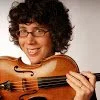
This interview is linked to the podcast and video versions (with a lot of music) and the show notes.
Victoria Bond:
I really need to rethink the relationship between conducting and composing. And there's another very important aspect, and that is when you're conducting, the music is in you. I mean, it is as though you are composing this work of Beethoven. It has to live within you, waking, sleeping. It's there all the time. And I would kid my husband, I would say, "I got to vacuum out the notes in my head because they're there. They're there all the time. And how do I have a blank canvas on which to hear my own music?" So that became an issue as well as the time issue. And so at a certain point I said, "I love conducting. I'm glad I did it, but I am first and foremost a composer. I'm a composer who conducts, but I'm a composer first."
Leah Roseman:
Hi, you're listening to Conversations with Musicians with Leah Roseman. This week's episode features the fantastic composer, Victoria Bond. You'll be hearing music excerpted from several of her chamber music projects, including Dancing on Glass, Frescoes and Ash, and Instruments of Revelation. She's been commissioned by ensembles, including the Houston and Shanghai Symphony Orchestras, the Cassatt String Quartet and American Ballet Theater, and has composed eight operas, six ballets, two piano concertos, and orchestral, chamber, choral and keyboard compositions. She joins me for a wide ranging interview and you'll hear about her career as a conductor, the success of her Cutting Edge Concerts, her operas about strong women, including Clara Schumann and Victoria Woodhull, who ran for president of the U.S. in 1872 before women had the vote. Victoria is often inspired by other art forms, and you'll learn how this goes back to her childhood. She shared stories about her mother, the pianist, Jane Courtland, who studied with Bartók.
You’ll hear about some of her mentors including Ingolf Dahl, Roger Sessions, Pierre Boulez, André Previn, and Herbert von Karajan. I was so delighted to get to know both Victoria and her music. You can watch the video on my YouTube or listen to the podcast, and I've also linked the transcript. It's a joy to bring these inspiring episodes to you, and I do all the many jobs of research, production, and publicity. Have a look at the show notes of this episode on my website where you'll find all the links, including Victoria's music, different ways to support this podcast, and other episodes you'll enjoy among over 250 episodes since 2021.
Hi, Victoria. Thanks so much for joining me here today.
Victoria Bond:
It's a pleasure to be here.
Leah Roseman:
It's a real honor to have this chance to speak with you.
Victoria Bond:
Well, thank you so much.
Leah Roseman:
I see a piano behind you. Are you in your home studio?
Victoria Bond:
Yes. Well, actually I'm in East Hampton right now, and I have a studio here as well. It's the one in New York.
Leah Roseman:
Is that the one where you have the Frog Pond?
Victoria Bond:
Yes, indeed. It has no frogs in it right now.
Leah Roseman:
Yeah. So we're going to focus on a couple of albums of your work, but I hope to also speak about your work as a conductor as well as a composer. But let's start with Dancing on Glass. One of the musicians in this trio recording, Coleman Itzkoff, he was on this podcast just a couple of months ago, and I should have asked him because it wasn't on my radar that he was on that album. I knew I was going to be speaking with you, but yeah.
Victoria Bond:
He's a wonderful cellist. I was really so happy to be working with him and he plays beautifully and is so musical.
Leah Roseman:
Yes, it's a wonderful recording, but I noticed it was commissioned for a different string trio, the Jade String Trio back in 2003.
Victoria Bond:
Yes, indeed. I think the Jade Trio was three Chinese women and very interesting because one of the principle themes in this piece is a work called Liu Yang River, which is a very famous Chinese song. And so the head of the group sang it for me and I wrote it down and used that as a basic theme throughout the whole piece. And because it makes nine turns, I did everything in multiples of three.
Leah Roseman:
Yeah, the structure is quite interesting. You want to speak to that a little bit, the different movements, how you laid it out?
Victoria Bond:
The fact that the river winds through different, not scenes as in the Moldau of Dvorak, but different emotional states. One is ice, that is a violin solo. Every instrument has its solo.(Music: clip Dancing on Glass) And the ice one I remember very clearly was the violin was harmonics on the violin. And I believe it is the cello variation was a street musician sitting outside the town gate and playing his instrument with a chopstick. And so we used, of course, the bow instead of a chopstick.(Music: clip Dancing on Glass) But that was also something that became a political song, that particular piece, but it has all kinds of implications to it. And I just thought it was beautiful, and so I wanted to include it in the piece. And there is the continuation of the river between sections.
Leah Roseman:
But just the fact that each instrument has its own solo and that there's duos as well as trio, it's interesting that you though of that.
Victoria Bond:
Well, I've done that actually a lot. I love giving people an opportunity to express their own individuality, either accompanied by or in solo. So that has been kind of a plan of mine for a lot of chamber music that I've written.(Music: excerpt of Dancing on Glass)
Leah Roseman:
And are you offended if, let's say somebody just takes the violin solo out of that and plays it separately on a program or?
Victoria Bond:
I am never offended when people perform my music. I've written very many instrumentations of pieces so that they do have the opportunity to be performed in different circumstances. And my model for that is Bach. If he didn't mind if pieces were performed by a harpsichord or performed by various other instruments or re-imagined, this is what I feel is something I very much encourage for people to take things out of context if the piece is too long. I don't want them to change the notes of course, or the rhythms, but it's also interesting people's interpretation because I feel that as a composer, I'm a collaborator always. I'm a collaborator with whoever is performing my music. And so I'm very curious to know what this particular piece means to them and not so much in words, but in the way they play it. And so I've had some lovely surprises along the way of things that I hadn't imagined it being performed, let's say at this particular tempo with these particular dynamics.
But if it's somebody who's musical and who adds a personal touch to it, I am delighted. I'm very happy about that.
Leah Roseman:
That's wonderful. Yeah. So by this point, people will have heard one or two short clips from this Dancing on Glass. And I'll just let listeners know they'll be hearing a lot of music during this episode and always short excerpts. And I encourage people to not only listen, but to play your music because I know a lot of performers listen to this podcast.
Victoria Bond:
Wonderful. I did want to mention one thing about Dancing on Glass. Somebody said to me, "Gee, isn't that dangerous?" But the idea of dancing on glass is light dancing on the surface of water. So the surface of water can look like glass. And that was the idea of dancing on glass. Nobody has to get hurt.
Leah Roseman:
It's interesting, Victoria, because with evocative poetic titles, I think it's kind of in vogue now and I like it. Hasn't always been the case.
Victoria Bond:
I do too. Yeah. Rather than Sonata number one. Pretty boring, right? Yeah. No, all of my pieces have hopefully evocative, but they all have titles that are not just identifying things by numbers.
Leah Roseman:
Yeah. And -
Victoria Bond:
I can give you a couple of examples of that if you like.
Leah Roseman:
Sure, sure.
Victoria Bond:
Okay. So I have a piece called Urban Bird, and it's based on music of Charlie Parker. And so I got a review once that said, "Oh, this poor bird is caught and he's crying out for help." And that had nothing actually to do with the piece. The piece is a street musician playing on a subway platform who keeps getting drowned out by the passing trains, but I used excerpts from Charlie Parker and Charlie Parker was known as Yardbird. And I live in New York, so that's how the title Urban Bird came. But of course, as with many titles, they are open to misinterpretation. So I was very amused at the review, but it didn't actually have anything to do with why I chose that title.
Leah Roseman:
It's interesting. I was just thinking about, people have asked me to review albums and I simply don't do that. I'd much rather just talk to the composer or whoever, performer, but I think a lot of the writing about music evolved at a time where there weren't recordings. So Schumann with his journal and all these people writing about music to get people excited to come to concerts. So it's interesting in a way that people feel they can make assumptions about what the music's about.
Victoria Bond:
Indeed, indeed. And this is very true with programmatic pieces. And it was Gustav Mahler who had included the program of the first symphony and then was so distressed by the way people mangled it that he said, "No, I'm never going to do that again." And he didn't. I mean, there might have been a program and of course there was a program in his own mind, but better to leave it up to each individual to create his or her own program or just simply listen to the music, listen to the notes and the way they interact. And I mean, music is a language, so there are certain intrinsic relationships between notes, themes, harmonies. I like to think of thematic material as characters in a drama because music is a drama.
Leah Roseman:
I'm curious, has your notation evolved over the years? I'm assuming you started with pen and paper, but as computers came into practice, have you changed to digital?
Victoria Bond:
I have. I have for several reasons. Number one, I love the fact that I can make revisions the next day and still keep the original because in the old days when a pencil and paper, I would either have to erase things or I would have to rewrite things or I would have to paste portions of a page on top of it. And I am an inveterate tinkerer. So a piece is sometimes never finished. It's always left open-ended, but I do like to come back and get new ideas the next day. And the fact of the computer makes it wonderful that I can make wholesale changes without any fear of losing what I had written the day before. So that's one important thing. Another is eyesight. I have had some vision problems and so it's very difficult right now for me to use pencil and paper.
So the computer, because I can blow it up, I can make it smaller, is a tremendously useful tool for me. Plus, the last part of it is that in playback, I can hear mistakes much better than I can see them, errors, wrong notes, things like that. I mean, I can look at a score and sometimes not really be able to tell what the problem is, but once I listen to it, I know right away.
Leah Roseman:
Yeah. Well, let's go on with this Dancing on Glass album, which continues with Pieces for Piano. Now, Binary, you also have a solo piano version on another album that we'll talk about.
Victoria Bond:
Well, as I said, I've made multiple versions of many pieces and Binary has three different versions. It has a version for two pianos, which is Binary, hence the name Binary, was commissioned by Paul Schenly for Piano Fest. And very funny because I sent in one movement and that was performed very successfully. And Paul Schenly said, "Binary means two. It needs a second movement." So that's why I added the second movement. Two pianos was the original version of it. Then I made a version for one piano, which was recorded. Then I made a version for Piano Four Hands. So there are three different versions of the same piece.
Leah Roseman:
So I'm a violinist, so I want to understand the difference. So with four hands, because you're sharing the same instrument, you can't be crossing over. So it's not just range. I imagine it has to do with getting in each other's way.
Victoria Bond:
Oh, absolutely. There were major changes that I had to do in terms of registration, as you can imagine, with the four hand version, but I used to love to play four hands. I had a partner that I played with every week, and so I though this would work. This piece would work for four hands, but it's not as expansive in terms of registration as the two piano version. And the same thing with the one hand, with one hand, with the two hand, one person version of this, obviously there had to be changes from the two piano version.
Leah Roseman:
Yeah. It was interesting because I listened to them both. So this first movement, which was originally the only movement, it's based on the interval of a second.
Victoria Bond:
Correct.(Music: clip of Binary, middle of 1st movement)
Leah Roseman:
And the second movement is based on this Samba rhythm.
Victoria Bond:
Right, yeah, the Brazilian Samba, which is one of my favorite rhythms. I was taught this rhythm by an American percussionist who played every year at the big festival in Brazil and had a loft full of percussion instruments. So I went to visit him and had fun listening to and playing on some of these instruments. So I love that rhythm. It's a dance rhythm. It's very catchy.(Music: clip of Binary, 2nd mvt)
Leah Roseman:
Do you mean Carnaval when you meant the big festival?
Victoria Bond:
Exactly right. Carnaval in Brazil.
Leah Roseman:
You had mentioned, I actually wanted to ask about your parents later, but you mentioned about playing four hands every week. I knew you were trained as a singer and conductor, but your mom was a concert pianist.
Victoria Bond:
Yes. My mother was actually very famous as a young woman. She won the Liszt competition, went to live in Hungary and studied with Bartók and Kodaly and gave a lot of concerts when she was very young. And then World War II happened and she was in Hungary and performing in Germany at the time. And her parents said, "You come home immediately." She was blissfully unaware of what was going on around her because she was so focused on her career as a pianist. So she came home. She started a radio program, which you can appreciate, in Manhattan and did a lot of concerts, met my father who was a singer in addition to being a doctor, and they gave a lot of concerts together. So she continued her career in America.
Leah Roseman:
Was she born in Europe then?
Victoria Bond:
No, no. She was born in Chicago.
Leah Roseman:
Okay.
Victoria Bond:
Just won the Liszt competition, which is how she happened to go to Hungary. She went to Julliard and that's why I went, well, one of the reasons why I went to Julliard, continue the family tradition.
Leah Roseman:
When she studied with Bartók and Kodaly, was it as composition or how did that work?
Victoria Bond:
Chamber music. She studied chamber music with them, although she did take composition lessons from Bartók, and she told me something about that. And I had the good fortune to go with her to Budapest. I had a recording in the Czech Republic, and so hop, skip, and jump over to Budapest. And we went to Bartók's house, which is where she had her lessons. And she remembered the house so well and his folk furniture. And she said to the caretaker there, "Well, the piano used to be there." She said, "Yes, there were a lot of changes in renovations since the war." So she remembered that very, very well and remembered Bartók and told me wonderful stories about him.
Leah Roseman:
Your mom's Jane Courtland. Did she keep her name after she got married?
Victoria Bond:
She did when she was performing, yes. She kept her name Jane Corrtland. And then my mother was married twice. So first of course was Bond and second was Welton.
Leah Roseman:
I was just curious because of the era.
Victoria Bond:
Oh, my mother was totally a revolutionary for her era because when most women were just staying home and being mothers and housewives, my mother was out there on her own without a chaperone, giving concerts all over Europe, living in hotel rooms. And she said she used to travel with her stuffed toy Mickey Mouse, and she would put it on the dresser or the bed of every hotel room she was in just to make her feel like she was at home. So in a certain respect, it was kind of a lonely life because here she was traveling alone as a young girl and totally unheard of, as you say, of her generation.
Leah Roseman:
So what do you think you learned from her in terms of being a musician and a woman in music?
Victoria Bond:
Oh my God, everything. Absolutely everything. My mother was very supportive of my work. First as a pianist, she was my first piano teacher. And then as a conductor, she was very excited about conducting and always as a composer because composition came first and I used to do what I called making up pictures on the piano because I didn't know the word composer or composition at that very early age. And so she would write down the pieces that I would improvise. I learned all about what it meant to have a high standard. As I say, my mother won this major competition and she was a very successful pianist and a very hard worker. And so the idea of being a musician was really patterned on the way she lived her life, getting up in the morning and practicing every day. She also taught. And so, I mean, the piano was in use, I wouldn't say twenty four seven, but it was certainly in use from early morning until dinner time.
And so that kind of dedication, I would say, was something that I definitely learned from her.
Leah Roseman:
Let's talk about the Black Light piano duo.
Victoria Bond:
Okay. This one has a very interesting background because, well, Black Light, the title, is the light that shines from the music of the Black experience, which I will, just a parenthesis, my first major conducting job was with the Pittsburgh Symphony as Exxon Arts Endowment Conductor, and André Previn was music director, and he brought in Ella Fitzgerald and Oscar Peterson and the greats of jazz. And that was my first major exposure to jazz, which I absolutely fell in love with and has been a strong influence on me ever since. And both of those musicians, of course, are African American. And so Black Light was the inspiration that I felt emanated, the light that emanated from the music of Black composers and singers and performers. So originally, because jazz is an improvised art form, I wanted the piano part to be improvised. I gave some harmonic indications, and of course the orchestra part was all written out.
But what was interesting was that I sent it to a person, a pianist who was both jazz and classical, and I though, "Oh, this is the ideal person to premiere this piece." I was not there for the premiere, but I got a recording sent to me afterwards, and I was horrified, absolutely horrified, because every time the pianist came in, it sounded like Gershwin, and the orchestral music that I had written and my intentions for the piano part were definitely not Gershwin. I love Gershwin, but my piece was not a Gershwin inspired piece. So I put it away in a drawer and I though, "Eh, good experiment. Didn't work. I won't do this again." Then Paul Barnes came to me and said, "I want to perform that piece." And I said, "No, you don't. Think of something else." He said, "No, I want to perform that piece." And I said, "Are you an improviser?" He said, "No, I don't improvise.
Can you write out the improvisations?" Aha. So I went back and I basically wrote the piano part, and I wrote it the way I wanted it to be. And he performed it as you hear... Oh no, of course you're listening to the two piano version, but he recorded it with orchestra and I was very happy with the results. And Madeline Rogers, who is a student of his, was the one who proposed doing this version for two pianos. And she and Florencia, I heard their performance and I was so entranced with it. I said, "We need to record this. I just love what you're doing with it." And it's a different piece with two pianos than it is with piano and orchestra. And it has a kind of a leanness to it. And just like looking at a black and white painting rather than a full color painting, it's a different kind of art.
It's not a question of better or worse, it's different. And I really like the difference of it. It brought out certain aspects of the piece that are enhancing the other version.(Music: clip of Black Light 1st mvt)
Leah Roseman:
The second movement is inspired from Jewish liturgical.
Victoria Bond:
That's right. And I have tried. I have a studio in the city. Well, I don't know if you can see here. This is neat compared to my archives in the city, which go ceiling high and we have a nine foot ceiling in the city. And I have looked everywhere for the original cassette recording that was recorded when a cantor, who was a friend of my husband's family, sang into the cassette machine and sang this gorgeous, gorgeous melody. And I looked everywhere to try and find it, but I couldn't find it. I remembered the melody, of course, and that is what that movement is based on. And it has the cry of the soul, which is very much part of the Jewish experience. I mean, history is not... Well, James Joyce said, "History is a nightmare, which I'm trying to wake up from." It's probably not an exact quote, but that is the meaning of it.
And the history of the Jewish people, of course, is survival and catastrophe. In alternating bands. So this piece had that very plantiff cry that just touched me so deeply when I first heard the cantor sing it and I wanted to include it. And the orchestra there is the protagonist. They are the aggressor in the beginning. So there are these two, very much like the Beethoven fourth piano concerto, the two contrasting aspects of the aggressor and the victim.(Music: Black Light, excerpt of 2nd mvt)
Leah Roseman:
I've only heard the For Hands versions. Did I miss, was it recorded with Paul Barnes?
Victoria Bond:
Oh yeah. Yes it was.
Leah Roseman:
Okay.
Victoria Bond:
Paul Schenly, that was Binary, but this one also has... And then there's a movement that's based on Ella Fitzgerald's scat singing, which takes us to a whole different place. There are certain things from tradition that I don't want to throw out. I don't like to throw out the baby with the proverbial bathwater. And the idea of a introspective slow movement being followed by an upbeat dance movement is something that I've sort of kept as my formal large structure ever since.(Music: Black Light, clip of 3rd mvt)
Leah Roseman:
Let's talk a little bit about your compositions teacher. So you studied with Roger Sessions and Ingolf Dahl?
Victoria Bond:
Yes, I did. Ingof Dahl in Los Angeles and who was just an extraordinary teacher because he was a performer on multi instruments, I would say. He was a conductor, he was a pianist, he was a composer, he was a hiker. He was an all around musician and also the kind of teacher who did not try and impose his own compositional philosophy on his students. And that was also true of Roger Sessions because although I admired Sessions tremendously, my music is nothing like his and he never tried to shape me into his own musical philosophy. So both of those teachers were very inspirational and I learned different things from them. Well, the wonderful thing about when I worked at USC was that I had a theory teacher who had us write pieces in various different styles for different combinations going through history. So we would write a trio sonata and then he would bring instrumentalists in and have it performed when we had finished it, which was very, very inspiring and very interesting.
And then a string quartet and very onward. And this was so great because it was teaching technique and there was never a question of style. It's not like this is your style. No, you're writing something in a baroque style. And so you follow the rules of baroque music at that time. And I think that's very important. The idea of having a solid technique is like having a scaffolding on which you can build your sculpture. And I'm very grateful for the focus on technique that I got actually even before I studied with Ingolf Dahl, as I say from this wonderful theory teacher and also counterpoint that there was a heavy emphasis on counterpoint, gradus ad parnassum and various other counterpoint exercises, Persichetti counterpoint exercises. And it's interesting because I remember reading about Brahms and Joachim, that Brahms and Joachim had a deal as it were, that each of them would write a counterpoint exercise and send it to the other one to correct or to edit.
And Brahms kept up his side of it, but Joachim, because he was so busy concertizing and going off on tours, sometimes with Brahms, and Joachim of course was a violinist, you know that, but I'm not sure your audience does. Yes, Joachim was a great inspiration to Brahms. And so Brahms kept up with these counterpoint exercises and boy, can you hear that in his music. The counterpoint in all of Brahm's repertoire is just so extraordinary. So that kind of technique I find very, very useful, helpful and inspirational and counterpoint has ever since become a really important part of my compositional tools.
Leah Roseman:
Ingolf Dahl was very influenced by Stravinsky and worked with him. I definitely hear some Stravinsky influence in some of your music.
Victoria Bond:
Absolutely. What composer has not been influenced by Stravinsky? I think as one of the towering geniuses, I would say Stravinsky and Bartók, it behooves us to study his music and to extract from it that which applies to ourselves and to our own individual perspective. And of course, Stravinsky, the master of rhythm, is tremendously inspirational. And yeah, I'm happy to be influenced by him.
Leah Roseman:
Do you think with the younger generations, some of this rigor is missing?
Victoria Bond:
Oh yes. Yes, I do think that the rigor is missing. At least that's what I hear when I hear a lot of younger composers who are more concerned with their own individuality than they are with the overall shape of a piece. As I said, I like to think of musical phrases as characters and a composition is very much like a play or an opera or a story, even though there are not necessarily any words involved, but it goes somewhere. And that is, to me, the operative. It has to go somewhere. So you have to know where you're going. And I like to think of it as two perspectives, the eagle and the ant. And the ant is going from moment to moment along the grass and seeing great detail, but not seeing the whole picture. And the eagle is soaring above and sees the whole shape of it.
So I think that both of those are important, but just the ant, if somebody is just going measure by measure and not seeing the whole shape of it, you can fall off a cliff from that and not get to where it is you're going because you don't necessarily know where you're going unless you have a sense of the whole piece. And a dear friend of mine, Jonathan Tunick, said writing a piece is not like going from A to B to C to D. He said it's more like a lake where you can enter at any point. And I like that image a lot because then it gives you a sense of what the whole is and how every piece that you are doing relates to the whole. And so that to me is really kind of the number one aspect of a formal structure is knowing where the piece is going.
Leah Roseman:
Yeah. This came up with other composers I've talked to. When I was going through my education as a violinist, honestly, I kind of put up with theory and learning about certain things, but I didn't appreciate it. And now after more than 30 years of playing in orchestra, I have much more appreciation for that. But I think about the audiences and I'm a big fan, especially with all new or unfamiliar music. I really wish there would be more bridges made on stage to help people understand the context or anything to help them connect with the music more.
Victoria Bond:
Well, my role model in this was Pierre Boulez. I was his assistant when he did concerts at Juilliard and I used to go to his Perspective Encounters and his Rug concert. And he was a brilliant teacher as well as of course composer and conductor. And he could bring out the most recalcitrant composer who might have just answered in monosyllables. He could bring them out so that he could illuminate their work to an audience. And sometimes he would even play the piece, talk about it and then play it again, which I thought was particularly valuable for an unfamiliar piece where it's sometimes very difficult to absorb it the first time you hear it. So his Perspective Encounters inspired my series, Cutting Edge Concerts, which was first called Close Encounters, not based on the movie, but based on the fact that the original venue where we performed, the audience was very close to the performers.
But I got a cease and desist letter, not from the film company, but from some other chamber music organization that had used that title. So I came up with Cutting Edge Concerts, which I like a lot better. But it was that idea. So I always talk with the composers before their music is performed. And Boulez being my role model here, I like to ask them questions that will stimulate conversation from them, not lengthy conversations. And I also don't particularly enjoy people who like to tell you all the technical aspects of it. This is a three parts Sonata Allegro and audiences, one cannot assume that an audience is one of musicians. There can be lay people there who just enjoy music and come for the experience. And so having had to do a lot of pre-concert talks for the New York Philharmonic and the Metropolitan Opera, you never know who's in your audience.
There may be people who know every word and note that Wagner ever wrote, and there may be people who say they don't even know what's on the program. So you've got this wide range of experience and knowledge in your audience. And my husband was my beta tester because my husband is a very intelligent, well educated person, Stephan Peskin. We have different last names. And when we were first dating, we would go to concerts and most of the concerts I would go to would be concerts of contemporary music. Now for somebody who is not used to going to concerts to begin with, to go to concerts of contemporary music, I had to figure out how to keep him interested and engaged and coming back for more. So that was the language that I evolved, not having any technical musical terms, but terms that were not talking down to somebody because as I say, he was very well educated, but not in music.
So that was really the way I evolved speaking about music to an audience. And this is what I do with Cutting Edge Concerts.
Leah Roseman:
Yeah. I was going to ask you about that series. So it's been going for almost 30 years.
Victoria Bond:
Yeah. Yeah. Who knew it would last this long? What happened was, as I say, my first job is with the Pittsburgh Symphony and I had an apartment in Pittsburgh and was spending a lot more time there than I was in New York City. And so when that job was finished and I came back to New York, it was like, who are you and what do you do? So a friend of mine said that Greenwich House had a composer portrait series and they said, "This would be perfect for you. You should do one of these concerts." And they invited me to do that and I invited all of my friends from Julliard, both to perform and to attend. And it was very successful. So that's how it got started was at Greenwich House with a small venue. This was when it was called Close Encounters. And it grew from that.
We moved to Symphony Space. I don't know if it was a decade later or a little less than that, but it outgrew the venue and we moved to Symphony Space and we did large pieces like operas. I've done five operas there, staged and as well as chamber music and solo performances and musicians from all over the world, mostly of course from New York, but from Denmark. And now I'm blanking out on where the other performers and composers were from, but many international as well.
Leah Roseman:
Yeah. I was just thinking about programming. I mean, the sort of traditional model that seems to continue is you have a short, unfamiliar new piece on the program and then there's a concerto that everyone's heard a million times and then there's a symphony everyone's heard lots and that's the formula. And I don't think it works that well. I don't think it does service to the new music.
Victoria Bond:
I agree 100%. And of course my series is only music of living composers. That's what I wanted to focus on being a living composer myself and realizing that pattern that you're describing usually gives only a sliver of the time to a living composer and maybe not even a living composer, a new piece, but all of the pieces on Cutting Edge Concerts are all pieces by living composers.
Leah Roseman:
I wanted to talk about another album. There's this album on Naxos American Classic series, Instruments of Revelation.
Victoria Bond:
Well, this has a very contemporary extension. I got an email from the Morgan Library at Museum that they were going to have an exhibit of tarot cards and they had read about Instruments of Revelation, which is a tarot inspired composition. And would I be interested in having it performed and would I be interested in curating a concert of music related to the tarot cards to be performed in conjunction with their exhibition? Well, you can imagine I was thrilled. Usually you're out there beating the bushes and trying to get performances and here was something that fell in my lap. This doesn't often happen, but I was thrilled that it did. And so the concert was just two weeks ago and the exhibition was absolutely extraordinary. So what I did was I started out with Carmen because as you remember, in the card scene with the two other gypsies, she is reading her tarot cards and the other gypsies are talking about how they're going to marry rich people and they're going to have a happy future.
And every time she turns over her cards, it's death. And she says the cards never lie. So I thought, and by the way, I was in the children's course at the New York City Opera as a child. I think I was seven years old and there is a children's course in the first act of Carmen, and I was in that children's course. So that particular opera has tremendous meaning to me. And so I wanted to begin the program with that and it was going to end with Instruments of Revelation. And I thought, well, I have this wonderful group. I had put together the musicians who I knew and I have these wonderful musicians and I have this wonderful venue and occasion. Why don't I write another card? So originally the three cards in Instruments of Revelation were the magician, the high priestess, and the fool.
So I added a fourth card and this was the premiere of that particular version. And that was the Wheel of Fortune, which is also very intriguing because it goes of course from everything you've ever wanted to everything you've never wanted, which for musicians, a pretty big contrast.
We also had pieces of solo flute work of Catherine Hoover and Debussy Syrinx, a solo clarinet piece of Pierre Boulez and cello Dvorak Songs my Mother Taught Me. So all of these pieces related in one shape. Oh, and I should mention also Tzigane of Ravel, which is, I'm not supposed to use the word gypsy anymore. We use Roma. And so the concert was very successful and that was Instruments of Revelation. The version that you've heard on recording or are playing is the three card version. And maybe one of these days we'll have an opportunity to record the four card version and who knows, maybe I'll add some more cards. There are many cards.(Music: clip of Instruments of Revelation, The High Priestess)
Leah Roseman:
So I also saw on YouTube there, because this was originally commissioned from Ballet Chicago, the version
Victoria Bond:
That's right.
Leah Roseman:
It was just interesting because I'd first heard it without knowing that. And then I saw the video and that was actually super interesting to see the portrayal of the characters. And what a great format as well. I think it's great to marry their arts like that, the performing arts and visual arts.
Victoria Bond:
I do too. Originally they were going to have Ballet Hispanico perform it and it didn't actually happen, which was okay because it focused on the music. But talking about doing different versions of a piece, this was originally written for a different instrumentation, which is the one that's on the YouTube channel. And I was introduced to an extraordinary choreographer who used to be a principal dancer with New York City Ballet. And he devised this choreography for solo dancers. I mean, The Magician, The High Priestess, and The Fool are all for solo dancers, which I just loved. I loved what he did with it. And so it lends itself, I think, very well to ballet treatment. And I've written a lot of ballets. One of my first collaborations was with Lynne Taylor-Corbett, and we did a ballet for a Pennsylvania ballet called Narcissus and Goldman based on the Herman Hesses story.
And it's a 45 minute full length work. And I loved working with her and with the dancers. I had studied ballet as a child because my childhood friend was the daughter of a famous dancer, Igor Youskevitch and his wife. And his wife wanted her daughter to become a ballerina. So she opened up a school for Maria, her daughter, and her little friends. So from the age of, I don't know, five or six, I took ballet lessons. And even though I am definitely not a ballet dancer, well, it was never in the cards. You should pardon the tarot analogy. But I learned a lot about dance and I love working with dancers. I just find that very inspirational. As you say, the marrying of the arts and to have the kinetic movement connected with the music. So what we would do, Lynne Taylor and I, we would go into a studio and improvise together.
She would improvise a movement. I would improvise something that I thought was an appropriate music for that, or I would improvise a musical gesture and she would improvise a step. It was thrilling. It's the only time I've done that, but I loved it and I wouldn't mind doing it again because it sort of escalated the inspiration. One idea suggested another, suggested another, and it was very thrilling and I was very happy with the results. It was performed at the Brooklyn Academy and was very successful. So that was not the last ballet, that was the first. And there've been many others since.
Leah Roseman:
Yeah. Wonderful. I was just thinking about Coleman Itzkoff. We spoke about him, the cellist, at the beginning of this, because he's also involved with dance. So I'll link that episode. It's quite interesting how he learned to dance and got involved with all that whole world.
Victoria Bond:
I had no idea how wonderful to able to learn that.
Leah Roseman:
Yeah. Well, people will have heard some of Instruments of Revelation at this point. Also on this album, there's Frescoes and Ash. And again, the different instrumentations, it's quite interesting how you've orchestrated this. Do you want to talk about the inspiration for this?
Victoria Bond:
Yeah. Yeah. Having been to Pompeii and having seen the frescoes and the paintings and mosaics, they're so evocative. They are so suggestive of characters, scenes, stories that I got a commission from the Los Angeles County Museum of Art. Again, they were having an exhibit on Pompeii. And so this piece was done in conjunction with that exhibit. Well, first of all, the way that the Romans thought about death, the Frescoes and Ash, the ash part of it was not grim. It was just something that was part of life. And so the idea of death was one more of resignation rather than fear.
I also want to speak about the musicians who performed this because they are all members of the great Chicago Symphony and the clarinetist, John Yeh, who basically is somebody that I have known since Los Angeles. We were at University of Southern California together. We were at Julliard together. And while he was still at Julliard, he got this incredible job as clarinetist of the great Chicago Symphony. And what need is there to go on with your schooling when you have the best schooling in the world to be in that great ensemble. And so this piece was basically inspired by John, and I was thrilled with the level of musicianship. It's one thing when you're a conductor and you basically are shaping how people perform. And another thing when you're a composer and you're not conducting a performance and you're listening to the way the musicians interact, and their standard was so high that I was intrigued and inspired by the way they corrected, commented, polished each other's performances.
And that is one of the best aspects of chamber music when there's this democratic small D, democratic way of performing music where each person is such an integral part of the overall performance and when their standard is so high that I just marvel.
Leah Roseman:
Yeah, it's a brilliant recording. The first movement is Street Musicians.
Victoria Bond:
Yes. Okay. So street musicians is based on a mosaic and you can tell they're playing really loud. They are a raucous bunch. These are not refined musicians. They're street musicians. They're the buskers of the Roman era. And so I wanted something that was - I wrote something that was lively and raucous and loud.(Music: clip Frescoes and Ash, Street Musicians)
Leah Roseman:
So I remember in school learning about Pompeii. Maybe you could speak a little bit about that. Not everyone will know.
Victoria Bond:
Oh, Pompeii. Yes. Well, of course, Pompeii is one of the early volcanic eruptions. And the extraordinary thing is that it preserved that town and those people perfectly. So that when you go to visit Pompeii in Italy, you can see portions of the buildings, you can see actual people who were trying to escape or who were hiding, even animals. So it is like a crystallized, perfectly preserved slice of what life was like in Rome at the time of that great catastrophe.
Leah Roseman:
So these mosaics you refer to, they were preserved, the art.
Victoria Bond:
Yes. And when the archeologists were excavating this, they were very careful to be able to preserve mosaics and frescoes from the... This was a wealthy area. So there was a lot of artwork in these homes. And you can, of course, see those online or in a book, but just being there and seeing it in person was very inspirational. Yeah. Marine Mosaic is the second movement. And it was one of my favorite mosaics because it shows a wealth of fish swimming around. And obviously the artist who made this knew a lot about fish and also knew a lot about movement, even though this is not a film, it doesn't move, but the images have so much movement within them. And having lived by the water practically my whole life, the only time that I wasn't by the water was when I was in Pittsburgh. The sea is very much a part of what I love.
And the idea, as my husband called it, of fish music was very much a part of what I like to write. So I had a lot of fun doing Marine Mosaic.(Music: clip of Marine Mosaic from Frescoes and Ash)
Leah Roseman:
And for some performances, you've had projections of the images or of art?
Victoria Bond:
Well, yes. Art is very central to me. When I was a small child, my mother would take me to the Metropolitan Museum, to the Museum of Modern Art. I was exposed to art from a very early age. And one of my favorite artists is Georgia O'Keeffe, and I've now written several pieces based on her artwork. I have a string quartet called Blue and Green Music, which is the name of one of her paintings. And this has an interesting backstory. It was commissioned by the Cassatt String Quartet, and Cassatt, of course, being the name of Marie Cassatt, a wonderful woman artist. And I had had performances with the Cassatt before, and so they commissioned this work. And I love the title, first of all, Blue and Green Music, because Georgia O'Keeffe said, "Because I cannot sing, I paint." And what better prompt does a composer need than to say Blue and Green Music?
Now, I was doing concerts in Chicago at that time, and the Art Institute in Chicago has the original Blue and Green painting. So of course I made my way to the room where it was, and I sat in front of it for probably an hour. I think the guard thought I was going to do some mischief there and just kept a close eye on me. But it's interesting how in absorbing that painting over a prolonged period of time, how different aspects of it spoke to me. And originally when I got the commission from the Cassatt, and they didn't dictate that it had to be a woman painter, it was my idea to do Georgia O'Keeffe. And originally I was going to base each of the movements, each of the four movements on a different painting. But because this painting had so much material, had such a richness to it, and I was intrigued because she had used two colors, blue and green.
And as a composer, I like to limit the amount of material I use and expand that material, looking at it from different perspectives and seeing what is in that material rather than having a lot of material to deal with. So the idea of basing it on two themes, period, and making a whole four movement work out of those two themes was very intriguing to me. And the fact that she had this suggestive, she had some very specific paintings of bones and landscapes and flowers, but this is a very... Well, it's abstract, but it's suggestive. And I think music inhabits those worlds of being abstract and suggestive. So that was my inspiration.(Music: clip of Blue and Green Music with Cassatt Quartet)
Leah Roseman:
Yeah. That's really interesting. I was just thinking about you absorbing that painting for that long. I do enjoy going to art galleries, but I find it I get fatigued quite easily and I do find it hard to know maybe to get into the right kind of meditative head space to really sit with something.
Victoria Bond:
Yeah. It's difficult in a museum or in a gallery to go from one painting to another. In a way, it's like being in a concert hall and having a lot of short pieces. Are you really absorbing each one of them? And I think it takes time. I mean, an artist's now thinking visual, an artist's' visual world and visual ideas are not something that you just want to glance at and walk away. It's something that really you need some time to absorb because it's not you, it's someone else. And in order to enter that person's mind and vision, it takes time.
Leah Roseman:
Did you want to go back to Frescoes and Ash because we just talked about a couple?
Victoria Bond:
Sure.
Leah Roseman:
So back to Frescoes and Ash, the third movement is Scene From a Comedy.
Victoria Bond:
Scene From a Comedy is the third movement. And here it depicts actors with masks on their faces. You don't see their actual faces, you see the masks, although there is an old woman sitting in the corner looking very menacing, I would say. It's not a pleasant expression that she has on her face, but the actors definitely have comedy masks. And so this one is a percussion and the wonderful percussionist of the Chicago Symphony was my inspiration here. And the percussion and clarinet, they can laugh and they can joke with each other. And it was the interaction between these instruments in a very jocular manner. Again, it's saying that these extraordinary musicians brought so much to the work that I would say they were my collaborators on it. They didn't change the pitches or the rhythms, but they did infuse them with so much of their own personality that I just love what they did with it.
I'm very, very happy with this recording.(Music: clip from Scene From a Comedy, Frescoes and Ash)
Leah Roseman:
There's three more movements to this wonderful work, but I do want to get to some other things.
Victoria Bond:
Sure.
Leah Roseman:
I'll encourage people to listen to everything. We talked about your mom. Your dad, it's interesting to me that he was a medical doctor and an operatic bass. How did that even work?
Victoria Bond:
Yes, indeed.
Leah Roseman:
There's so much more coming to this interview with Victoria, and this short break is to let you know that I've linked quite a few episodes for you in the show notes for Victoria with with Boman Desai, Coleman Itzkoff, Nimrod Borenstein, Jessica Cottis, Ruby Colley, Christina Petrowska Quilico, Gail Archer and Katherine Needleman among more than 250 episodes since 2021. Sign up for my newsletter, where you’ll get exclusive information about upcoming guests, consider buying me a coffee on my Ko-fi page, and buying some unique podcast merchandise. You can also review this podcast, share it with your friends, and follow on your podcast app, YouTube, and social media. It’s a very challenging media landscape for independent podcasters like me, and I do all the many jobs of research, production and publicity. Thanks. Now back to Victoria Bond.
Victoria Bond:
He sang with solo bass roles with the New York City Opera. He sang the role of Osmin in the abduction from the Seraglio. He sang Sparafucile. And so as a small child, I grew up knowing the bass repertory very well. And my mother tells a story of when I was in kindergarten and the children were talking about, "Well, do you know this song and do you know that song?" And I said, "Well, do you know Batti Batti o bel Masetto?" Just figuring everybody knows that. And I would get stares. So I grew up with this repertory and my parents would do concerts together. My mother would accompany my father and he did a lot of Bach. He sang a lot of Bach, but he also sang a lot of opera. He sang Boris in Boris Godunov, not at City Opera. I don't believe they ever did that there, but he did Arias from it.
The singing voice was something that I grew up with. It just seemed so natural and so normal. And actually, as I got older, I knew I wasn't going to be a pianist. My mother had that instrument, basically, that was hers. But I did have a good singing voice. I was a lyric soprano, and I thought that was going to be my double life as a singer and composer. And Samuel Barber was my role model in that, and certainly somebody who wrote beautifully for the voice, because of course, he sang a lot of his things. And when I was at USC, I wrote for myself and performed a lot of my own works. I remember there was something called Aria Obnoxious, and the only words in it was aria, and it went all over the map, and I had great fun singing that. So let's see.Where did we start out with this?
Leah Roseman:
Well, I'd asked about your dad. I actually did want to get to your operas because I'm fascinated with the topics of many of your operas. But before we leave your family, your grandfather, Samuel Epstein, that's kind of an interesting story if you want to share.
Victoria Bond:
Absolutely. My grandfather, my mother's father, lived in a small village in the Ukraine or Russia. It depends what year you're looking at. And he wanted to be a musician, but his father thought this was not an honorable profession for a young man and basically forbade him to practice or to play. And so my grandfather ran away from home basically and went to the big city, which was Warsaw, Poland. He took the train there. I think he was a stowaway actually on the train and got to the Warsaw Conservatory and didn't speak a word of Polish and was so exhausted that he fell asleep on the steps of the Warsaw Conservatory. And my mother tells me that at that time, the conservatory was way on the top of a hill and there were these many steps and he fell asleep on one of them. The next morning, a kindly musician came along and saw my grandfather, took him under his wing, and that man happened to be a bass player.
So my grandfather became a bass player and graduated from the Warsaw Conservatory. And the punchline of this particular story is that when I was conducting, I did a lot of concerts with Ray Charles. And Ray Charles sang his 75th birthday concert in Warsaw, Poland. And I got a last minute call, "He wants you to conduct." And I said, "Oh, where is it? Warsaw. When is the rehearsal? Tomorrow." I was in the midst of staging rehearsals for an opera with the Harrisburg Opera. So you don't refuse a 75th birthday concert of Ray Charles. What a great honor. So I got there and because it was Warsaw and I thought about my grandfather, when I was picked up at the airport, I asked the driver, "Could we drive past the Warsaw Conservatory? I want to see where my grandfather went to school." So he drove me into town and there was this nice building with about two or three steps, and I thought, "This doesn't look right." But I had a book in the room that said, "What to do in Warsaw?" And the Chopin Museum had been the Warsaw Conservatory.
And I looked at the picture and sure enough, there were the steps and it was close to the hotel where I was staying. I mean, is this fate or what? So it was a little flower in my room. I took the flower, I took a camera and I walked to an underpass and coming out from the underpass, there it was, the steep staircase, the conservatory, now a museum on the top of the hill. I got goosebumps. It was so thrilling. And I didn't know what step he had slept on. So I put the flower on one step, took a picture of it, put it on another step, took a picture of it. And then when I came back to do the dress rehearsal before the concert, I told Ray Charles about it and he was delighted with the story. And of course, when I came home, I showed my mother the pictures and told her all about it.
So that was the very, very happy ending to my grandfather. Now, he passed away before I was born, but I do feel his presence. He was a composer, a conductor, and his DNA is in me.
Leah Roseman:
And he must have encouraged your mother.
Victoria Bond:
It was a difficult relationship. He was a very strict disciplinarian. And my uncle, my mother's brother, would say that there would be shouting matches and she would run out of the room crying. But yes, he was her teacher and he taught her well because she had a big career, which was cut short by World War II, but she was a very formidable pianist. And she has a lot of recordings. She did record on Columbia Masterworks, so there is a living testimony of her work. So yes, he was her teacher, but my teachers as well. I had teachers who taught by fear and intimidation, and I guess that was his method. Tough love, I guess you would call it today.
Leah Roseman:
Yeah. Thankfully, times have mostly changed in that regard.
Victoria Bond:
Yes, I hope.
Leah Roseman:
Yeah. Well, I was going to ask you about your operas, but we didn't actually really talk about your career as a conductor. I mean, you mentioned you were Assistant to Pierre Boulez. You also were Assistant to Aaron Copland and Rostropovich?
Victoria Bond:
Yes. They both did concerts at Julliard and I loved working with them. Rostropovich was very colorful. He said things that we as young conductors could never say, such as, "This piece, this moment must be like a stab in the heart." And when he said it with his Russian accent, it was like, "Oh wow, that's great." But we as young conductors could not describe something this way, but they were both very encouraging to we young musicians. And very often I was playing keyboard in the orchestra as well as being assistant conductor. So I learned a great deahl from working with them as well as the main conductor, Sixten Ehrling. And then of course in my last year, it was Herbert von Karajan who was there for a week of concerts and master classes. And he set the bar as high as I have ever seen it.
He would sit in front of us. Well, first of all, he demonstrated in rehearsal what he would do, and he was demonstrating how to get a pianissimo. And so he rehearsed the beginning of the piece, got to a certain point, and he said, "No, I want half that dynamic." Went back, came to the same place, "No, I want half that dynamic." Went back, and the orchestra, which never liked to play softly. I mean, playing loud is what you do when you're a young string player, wind player, brass player. So getting the orchestra to play softly was a major accomplishment. And finally, the orchestra realized, we're never going to get past this spot unless we give him what he wants. So in that moment, I realized what I call the pit bull technique, you bite down and you don't let go until you get what you want.
So valuable information for me as a conductor, and something that he also said was that you have to be two people. This, the gesture, has to be so automatic that you don't think about it, and you need to be the person sitting in the back of the hall listening. And his great contribution was the way he listened. So I started telling you, he sat when we were having a lesson from him, he sat right in front of us looking at us, and you can imagine how intimidating that must be. And then he would stop us and say, "What do you hear?" And at first it was like, "My ears were cauterized. I didn't hear anything. What does he want me to hear?" And that's not what he was after. He was after careful listening. And so finally, I realized that this is what he wants me to do is to really hear what's going on.
He said, "Young conductors have a recording going on in their mind of what they want to hear, and they are not necessarily listening to what they're actually getting." And so it takes a certain amount of calm to just listen to what is actually happening. So very, very valuable lesson, which I have taken to heart ever since.
Leah Roseman:
Yes. Yeah. It's interesting. We work with so many conductors and I've also been part of conducting masterclasses, so that's always super interesting to see them being coached. And one thing we don't like are these, we call them shopping list conductors. It's like they have this idea of what they're going to impose before they've really heard what we're giving back, and that's always irritating.
Victoria Bond:
Yes, indeed. And an orchestra knows that. Well, first of all, an orchestra knows five minutes into when a conductor starts, if he or she knows what he or she is doing. I mean, it's very obvious. Everything is exposed, your soul, your thoughts are loud when you're a conductor. And so the idea of actually hearing what the orchestra is bringing to this piece, and it takes a while. You don't want to stop right away after five minutes and start making corrections. You want to go on for a certain amount of time, and if your beat is clear, there's no reason to stop until you get to an appropriate place and then to go back and to make several corrections or suggestions. An orchestra does not like a conductor who talks too much. Am I right?
Leah Roseman:
This is true. And I was curious, because I know when you first started out, some of your first rehearsals were with the Senior Citizens Orchestra of Los Angeles, and a lot of conductors, they're working with amateur groups or students for a long time, and they don't have the opportunity to work with really high level professional orchestras. So that affects the way they do things as well. It must be so challenging.
Victoria Bond:
Well, the way I got my first opportunity to conduct an orchestra, first of all, my first teacher, interestingly enough, was Leonard Slatkin. And the way this happened was I was a singer at the time, and I was going to the University of Southern California with Leonard's younger brother, Frederick, who is a cellist. And both Leonard and Fred were going to Aspen, and I was going to Aspen to study with Jenny Terrell and Maria Stotter. And so in the drive, when my mother, who knew the Slatkin family or their mother said, well, I ended up driving out with Fred and Leonard. And so Leonard said to me, "Well, if you're going to be an opera singer, you should learn what the conductor does, and I'm going to be teaching for the first time, and I think you should study with me." And I though, "Well, I guess that makes sense." Having no thought at this point of conducting as a potential career.
As I said, my idea was that I was going to be a singer and a composer. And so I studied with him that summer, and he was a wonderful teacher, and it was very eye opening, ear opening to really have a global sense of a composition. Whereas as a singer, people joke, yada, yada, yada, and then I sing, just completely not involved with what really happens. Of course, the best singers really are, but you don't have the same sense of the entire piece, or certainly of shaping the entire piece as a singer. And this, just all of a sudden, I realized this is a better double for me than being a singer and composer, being a conductor and composer. So when I went back to Los Angeles, my mother, who knew a lot of musicians, knew the conductor of the Senior Citizens Orchestra, and he said he would give me the opportunity to conduct a rehearsal with his orchestra.
And a lot of these players had been part of orchestras, major professional orchestras, and they had retired to Los Angeles, and they still wanted to play. So some of them were very good. Well, I wouldn't have known really at that time because I got up on the podium, and this is the first time I'm in front of all of these people with a baton in my hand. And I was so nervous before we started that I remember I was shaking, and it was the Schubert Unfinished Symphony, and I started, and a miraculous thing happened, which I will never, ever forget. And that was that there was somebody inside of me who knew exactly what to do. And the moment that I realized that I could relax and just let this inner expert take over, and that has been ever since. So people came up to me afterwards, and as I say, a lot of these people had played in professional major orchestras, and they said, "You know, you're talented.
You ought to consider this." And this was not a time when there were many women conductors on the podium. There was Antonia Brico, the film that was done about her. There was Judith Somogi there was Sarah Caldwell. There were those conductors, and really nobody else that was well known. They may have been conducting in universities or choruses. Well, there was a big difference between a choral conductor and an orchestral conductor. And so I did not study choral conducting, I studied orchestral conducting. And so there were not a lot of role models as far as women. And I got a lot of attention as being the pioneer. That was the moniker that was attached to me at that time. And there were a lot of people that said a woman hasn't, a woman shouldn't, and a woman can't. There were those people, the naysayers, and a lot of resistance to get through in those early days, which you don't hear about at all now.
I mean, a lot of belittling, kind of insulting remarks. How do you know when a woman does the pickup, when her slip shows? That was not told about me because I didn't wear a dress, but that was a remark that was made about a woman conductor. So it was not a time where people just wholeheartedly embraced a woman conductor. I mean, a lot of people were very pleased, were very intrigued. I always had good relationship with orchestras and with audiences, but a lot of management was very, very skeptical about a woman conductor. Well, you should conduct a university orchestra or a college orchestra.
Leah Roseman:
Things have changed, but we still have work to do with gender parity on the podium. In terms of being a composer and a conductor, it's interesting, a previous guest of mine, Nimrod Borenstein, who's a composer, he said he switched from being a violinist to being a conductor because he figured then he wouldn't have to practice and he would have more time to compose. But then he found that he didn't want to be conducting too much because he just needs the time to compose. And you've also stepped away from conducting in order to have more time to compose?
Victoria Bond:
Yes. As a double life, I say I was my own composer in residence for all of the years that I was primarily conducting. However, in August, when I had several weeks or maybe even a month in the summertime to do nothing but write, came the end of August and I was facing a time where I had to put away all my composing tools at that time, pencil and paper, and get out my scores and really know that the rest of the year was going to be focused on conducting. And a couple of things. First of all, conducting is a full-time profession. It really is. You are either conducting a concert, conducting a rehearsal, traveling to wherever you're conducting or studying a score. And the study of a score, you may have conducted this piece before, but with the great works of music, there's always more to be learned and you want to really more than just refresh your memory.
You want to go a level deeper. And I always felt like I was playing hooky any moment that I was not spending studying a score. And so the idea of getting up in the morning and composing was I was playing hooky. So I felt guilty in doing that. And there came a certain point where I said, "Wait a second, the horse and the cart are in the wrong position." Originally, I studied conducting because I wanted to be able to conduct my own music. And now here I am, I'm conducting everything but my own music and I'm not having time to write my music. And if I want to write the operas that I think I have in me, which are going to take a lot of time, I really need to rethink the relationship between conducting and composing. And there's another very important aspect, and that is when you're conducting, the music is in you.
I mean, it is as though you are composing this work of Beethoven. It has to live within you, waking, sleeping. It's there all the time. And I would kid my husband, I would say, "I got to vacuum out the notes in my head because they're there. They're there all the time. And how do I have a blank canvas on which to hear my own music?" So that became an issue as well as the time issue. And so at a certain point I said, "I love conducting. I'm glad I did it, but I am first and foremost a composer. I'm a composer who conducts, but I'm a composer first."
Leah Roseman:
And you were the first woman to get a doctorate in conducting from Julliard?
Victoria Bond:
Correct.
Leah Roseman:
And did you consider, it would have been the same problem had you become a professor somewhere in terms of time, right?
Victoria Bond:
I guess so. I never wanted to go into academia. Both of my parents were professional musicians and that was the option, being a professional musician. It was never becoming a teacher.
Leah Roseman:
Yeah. Well, I want to leave the last part of this to your operas because I was fascinated to read about the topics and people won't be able to hear any of the music here, but -
Victoria Bond:
There are excerpts on YouTube. Absolutely. Yeah. Yeah. Well, strong women. So often operas have fabulous female characters, but a lot of times they are the victims rather than the victors or Victorias, I should say. And the topic of the first one, well, actually I was conducting Travels, my opera Travels with Opera Roanoke. And this is loosely based on Gulliver's Travels, which by the way is a story that has been ongoing interest to me. And my mother told me about this woman, Victoria Woodhull. She had been traveling. She was at a hotel in San Francisco and there was a plaque. Victoria Woodhull, first woman to run for president, slept here. So she was intrigued by that and she said, "Well, why don't you look into this topic?" And I did. There were a number of books about her and the more I read, the more fascinated I was because here was a woman at a time when women couldn't vote and her platform, which was she's at the time of the suffragettes, but she went beyond the suffragettes.
She wanted complete equality between men and women. So it was even beyond the right to vote. And she was a very controversial person.
She was too controversial for the suffragettes to embrace. And so when you see a list of suffragettes, her name is not on there because she really wasn't one of them. She was somebody who certainly embraced the idea of women's right to vote, but she actually ran for president in 1872 and her running mate was Frederick Douglas. Now, are we ready for that in 2026? I wish we were, but we're not, obviously. And so because she was controversial and had many sides to her character, she was not a school marm with a bun. She was red hot mama and she had had lots of affairs and her platform was free love. Now I ask you today, would this be a platform that would be embraced even by social media? And what she meant by that was that a woman did not have the freedom to get out of a difficult relationship.
She would lose her right to her property, her right to her children. She'd be a pariah in society. So free love was the freedom to not only to fall in love, but to fall out of love and to be able to have her own independence. So it wasn't just a love in, a free for all. And so Marsha Norman, the playwright, very well known playwright, was teaching at Julliard and she had a student, Hillary Bell, and she said, "Hillary Bell is also interested in Victoria Woodhull. I think the two of you should meet." And we met and we hit it off immediately and Hillary became the librettist. And we created the opera basically side by side in a similar manner to that first ballet that I was telling you about, Narcissis and Goldmund. And we had index cards of the scenes that we wanted to dramatize and to musicalize, but we weren't 100% sure where they would go, what the sequence would be.
So we experimented. We had a number of workshops and New York City Opera did four scenes, which I'm happy to say I conducted and that was exciting because I knew a lot of the musicians in the orchestra from my Julliard days. So that was a really exciting moment. And so I'm very pleased with that opera. We had a semi-stage production with the Anchorage Opera in Alaska. And the exciting thing about that production was in the last scene, Victoria Woodhull has been jailed on election night and she's been jailed for sending what is considered to be obscene literature through the mail. And what that obscene literature was, was really telling the world that Henry Ward Beecher, the most famous preacher of his day, was having multiple affairs. And he was very powerful. All of the New York politicians and the big money people were members of his congregation, and he had the ability to basically crush her, which he did.
Well, no, he didn't crush her. He just crushed this particular moment because she did go on after that. But her ability to not only run for president, but just to be a spokesperson for her platform. So she is in jail hearing the shouts of the election and she has a vision. And I always cry when I think about this moment because it was so powerful, so beautifully written by Hillary Bell, my librettist. And she has a vision that women will come after her and they will take her ideas and they will be able to carry them forward further than she could actually go. And the beautiful thing about this production in Anchorage where there were a lot of women politicians was the person who was directing the semi-staged production, we gathered these women. And as the spotlight is on Victoria Woodhull in the center of the stage in this dismal jail cell is that the women come out of the wings and they walk down the stage and through the audience.
Now the audience knew who these women were. They were well-known politicians and it was so thrilling because everyone got it and cheers went up. It was a thrilling moment. So I think that wherever this work gets staged, and I do hope, fervently hope that we can get a fully staged production of this someday. And wherever this is, I bet you dollars to donuts as they say, that there are women politicians in any city that this would be done in and that particular moment could be replicated.
Leah Roseman:
Yeah. Amazing. Actually, I was just thinking that for people to hear some of your beautiful writing for voice in the same album we were talking about before, there's the thing of the James Joyce. I can't remember the title of it.
Victoria Bond:
Oh yeah. Leopold Bloom's Homecoming.
Leah Roseman:
Yes.(Music: clip of Leopold Bloom's Homecoming)
Victoria Bond:
And there's also Molly ManyBloom, which is on a different recording. Well, okay. The James Joyce Project, an ongoing project, which I am continuing as we speak. I just had a performance about five days ago of Sirens, which is the 11th episode from, I think it's 11, from Ulysses. When I was in high school, I was told, "Don't read this book." So of course I read it. Not only did I read it, but it spoke to me. And I think at that time in high school, nine tenths of it went over my head, but the little bit that did trickle down into my brain was so potent that I said, "Wow, this is a book that I... It's my desert island book." And I've been reading it ever since, and I've set four episodes and Sirens was one of them. I started with the end of the book, which is The Penelope, 200 pages with no punctuation.
And it was basically based on James Joyce's wife, Nora Barnacle. And I set that, it's called Molly ManyBloom, and it's for soprano and string quartet. And the one that you're referring to, Leopold Bloom's Homecoming is the pentultimate episode. And then I've also set Cyclops and Sirens, as I say. And now I am starting on Calypso. And James Joyce was himself a singer and evidently a very fine tenor. And his writing is so musical and he has musical references all through the book that this is my equivalent of my Ring.
So this is now, this will be the fifth episode that I set. And it's work that I've just basically started because I had a wonderful performance of Sirens with a great cast and wonderful instrumentalists. And so I felt, well, I got to forge ahead and do yet another section.
Leah Roseman:
Tell me about Clara.
Victoria Bond:
Clara Schumann is somebody who has fascinated me through my mother. My mother studied with Carl Friedberg, who was a student of Clara Schumann. So I believe there is a direct line, and my mother talked about Clara Schumann a lot. And Nancy Wright, who was a friend of mine, had written an extraordinary biography of Clara. And here was a woman who was herself one of the top virtuosos of her day, an inspiration to her husband, Robert, an inspiration to Brahms, and a very fascinating relationship, both with Brahms and with Schumann. And so it is a love story, it's a music story, and they all talk to each other in music. What could be better? I mean, they wrote pieces based on each other's music. Brahms has a lot of works that are based on a Clara Schumann theme. Brahms has works that are based on Robert Schumann.
Robert Schumann based some of his work on things that Clara had inspired.
So she was at the epicenter of a fascinating musical world. And I just wanted her to be the focus in this opera, surrounded as she was by very, very powerful men, beginning with her father. And her father was of the old school fear and intimidation, and basically gave her the career that she had as a pianist. And when I say gave her, I mean he probably, she was already in love with music, but the discipline was what he gave her and what he imposed on her. And he arranged for all of her concerts, the repertoire. She also composed works that she performed as a pianist, and he arranged the concert tours. He took all the money and basically wanted to have complete control over her forever. And Robert Schumann came to study with him and met Clara. She was just a teenager at the time and their relationship early on was just of older brother, younger sister, friendship.
He was a bit jealous of her playing because she was a better pianist than he was. And she was a bit jealous of him because he had a lot of girlfriends. And so their relationship bloomed, it started to bloom. And as it bloomed, Clara's father, becoming aware of that forbade her to see Robert and basically threw him out. And well, nothing can be more stimulating to two young lovers than to be forbidden to see each other. So at one point she has to make a decision, is it my father or is it the man that I love? And that is the aria that ends act one when she's caught on the dilemma of these two very powerful men. And the aria is called Two Loves. Then in the second act, she has married Robert, but then the question of two artists living together in the same house whose work has priority.
Now, Robert did really not want her to go on tour. She was used to touring for long periods of time and he didn't want her to go on tour. He wanted her to stay home. They had a large family. They ended up having seven children. And the problem with Robert was brilliant musician composer that he was, he had ruined his hands because he had tried to strengthen the fourth finger, which is the weakest finger in the hand and had done it in such a way that he really destroyed the ligaments or whatever in his hand and could not perform as a professional pianist. As a conductor, I have a scene where he's conducting one of his works and he was not a communicator. And the chorus that he's conducting at the time realizes this. And also he was hearing, I believe it was an A in his head.
And as we know, he died in an institution and there's a history in his family of mental instability. So as a conductor, this instability was only aggravated. And so he was not able to earn enough money to support the family. He was not as well known as a composer at that time. And when he went on tour with Clara, it was also, "Oh, is this your husband? Is he a musician too?" That kind of thing. So he didn't like to go with her on tour. He didn't want her to travel. So there was a lot of domestic tension between the two of them. She needed the time to practice. He needed the time to compose. He couldn't compose when she was practicing. So there was that relationship. Then Brahms comes to play for Robert. And at first Robert thinks, "Oh yeah, another young composer. I really don't have time." But he did allow him to play one of his pieces.
And I was very fortunate to know Michael Musgrave who wrote books both on Schumann and on Brahms. And I asked him, I said, "What would he have played for Schumann?" So he gave me the list of works that he would have played and Schumann immediately recognizes this is a young genius. And he calls Clara in, "You have to hear this." And so they both realize the musician that Brahms is, and Brahms lives with them. He comes to live with them. And it's funny because his mother, and he's taking care of the children when Clara is away on tour. So Brahms' mother writes and says, "Johannes, when are you going to get a real job?" So there he is babysitting and he loved children, of course, never had children of his own, never married. But the relationship between him and Clara was one of love and respect.
Clara was Brahms' ideal woman. Brahms also had tremendous respect for Robert. So nothing could have happened in that household because there was so much mutual respect between the three of them, but there was always this tension. She's my ideal woman. Would this happen? Could this happen? I just would love to put my arms around her. And she was thinking, oh, this young handsome, and he was very handsome as a young man, this young handsome man who loves me.
That kind of electric, erotic tension that did not have any release as it were, except in music. And you can hear it in the music, you really can. So it was a fascinating relationship. And I don't answer the question, did they or didn't they, because that to me was beside the point. There was that love, there was that tension, and there was that respect between the three of them. And then when Robert is confined to an asylum and Clara is forbidden to see Robert, they felt she would be too much of a strain on his nerves, but Brahms could visit Robert. And so Brahms now becomes the go-between between Clara and Robert. And it's a fascinating, fascinating relationship. And I used a lot of source music in it, Clara's works, Brahms works, Schumann's works, because it's part of the story.
Leah Roseman:
That's what I was curious about. And the music that you wrote, source music in that you quoted or you just used their music?
Victoria Bond:
No, I quoted. I actually... Well, no, I'm sorry. I did use their music. When Clara gives a recital in the first act, I do use one of her pieces that she plays at that recital. And when Brahms comes to play for Robert, I do use one of his works. And when Clara and Robert are playing four hands, there's a scene in the second act where they're playing four hands and they're playing a work of Robert's and he comes in and he sees the two of them sitting side by side where they're thinking, "I love her. Can I put my arm around her?" But that's all in their head, and Robert sees the two of them and says, "Ah, isn't that beautiful? The two of them, and they both love me so much." So he was, I think, blissfully unaware of what was going on in their own minds and the tension that was going on.
Leah Roseman:
Well, what a great subject for an opera. And I will tell listeners, I interviewed the writer, Boman Desai, a few months ago, and I'll link his episode, his newly published novel, Brahms Comes to Dinner, is about this. And now I'm actually reading his much larger novel, Trio, which is absolutely fascinating. And just as he says, he didn't have to make anything up because there was so much drama in all these relationships.
Victoria Bond:
So this trio is about the three of them?
Leah Roseman:
It is. It's a larger context. Lizst is in there and Mendelssohn and all kinds of people.
Victoria Bond:
Yes, yes.
Leah Roseman:
He spent years and years writing this much larger book, Trio, which is, yeah.
Victoria Bond:
Oh, I will definitely get it.
Leah Roseman:
Yeah. So do you have a writing schedule most days?
Victoria Bond:
Yeah. Morning. Morning is my best time to write. I like to take a walk and I get some of my best ideas when I'm walking, not when I'm sitting in front of either a computer or a desk. And it never fails. Ideas always happen when I'm taking a walk. So I take a walk, I come back and I write. And depending on my schedule and how much other stuff I have to get done, I would write all day long.
Leah Roseman:
Yeah. I was just noticing some of the stuff you had, like you had a trombone concerto premiere last year.
Victoria Bond:
Yes, yes.Indeed. Yeah, The Voices of Air. I had a commission from a very fine trombonist who played in the Santa Fe Opera Orchestra, and originally the piece was for trombone and piano. And so I have expanded it out for trombone and a large wind ensemble.
Leah Roseman:
Okay. Well, there's so much music you've written and are continuing to write, so I just encourage people to click on the links and I really appreciated this opportunity today.
Victoria Bond:
Wonderful speaking with you, Leah, and thank you for all of your intelligent and idea prompting questions. Well, when you said 90 minutes, I though, well, do I have enough to fill 90 minutes?
Leah Roseman:
Always, yeah.
Victoria Bond:
Always.
Leah Roseman:
Okay. Well, thanks so much.
Victoria Bond:
Thank you, Leah. I really enjoyed meeting you.
Leah Roseman:
I hope you enjoyed this episode. Keep in mind, I've also linked directly several episodes you'll find interesting in the show notes of this one. Please do share this with your friends and check out episodes you may have missed at Leahroseman.com. If you could buy me a coffee to support this series, that would be wonderful. I'm an independent podcaster and I really do need the help of my listeners. All the links are in the show notes. The podcast theme music was written by Nick Kold. Have a wonderful week.