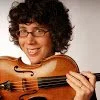
Winston Webber with “Best Seat in the House”
This interview transcript is linked to the podcast, video and show notes here.
Winston Webber:
When you're all together in this, it's a safe space. The concert hall is a safe space and you can hear this music and it gives you permission. You paid a lot of money for the ticket and you had all the trouble coming out and you parked and had dinner and got the program and everything. So you now have permission to open your heart to this music. That's why you came. And you've got the protection. All these people around you are doing the same thing. So you have this weird, incredibly personal, solitary experience, this solitary connection with this great music along with 2000 other people. Nothing comes close to that.
Leah Roseman:
Hi, you're listening to Conversations with Musicians, with Leah Roseman, which I hope inspires you through the personal stories of a fascinating diversity of musical guests. Today, I welcome the author and violinist Winston Webber, who has recently retired from his position as Assistant Principal Second violin of Canada's National Arts Centre Orchestra. The acronym we use is NACO, which can be confusing. I'm grateful that most of you listening are not in fact in Canada. So I wanted to give this some context. The focus of this episode is Winston's wonderful book, "Best Seat in the House: Love Letters to a Profession". And you'll be hearing Winston read from the book and share memories with us of musicians such as Pinchas Zukerman, Karel Ančerl , Ida Haendel, and Greta Kraus. He also shared his experiences of violin lessons with Lorand Fenyve and conducting lessons with Sixten Ehrling, many moving experiences on tours and insights into composers.
We also exchanged ideas about programming and concert presentation, and you'll hear his experience of quitting the Toronto Symphony to go to University of Toronto to study pre-med science while conducting several orchestras before he borrowed a violin to change directions again and audition for NACO. You can watch the video on my YouTube or listen to the podcast, and I've also linked the transcript. It's a joy to bring these inspiring episodes to you, and I do all the many jobs of research, production, and publicity. Have a look at the show notes of this episode on my website where you'll find all the links, including Winston's book, different ways to support this podcast, and other episodes you'll enjoy, including several with my NACO colleagues among over 250 episodes since 2021.
Thanks so much for joining me here today.
Winston Webber:
Thank you.
Leah Roseman:
You were just exclaiming at the red light of the recording. It brings you back to many recordings, I guess.
Winston Webber:
Oh my God. Off the top, I guess I should explain or apologize. You see the book back there where you can see it in the frame. This is cheesy. Everybody does that. Everybody who writes a book, they always have the book in the frame. If they're complete nobodies or if they're... Tim Snyder does that. He has his book up there. He'll be talking. He's got On Tyranny is back there. Everybody does it. So I though, well, who am I? So I'll put it there. And because it's a nice cover and also nice business cards, the same cover. So I've got all the merch.
Leah Roseman:
Yeah, it's so exciting. So we're going to be really having a focus on your new book, "Best Seat in the House: Love Letters to a Profession". I was curious, Winston, so when our orchestra, the NAC Orchestra had its 50th anniversary, you wrote a beautiful piece that was published on the website and you used that turn of phrase "best seat in the house" at that point. I was just curious if it was something that you'd heard people say before in terms of being on the stage or...
Winston Webber:
No, it was just there. And because I actually did have for 40 years the best seat in the house, you really had to sit in that chair to appreciate the sound. I mean, what is the budget of the orchestra? Millions of dollars anyway, something every year, millions of dollars. And I think, okay, I'm sitting here and I've got a pair of stereo headphones worth millions of dollars around my head with this amazing sound. The longer I was in the orchestra, the more I was amazed by it, really. I can't remember if I told you. You remember Nick Bryce, our librarian from way back. He wanted to get a pair of stereo speakers. He wanted to get a whole new stereo. After he retired, he wanted a whole new stereo. So we went over to this place over on Bank Street and it's a sort of medium high-end place, not ridiculous, but they've got some nice stuff. And you go into the music room, the audition room, and they've got all these speakers all around there. When they found out that we were associated with NACO, oh, well, we had to hear the best thing they had. And of course, I brought a CD of something, I don't know, Beethoven 5th Symphony or something like that. So we put it in the machine and they had these huge tall speakers and they were British. They had the little British flag on them. If a speaker has a British flag, it means it's really expensive.
So you had these big gorgeous things, I don't know, wood grain or something, and he put on the CD and it was so loud. Oh my God. It was just blasting out, blasting out. I said, "Please, please. Okay. Okay. I get the point." I said, "Isn't that fantastic? It's just like being in the orchestra." I said, "No, it's not. It's really not. Nothing can compare to being in the orchestra." The only thing I wished when I sat in that chair for all that time was that all those people out there that I was looking at while I was playing, I wish they could hear the sound that we were hearing on this stage because there are some places in Southam Hall that have good sound, but there are many places where the sound is not the best and even it's a lot better than it used to be.
But on stage, when the hall is properly set up, the sound is really unbelievable as you know, because you've spent a lot of time there yourself. So that's where it came from anyway.
Leah Roseman:
Yeah. The only exception I would say, often when there's a concerto, I just wish I could be in the hall because I'm not really hearing the sound and I can't hear.
Winston Webber:
That's very true. Where I was sitting, that's less true because I was right in the middle and very close. If you're sitting off to the side, then you really don't hear anything. I mean, that was of the many great things. All the years we had Pinchas and he would play, of course, concertos with the orchestra, with no conductor. And you know how he liked to step back into the group?
Leah Roseman:
Yeah.
Winston Webber:
So he was standing, I could reach out and, "Hey Pinchas," and touch him. He was right there playing like a god with his gorgeous Del Gesu. And I thought, "Oh, it doesn't get better than this to be that close to that kind of music making and see it and hear it like that." So it was a 40-year privilege really.
Leah Roseman:
There's so many wonderful memories in your book, and this is certainly part of one aspect of the book. And as I was reading it, some of these experiences I had shared because it was within the last 30 years, but I found myself thinking, does Winston have just a phenomenal memory or did he write some stuff down? Were you journaling some of these experiences?
Winston Webber:
No. No, I don't. I think I tend to remember more the, oh my God, wow, high points. My book is titled "Best Seat in the House" because it's a catchy title and it's how I felt when I was there. All I can say is it's really about not my musical life because I mean really who cares about my life? I'm not a celebrity, so it's not a memoir, but it's a view from a very good seat into the really amazing side of what we do. And it's my modest effort, I realize after the fact, to try to communicate that to anybody who might read the book and make them maybe more interested, get a different perspective, a different sidelight on what we do. So when they go to a concert, they might listen differently, look for different things and appreciate things differently.
Leah Roseman:
Now, it's interesting because you have this training and experience as a conductor as well, and that definitely comes into the book. And in one of the early chapters, you talk about Helmuth Rilling and having the opportunity to attend his summer conducting academy.
Winston Webber:
Oh God, yes.
Leah Roseman:
I was thinking about, you talked about his Gesprächskonzerte talking through works and that it would even be broadcast on radio. I though that was super interesting in terms of bringing people into the music because I think we need more of that now and we have less of it.
Winston Webber:
Oh, well, I mean, first of all, nobody did it like he did, although Bernstein came close and Rilling studied with Bernstein. There's actually a similarity of a really passionate, very learned but passionate approach to music. But his Gesprächskonzerte, first of all, they were all done from memory, which is mind-boggling considering the content in those concerts. The orchestra, because I remember I was there and I saw them, the orchestra would have several sheets of paper with the... It's like a playlist and second violins play this theme and here the flutes play this theme and now the sopranos will do this theme and then the cellos and the basses will play this counter melody and all this stuff, it was all in his head. He would just stand there and gesture it with his clear gesture.
And in Germany, of course, and I think at least in Germany they were done in German, but most of the rest of the world, he did them in English, certainly in English when he was doing the festival in Oregon. It's interesting you brought those up because it was sort of the... They were the essence of Helmuth Rilling, those concerts. They really were the essence of his unbelievable knowledge, but then he wore it so lightly like, "Yeah, I know all this stuff from memory. Of course I do, but what's the big deal?" And he just did it, very matter of fact, standing there in his black leather jacket. They all wore black leather jackets.
And you felt like that he had this direct identification with the music. Very few other conductors I've experienced were like that. And there was a big spiritual component with him too, obviously, because he did a lot of Bach and a lot of sacred music, although not all of it was like that. Of course, now he's no longer with us. I think he was in his 90s when he died. Bless him. But if you ask anybody who worked with him, you know Donna Brown? You ask Donna Brown about Rilling and she just won't stop talking. Of course, she was on a lot of his recordings. She was the soprano of choice for Rilling and Gardner and Trevor at the height of their recording careers in the '60s and '70s. So she was right there with them.
Leah Roseman:
Yeah. I was thinking about the changing media landscape and broadcasting, and when you were interested in joining the orchestra here, it's because you'd heard them on the radio so much.
Winston Webber:
Oh, yes. I think of that very often now, of course, because we don't have CBC broadcast. Other orchestras don't have those broadcasts either. Do you remember when the CBC used to send out, you could subscribe to it every month, it was a schedule of the broadcast for the month of all the orchestras across Canada and when they would be on.
Leah Roseman:
What I remember growing up in the '70s and '80s is you turn on the radio and there was always an orchestra playing from somewhere in Canada, and it just seemed normal.
Winston Webber:
Exactly. It was normal. And as I said in the book, that was when I first came to Toronto. I came to Toronto because I was out of school. I auditioned in Cleveland, Pittsburgh, Philadelphia and Toronto, and I got Toronto. So that's why I came there. And it was a fine orchestra and it was a wonderful thing right out of school to be playing in this big... It's a great orchestra. But one of the first things that happened was I turn on CBC and I hear this amazing playing, and it was the National Arts Centre Orchestra. And I though, "What's that? Gosh, I wish we played like that." And that's true, not only the way they play, but also the repertoire, because in those days, a big orchestra like Toronto played very little Mozart, almost no Haydn, never Bach, unless it was a cantata or something. And yet here's this orchestra playing like gangbusters, playing Haydn and Mozart and early Beethoven.
I though, shoot, this is fantastic. This is my dream orchestra because it was really like an orchestra, like a big chamber ensemble, the way Nako played and still does actually. So that's how I got to know NACO. I didn't know anything about it when I came to Canada. So it was the CBC that put me onto it and then I never forgot it.
Leah Roseman:
It's interesting that although our repertoire certainly evolved and we almost never play that repertoire like we used to, it's still, I think the way of playing together and certainly with certain music directors, we certainly had that chamber music feel that sort of culture's continued, right?
Winston Webber:
Oh, it absolutely has. And this is another thing, working with Pinchas, all the times we played with him without conductor, it was a natural thing. It was like stepping into comfortable shoes.
Leah Roseman:
When he was playing solo.
Winston Webber:
Yes, when he was playing solo. And ironically, it was like that with Trevor too, of course. Playing with Pinchas without a conductor. The orchestra always did that instinctively. It was like it was no big deal. I always felt it was actually the way we preferred to play. And it was the same thing with Trevor and for the same reason. I mean, they were like polar opposite musicians, although both great musicians in their areas, but it's just the music came off their body language. So it was so easy to play with them. This orchestra I think has always had that going back to the earliest days with Mario. One of the first things the orchestra did in I think the first year of Festival Ottawa, which was 72, I think, 72 or 73, was Mozart Marriage of Figaro, and Mario was in the pit playing harpsichord and conducting from the keyboard.
So it was in the orchestra's DNA from the beginning to work that way. I always think when, especially student conductors get up with the orchestra, I think, oh man, you have no idea what you don't need to do.
Leah Roseman:
Yeah. Actually, before, what advice would you give emerging conductors in terms of what you've observed and what you learned?
Winston Webber:
That is one loaded question. What's my advice? Apply to medical school. That's my advice. That's a hard question because people decide they want to be conductors for all kinds of different reasons, and probably most of them aren't very good. I don't know. There's a thing of elimination, I suppose, when someone becomes a conductor. The problem with conducting, and we've talked about this forever, is that orchestras are too good. They really are. So that you really can't tell, especially if you're sitting out in the hall, you can't tell, is this conductor really that good or is it just the orchestra? Because unlike anything else, the conductor up there who's doing all the conducting stuff could suddenly stop doing that and step down off the podium and walk into the hall and the orchestra would keep playing. And often it would sound better. That's what they never want to admit. It would sound better.
Of course, you need conductors for all the organizing and the deciding and when you get a truly great conductor, then you get a whole nother thing that comes off of them. I talk about that in the book too. That's what Rozhdestvensky called the radiation. What makes a great conductor? The radiation. What I would ask a student conductor is to think about... It's a story I write about in the book, Werner Thärichen, the Timpani player in Berlin before the war, who was a composer. So he would be sitting there... Timpani players often have whole movements where they don't play at all, so he had a score in front of him for something, usually the score of the piece they were playing, and he would be studying the score. And they had a not very good conductor that particular day. So he's looking at the score and the orchestra is sounding... Even Berlin was sounding routine.
And all of a sudden it changed. The sound changed. And it was like, "Wow, what happened?" It's like suddenly there's resonance and it sounds musical and it's got vitality and he looked up and nothing looked different. Then he saw that Furtwängler had walked in the back of the hall, but that's a great conductor. That's something the students would never experience, but that's a great conductor just by being there. Musicians play differently. Not very many conductors can do that. Fortunately, fortunately, our new guy... Hey, here we are. I have a prop. Look, I have a prop. This guy...
Leah Roseman:
John Storgårds.
Winston Webber:
This guy does that. John Storgårds. Of course, he's been coming here for 10 years. We've known him for all that time. The thing I wish, speaking of student conductors, I wish there had been people in the hall at the very first rehearsal with him on something. I think we were doing Sibelius first symphony and everybody comes out, all the management comes out. Oh, welcome back, John Storgårds. Oh, very nice. And then everybody disappears. I think, wait a minute, you're going to miss the magic. You're going to miss the moment. And so we just start. He's standing there in his worn out t-shirt and three day growth and the whole thing. And we start, and it's clarinet and Timpani, that's it, to start Sibelius one. He just stands there and starts Sibelius one. And I though, "That's it. There's the sound. Hardly anybody's playing, but there's the sound." Suddenly, Sibelius is in the room. I don't know how he does that, but he does that and we did it. Well, Kimball and whoever was playing Timpani then did it. Sibelius came in the room. That's a great conductor, and there's no way you can teach that. It was just him.
You want me to read something? What would you like me to read?
Leah Roseman:
I assumed you picked two or three things to read today?
Winston Webber:
Oh, I've got more than two or three things. This is sort of typical, I think, of at least some of the book. It's from the chapter, "When Will You Pay Me, Say the Bells of Old Bailey". And it goes like this. A century ago, in a dark, damp corner of the city of London, a 10-year-old boy made his way up the aisle of the gloomy church of St Sepulchre-without-Newgate, squeezing his way past the Newgate prison execution bell mounted on a pillar in the south aisle, trying hard not to look at it. He would likely have preferred to be anywhere else, but he wanted organ lessons and his father sang in the choir, so there he was. Early churches on this site were dedicated to St. Edmond who was killed by the Vikings. Long ago, a Protestant vicar of St. Sepulcher's, John Rogers, was burned at the stake for the sin of translating the Bible into English.
Selection committee for his successor must have been interesting. Later, a parishioner named John Smith traveled to the American colonies where he was captured by the Powhatan tribe. His life was saved by none other than Pocahontas, but unlike the Disney movie, Pocahontas did not marry Smith, but another man named Rolfe. Smith came back to England, met Pocahontas again, no record of how Rolfe felt about that, and is buried in St. Sepulcher's south aisle, not far from the executioner's bell, and built into the railing just outside the church is London's oldest public drinking fountain. It was funded by a member of parliament named Samuel Gurney, who went on to found the Metropolitan Drinking Fountain and Cattle Trough Association. Anyway, the frightened young organ student was one master, Henry Wood, later to become Sir Henry Wood, founder of the immensely successful Promenade concerts, The Proms.
Leah Roseman:
Thank you.
Winston Webber:
Just for fun. That's for fun. That's not music history. That's not awesome performance of Britten Violin Concerto by Ida Haendel. It's the background of Sir Henry Wood. And as you probably know, St. Sepulcher-without-Newgate is where the musician's chapel is. You know about the musician's chapel.
Leah Roseman:
You told me about it, I think when we were on tour there or something.
Winston Webber:
It was dedicated actually to Sir Henry Wood after he died. Well, it's a side chapel in the church and all the stained glass windows are like St. Cecilia and musical things. Sir Henry Wood's ashes are buried there and there is a book of remembrance, great big, beautiful parchment thing. And every year, British musicians who have passed away the year before, their names are inscribed in the book and there's a special service, an even song, usually in April or May, where all the names that were inscribed in the book that year are read out and there's a special service. And that's been going on now for what, 70, 80 years? It's really quite beautiful. So that's the other connection with St. Sepulcher is that that was... I mean, Sir Henry Wood practiced organ there at 10 years old, now he's buried there. And he liked musicians.
That was the thing about Sir Henry Wood. He really liked musicians.
Leah Roseman:
Wasn't your father honored in that Book of Remembrance?
Winston Webber:
Yes, he was. I did that. And actually the way it worked out, the year I went there was 2016, the year I had his name inscribed in the book, even though he died in 1961. So his name was just above David Wilcox. So I thought that's not bad company really. And it was a big thing to do for my father. So heard his name read out and all that. So it's a very special gesture of respect to British musicians.
Leah Roseman:
So you do talk about your father in the book. What do you want listeners to know about him?
Winston Webber:
Well, he was born in 1895 in England during the reign of Queen Victoria. So that was an issue for a kid growing up in Detroit, to have a father who was born in the reign of Queen Victoria, and I'm going to Detroit public schools. I was like, it wasn't really a good fit that way. And he was at least 10 or 15 years older than all the dads of my friends. He was also much better educated. He was British. He did the whole British education thing. He really knew stuff and he could write beautifully and had beautiful handwriting and the whole thing. He was a really excellent pianist. That's how he met my mother, giving her piano lessons. But he was also an organist. That's what he was trained as an organist in the church of England. Actually, he studied in Coventry with Harold Rhodes, who was the organist of the original Coventry Cathedral.
So for various reasons, he found himself in Detroit in 1929 when the Depression hit. And as it happened, a brand new Christian Science church, he wasn't a Christian scientist, but a new Christian science church had just been built, brand new organ, and they heard him play in the Fisher Theater, which was a legitimate theater then and now. They said, "Hey, we need an organist. Would you like the job?" Here it is, the Depression. "Would you like the job?" The obvious answer was yes. So he supported himself through the Depression with this job as an organist. And the thing he liked most about playing for a Christian science church was that they didn't have a choir. He was brought up in the Church of England where you have to deal with choirs and they're volunteer choirs, and some people are really good at that. He was not.
He didn't want to constantly cajole and, "Oh, sorry, Mrs. Smith isn't here tonight." They have one paid soloist, and it was a very fine professional soloist, and he loved that. So he would work with this one professional singer. He was there for, I don't know, some 30 years, and that's what I remember most about him, was that he was a man of great dignity, and there's not too many kids who get to go back... Well, this is in the 1950s, when people got dressed up to go to church, and he wore morning clothes. In other words, it was tails only with a gray thing and a cravat instead of the white tie, so very formal. And he would be there at the organ console in this sort of a pit sort of thing, but I could still see his head. And then I would hear my father play through the service, and of course, an organ is a very big instrument, so he was very impressive how he would play, and he was really a very fine player.
But the best part was that after the service, I got to go back and say hi to him while he was still at the organ. And in order to do that, I had to go out in the hallway where everybody else was, and then there was a door that said, "No admittance." I got to go through the door that said, "No admittance," and go down some steps, and there was my father. For a little kid, that's a big deal. So that's basically most of what I remember of my father.
Leah Roseman:
Let's talk about... There's something you said in this book that I have heard other people say, and I don't necessarily agree with it. You said orchestra musicians, they trained for years to become soloists, and it wasn't true for me. Was this true for you? Was this your aspiration?
Winston Webber:
No, it was not true, and that's more an observation of most of the students that I studied with in university, that many of them did have ambitions to be a soloist. You could tell by the way they played and by just their attitude towards things. I had to, "Oh, we have to go to orchestra now." That's never how I felt. I love playing in the orchestra. The first time I played in an orchestra as a small, 10 or 11 years old, just blew my mind. I couldn't believe what this was. And I was lucky because back then there was music instruction in every school down into elementary school. If you wanted to play the violin, I got a violin and got some instruction. And there was a thing called the All City Youth Orchestra in Detroit, which was a big orchestra that played real music with the real stuff on the stands.
And the orchestra played in the Cass Technical High School Auditorium, which is the auditorium where the Detroit Symphony made many of their best Mercury recordings. The Wilma Cozart Fine and all of that, those amazing recordings. Because the auditorium was one of these, I think it had three balconies, went way the hell up, and a beautiful warm acoustic. It was a real concert hall. And that's where this orchestra played. And the first time I was on stage with this big group and heard this sound in this big hall, I was hooked like no tomorrow. And I though, okay, that's it. Nothing will have this kind of effect. And I think my last day playing in the orchestra was the same thing. I though, wow, this is amazing. This is just amazing.
Leah Roseman:
Yeah. As is revealed in your book, when you were 30, you had a change of heart.
Winston Webber:
Yes. Midlife thing. But also to be fair, the Toronto Symphony today is a really great orchestra. No question about it. The Toronto Symphony in the 1970s was a very fine orchestra. It toured internationally. I did international tours with it, but it was really a pretty grumpy group of people. And that was pretty well, I think, the standard for that time that orchestra players became disillusioned at some point, but kept going because that was what they did. I think probably the greatest thing in the length of my 50 years in the business is to watch orchestras grow past that. And now orchestras are, especially the young players are full of enthusiasm and idealism and okay, let's play some baroque music. No vibrato, no problem. Sure. Hey, let's have some fun playing Baroque style. The old orchestra was a grumble. No vibrato. Now of course, the orchestra does it with joy.
And that was a great kind of development for me to witness within the length of my career. And also the amount of personal initiative that players take now, how hard they work. Oh my God, people work hard. And the level of preparation at rehearsals now is no comparison to when I was first starting out in the '70s. I write about that in the book too, when the orchestra really was not prepared and we had a great European maestro who just called the orchestra over the coals for it. You wouldn't need to do that now.
I can't remember how we got here, but that was - Well,
Leah Roseman:
The fact that you left the Toronto Symphony when you were 30 to go -
Winston Webber:
That's right. Yeah. I always had this idea of going back to school and applying for medical school. That went way back. In my first or second year with the TSO, I though, I'm still in my 20s. I could still do this. I got good grades. I could go back and take the science courses and maybe do this. And so I though, okay, it's now or never because I was just turning 30 and that's actually late, but it's just still possible. So that's what I did. Went back and took courses, all the science courses at University of Toronto. That was probably one of the best experiences of my life doing that. I mean, not only the way... I mean in school, if you're a musician, all you do is practice. I practiced all the time and everybody I knew in school practiced all the time because if you couldn't play the notes, then all the music theory and all the music history wouldn't help you if you couldn't play.
It was very practical. So it was amazing to go back to school and take real courses and really hardcore stuff where the courses were amazingly well designed, very efficient. The exams were, wow, somebody really thought this through. The professors really knew their stuff. And because they were pre-med science courses, most of the students in the class were pre-med students. So in the lecture halls, it was dead silent. These kids were hanging on every word like, "Is this the exam question that's going to get me into medical school or not?" So it was this almost desperate thing. I didn't feel quite like that because being older and always liking the sciences anyway, I made friends with the professors.
I said, "Hey, aren't you a little bit old to be in this class?" "Well, yeah, I'm thinking of this, that and the other thing. "And we end up going out for coffee and one of my chemistry profs turned out to be a real music lover, so he invited me over and we'd play records and he liked that I knew all these singers. And so it got to be really quite neat to have that different kind of connection with the guy up at the blackboard who was writing all this stuff. Oh my God, how does he do that? So that was fantastic.
I guess the thing, and I write about this, the only part of the book I write where I write about myself, it was really looking like this could happen. I got a letter from Queens Medical School. They were really interested in me. They thought my background was interesting. Send us your MCATs as soon as you take them. We really want to talk to you. Okay. And I was at a party with a bunch of doctors, which is always, I love to do that. Well, I know doctors and I go to parties full of doctors. Wow, this is cool. And there was a guy who turned out to be a dermatologist, but that doesn't matter. And he was sitting on the couch and he saw me and he said," Hey, what are you doing? You're not really old enough to be a doctor, but you're a little old to be a student. What are you doing? "And I told him that I was taking pre-med courses and I was doing my hospital volunteering and I had this fellowship at Princess Margaret and written a paper and all this stuff and I was all excited about it. "But you look a little old for pre-med. What did you do before?" I said, "Well, I was a violinist in the Toronto Symphony." And he, as I say in the book, he almost threw his drink at me. Said, "What are you doing? Any idiot can be a doctor. You have to have talent to do that. You were in the Toronto Symphony and you left. You out of your mind?" And I though, well, what took me aback was I did not have a good response for him. "Oh yes, I want to become a doctor because this, this, this, and this." I wasn't going to say because I want to save lives while the city sleeps.
I'm not going to do that kind of thing. He really had me. I though, why am I doing this? And in fact, you do sort of have to have talent to get into a fine orchestra and you know how hard you have to work to win an audition. It's crazy. I said, "Yeah, I did give all that up."
This will take seven minutes. Is that too long?
Leah Roseman:
That is just fine.
Winston Webber:
This is about my first year in the Toronto Symphony with Karel Ančerl. And that was really starting at the top because Karel Ančerl was a great European maestro and also a Holocaust survivor. And his story during the war is actually pretty hair curling. So we had this amazing man as our music director, so everybody just respected him all up and down and he was a fabulous musician and a great conductor and conducted the Czech Philharmonic and was a student of Václav Talich and all this stuff. So it was like you can't argue with anything. This was as good as it gets. And that was my first year. I'm starting at the top here. What's going to happen now? And what happened was what you would expect. It wasn't... Anyway, so this was about a week in which I had the week off actually.
Well, it was next week. We were doing one of the Shostakovich symphonies that had a very difficult first violin section and we played it really badly, like really badly.
So we had a set two with him about that and he really laid into the section. And the next week I had the week off. We had rotating weeks, the big orchestra, you can have rotating weeks off in the strings. So I went to the concert. I though, hey, I want to hear... It was Bizet Symphony in C. That was one of NACO's party pieces, as you know. It's a virtuoso first violin part. Wonderful, transparent orchestration, perfect piece for NACO. It was not a perfect piece for the 1972 TSO. Shostakovich 10, sure. But Bizet Symphony sort of... Anyway, so the concert wasn't good. And so I'll start there.
And this is from the chapter called "Last Week Was Unacceptable". The following week, the first thing he did was tear a strip off the violins. He's tore a strip pretty much off the whole orchestra, actually. No matter who is conducting, you must play your best. The audience pays the same. Last week was unacceptable. 50 years later, I remember those words like it was last week. And so we learned that Ančerl was our music director every week of the season, not just his weeks. Again, he was right. But as the season progressed, we realized that something else wasn't right. The great man didn't look well. He missed some concerts. A recording of Smetana's mighty symphonic cycle Ma Vlast was on the schedule. Ma Vlast in English is usually my country, but that doesn't come close to doing justice to the bone deep patriotic and personal weight that that title had for Smetana.
Semyon Bychkov, today's Chief Conductor and Artistic Director of the Czech Philharmonic writes this. Ma Vlast, my homeland, mijn vaderland, patria mia, Ma patri, Rodina. We all have one. It may be called by a different name, but the feeling is the same. The sense of identification with one's roots and of belonging, the pride we take in the best of our heritage and the pain of having to live with and come to terms with its darker pages. Smetana speaks for his country, it's longing for independence at a time when it was dominated and needed to assert its national character, its language, its way of thinking. While looking at its past, he dreams of its future.
Every year for the past 70 years, Ma Vlast has been performed on the anniversary of Smetana's death as the opening concert of the Prague's Spring International Music Festival. Ma Vlast was Ančerl's last recording with the Czech Philharmonic before the Soviet invasion meant he could never go home. Nothing could have been a greater privilege than to record this great work with him, but it was canceled. We became concerned for him and we were right. He had been the Toronto Symphony music director for only four years, but his identification with the orchestra and the orchestra with him was complete. With Má Vlast canceled, we though we might never again be so close to his heart, but on that we were wrong. Ančerl's 65th birthday was April 11th. As it happened, we had a concert with him that night, so despite his increasingly dubious health, somebody got the bright idea of surprising him.
The plan was instead of playing the swashbuckling opening of the big piece for the evening, Strauss's Don Juan, we would play happy birthday instead. Then the mayor of Toronto would come out and present Ančerl with a plaque. What could possibly go wrong? So Ančerl bravely starts that muscular tone poem swinging for the fences. We play happy birthday instead and the poor man staggers back like he's been shot. The surprise wasn't funny at all, not one bit. Unperturbed, whoever was running this charade cheerfully came out with the mayor and the plaque and oh God, a microphone and asked Ančerl still breathless with shock to say a few words. Somehow he managed, but we were cringing at the obvious inappropriateness of the thing. Finally, the presentation was over and Ančerl managed to conduct Don Juan of all pieces, but he was clearly shaken. Equally clearly, people had not realized until then just how ill he was.
Just a month later, Ančerl conducted Dvořák's Requiem. This transcendent work is the grief of the ages in Latin, of course, but musically in Czech, if you can imagine such a thing. Acčerl was not himself. He was pale and bent, so unlike him. But this masterpiece from the summit of his culture held him up and us with him. The dress rehearsal had the whole Toronto Mendelssohn choir, 300 fine singers, as well as four soloists and nearly a hundred musicians of the Toronto Symphony, 400 people on stage, but the hall was empty. It was just the dress rehearsal. But soon it became obvious it was much more than that. Nothing was said, but everyone could sense that Ančerl was looking at his last days, and here we were with him playing this immortal music that was so dear to him. Gradually, we realized that this dress rehearsal was his farewell to us.
We played for him like we had never played before. The magnificent choir sang like they had never sung before, all to the empty hall, just for him. It became our private benediction and his.
At the end, there was no sound. Ančerl placed his hands gently on the score and looked at it for a long time. Then he slowly stood and walked off the stage all in silence. When he had left, nobody moved, 400 people. It seemed to last forever. Finally, a chair shifted and people quietly began leaving the stage. We were all moved beyond words by the experience we just had with this great, great man. Our love and respect for him, his love and respect for us, expressed through the almost unbearably powerful music of his countrymen. Official records say we did another program with Ančerl the next day, but I have no memory of it. In any case, those were his last concerts with us. He died just two months later of complications from the chronic hepatitis he'd contracted in Auschwitz. His parents, his wife and his son were murdered there, only he survived.
And we had just played the great requiem of Dvořák with him, he conducting his heart out for us, us playing our hearts out for him, and for a hall full of ghosts.
Leah Roseman:
Thank you very much for reading that.
There’s so much more coming to this interview with Winston and this short break is to let you know that I’ve linked quite a few episodes for you in the show notes for Winston with many of my NACO colleagues, including Elaine Klimasko, Yosuke Kawasaki, Carissa Klopoushak, Douglas Burden, Christopher Millard, Rachel Mercer, Jeremy Mastrangelo, Fréderic Moisan, Julia MacLaine, also conductor Jack Everly and author Nancy Shear, among more than 250 episodes since 2021. Sign up for my newsletter, where you’ll get exclusive information about upcoming guests, consider buying me a coffee on my Ko-fi page, and buying some unique podcast merchandise. You can also review this podcast, share it with your friends, and follow on your podcast app, YouTube, and social media. It’s a very challenging media landscape for independent podcasters like me, and I do all the many jobs of research, production and publicity. Thanks. Now back to Winston.
You sold your violin too.
Winston Webber:
I sold my fiddle. Well, I had to because I didn't have enough money. I sold my fiddle. I kept conducting. I had some conducting jobs then. So the conducting jobs and selling the violin sort of paid for tuition, and that's what I was doing. And going down to New York and taking conducting lessons with Sixten Ehrling. It was totally, totally nuts.
Leah Roseman:
I was going to ask you about that. So you were having lessons with him in New York when you were already back at university?
Winston Webber:
Yeah. It all happened at the same time. It all happened at the same time because I went down there, I had an interview at Julliard for their conducting program and they said, "Well, you look a little bit old to be a student. What are you doing now?" I said, "Well, I'm music director of a chamber orchestra in Toronto and I'm music director of a semi-professional orchestra in a suburb of Toronto, and I'm music director of another orchestra outside of Toronto. So I've got three orchestras." And they said, "What are you doing here? Our graduates would be happy to have one orchestra." So I thought well, I don't know really what they're trying to say. "But you should just study privately with our professor of conducting Sixten Ehrling, just take private lessons with him." I thought, "Well, yeah!" because I knew Sixten Ehrling because he was then the music director of the Detroit Symphony, which was my hometown band, right?
I'd seen him conduct, and I knew he was a very famous conductor and very fine, and here he is, professor of conductor at Julliard. So I called him up, "Sure, I'll take you as a student." So I went down every month, flew down to New York and took some coaching with him in his studio at Juilliard, and then walked around New York feeling very serious, like, "Oh, I'm studying conducting in New York." Actually, he was very good as a conducting teacher. I've often thought later watching other conducting students, what he used to do in his studio, his favorite thing to do with a student was to assign a recitatif from one of those really squirrely French operas and then bring in not a very good singer and a pianist and have you try to keep it straight. That was probably the hardest thing. Or he said, "Okay, you're conducting Beethoven Pastoral Symphony.
Well, start." "Well, there's no piano. ""That's all right. If you're conducting well, I will know where you are." That was intimidating just to conduct in silent air and try to show what the music was. So those were really good, actually really good lessons. And since I was conducting at the same time, that was really pretty good. It was a neat thing to do. But it was the party with the doctor that did me in because I didn't have an answer for him. And the thing that really got me, I write about this in the book, it's the only chapter about me, is I was meeting a friend at the Royal Conservatory on Bloor Street.
Well, I might've been meeting Lorand Fenyves actually about something. Anyway, I was waiting in the hallway and they have a bulletin board, and on the bulletin board was notices of vacancies, and there was notice of vacancy, National Arts Centre Orchestra, violin. I though, "Oh no, now I'm in trouble. I'm in real trouble," because this is the orchestra I'd heard all these years and thought was so wonderful and, "Oh wow, I wish we played like that." Now here is an opening for a violin in that orchestra right here at this sort of cusp, "What am I going to do?" I thought, "Okay, I can't pass this by. I can't let this go past." Leah, this was nuts. This was nuts. I didn't have a fiddle. I went across the street to Michael Remenyi's, who was a friend of Lorand Fenyves so we all sort of knew each other.
I said, "I'm going to play an audition for the NAC orchestra, but I don't have an instrument." So he found a nice violin. He said, "Here, you can play this, and when you get the job, you can pay me for it." But what do you mean when I get the job? If I get the job? So he gave me this fiddle and I just started practicing like crazy. I had to do an audition tape for the orchestra, some unaccompanied Bach or something.
By that time, I had stopped going to lectures, the science lectures. So if you even miss a week of classes at university level science classes, you're done. It's like falling off the train. The train disappears in the distance and you're off. So I though, okay, that's it. The decision is made for me. I've got NACO or bust. If I don't get a job in NACO, I'm going to be driving a taxi. So fortunately, I got the job. I look back now and I think, how could I possibly have taken that kind of risk? How could I have done that? Except that I loved the sound of the NAC orchestra so much. I loved the way they played. I loved the music they played. I thought this was the chance to do what actually I've always really wanted to do musically. If I can get this job, this is really...
If I'd been in the NAC orchestra, I wouldn't have quit. I wouldn't have quit to go back to school. None of this stuff would've happened. It was great that it did, and having gotten the NAC orchestra, I never once regretted it. I loved it for 40 years.
Leah Roseman:
And that violin that Remenyi loaned you, Winston, is that the one you ended up buying?
Winston Webber:
Yes.
Leah Roseman:
Okay.
Winston Webber:
I bought it and I played it for maybe three or four years and then traded it on something else and then eventually got a Peresson, but that was many years later. Yeah, that was the violin.
Leah Roseman:
You mentioned in the book that you had some lessons with Steven Staryk. You don't go into detail about that. You talk about him a little bit, but do you want to reflect on those lessons a little bit?
Winston Webber:
Oh, Steven Staryk. Actually, he set me up for, to whatever extent my playing was bulletproof. It was never as bulletproof as I wanted it to be, but as bulletproof as it became, it was because of Steve Staryk, because he had this routine set of bow exercises and left hand exercises and his old daily dozen left hand things. Have you studied with him?
Leah Roseman:
No.
Winston Webber:
And of course, he was a fabulous fiddle player. Oh my God, he could play anything. And he was really a very down to earth, feet on the ground, cold shower, the real side of the music business sort of guy, and he had reason to be that way, as I also write about. But as a fiddle player, he really had the whole mechanism put together because that's what he did himself. He put his playing together, each nut and bolt. He knew how he did it. So he could give you the same exercises that he did, and to the degree that your musculature would take it, as an older student, it was risky, and whatever your talent could do, you could make fantastic progress technically. So I think the year, year and a half I studied with him was incredibly worthwhile. It was very tough. He was not a warm, fuzzy teacher, but this was really the nuts and bolts of fiddle playing. It was great.
Leah Roseman:
So you were already in the Toronto Symphony when you took lessons with him?
Winston Webber:
Yeah. Yeah. Also, when I studied with Lorand Fenyves I was already in the TSO. I can't remember how I heard about him, but it was very early on when I was in Toronto. I mean, I got the job when I was 23, so you know how it's like that with the young kids in NACO now. They keep studying, they keep taking coaching lessons, they do recitals and they do all kinds of stuff. I really didn't stop studying. I got the TSO job, but I took lessons with Steve Staryk. I took quite a few lessons with Lauren Fenyves just because you want to keep studying, you want to keep improving and learning things. When you have people like that around, how can you not go and take lessons with them? And of course, Fenyves was a whole different... Oh, good heavens. Well, you've probably heard people talk, like Elaine will talk forever about Fenyves.
It's a good thing and it's a problem as well that players my age are sort of the last generation who studied with the great pre-war musicians. Like my teacher in school, Ángel Reyes, was a prize winner in the very first Queen Elizabeth of Belgium competition, the one that Oistrach won. That was 1937.
And Lorand Fenyves graduated from the Franz Liszt Academy in Budapest in 1936. So this is between the wars, European players, it's a completely different attitude towards music than we have now. And I'm not sure if it was really better, but it was certainly different. I write about when I was in Detroit as a kid just in high school, the names that I kept running across were names like Bistritzky and Sirounian and Mischakoff. Mischa Mischakoff was the concert master of the Detroit Symphony then, and these are great central European names. And like I said, I learned to respect the music of Beethoven Brahms as much as they did, and of course they respected it because Beethoven and Brahms saved their lives.
They were all refugees from Hitler. So when a musician has a background like that, I can't say enough in terms of thanks and respect and just sheer awe for someone like Lorand Fenyves with a European background like his, he studied with all the big names in Hungarian music in between the wars, but I'm sure you know the Orchestra of Exiles. This was the orchestra put together in Palestine by Huberman as a way of getting out several hundred, well actually ended up being a couple of thousand, including their families, central European Jews before things closed in because he saw it coming probably because of his political connections and his amazing intelligence, he saw it coming before a lot of other people did, and he wasn't committed to living in a particular place like other people were. It's very hard to leave when you've got a job and you've grown up somewhere.
It's hard to think... Well, he knew that all these people were thinking, "Well, This will blow over. It'll get better. It will blow over. This is just a passing thing." And he though, no, it's not just a passing thing. And Fenyves was one of the violinists who left Hungary to join the Palestine Orchestra that Bronislav Huberman was putting together, and he became the concertmaster. So this is a whole orchestra literally of exiles. And they played their first concert conducted by Arturo Toscanini.
Huberman got Toscanini and Toscanini conducted without a fee because he believed in the project. He was, of course, a huge anti-fascist and wouldn't conduct in Italy with Mussolini and all this. He actually got beat up in Italy, Toscanini did, for his anti-fascist views, and then he left. So he conducted the first concert, which gave the orchestra great credibility. And Fenyves was the concert master of that orchestra. It later became the Israel Philharmonic. And then from there he went to Geneva and played in the Orchestra de Suisse Romande with Ansermet, and then eventually ended up in Toronto where he taught 24 hours a day, seven days a week, forever. And he would go to his house and study. I didn't study with him at the university. I studied with him privately. And he always had a pot of just total kick-ass espresso on the stove.
Medaglia d'Oro in one of those aluminum Italian espresso makers. And oh, you'll have a cup of coffee. She'll have a cup of coffee. Elaine loved talking about Fenyves' coffee because you'd have one cup of coffee and you'd be wired for the rest of the day, but of course you wouldn't say no.
But his house was... Fenyves, his house, and also his amazing wife, Vera, were this amazing repository of European culture, pre-war culture before things went crazy. The house was full of art, beautiful paintings and sculptures and things. So you felt like you were taking a violin lesson, but you were taking a culture lesson with him. He was a great storyteller. Now, of course, you just turn your iPhone on, record, and you'd have it sitting in your pocket. We didn't have things like that then. I just can remember some of the stories he used to tell. He was telling stories all the time, just these amazing... And they always had a real human twist in them.
So he was a wonderful fiddle player and a wonderful human being and you just can't say... These miraculous people come in this life once in a while. And music is one of the ways you get to contact people like this. And when I write about The Life It Brings, it was in the introduction to the book, The Life It Brings. And that was actually a phrase, it was the title of a book by Jeremy Bernstein, a physicist. And this physicist had worked at the Institute for Advanced Study where he rubbed shoulders with Einstein and Bohr and Pauli and Oppenheimer, all these guys, the guys that Richard Feynman called Giant Minds. And he wrote this book called The Life It Brings, which was basically about how grateful he was just to be there at that time and that place to get to know these astonishing people.
And it's the same way with music. I mean, in our careers and with the people we've experienced at the NAC Orchestra, maybe less now than before because a lot of them have died, these pre-war, mid-war, just after the war players that came with this immense amount of intellectual and cultural atmosphere around them. And we got to know them like Ida Haendel. Oh my God, Ida Haendel. To have known her, I mean, she played here a lot and she was a good friend. As you know, she was a good friend of the orchestra. She liked us and we liked her and she wrote letters for us back in the bad times.
We got to know her. You remember when she played at Fanfair? She was here. She happened to be in town over one Christmas. I don't know. Well, I mean she lived in Montreal, so she wasn't far away. We were doing the Fanfair concert and we though, "Well, hey, we always have a celebrity conductor. Let's ask Ida Haendel if she would like to conduct." She says, "No, I want to play the Vip." She wanted to play the whip in Sleigh Ride, and so she did. And she was really good at it. Anyway, I though this hit in a number of directions that were entertaining. But you were in the orchestra when she did the Britten concerto with us.
Leah Roseman:
Yeah. And I heard her as a child many times because I would come.
Winston Webber:
So you know about Ida Haendel, what just an amazing player she was. No, I was just going to say, because I wrote about this too, that you have Franz-Paul Decker who was a student in Cologne during the war and he conducted opera, I guess maybe in small towns around Cologne during the war. Imagine. Ida Haendel was also a pre-war European. So these two would get together over a piece like the Britten concerto, which is, I don't know how you would describe it because most people listening to this probably would never have heard it. I certainly didn't know it until she played it with us. It was one of the dozen violin concertos that were written between 1930 and 1939. All of a sudden, all these great composers were writing violin concertos when Europe was going to hell basically.
The Britten concerto was a concerto funebre which he realized he could write after hearing the world premiere of the Berg Concerto in Barcelona, which was just before the Spanish Civil War. Britten had a lot of friends who had volunteered decide to fight on the loyalist side, some of whom did not come home. So he wrote this concerto as a sort of in memorium to them, just like the Berg concerto is a memorium to Manon Gropius, this kind of thing. And so here's Ida Haendel who had this particularly grim sense of humor, you remember, and she was very funny, but it always had an edge on it. And of course, Decker, who was very much like that, and the two of them just bounced off each other like crazy. So we did this, the Britten concerto with her, and in the dress rehearsal, it's one of those weird things.
It's like the dress rehearsal for the Dvorak requiem I write about with Karel Ančerl.
The hall is empty. This is just a dress rehearsal. So it's just the musicians with this amazing... Amazing is such a weak, stupid word. Everybody uses it. That concerto is the grief of the ages. Somehow Britten got it in because he had a lot of personal reasons to feel all these things too, including his friends who died. And there's Ida Haendel up there and she was doing something with this music that you sit back and think there's something going on here. This is not just a dress rehearsal. She is doing something. She is into this music in a way you don't hear very often. Decker, of course, was completely with her because they were good friends and he was a great conductor. She's playing this piece and people in the orchestra had tears running down their faces.
All you can say is you had to be there, but it was true. People were just totally wrecked by this piece. She got to the end and we're sitting like, "Oh my God, what just happened here to this empty hall? What just happened here?" And then Decker turns around to her and said, "Ida, don't do that to me." So this is the weird thing. In a thing like this, someone like me can say, "Oh, this was the most amazing thing. Oh, wow." But that doesn't really communicate what was really amazing about it. You had to be there. You had to hear it. So that's why I would encourage anybody who's been hanging in this long to come to some concerts. If you don't come to concerts, come. If you come to concerts, come more often and hear what happens when it happens live because there's nothing like it.
There's nothing like it.
Leah Roseman:
Yes. And I think listening in community is very different as well.
Winston Webber:
Oh God, this is absolutely the thing. It's a weird... I mean, fortunately now after COVID is now five years in the past, now we have full halls again. There's 2000 people out there. And when you play a piece, you can play... When we did those concerts of, remember Bugs Bunny cartoons, George Doherty was conducting, and this was all the Warner Brothers, famous Warner Brothers cartoons. And we would play the Rossini overtures and the opera stuff and all that. And it was so much fun to play this concert when the audience was laughing all the time. Or we'd play the Harry Potter movie and the audience is cheering, "Harry, you're our Wizard Harry." And everybody cheers for that sort of thing. And it's the same communal thing when you have a piece like the Britten Concerto that somehow when you're all together in this, it's a safe space.
The concert hall is a safe space and you can hear this music and it gives you permission. You paid a lot of money for the ticket and you had all the trouble coming out and you parked and had dinner and got the program and everything. So you now have permission to open your heart to this music. That's why you came.
And you've got the protection. All these people around you are doing the same thing. So you have this weird, incredibly personal, solitary experience, this solitary connection with this great music along with 2,000 other people. Nothing comes close to that.
Leah Roseman:
You were saying about program, people read the program. I am a big proponent of speaking to the audience and making a connection, like you were saying about the Britten concerto, for example. It's going to have an impact whether you know the history or not. I would argue it's going to have more impact if you understand the context. And we have more and more new audiences coming in who aren't familiar with... Or we're playing new pieces that no one's heard before, newly composed pieces. And there's often a context I think that really is going to help people appreciate it more. What do you think about that? I mean, you write program notes, but speaking from the stage, connecting in that way.
Winston Webber:
First of all, it depends on who does it.
Leah Roseman:
Yeah. Okay.
Winston Webber:
Because some people are much better at it than others. Maybe because I'm old-fashioned. If you're going to have... For certain concerts, yes, no question. I think if you're going to have Ida Haendel playing the Beethoven Concerto or Britten Violin Concertos, one of those, I don't want to hear speaking first. I want it to be a musical space. It's a funny sort of shift of gears. I like to think for a serious concert, which has become unfashionable, but there should be serious concerts. You come into the hall, it's not a place for spoken language because that's a different part of your brain that's engaged. It's a different part of your intellect that you should be focused on hearing music and letting the music speak to you. That said, it's harder now because we don't have really good programs. We don't have programs at all. We have maybe one sheet of paper that the audience gets.
The audience used to get a booklet. Even then, even if you had wonderful program notes, you probably wouldn't have time to read them properly. The lights go down, so you can't read them during the music. Now, if people really want to know, they can go online and get the program notes ahead of time, or they can look up the piece if they want to look up something about it. Most people won't do that. They won't have time to do that. I don't know.
Leah Roseman:
How about pre-concert lectures?
Winston Webber:
Yes. No question. That's right. That's it. That's like a different space, a different thing. If people would come, I think that's ideal. If people would come even half an hour early and not in the concert hall. I mean, there's so many nice spaces now with the renovated lobby, all these smaller spaces where people can do things. And if you have somebody who knows what they're talking about and do a thing, I mean, ideally with the artist, although they may not want to do that.
Leah Roseman:
I don't think it's fair to artists, and I would argue even speaking during a concert, which I'm still a proponent of, you can get a member of the orchestra or you could have a person whose job it is to do this. I just feel like it's lacking and often things fall flat because people don't know what they're hearing, especially with a lot of new music or unfamiliar music. So just my opinion.
Winston Webber:
This is for sure. Well, either new... And actually, a lot of pieces. Do you remember when we did Opus 95 Beethoven Quartet with Pinchas?
Leah Roseman:
Yeah.
Winston Webber:
I have the recording off the air of that. Have you heard that? Do you know what that sounded like? I mean, it was awesome. It just came out and it rubbed you by the throat. And then it did its Opus 95 thing, which is just... It's a personality disorder, that quartet. It goes so crazy from up and down. It's astonishing music. And the first time you hear it, I mean, I don't know how many people in the audience will have heard Beethoven Opus 95 before, probably not a lot. The first time you hear it, it's like, "What the hell was that?" All you know is that you just heard something awesome and you saw that all these musicians on the stage were sweating buckets. That's actually what Kimball said. When we walked off stage after that, Kimball sitting backstairs, "Wow, there's a lot of sweaty string players." Because that was true.
It's terrifying to play that stuff, but it's magnificent too. You're just on the top of the mountain with that music. But I say in the book that actually I'm remembering Rachel Maddow, you know Rachel Maddow, of course, wonderful, fabulous journalist and TV commentator, that she actually writes about being on a panel at a convention or something and somebody gave a big political speech and she's on live to air, "Well, Rachel, what do you think of what Joe Biden just said?" Or something like that.
"Well, the first time through, I'm thinking about is I think about the production values and was the picture in focus and then it's over and I have to go home and listen to it at home. Then I know what I'm listening to. And I thought," Oh, thank you. Thank you. Thank you because that's how it is for so many things, but people won't admit it." It's really hard to get stuff the first time through. So if you could do something at Opus 95, play it again. Now you've been hit by a truck. Now you know the truck is coming, so maybe you can enjoy it better the second time when you know the truck is coming. But we never do that. And with a new piece, of course, playing it twice makes all the sense in the world because nobody's ever heard it before and we've never played it before.
So it's worth playing. Why not play it twice? But that's not the way... I don't think you'd ever convince anybody to program that way.
Leah Roseman:
Yeah.
Winston Webber:
Maybe John Storgårds might do that. He'd be enough off the wall to do something like that. I don't know.
Leah Roseman:
I was wondering if you could do another reading for us.
Winston Webber:
Well, okay. We've been sort of serious here. This is short. This is actually a quote. This is a quote from a book called "For the Love of Music: Invitations to Listening" by Michael Steinberg and Larry Rothe. Do you know Michael Steinberg?
Leah Roseman:
No.
Winston Webber:
Michael Steinberg was, unfortunately, he's no longer with us, one of the great writers on music, great program notes, great books of appreciation, essays on pieces. He wrote the program notes for the San Francisco Symphony for a long time. He was a music critic in Boston for a long time until his criticisms of the orchestra got so pointed that the musicians decided they wanted him banned from the hall. So instead of banning him from the hall, management hired him to write their program notes. So he wrote the program notes for the Boston Symphony for many years. Michael Steinberg came over with the Kinder transport. He came over just before the war, six or seven years old sort of thing, to England, and eventually found himself at Princeton where he did very well and he became a writer.
But in between when he first arrived in North America, his family didn't have very much money. He didn't have any money, but somehow he had heard an orchestra play and he was just transfixed by it. He thought this was just the most amazing thing he'd ever heard, but he couldn't afford to buy tickets. So he found out that in the alleyway behind the hall, there was a utility door that led into the backstage area, and he would stand there with his ear up against the crack of the door listening. And then a stage hand saw this little kid and realized what was going on, so without telling anybody, he would leave the door open. So little Michael Steinberg would stand out there in the alleyway. I'm going to get all choked up thinking about this. He's out there in the alleyway and listening to the orchestra through the utility door in the back from the alley.
He loved music that much. Anyway, he became a fabulous writer and also a mentor for a lot of young musicians. He was a mentor for Angela Hewitt when she was playing in San Francisco. He did that, I think, for a lot of young players coming up. Anyway, this is from this book "For the Love of Music" by Michael Steinberg and Larry Rothe. It's not very long. It says, "The sacred, the profane, and the gritty affirmations of music." The gritty affirmations. I love that phrase. "One of the ironies of our cultural scene is that concert music is often though of as the province of the elite, as a super sanitary adjunct of society's upper stratum, as the art form best suited to those who have little or no firsthand knowledge of what its critics think of as real life. How to dispel this? Not by the sort of crossover that brings us Pavarotti singing strangers in the night.That's not so much a meaning of sacred and profane as it a convergence of opportunity and smart business. The greatest Western concert music aims at a bullseye, and the bullseye is a representation of life as real as it comes. Maybe not in a picture you can recognize, but of whose truth you're convinced, of whose truth you're convinced."
This is what really resonates for me because more than anything else, great music is true. There's truth in it. And truth is more and more seen as subjective. Your truth doesn't have to be the same as my truth. The truth can be whatever you say it is, whatever you feel it is. And in some ways, yes, that's in some areas of truth, obviously. But for real truth, like the gritty affirmations that he's talking about here, there's just truth. Music communicates that truth like almost nothing else. I think mathematicians feel it, physicists feel it when they discover something.
There is a wonderful book on mathematics that tries to figure out how it is that the universe can be described mathematically. I mean, it didn't have to be that way, did it? Why can we predict a solar eclipse years ahead of time because it obeys certain mathematical rules? And he says, "Why does it have to do that?" It doesn't have... There's nothing that says it has to be the square of something or the cube root of something, but it is. And he said that actually this amazing fact that things can be described mathematically is not the secret, but it implies that the secret exists.
That's what I wrote on... Actually, it's on the back of my book, and I'm amazed that my publisher actually took it. He asked me for six paragraphs that could go on the back of the book, and this was one that I included. I didn't expect him to take it, but he did. I said, "When you study classical music, you learn right away that there's in tune and out of tune. One is good, the other is bad.Now, that's a value judgment, and there are right notes and wrong notes, which is another value judgment. And then you begin to sense that an etude by Czerny is not as good as the Beethoven String Quartet, Opus 127. Eventually, you begin to sense that almost no music is as good as the Beethoven String Quartet, Opus 127, which is a positively massive value judgment. That's one way of carefully, respectfully, modestly, perhaps fearfully approaching the idea that truth exists." That's not a statement that I think a lot of people would disagree with that. For me, the whole reason, and I didn't realize this until quite late in the game, the reason I devoted my life to music anyway, is that music somewhere implies that the secret exists. It implies that truth exists. You may not be able to put your hands on it, but there is truth there, and that's something you need to hang onto with both hands and never let go, especially now.
Leah Roseman:
Well, speaking of awe, the sense of awe and depth in music, you have an interesting chapter about J.S. Bach and his Orgelbuchlein, which I didn't know about.
Winston Webber:
Little black book.
Leah Roseman:
Yeah.
Winston Webber:
Bach's little black book. Yeah.
Leah Roseman:
And it was really interesting because the idea of him even developing his craft, because I think a lot of people, I naively assumed that Bach was always Bach and that it started -
Winston Webber:
Bach just sort of came out of the chrysalis fully formed like a butterfly.
Leah Roseman:
Yeah. And I'd learned somewhere about he was imprisoned, but I haven't read any books about Bach, so you go into some detail about it. It's quite interesting.
Winston Webber:
Well, it's just because Bach was a difficult personality. I mean, he insisted that he just worked very, very hard and that if anybody else would work as hard as he did, they would be as successful as he was, which is really not true. Obviously he was a... But he wasn't exactly a prodigy. If you look at his organ music, his early organ music, the pedal parts are pretty rudimentary. He's got the keyboard stuff going on, but the pedals play one note and then another note sort of thing. You can actually watch his technique develop as you look at his compositions over time. And of course, eventually his technique developed to the point where people said his feet played as quickly as anybody else's hands. He was so famous for his amazing pedal technique, but it didn't happen overnight. He worked at it really, really hard.
Leah Roseman:
Yeah. And another thing in your book, speaking of organs, the Flentrop organ here in Ottawa at the NAC, it's really a beautiful story that the Dutch community had donated it and they don't use the organs anymore. I don't know what's going on with that. But you mentioned this book that the people who donated money, it was stolen or something?
Winston Webber:
It was stolen. Yeah. The archivist, Robert Vanderberg, told me that one day it just disappeared out of its case. It was in the lobby in a big plexiglass cage, and the book was huge. I mean, I don't know, it was maybe two and a half feet by... Anyway, it was really big and it was beautifully inscribed with all the names. It was open at some page, and it was just the names of everybody in the Dutch community who had contributed to those two instruments in recognition of Canada's role in liberating the Netherlands. So it's a serious thing, a serious gift. And as far as I know, the book has never been found. I mean, who'd want to steal something like that? It had no financial value. I don't understand, but it was gone. That's why Glenn Gould's chair is now in an unknown location, because it used to be in the lobby along with Glenn Gould's piano, and then it wasn't there because I think they realized this was a real security issue because you can't walk out with a grand piano, but you can walk out with a chair. So now it is... I happen to know where it is, but I'm not at liberty to say. It's not in a place where the public would ever go, which is too bad because now nobody sees it. His famous, his famous chair, but yeah.
Leah Roseman:
So this was your first book that you've published, but you're already working on your second book, I gather.
Winston Webber:
Yeah. The second book will be very different. You want to ask me what the second book is about?
Leah Roseman:
You don't have to speak about it. I'm just mentioning to people there's another book on the way. That's wonderful.
Winston Webber:
Yeah, it is. I'd like to ask you a question if I can.
Leah Roseman:
Yes.
Winston Webber:
Thank you for reading my book. I appreciate that. And your questions show that you really have read my book. But you haven't commented on the last part of the book, how different it is from the other parts. Did that make any impression on you or anything, how the last part was so different?
Leah Roseman:
I didn't take notes on that. I mean, I was reading it on the bus on the way to our tour in July. I remember finishing it. I was finishing it with the orchestra actually.
Winston Webber:
You've got the introduction. Then you've got part one, which is "Conductors. What do they really do?" And you've got part two, "Soloists, politics and snakeskin boots". The snakeskin boots is Ida Haendel, right? Part three, "Composers, the gifted and those who wish they were". And the first chapter is Mozart from the movie and from the play. And part four is "Music. Can you live without it?" And this is a whole series of program notes. And "Can You Live Without It" is from the epigraph at the very beginning of the book by, here it is, Nadia Boulanger. I though this was pretty snarky, but my publisher let me do it. "Can you live without music? If you can live without music, thank the Lord and goodbye." That's good old Nadia Bulanger. And I have a chapter about her too that had stuff about her that I had no idea.
Also her amazing sister, Lily Boulanger.That's a whole nother thing. So music, can you live without it? That's a whole bunch of program notes. And the last part is called Remembrance Day. That's different. And instead of having chapters like Shall We Ask the Composer what he wants and it's hot in here, Bach's little black book, listen to me, I'm amazing. Mom always liked you best. Chapters like that. The last one, the first chapter is Dark was the night, cold was the ground.
And that was about Blind Willie Johnson. Do you remember that?
Leah Roseman:
You mean about Voyager?
Winston Webber:
Yes. About Voyager. And there are other chapters, The Deep Difficulty of Excellence: The Life It Brings, A Death in the Family. That's about as serious as it gets. Chaconne, which was also serious. Edinburgh, about our playing in Edinburgh when we just arrived when this horrible thing had happened on Parliament Hill. And then Remembrance Day, the chapter of Remembrance Day, which was about our concert at Salisbury Cathedral. It was impossible to hear. It was uncomfortable. The chairs were uncomfortable. It was a thing for me probably because as I wrote in the book, I had friends who were associated with the cathedral. And so it had several extra layers of meaning because I went to the Evensong in between. And that really was very funny because the church was so full of people, all the musicians and the CBC people and the tourists and the people were there for the lectures and stuff.
And then finally this voice comes on and say that the cathedral is now closed except to those attending the Evensong service. And it was like, whoa, people running for the exits. "Now there's going to be a service. Oh my God, let's get out of here". So the church must have had, I don't know, a thousand people in it anyway. And 15 minutes later it had 30 people in it who stayed for the Evensong. And of course I was one of them, but that's not everybody's cup of tea. It was certainly mine, especially then because I had friends who were, one of them was a canon of the cathedral. So that was pretty cool. But it was remarkable that the effect that it had, at least on one person, and I write about that, as you know, that was an amazing thing to see one of our highest people in management so overcome with the music. It was a wonderful thing.
Leah Roseman:
When you joined the orchestra in 1985, it was right before the tour to Japan.
Winston Webber:
Oh, was it ever? Yes. With Franco.
Leah Roseman:
Yeah. Do you have memories of that tour that are beautiful halls or anything about it?
Winston Webber:
Of course I've got memories of that tour. It was crazy. And it was terrifying. And that was what? Tsutsumi played, I think Rococo and Peter Oundjian played Mozart A major concerto, and Garrick Ohlsson played some Mozart piano concerto. I can't remember. And of course, Garrick Ohlsson's great big bear of a guy, right? And Franco had a bad back. So you would catch a sight of Garrick and Franco and Garrick would take Franco in a huge bear hug and lift him off the ground and swing his legs back and forth to straighten out his back, that sort of stuff. But no, it was my first time in the orchestra. Came up here, found an apartment. We had a week of double rehearsals in rehearsal hall B, God help us. And then we got on a plane. So it was really in the deep end.
We had obviously Prokofiev Classical Symphony. It was NACO's greatest hits and Mendelssohn Italian Symphony that Franco took fast as a bat out of hell and all this other stuff. And I was playing second fiddle, which I'd never played before. So all the music was brand new to me and brand new to playing in the orchestra. And I hadn't played for three years. So the whole tour was like an exercise in one terror after another. I was practicing in my room with my little headphones on playing the second fiddle part to the Mendelssohn because all the entrances were different than the first violin entrances.
Leah Roseman:
This I'm interested to hear. So you actually practiced with recordings?
Winston Webber:
Yeah. Well, I had to because it was partly learning the notes, but it was learning where the notes fit. I'd always played first violin until I came here. And so playing second I discovered is actually harder, especially when you're not playing the tune and you tend to come and go, you come in and out. And in something like the Mendelssohn Italian Symphony, it's all canonical. You don't come in with the first fiddles. And there was one particular entrance in the last movement where the second violins come in, I think a bar later than you think it should be. And you're sitting there and you're just counting and counting and thinking, okay, not yet, not yet. No, not here. Here. Because in NACO, of course you came in early, everybody would hear you. So that whole tour was basically, I was terrified all the time, but in a good way because it was Franco and we had crazy things like in Naha and Okinawa when he started the last movement of the Classical Symphony in one.
So that was nuts. But the best thing I remember was I think in Fukuoka, way down southern part of Japan. And the encore we played was the Intermezzo from the Three Ruffians by Wolf-Ferrari. It's just the most charming Italian and it's very soft and very sweet and very nice. It's just this gorgeous little encore. And the next morning in the hotel having breakfast and the thing there, a Japanese businessman came up. I mean, just Japanese businessman, impeccably dressed and very apologetic, but he said, "I know you were playing in the concert last night. What was that wonderful encore?" He was so charmed with it. He looked me up the next morning to find out what it was. So then you really know that you've connected with an audience when that happens. And of course that tour was where I got off the train to visit Hiroshima.
And this is where Harold Clarkson, bless him, I don't think any manager in his right mind would do what he did because we were already on the train from, I don't know, from I think Osaka, I think down to Fukuoka. It was a long ride down. I looked at the map, "Hey, we go through Hiroshima." Didn't know that.
I thought, "I feel an obligation to get off and pay respects as an American." I felt, "I'm here. I can't not pay my respects here." So I went to Harold and said, Harold, we're going through Hiroshima. Would you mind if I got off the train? I'll catch the next train down to Fukuoka. He said, "Sure, of course. Give your fiddle to somebody. You can do that." Which is crazy. What manager would do that? So of course we come to Hiroshima. I get off the train, the train leaves, and then I realized I didn't have a ticket because it was a group ticket. You needed a ticket to get out of the station.
Leah Roseman:
Oh yeah.
Winston Webber:
Okay. So well, now what do I do? Well, I'm obviously not Japanese. So I just walked slowly and just smiled and smiled at everybody and kept walking. They didn't stop me. So I got a taxi and somehow got to understand. I went to the famous ground zero, which was a very emotional thing to do. And then got back and I though, okay, now how do I get back on the train? How do I buy a ticket? All this stuff, I managed that and got there and it was just fine. I though it was amazing of Harold to allow me to do that. That was the kind of thing. I didn't plan for it. I just realized I could do it. I though I've got to do this. And it was a memorable thing. It was an important thing to do.
Leah Roseman:
I want to close this out and there's so much we could get to and I really appreciate your time. There's somebody you mentioned. I was curious to read more about her. You were friends with Greta Kraus in Toronto.
Winston Webber:
Oh my God, yes. Did you know Greta?
Leah Roseman:
No, but I was curious to read about her and then I looked her up after I read your book.
Winston Webber:
Oh wow. The Life It Brings. That's another real case of the life it brings. Greta happened to be in Toronto by, I can't remember if I wrote, I probably did write about this in the book, just by a quirk of fate. She, along with a number of her Jewish or partly Jewish colleagues left Vienna just before the Anschluss and they all went their own separate ways. They were all intending to end up at the Mannes School in Manhattan, but they all traveled separately. She traveled by way of Canada because she had a visa based on her having offer of employment as an au pair in Quebec, so in Hawksbury. So she got into Canada. Most of the rest of them went to New York, but when she went to the border to get in the US, they wouldn't let her in. The reason given was that she was already safe in Canada, so why do you need to come to the States?
That was the stated reason anyway. So she was in Canada for a very long time, didn't reunite with her colleagues in Manhattan for many years after that.
But she became with her background, her training in Vienna was a lot with Heinrich Schenker, the great analyst in the Schenker analysis. But her big thing was always singers and lieder. And as a student, she was at the Vienna State Opera all the time, up in the gods in the cheap seats. So she heard all the great singers of the day. So for her, the voice was always the final arbiter for musicianship. There's the voice and then everything else. Then when she came to Toronto, she played harpsichord, she played piano. She became sort of a guru for people because of her Viennese background and the fact that she was, well, another incredibly cultured person, also very friendly and actually quite funny. But her real thing was German lieder and she had lieder classes at the U of T for many, many years. And I was fortunate to get to know her through a mutual friend and we just sort of hit it off.
So she would invite me over for dinner and we would listen to singers on her stereo and talk about it. And the price for that was that I would bring dinner. So it was always a...
You know Lois Marshall, the singer Lois Marshall?
Leah Roseman:
Just the name.
Winston Webber:
Okay. This is all previous generation, two or three times back thing. Lois Marshall in her day, which was the 1950s and 60s, was one of the greatest singers that Canada produced. She was maybe the generation before Maureen Forrester, but she was one of a line of huge international singers that somehow Canada produced and still is. I mean, there's still great Canadian singers out there now singing at the Met and in Vienna and in Berlin and everywhere. It's just amazing the singers that we produce. Anyway, she and Lois Marshall got together as a piano voice duo very late in their life. She must have been, I think Greta would've been her upper 70s, early 80s, and Lois was in her 60s, I think, and her voice had dropped and she was now singing Mezzo. And these two great artists met each other musically, both quite late in life.
And they did a couple of recitals that fortunately for once were picked up by the CBC and they were actually released on LP Records. One was didn't matter if she was a woman, she sang it anyway. And another was a concert of entirely Hugo Wolf lieder, which was just too amazing for words because that's where words and music meet with Hugo Wolf and they meet at a very high level and you can't get any better than that. That's what I remember about Greta Kraus. She was a wonderful person. Left us too soon at the age of, I think, 93.
Leah Roseman:
Yeah. Well, I encourage people to read your book, which will be available widely soon. And of course it'll be linked in the show notes. And thank you so much for this conversation today. Really appreciate it.
Winston Webber:
Well, thank you.
Leah Roseman:
I hope you enjoyed this episode. Keep in mind, I've also linked directly several episodes you'll find interesting in the show notes of this one. Please do share this with your friends and check out episodes you may have missed at LeahRoseman.com. If you could buy me a coffee to support the series, that would be wonderful. I'm an independent podcaster and I really do need the help of my listeners. All the links are in the show notes. Have a wonderful week.