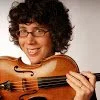
This transcript is linked to the podcast and video versions with show notes.
Kellylee Evans:
All my songs are about relationship, being in relationship, being out of relationship, wanting to be in relationship, wanting to get out, just all the different stages, just stages of growth, relationships in all forms with myself, with my family, between me and my kids, between me and my mom, understanding the relationship between my parents growing up as a child of two people that didn't get married back in a time when parents get married. My brother's three months younger than me to the day. We don't share the same mom. There were all of these different things about me growing up that made me not like others. And I've spent a long time being not like others. And the cool thing about it is it's great songwriting material.
Leah Roseman:
Hi, you’re listening to Conversations with Musicians, with Leah Roseman, which I hope inspires you through the personal stories of a fascinating diversity of musical guests. I’m honoured to welcome back Kellylee Evans the internationally acclaimed Juno-winning singer-songwriter who has survived so much and returns to this podcast with 3 more albums and a moving story of recovery from chronic pain. My 2022 episode with her is linked in the show notes and in that episode you’ll hear about how she survived the lightening strike and overcame many serious challenges to pursuing her music career, but after that interview her health deteriorated further and she had to completely stop touring. I literally ran into her at a friend’s birthday party and it gave me chills to hear of her rapid and complete recovery which is featured in Dr. Howard Schubiner’s new book “Unlearn Your Pain”. I told her how this approach to understanding neuro plasticity and mind body medicine had helped me as well over 20 years ago. We also get into, as Kellylee calls it, “real life stuff” family relationships, grief and self care. You can watch the video on my YouTube or listen to the podcast, and I’ve also linked the transcript. It’s a joy to bring these inspiring episodes to you, and I do all the many jobs of research, production and publicity. Have a look at the show notes of this episode on my website, where you’ll find all the links including other episodes you’ll enjoy among over 250 episodes since 2021.
Hey, Kellylee, thanks so much for joining me here.
Kellylee Evans:
Thanks so much for having me.
Leah Roseman:
It's awesome because I so recently saw you live in concert and I was thinking, because you asked the crowd, "Is it your first time?" And I thought, "Well, I've heard you live, but actually with my orchestra, I hadn't actually been to a solo show of yours before."
Kellylee Evans:
And it's a totally different experience.
Leah Roseman:
Oh, it was amazing.
Kellylee Evans:
Oh, thanks.
Leah Roseman:
You have such an incredible energy on stage, so much charisma and really, really special. So talk about connecting with your fans and the way you do things. Since you were on this podcast almost four years ago, I was looking it up, your life has really changed. It's another story of recovery and creativity for sure.
Kellylee Evans:
I kind of wish I'd listened to the first interview to see so I could think back. I'm trying to think what's happened in four years, but yeah, we'll talk about it today.
Leah Roseman:
Yeah. Well, I know we talked a lot about your start and your career getting launched and some other things, and of course your lightning strike and your other near death experience. So we won't be getting into that today and I will definitely link that episode in case anyone missed it. So recently you got an honorary doctorate from Carlton University, so congratulations.
Kellylee Evans:
Yes, that happened. That is something that happened. Thanks very much. It's funny because I was feeling like, I don't know, how it happened in my mind is that I went to watch Tina Fedeski of OrKidstra get her honorary doctorate. I think it was in 2024. That was a great year for Tina. I think she got the Order of Ottawa that year too. We were just all showering her with thanks and praise for all the amazing things that she's done. She's just been huge in this community. My kids are part of OrKidstra. OrKidstra, for people who don't know, is an organization that helps kids in our community connect with music in so many different ways, with classical music mainly. And so it gets them instruments, it trains them from, I think they call them kiddly winks. It's maybe three or four. They're just using boomsticks and learning to sing and then pairs them with an instrument.
A lot of the instruments that I would've dreamt of being able to play, my mom couldn't afford a violin or to have me do violin lessons or anything like that growing up. My kids went through oboe, clarinets, flute, upright bass, trumpet. And then they bring them into the community to perform. I mean, my kid, I want to say she might've played with the orchestra. No, they played with the orchestra almost before I did. I did do one before, but it was almost that they were there with you guys before me. And it's just been an amazing thing. And I'm an ambassador for them. And I got a chance to go and see her get this degree. And so I'm a Carleton grad and I'm a Carleton dropout. I have two degrees from Carleton, my degree in English literature and another one in law, which is more legal studies.
And I was doing my Master's in legal philosophy and I might've talked about this before, but my mom got sick, just life happened and I dropped out with one chapter left to write. And I remember kind of saying tongue in cheek, "Oh, one day they'll have me back. They'll give me an honorary degree." And I just kind of left it. But in my mind, there's things you do. You've got to be Tina Fedeski to get an honorary degree. That's the way I'm thinking. You've got to be contributing to society in a huge way like that. But as I watched her go across the stage and I watched all those students and the glow of all the people that had just finished something and I went back in time about and remembered I didn't get to finish that one chapter. So I contacted that day I was like, "I want my degree. I want my Master's degree. I want to finish it." So I contacted them and I was like, "I did all the coursework. I just didn't finish my thesis." And now my old course is a thesis only course. So I was like, "Could I come back? I'll even take a course or two just to refresh my knowledge, but I want to walk across that stage." And they said no, that my credits had expired. I'm like, "What?" That just made no sense to me because I'm like, "If I'd had a degree at that time, does my degree expire? No." So I was like, "Oh." And I let it go thinking, okay, I'll figure out a different way to get my Master's somehow. And then sometime earlier this year, I get another letter from Carleton and it's like an email just from the office of the President or the Dean. I can never remember the right terms. So I read it. I was like, oh, I wonder who's getting there. Someone's inviting me to a Doctorate, because that was the same thing that I had gotten for Tina.
And I'm reading through and it's me.
And so that was just what was so crazy. I wasn't gunning for this. I wasn't expecting it. And I think it's taken some time to really come to grips with it too, because there's that imposter syndrome aspect that has popped up in looking at the people that have finished a program of study or the people... I think the other woman that I met who had gotten a doctorate, she's somebody big at a major tech company. And I was like, "Oh, do I deserve this?" And all I'm getting, people kind of tongue in cheek call me doctor as I walk around the city. And somebody said to me at a gig just on Friday, just this last Friday, he came up and he said, "We're so proud of you." These are people that knew me before and have come along with me on this journey. And he said, "Wow, we're so proud of you.
I just want to thank you. Good job." And he said, "I want you to know that when you get your doctorate initially, they're recognizing potential. If you're going to school and you do the work, they're recognizing your potential. And in this case, when you're granted one, they're recognizing your accomplishments and what you've done." And it was just such a nice thing to say and I'm getting verklemt and I'm still really processing it, but it was such an amazing experience. Something else that's happened to me, and it's all been this week, in this last week, I was walking along the street and somebody stopped me. It was an Uber driver and he stopped, Miss, Miss, were you at my graduation?" And I said, "Yeah." He said, "Thank you so much." And he said, "I just want to thank you so much for your speech." And two other people that were also graduates.
And so three people in a week just thanking me for the speech. And to me, that means more than the degree, just that my hope with the speech that I gave was that these kids would get the message that I needed to hear back then, which was that you're going to be okay.
And that wasn't necessarily really evident to me at that time because at that time my mom had just passed away. I was a new mom. I was dealing with all this stress of living without a parent really and trying to make the world go. Newly married, new baby. How is I going to be a mom? How's I going to take care of this kid? And I'm trying to be a musician and how is this all going to work? And I just dropped out of my Master's, which everybody and their mother was telling me was the stupidest thing to do and that my mother would be rolling over in her grave. And just for somebody to say you're going to be okay and to keep going, that was my goal for the talk, the speech that I gave and that three people came up to me individually in one week to tell me that they heard the message and that it gave them hope.
That was huge for me. So yeah. Yeah. I'm a doctor.
Leah Roseman:
I'm sorry you had to hear that from people after the loss of your mother. That's a terrible thing that they said that to you.
Kellylee Evans:
I know. I'm sorry too. I'm sorry for that little person. It's funny because you just... Yeah, thanks for saying that. You don't really know what's coming and I think everybody's trying to just doing their best. People just lose themselves. They lose rational thinking when somebody dies. So I don't mean the closest person to the person that died. I mean the people around them. People don't know how to behave in those situations. And so I really learned during that period as well to give people a lot of grace. You have people coming. I mean, my mom had been passed away for a couple hours and somebody would be at my house like, "Oh, your mom promised me that painting." And these are good people, do you know what I mean? But they just lose their stuff. I'll just give people a few tips. This is my new service.
Any tips for people who've just passed away.
Don't bring your favorite dish with your... If you're going to bring a meal, don't put it in your favorite dish and then ask that person to remember to give it back to you. Bring it in a disposable container. Yeah. Keep checking in. You don't have to check in every minute, but probably in a month or two months time, that person still needs your help. Don't ask for any money. It doesn't seem like you should have to tell somebody that, but yeah, don't assume that they've inherited things and don't ask for any money. What's another tip? I think, yeah, give people space, but not too much space. Yeah, not too much space. Let them know that you're there.
Leah Roseman:
Yeah.
Kellylee Evans:
And when you ask somebody if there's anything you can do, maybe think of some ideas of what you might be able to offer because sometimes they don't even know what they need. So if you have a special skill, if you're really good at organizing things, they might need your help to organize a funeral, to organize a photo book, the photo display for the funeral. There's a million things that a person that's dealing with the death of a loved one can have help with. So yeah, I think I'll just leave it at those little things, but those are the things I remember. I remember being in that situation and thinking, "I should write a book." I've had a lot of deaths in my life. Even my uncle just passed away on Friday and it's like, "Ugh, I know. What's with all these dying people?" But you gain skills.
You gain skills on what would be most helpful for the people dealing with things. Well, real life stuff.
Leah Roseman:
Well,
Kellylee Evans:
You okay, Leah?
Leah Roseman:
Yeah. I'm just wondering where to go with this.
Kellylee Evans:
Don't worry. Anywhere you want to go. Yeah.
Leah Roseman:
Well, in terms of the courage to begin again, I mean, you've had lots of difficulties in your life. You were quite disabled four years ago when we talked, and I think it got worse before you recovered.
Kellylee Evans:
Yeah, it really did. It really did. Oh my goodness. It's neat. I don't often get to talk to the same person a few times, so this is really neat to be able to revisit some of these things with you. Yeah, so it's interesting. I started to need a mobility scooter to get around my mobility scooter Sunny. And it was interesting because when I grew up, my mom had me read Norman Vincent Peale's "The Power of Positive Thinking". That was required reading. And she was just a super positive person, always looking on the bright side. I remember when I would go around with this woman, because she worked at the hospital as a nurse and I would volunteer as a candy striper, I could hear her coming down the hall. She was just light. She was light and the patients couldn't wait to see her. That's the kind of vibe she had.
I didn't feel like I had the luxury of being dejected or depressed about losing my mobility. I can still remember when it happened in 2013 when the lightning strike first happened. I was going on Canada AM and I was like, "How am I going to pull this off?" Because I'm feeling pretty bad about myself right now. I can't cut food. My hands aren't working properly. I feel like it's like I've had a stroke from the initial lightning strike, but everybody knows me as a smiling, happy, bubbly person. You know what I mean? I have to show up as myself, but I don't feel like that person because I'm in a wheelchair or I need the use of this cane. I remember thinking I've got to find the good in this. All that training came back. I've got to find the good in this situation. I can say that when I got on that show, I wasn't faking it.
And so that understanding of what I needed to do in order to keep my spirits up still was with me with the scooter, but I couldn't see the end game. I couldn't see how this was going to possibly work out in my favor, but I kept the faith. One day I was reading... There's a book by Gabor Maté. Have you ever read his stuff?
Leah Roseman:
Yeah, a little bit. Yeah.
Kellylee Evans:
Yeah. There's one, is it the one "The Body Says No"? Is that one of his titles? I think so.
Leah Roseman:
Yeah.
Kellylee Evans:
Right. And so it's going through all these different ailments throughout the book, and he kept talking about people not being able to feel their feelings. And I remember thinking, "Is there a book on feeling your feelings? When is he going to get to the how to feel your feelings part without killing someone? Where is that?" I remember I actually genuinely went on YouTube to see if he'd recorded a video or something because I know how to stuff my feelings and I know how to smile and say I'm good and be a people pleaser and how to fawn in situations where I don't feel safe. I know all that stuff. But this feeling the feelings business. So I listened to a talk that he had and he was talking about this doctor named Dr. Sarno who helps people with back pain. And I went on Amazon and my partner had back pain and I was like, "Oh, I should check into this book because I'm good at people pleasing.
I'm also good at being codependent and trying to fix other people." I was like, "I'm really good. I'm a doctor in that too." I'm there on Amazon and I'm looking up his book and I heard a voice. I know you came to my concert, so you've heard me talk about the voices. So this voice was not telling me about the lightning strike, was not telling me about that I was going to have a baby, which are two voices I've heard. But the next one I heard was it said, "Why don't you stop trying to fix somebody else and fix yourself?" I remember thinking, "Oh, what?" And then right below there was a book, it says, "Amazon suggests," and it was a book called "The Way Out: How to Heal from Chronic Pain". I was like, "I don't have chronic pain. I just have these headaches that won't go away when I walk." I was just totally disconnected from my body.
That's my chronic pain.
I got it as an audiobook and I listened to it, and I had been in bed that period for about two weeks. I had tried to go for a walk and the headaches were so bad that I had to stop again. And my kids had just gotten used to their mom being like that. I read this or I listened to this book because at the time screens were just still difficult for me. I was listening to the book for a few hours and I went to sleep and I woke up in the middle of the night because I'm also getting a woman of that age where we wake up in the middle of the night and I started listening to it again. It was a four-hour book and I finished it and I believed it. I believed this idea that the body could learn symptoms and kind of be in that groove of the symptom and to protect us and that we could untrain ourselves from having those symptoms affect us.
I said, "I really believe this." I remember the next day I said to my kids, "I'm going to go for a walk." And they were like, "Mom, don't do it," because they had seen what the walk had done for me or trying to go had done for me before. I said, "Guys, no, no, I really trust this." I remember walking around the block and my body, my heart just racing, and I was doing all the things that I had learned through this book to calm my system down, talking to myself, telling myself that I'm safe, you're safe, everything's okay, you're going to be all right. We're going to just walk to that light post, and then we're going to walk to the next one. And if anything happens, you could call an Uber. They're going to be upset because no Uber wants to do a two minute, but we could do that.
I went all the way around the block just calming myself and doing breathing exercises, and then I just kept going every day. I walked a little bit further and a little bit further, and I never went back to my scooter again. It's crazy. But people looked at it as a miracle because that's how it felt to go from these horrible headaches and all these... It was other symptoms that I was dealing with from the lightning strike, left-sided weakness, and that would only pop up after effort.
If I put effort into anything like touring, running, walking... Well, I couldn't run, but things that were just what my body deemed to be too much, it would be like, "Okay, we're going to have horrible headaches until you rest again." And I'm thankful for what I learned from the whole experience, but the biggest thing I learned is that I can create a sense of safety in my body and that there can be a result that would be beneficial to me. Yeah, that's what happened.
Leah Roseman:
I remember I run into at Roddy Ellias' birthday party and we talked about this because I read Sarno's book and -
Kellylee Evans:
Oh.
Leah Roseman:
Yeah, because I had a couple of occasions where I had some weird chronic pain that I was able to... They were different and I was able to banish them. So I know the body mind stuff can be so powerful, but people haven't experienced it, think it's... They don't think it's scientific, but there is science behind it.
Kellylee Evans:
There's science behind it.
Leah Roseman:
Yeah. Our muscles can contract or we can get pain signals when there's nothing actually wrong. There's a lot more to it, and maybe we'll put some resources in the show notes for people.
Kellylee Evans:
Yeah. I have a whole page on my website that shows the resources that I went through as well, but I think there's been more... I ended up connecting with one of the doctors that works in that field, Dr. Howard Schubiner, and his book, "Unlearn Your Pain and Anxiety", was so monumental for me because remember that thing I was looking for, how to feel your feelings?
Leah Roseman:
Yeah.
Kellylee Evans:
He taught me how to do that, and it was amazing. I think one of the coolest things about Dr. Sarno is a lot of what he... His main thing was that we're holding the tension in certain areas of our whole body, and that's why it shows up specifically in maybe areas in our back, back into your sacrum, just certain pressure points, and that you could help to release the tension. And a lot of the times, some of that tension is from our feelings and from the anger that we're holding or the resentment or the fear and the things. And so working through Dr. Schubiner's book really helped me to relieve that tension and to continue to be able to do that. So when things happen to me that I have feelings about, I don't have to stuff them or eat them or shop them or binge watch them.
I mean, I still do all that stuff, but I don't have to. I know that I have some tools that I could use. I don't meet a lot of people who've actually used the techniques. I meet a lot of people who go, "Oh, that's interesting." So yeah, that's amazing. And you've used it on separate occasions to some success.
Leah Roseman:
Yeah. And a very close friend of mine turned me onto that, and I know about Schubiner. I think I read one of his books too, and this is going back a long time ago for me, and I told this friend of mine that you were going to be on again about this, and she was so excited that you were talking openly about it. And this friend of mine, she's a scientist too, and she's the least... Yeah, she's a very clear thinker. So look, I think the best thing is people should just go to your website because I did see those resources on your website, and of course your albums are all there and everything else we're going to talk about, so it'll just be the one link for you, and I think that's easiest.
Kellylee Evans:
Okay. Yeah. And what's so interesting is I have to actually update it because Dr. Schubiner just published a new book, and my story is in the book. And if I'd known that you knew of his work, I would've invited you to come meet him. He was just in town two weeks ago.
Leah Roseman:
Oh, wow.
Kellylee Evans:
Yeah, two or three weeks ago visiting. Yeah.
Leah Roseman:
Cool.
Kellylee Evans:
It's amazing how many people could benefit from the work and the knowledge there, but they don't have the... I think you really have to think that there's no other way, you know what I mean? You have to reach that point where... It's so interesting. I think if I was to tell anybody one thing to think about in this whole study, in this whole world, if you're experiencing chronic pain and you've already gone and they've done all the tests possible and they can't pinpoint what it is, or especially say with back pain, people will say, "Oh, I have a bulging disc," or, "Oh, I have this." Well, I have no back pain. I most likely have bulging discs. It's just called graying of the spine. And so there's a lot of people that have these things... In a given population, many people, I can't remember, but 60, 70, 80% of people have what's called graying of the spine, sort of like wrinkles, but it doesn't mean that they have pains.
And then some of us do have pains. And if you notice that the pain comes with a change in the weather or a change in your position, but maybe you fell asleep in one position and you woke up in pain and you think, "Oh, it's because I slept that way," but it's not all the time. If I broke my foot, every single time I walk on that foot, it's going to hurt. You know what I mean? So if it's something that comes and goes, it's possible that it might be your brain. It's not in your head, but it's in your brain, and it might be something to look into. And there's so many wonderful resources and people and books that you can read. It could be stomach issues, headaches, migraines. I ended up giving my doctor a book that was more for diagnostic, something that a doctor could use.
If you see these symptoms, Please don't make the person think that they're crazy. You know what I mean? Potentially lead them into this direction. Because I think about all the times that I went to get checked out and my doctor was great. I had a really great family doctor, but sometimes I would go to other specialists and they would just be like, and I think not enough people know about this work.
Leah Roseman:
Yeah.
Kellylee Evans:
Yeah.
Leah Roseman:
Dr. Schubiner's new book, what's it called?
Kellylee Evans:
I believe it's called "Unlearn Your Pain".
Leah Roseman:
Okay.
Kellylee Evans:
Yeah.
Leah Roseman:
Yeah. So the symptoms you're talking about were what, 13 years after your lightning strike?
Kellylee Evans:
They just continued. Yeah. So they started and they just never stopped. And they started off being all the time to being just like when I put in effort or when I came back from a tour or just not being fully consistent. And it was enough time for my body to heal, but not for my brain to give up the symptoms.
Leah Roseman:
Yeah. Well, let's get into some music.
Kellylee Evans:
Okay.
Leah Roseman:
Since we did this first interview, you've released three albums.
Kellylee Evans:
Oh my gosh.
Leah Roseman:
So Winter Song was nominated for a Juno, and most of my listeners aren't in Canada, so I'll just say it's like Canada's Grammy Award. It's a big deal. You received one, actually your first album, your tribute to Nina Simone "Nina", you've received a Juno award and since then you've been nominated three times. Am I right?
Kellylee Evans:
Yeah, I think so. Yeah. So my first album, it's funny, my first album actually was nominated and that was in 2006. And then yeah, "Nina", I got the award. I was nominated I think for another one. And then for what? Yeah, so four nominations, one win. And I was on a winning album with Jane Bunnett.
Leah Roseman:
Okay. Yeah. Winter Song, you have this great band, including, I'll say Steve Boudreau on keyboard. And he was on this podcast with Peter Hum about three years ago.
Kellylee Evans:
Oh, that's cool.
Leah Roseman:
Yeah. I like that.
Kellylee Evans:
Was it about their being pianists?
Leah Roseman:
Yeah. So they put out a duo album and actually it's cool on that episode because they were in Steve's music studio where he has two pianos and they were playing kind of live for the podcast, some of their tunes together. And they both have very different lives, but I got them to each open up about their lives as musicians and their collaboration and how that got going.
Kellylee Evans:
I ask because I know that Peter's other life is being a food critic and that oftentimes he brings Steve with him. And so sometimes I'll sit and listen to Steve tell stories about the latest place that Peter took him to eat in town. And it's so neat, just the different relationships that we develop and just where they can go in life on stage and off.
Leah Roseman:
I think if you're going to go eat with a food critic, you better be open to eating just about anything, right?
Kellylee Evans:
Anything. Yeah. You can't have food allergies.
Leah Roseman:
So let's talk with the title track Winter Song. (Music: clip of Winter Song)
Kellylee Evans:
It's funny. Again, my mom came here from Jamaica. I was always enamored with, she was just amazing. She used to take me out on the ice. She couldn't skate. So she came in the '60s and I was raised in the '70s and most of the kids were playing hockey and doing all this stuff, but she used to go in her boots and take me out on the ice and pull me along to try to teach me to skate. She always wanted me to be a part of this country because I was born and raised here and she knew that that was a skill that I would need. But I tell you, winter and me, I hated being cold. At school, I used to be the kid waiting by the door, just wishing we could have indoor recess and asking the teachers, "When can we go in?
When can we go in?" And my partner kind of taught me, he was like, "There's no bad weather, it's just bad gear." And so I've spent the last few years really falling in love with winter and with walking in the Arboretum and being out and about. I never thought I'd be somebody that would willingly go for a walk in the wintertime. And so that title track Winter Song, it's really about how even back when I was young, what were the things that I loved about Winter? And it was the sound. Winter has a certain smell. It just smells clean. I mean, I guess as you were saying, we were talking to people who may not live in Canada, so maybe their winter doesn't feel clean. I remember when I used to visit my dad in North Carolina, they did not have winter like us. So basically, guys, I'm talking about the winter on the Hallmark movies with snow and ice.
It smells so clean. When you go outside, especially at night and there's not a lot of cars, just that crunch, the crunch of your boots on the snow, it's the coolest sound. Everything sounds muffled and just fresh. It's cold, but there's a specialness to winter and I wanted to be able to capture that in song. So that's the story behind Winter Song.
Leah Roseman:
Beautiful. Thanks. I actually love the winter. I did grow up here in Ottawa and that hush you mentioned, the snow, when we get a lot of snow, it really absorbs sound in a very special way. It's actually one of my favorite things about it.
Kellylee Evans:
Yeah.
Leah Roseman:
So this album is mostly like a Christmas holiday album, but you have some interesting choices for covers. So your re-imagining of John Lennon's "Imagine". Beautiful, beautiful rendition. Do you have musical memories associated with that song?
Kellylee Evans:
Yeah, that song basically started my career. 2004, I was applying for the Thelonious Monk Institute of Jazz Vocal Competition, and I needed to have songs that I was going to perform. So they wanted only covers. At that time, I had already written a bunch of music and I wanted to be somebody that did original songs, but for this competition, it was suggested in the beginning that we do our covers. And so I woke up in my dream, I arranged that song. I had the arrangement in my song and I remember waking up and I'm like, "I got to write down the chords before I lose them." And I rushed over and I mean, I have a very basic musical understanding so I can sing the notes of the chord and I had a little Casio keyboard and if I played the notes, it would say, "Oh, C minor or whatever." So I would like, da, da, da.
So that's what I did first thing in the morning. And I don't even know if I'd gotten in yet. Actually, no, I had. I did, I did, I did. I had gotten into the competition because even me getting into the competition was a miracle. I had applied after the deadline and I remember nobody wanted to help me. I was at the studio and I was like, "Listen, I need to get the music ready to send to these people." And the studio folks were like, "Kellylee, the deadline's gone." And I'm like, "I just have a feeling. I just know." And I said, "I'm going to send it anyways." And I sent it and they wrote me back and they said, "We received it after the deadline, but we loved it so much we decided to open and let you in." So people just keep trying.
Don't never give up. And I kept dreaming. I said, "Wouldn't it be cool if Quincy Jones was one of the judges?" And for a long while he wasn't. And then all of a sudden, one day I got a message that was like, Quincy Jones is going to be one of the judges. And so then when I had this dream and the Imagine came up, I was like, "Holy smokes, I'm going to sing that." And I sang that song at the Kennedy Center in front of Colin Powell, who at the time was the Secretary of Defense and a whole bunch of other Washington big wigs. And I remember when I got off stage, people were like, "Wow, that took a lot of balls to sing that song here." And I literally, that was the biggest stage I'd ever sung on. I was singing at a restaurant, the Shanghai restaurant in town.
I think we used to have a place called Empire Bar and Grill. I sang there a couple times or I was singing in my shower and then the Kennedy Center. And so that's that history. I listened to John Lennon, not so much as The Beatles, but more that period of the post-Beatles stuff, but he wasn't a part of my life and my musical history the way that some artists were. My mom really loved music and I spent a lot of time listening to the things that she loved, but also I had my own things that I got into as well. So that's the story behind Imagine. And I would play it all the time early in my career, and then it kind of fell out of my repertoire. And there were these fans that used to come from the beginning, Don and Deb. And one day I saw that they were there and they were coming and I was like, they always ask for Imagine.
And I said, "You know what? I'm going to do it for them." And then that became one of the Christmas songs that we added and then we added it there. Yeah.
Leah Roseman:
Wonderful. And for people that don't know, you did place second in the Thelonious Monk jazz competition, and we talked about that in your first interview with me.
Kellylee Evans:
Did I cry?
Leah Roseman:
I don't think so.
Kellylee Evans:
You don't realize how competitive you are and how much winning matters until you lose.
Leah Roseman:
I don't think of it that way. I'm like, "You won second, that's amazing. I mean, look at the odds. "
Kellylee Evans:
It is amazing. It is amazing. You didn't have my mom. You had a mom clearly who was like," Great job, honey. "My mom was awesome, but she was super competitive. One of the things she loved doing was watching the Olympics and we would watch a lot of sporting events and things. So winning was a big deal for her. And yeah, it was kind of like win or go home. And yeah, I wanted very much to win.
Leah Roseman:
Yeah. My mom was more accepting. My dad, I wouldn't say... Well, maybe he was competitive. My parents are both gone now, but I do remember as a kid, I did fairly well in school and whatever, the good grades. And I was pretty young and he said," Leah, gray matter is a dime a dozen. It's what you do with it. "And then I was like," What is gray matter? "But it kind of stuck with me that he said that because basically I'm not impressed with... It's what you do with your intelligence or whatever, but yeah.
Kellylee Evans:
Yeah.
Leah Roseman:
But it's that child of immigrants too, which he was. It's like that to have to encourage your kids to try to excel, right?
Kellylee Evans:
Yeah. It's interesting. Yeah. Figuring out what your kid needs for the push. Some kids I imagine need to be... I kind of feel like gentle seems it's better. I would prefer gentle personally, but some kids really do love to be... You can see some of these kids love to be pushed in some ways. They're more competitive or they're more... I don't know. I think having lived through the other style, I think it would be nice to have that. I would've loved to think about it the way you did, Leah.
Leah Roseman:
Well, your mom had the challenge of being a single mom, which you also had. You've also had this challenge.
Kellylee Evans:
Yeah. Yeah. This whole single parenting thing, it really makes you think about just different ways that society could operate because there's so many parents that need help. And I think there's a lot of situations where people might want to be single if they knew that they could take care of themselves. It's interesting. My son, I'll say to him, I keep saying it's interesting, but I do find life interesting. My son, he'll be like, "What are you doing today?" And I make a point of saying, because I work at home, I work from home, and I'm doing my admin, but I'll say I'm working and I'll be like, "I'm cleaning, which is work. I'm shopping, which is work." All of those tasks that tend to be women's tasks, they deserve value. And I don't know, I really think that raising kids and all of those things are things that should be remunerated.
Especially if we live in a place where I can't just walk up and grab an apple and eat it or pick food and just pick it from the ground. If I have to trade my trade labor for food and lodging and anything, I think that we should do more to help a parent take care of the family because their task... If you don't do a good job, people let you know. You know what I mean? And yeah, I think it's important. I think the work that we do as parents is important, and especially if you are on your own, I think you deserve help. Yeah.
Leah Roseman:
I'm curious because I have parented with my husband, so we, of course, bounce things off each other. But for yourself, if you're trying to make a decision about how to approach a problem with a kid, would you talk to your alter ego like, "Hey, Kellylee, what do you say?" Would you have that sort of conversation?
Kellylee Evans:
I'm trying to use my community and talk to... I initially started off as being one of the first in my friend group to have kids, so I didn't initially have a lot of people to go to in those early stages. Especially since I was trying to do the opposite, I was opposite parenting. So if I was just trying to do things exactly the way that my parents had done it, then I feel like back then I could have gone to... My mom wasn't alive, but that generation, but that generation, we were all kind of working fully against, you know what I mean? We were co-sleeping with kids. We were breastfeeding and not using the bottles. We were not going to hit them. There were so many things. And if you want to find out how to do the opposite of that, there's a whole generation of people that will tell you that everything you're doing is wrong.
I'd never let my kids choose what they want to eat. When I was growing up, whatever's on the table is what you're getting. You know what I mean? I still hear that from tons of people, and I was choosing the opposite. So in initial stages, I was reading a lot of books. I didn't have my mom to bounce things off of, but finally I started to get a community of people together that had kids or had gone a little further than me, and I could say, "Hey, what did you do here and there?" And I tell you, Leah, I'm sure you've noticed, there are tons of people who want to give you advice. Lots of unsolicited advice available in the world, but it's a lot of trial and error, which is sad for kids because they are our guinea pigs, but we're just doing our best.
That's one thing. I kind of just kept telling myself, I said, "I think no matter what happens, your kids are going to complain about you anyway, so you just have to do your best." Yeah, that's it.
Leah Roseman:
Yeah. And actually, well, it brings me to your album, Show Love, except I did want to talk about one more track on Winter Song, Joni Mitchell's River, another incredible cover.
There’s so much more coming to this interview with Kellylee, including lots of music, and this short break is to let you know that I’ve linked quite a few episodes for you in the show notes for Kellylee with Steve Boudreau and Peter Hum, Shakura S’Aida, Amanda Martinez, Julia Keefe, Vienna Teng, Vahn Black, Jah’Mila, and J. Walter Hawkes among more than 250 episodes since 2021. Sign up for my newsletter, where you’ll get exclusive information about upcoming guests, consider buying me a coffee on my Ko-fi page, and buying some unique podcast merchandise. You can also review this podcast, share it with your friends, and follow on your podcast app, YouTube, and social media. It’s a very challenging media landscape for independent podcasters like me. Thanks. Now back to Kellylee.
Kellylee Evans:
That one came into my life. I was asked to sing it at a funeral.
Leah Roseman:
Oh.
Kellylee Evans:
Yeah, we go back to funerals. Yeah. So it was one of the most beautiful funerals that I've ever been to. They actually, I believe, had it at Koerner Hall, and the person who passed, they and the partner, they loved music. They loved supporting music, and so they had a memorial. I'd never been to a funeral like that, and they hired me and asked me to sing that song. Even before the brain injuries, I just have a brain that doesn't necessarily latch onto lyrics and things. I'm like the chorus girl. You need a chorus. I can remember the chorus of a bunch of songs, but the verses, I'm like... That's kind of how I learned. But whereas my kids, they listen to a song two times and they've got it down. So I had to learn River, and I remember just loving it.
I'm trying to remember, I think what happened in this case was I asked people for the first time I did that concert. The concert was born at the NAC. I knew I had an NAC Christmas concert coming up, and I remember going on my Facebook and asking people, "What do you want to hear?" And so the songs, it's a complete album of songs that people asked for. So they asked for River, and it's one of my favorites because it's one of the ones that people will sing along with. They listen to all the... I know they know all the other Christmas tunes, but if I ask them to sing with me with River, you hear people, the whole audience just singing, and I just got goosebumps just thinking about it. It's such a beautiful song. (clip of River)
Leah Roseman:
Well, let's just talk for a minute about the way you connect with audiences. I mean, you tell a lot of stories. Okay. I heard you at the Robo Lounge, which is a very small venue here, but when you're in a big hall, do you sometimes walk out into the aisles as well? Same?
Kellylee Evans:
Same. Yeah. I look at concerts and performing as hosting, as if you came to my house. And so for me, the experience of being at home starts as soon as I get to the gig. I come as soon as I can. I've seen some artists, their musicians come and soundcheck before them, and they just come and just do the last little bit. I can't operate that way. I need to come in. I want to meet the people who are working backstage because they're also part of the team, and I like to get comfortable, set myself up in my space. Sometimes I sit on a stage. I like to go out into the audience when it's empty and just get a sense of the room, because this is my home for the day, and I'm going to be the host of the dinner, of the event.
And so for me, it's a warmer experience.
I remember when COVID happened and we weren't going out into the audience or going out afterwards either to sign CDs and things, I didn't feel complete at the end of the night. It felt like a part of the experience was missing because there was that part of saying, "Thanks for coming." You know what I mean? You take your guests to the door and you see them out, and it's just the start and the end of a cycle for me that starts from the moment I step into the venue till the time that I leave. And I'm usually one of the last to leave. I'm sure that the venue just loves that, but I spend time, and it's another part of, I think, why performing takes so much out of me because I do give quite a bit. And it's something that I probably need to revisit, but I know that's how I operate so far. (clip of Show Love)
Leah Roseman:
Okay. Somehow Jennifer Giles came up
Kellylee Evans:
Yeah!
Leah Roseman:
I met her a couple times, and then I was so sad to see of her death, and she was a very important mentor, so I was wondering if you want to honor her and tell people about her.
Kellylee Evans:
Yeah. So one of the first people that... I mean, I've been singing since kindergarten, and people have told me that I have a good voice and that I could do this from a young age, but I also was good at other things. And so I think I'm realizing that might be part of why I didn't have that huge support for my family to pursue music, because it wasn't the only thing that I could do. I also was good in academics, and they could see that that was a path I could take, and that would probably be a less rocky path. I now realize before I was more just kind of like, "Oh, my parents didn't support my music career," but I realized now, especially as I get older, my kids get older, and they're trying to make their steps in the world, take their steps in the world as adults, you do want your kids to be safe and sound and okay.
I think I can understand more of why they might not have been such... You can do it, but I look at people like Jennifer Giles as people that were in my corner and were on my side. I'm not sure if I told you the story the time that we talked, but I was in my third or fourth year, and I was at the Loeb building at Carleton University, and I was wandering around in between classes, and I noticed that there was the A Tower and an elevator, and I went in that A Tower elevator, and it went up to the ninth floor, and I had never seen the ninth floor. It didn't go past four, I think, in the other elevators. So I took it up to the ninth floor, and there it opened up to the music department, and I was like, "Carleton has a music department?" I had been there three years.
I had no idea. Didn't see signs I didn't know. So I went walking around, and there's a door open, and this beautiful white-haired woman with the biggest smile was sitting at her desk because she had a piano in her office, and I said, "Hello," and that was Jennifer Giles, and she invited me in, and I just said, "Oh, I like to sing." She used to tell people, I said, "Oh yeah, I want to be a singer." She used to say to people afterwards that when she heard me say that, she kind of rolled her eyes about the many times that she'd heard people say that, and she said, "Oh, really? Well, come on over and come sing a song." I was like, "Okay." I wonder what I sang. I might've sung Climb Every Mountain because I love that song.
She told people afterwards that she had to pick her jaw up off the ground when she heard me. And from that period onwards, she became my mentor. I wasn't taking courses, I wasn't doing anything real, but she gave me a music theory book, which of course I didn't do, I didn't work on, and she would invite me to her house in Ashton, which is funny because I ended up moving out there years later when she'd already moved into the city, and she would play songs and I would sing with her, and that was just this comforting place to land. I was still doing the thing that my parents wanted me to do, which was the academics, maybe become a lawyer or something one day, but I could at least say I was doing this thing that my heart wanted. At the same time, that same day, I noticed that Carleton had jazz combos and they had a choir, and that you could be part of those even if you weren't in the music department, which I think was such a great gift for me and they welcomed me in as well.
So all of a sudden I had a band, which I'd never played with musicians before, and I could sing in choir. And there was an opportunity for me to express myself in that way, even though I was there at Carleton to learn about the law.
So Jennifer was huge for me. She gave me a safe place to land and to become the person that I wanted to be. And years later, when my mom passed away and I'd had my baby, she was about one at the time, my voice started to cut out. I was just losing sound. And I went to a doctor, an otolaryngologist, and they diagnosed vocal nodules and I had to stop speaking. I know you can't believe that for a year.
Leah Roseman:
Really?
Kellylee Evans:
Yeah. Because it was that or surgery and we'd all seen what had happened to Julie Andrews and I didn't want to lose my voice, but I actually didn't even make it a year. I only got to about 10 months. And when I went back to him, he said, "Oh, look at that. The nodules are gone." But when I was talking, my sound was still not there. So right away, the mind, body thing, the physical reason is gone, but the symptom still remained. And I'd had a speech pathologist that I was going to, and every time I would talk about my dad, my voice would cut out like that. And she said, "I think it's something up here. It's not here." And she suggested I talk to a psychiatrist. And that began my first steps into mental health and learning to talk about what was going on and just how I was feeling.
And this block that I had around singing. And Jennifer knew of a woman in the Eastern townships of Quebec who helped blocked musicians. And she worked with people from all over the world. And she sent me to see that woman. And she's the person who helped me set out what I wanted to do in life.
She had me write down a list of the things that I wanted. And nobody had ever asked me ever, not once what I wanted. And being a lawyer was not on that list. I wanted to write an album. I wanted to write my own songs. I wrote ridiculous things because there were so many things that I had never gotten a chance to do, that I wanted to learn to play tennis. I want to do all these things. And then she told me to put it out into the universe and ask what I should do. And I thought this lady was nuts because I was coming from this very strong Judeo-Christian, my dad's side was Seventh Day Adventist, so this is where the world is. My mom's side was Baptist and nobody had ever talked about the universe to me before, but I was like, okay, this woman's crazy, but I'm going to do it.
And on my way home, I did. I put it out in the universe and I asked what should I do? And I just had this feeling rush over me that if there was a heaven and my mom was in it, she would know that I was not killing myself with worry. At the time I had the vocal nodules, horrible ulcer that was eating me up from inside that I'd had from the age of 14.
And she would know that all those things that she cared about, like whether I got 99%, whether my marks were better than so-and-so, all the courses I was taking, whether I was a gifted child, all these things, none of that stuff mattered. And if there was no heaven, she wouldn't care anyway. And I was free. I was free. And I went home and I dropped out of my Master's and the ulcer pains that I had been feeling disappeared again, the mind body. Right?And then I had to move from there to decide how was I going to live in this world where I no longer was tied to the expectations of my parents. My mom was dead anyway, so you know what I mean? There was nobody to berate me for not doing things their way. And my dad disowned me that day when I dropped out of my Master's because he's a PhD in biochemistry.
And so yeah, he didn't talk to me for five years. So I was literally free of expectation and pressure. And so that was part of the journey into moving into finally moving into music. And if Jennifer Giles had not introduced me to that guru in Montreal, I never would've taken that step. I mean, maybe I would've figured another way to this path, but it was instrumental for me. So you don't think about how much power you have in somebody's life just from little comments or little suggestions and you never know what somebody will do based on what you say. I don't think I ever told you this story. I'll tell you this little tiny thing, which is that a long time ago I was actually, so it was during university. So I was visiting, my ex lived with a roommate and the roommate had a girlfriend and we were just all at their apartment and we were chatting and she was telling me about this wonderful experience she'd had going to music school as high school.
I was never allowed to go to a creative arts high school. I wasn't allowed to take any arts related courses because my parents though that they were a waste of a credit. Although I paint, I used to do those things kind of at lunch or after school or kind of in secret. Not really secret, but it had to be after school. Could not be part of academic credits was genuinely what they said. It is a waste of her credit. I always looked at people who went to theater arts or music with such envy. I wish I could do that. So anyways, she was telling me about this trip I took to the jazz band to New Orleans and how amazing it was. And I said, "Oh wow." And she said, "Oh jazz, you could never learn that, Kellylee. It'd be too difficult for you." That's what she said.
And I remember being "really?"
All I did was research. I don't even know who I was back then or had the time, but on top of taking two degrees at the same time, I then began to do a full study in the history of jazz. I got out my planner, used to paper planner that time. At the top of every month I wrote down the name of a singer and then in that month I listened to all their music. I bought their... If there was a biography, I would read it and I would learn all about that person.This month is Miles Davis, this month is Ella Fitzgerald and everything so that I could prove this woman wrong. Fast forward, I think four or five years ago, I saw her and I was like, this is the first time I'm seeing her and I was like, "Yes." And I was like, "Remember what you said to me?
Remember what you said to me? I totally have a career as an artist who is considered sometimes by some people as a jazz artist." And she was like, "Did I say that?" She didn't even remember. This one throwaway comment that she said changed my life forever and this whole trajectory, for me to prove her wrong, it's hilarious. Yeah. You don't know. You just don't know.
Leah Roseman:
So part of those stories you had told me before, but not all of that.
Kellylee Evans:
I told you that one before?
Leah Roseman:
Part of it, yeah. And in terms of genre, you do perform in different genres, but when I heard you a couple weeks ago, you're doing some incredible improvisation, but you don't do that much jazz anymore. And I was kind of curious why not more.
Kellylee Evans:
Well, I think it's because I really love pop music. You know what I mean? Even back then, it's weird. It's like I love jazz, but I don't listen to it anymore. I just stopped listening. And I remember seeing Terrence Blanchard when I won that competition, well, when I came second place, when I won second place in that competition. And even back then in 2004, I was saying I didn't consider myself to be a jazz musician. I was here, I was at a jazz competition. I love jazz music. I was making music that was from that history, but I considered myself to just be a singer and I wanted to be doing with a mix of world music because that's the music that, when I say world, I mean reggae and dance hall and soca, that's the type of music that I heard growing up. I listened to country music, I listened to soul, I listened to R&B.
I saw myself more as just a singer of popular music. And so that's what I wanted to do. And I remember him saying to me, he's like, "You can't escape it. It's just in your tone." And I was like, "Damn you." But yeah, it doesn't matter where I go, people still see me as a jazz singer, even though that's not really the space that I create in now. But at the same point, it's a tool that I can still use. And I do love, I don't feel unsafe if there's a space for me to jump in and improvise. I'm not like, "No, don't come to me." I'm like, "Can I go?" Because I don't see myself as a, "Well, I'm going to scat now." I see myself as like, "Oh, I get to make sound now." And yeah, now my instrument plays now. This is where I can add something.
And so that's kind of more... Yeah, I would never call myself a scat singer, but I do improvise. Yeah, like you said. Yeah.
Leah Roseman:
Wonderful. We talked about connecting with fans and I know you... Have there been any aha moments in terms of feedback or things you learned from talking to people?
Kellylee Evans:
Oh yeah. Every time, every time. Say just within my life, I have people who are more shy than not, and they'll be like, "How do you just talk to everybody?" But it's probably a little bit autistic because I didn't have that fear of people growing up. And my mom went to work pretty early on. I think she only got three months off. And then my caregiver was my uncle's wife and she died when I was one. So I had a lot of cuts of caring in those early stages. So people always told me I was a baby that would go to anyone. And my mom, not my parents, but my mom definitely had to teach me stranger danger because I didn't have it because I would just talk to anybody. And so that thing that for other people is maybe difficult, is not difficult for me.
And it kind of becomes my superpower in that wherever I am, I'm pretty comfortable with people. People tell me all kinds of things and feel safe to open up to me about all kinds of things. And so I almost feel like every conversation feels like a revelation. I'm not somebody easily bored with other people. I find human beings very interesting. I love talking to people about their hobbies and the things that they think are weird or the things that other people would think are weird because I feel like I learn every time.
I have to actually tell myself don't talk to people on the plane because not everybody wants to talk to people. Do you know what I mean? So I'm learning the things to do. Okay, I'll put my earbuds in because if I start talking to the person on the plane, I'm just going to talk to them for the trip because I am so interested in finding out about where they're from, what they're doing. I'm that person, but I have learned to not be that person because I know that that actually can exhaust other people, but it took me time to learn that.
Leah Roseman:
So we were just talking about connecting with audiences and actually I did mention at the beginning that you had released three albums since we last spoke, and actually Greenlight came out shortly after we released that podcast, and that was a pandemic thing. It was recorded under lockdown. So maybe people could hear the title track Greenlight and you could just talk about it a little bit.
Kellylee Evans:
Sure. Yeah, so Greenlight, I always giggle when I introduce this song and I was introducing it on Friday because I was... I keep saying Friday, but it was Saturday that I had a concert, so just two days ago. And we were in a church and I was singing Greenlight and I did the song and basically it's about being in a relationship with mixed libidos and just wanting to connect with your partner and it never being the right time.(Music: clip of Greenlight) That is such a real life problem, I think, that people don't talk about that you may not... Or we call it mismatched, mismatched libidos. So yeah, that's what that was about. But it was so funny because I had already been messing with the audience for the whole concert. We were laughing just about the content of my songs and how wrong it seemed singing them in this church.
And as I mentioned, so my uncle had just died that day and he was the person who brought me to church really. So he was the elder of our church growing up. And so I say it to people like, "Oh, I grew up in a church." I think they're thinking of this Black American gospel experience, but that's not in any way, shape or form how it was. Back then, church music was very structured. Yo couldn't clap or anything afterwards. You could say amen. It was not like this, none of that. And so that's my experience. I didn't sing in the choir at church. I just sang with the congregation. I didn't go for a long time. I went till maybe I was about eight or nine, maybe 10, and then kind of found myself into other church traditions that happened on Sunday instead of Saturday as I searched for a community that I might feel a part of.
And I did it in a very, I guess, autistic way. I researched, I'm going to this Pentecostal church now. I'm going to go to this. I mean, I might have even gone to a mosque and to a temple, you know what I mean? Because I just wanted to see where would I feel at home? But at that point, my introduction to church and religion was through my uncle. And so for him to pass that day and then to be in a church singing music that I would not even have been allowed to sing because we weren't allowed to listen to secular music.
I wasn't allowed to wear pants. My ears were pierced because my mom was Baptist and she didn't care about that stuff, so she pierced my ears, but they would take the earrings out for me to go to church. My mom gave me pigtails and rice and bacon. You were not allowed to eat pork as Seventh Day Adventists. And so I lived in sinning. I grew up sinning all the time. You know what I mean? It was this interesting dichotomy of knowing that when I'm at home, I'm doing all the things that I'm being taught not to do in this other home because they took care of me when my mom was working nights. And so I had these two families, and that woman that I said passed away when I was one, that was my uncle's wife. And then he married another wife and she took care of me as I got older.
And so it was interesting being in that setting. So I was talking to them about wondering if I would be struck by lightning again in the church. We all laughed about that. We laughed because on the piano, there was a big thing of flowers and I said, "That looks like funeral flowers." And somebody said, "They are. Melissa's grandma passed away." We laughed about that. And it was just this wonderful way to connect with the audience about things that would've scared the bejeevers out of me to talk about as a child. I remember going to Sunday school and... Well, it was Sabbath school. It wasn't Sunday school, but it was called Sabbath School. And it was the first time that I'm such a questioning person. I drove my mom so crazy with all my questions because I would be like, "Well, what's this and why is this?" And so she bought the encyclopedia when they came to the door and she would say, "Go look it up, go look it up," because she was tired of answering all my questions.
When I was in Sabbath school, I said, "Well, I've read through the Genesis and where are the dinosaurs?" I kind of got kicked out of Sabbath school.
I was told to shut up and just accept. And so being in that setting, singing about love and longing and sex and the lack of sex in a relationship and all of those things was so liberating and talking to the audience just about all of those things that were real life things. So yeah, Greenlight is about... All my songs are about relationship, being in relationship, being out of relationship, wanting to be in relationship, wanting to get out, just all the different stages, just stages of growth, relationships in all forms with myself, with my family, between me and my kids, between me and my mom, understanding the relationship between my parents, growing up as a child of two people that didn't get married back in a time when parents get married, when you're supposed to have the same last name as your mom. My brother's three months younger than me to the day.
We don't share the same mom. There were all of these different things about me growing up that made me not like others. I've spent a long time being not like others. The cool thing about it is it's great songwriting material.
Leah Roseman:
On your Show Love album, you have that first track, Friends. A lot of people can relate to this and it made me think of a recent episode of one of my favorite podcasts, How To with Charles Duhigg and the guest had this lack of closure from this major relationship. It was really interesting because she had had this really passionate affair when she was young and had moved to Mexico. And then now, 10 years later, she was very happy and married, but had never told her husband about this previous relationship and this kind of traumatic breakup. She kept having recurring thoughts almost every day about it. So she was asking. And so on that show, they usually get an expert to talk to the person. So it's kind of like a... Yeah, I like it because it's like how do you figure stuff out and they bring a problem.
And there's been various hosts, but he'd started it. Anyway, it was such an interesting episode and I could relate this thing where thoughts come unbidden that don't relate to your life now and why can't I let go of that? But the person who was advising her was saying, "Because our brain likes to make stories and make sense of things and because there was this lack of closure in the situation." Can you relate to that?
Kellylee Evans:
I can. I can. I love that because the brain totally loves to make stories and it believes our stories. And so even what I mentioned earlier where I've been living in this story of my parents didn't support my music, they didn't support my talent, they didn't support my art, they didn't want me to do this. They thought this wasn't going to work. And so there's almost this part of me that was proving them right, you know what I mean? And I needed to change the story. And excuse me, earlier this year I was on stage and I was telling the story, which is my story, which is what I just told you. And it hit me. I was like, "Wait, if I don't figure this stuff out, if I don't get successful at this, they're going to be right and I don't want them to be right.
I want this to work. I want to figure out." It was that their idea of being an artist meant I was going to be a starving artist was the world that I was living because it was the story that my brain was telling and my brain was like, "Well, we'll figure out how to live that. Let's go bankrupt. Let's not save any money. Let's not have a retirement fund. Let's not do all of the things. Let's continue to pay rent and not develop a legacy because that's what you do if you're going to be an unsuccessful musician, and that's the story that I know." I just kind of gave up on that story and I bought a house in August.
It's funny because I had the money. I didn't even know I had the money because I was living in the other story where I didn't have enough money, but I didn't know that I didn't need quite as much as I thought I needed in order to not live in that situation. And you'll love it because information came the same way, inspiration came in the same way. I was sleeping, I was lying there and I went, "I need to buy a house." And so that was on, I think, the Sunday. And then on the Friday of that week, I got a message from my landlords that they were selling and I was like, "Okay." So I started to make the moves to start to... I said, "I don't know how I'm going to do it, but I'm going to at least ask." And then I was like, "Wait a second.
I think I have enough to do it." It's not a big house, but it's mine.
I get to change the story and create something different and have my brain believe something different about who I am and what I'm doing. And it's kind of going right back to our first story. When I was in my mobility scooter, my brain believed any effort that we get put out is going to cause headaches afterwards. It's going to cause me to be in bed for an indeterminate amount of time. This equals this. Part of what I learned with Dr. Schubiner's work and with that book I told you about "The Way Out" is that I was free to envision myself healthy and whole and walk into that space. What does a healthy and whole person do? Which is totally in line with how I do things, you know what I mean?That's how I learned to speak French.
That's how I did my CD, you know what I mean? I was like, "Okay, I want a CD. I want to have a CD." This was back in the day of CDs, guys. "What am I going to need? The CD's going to need songs. ""Okay. Are they going to be my songs or somebody else's songs? They're going to be your songs." "Okay, well, I need to learn how to write songs. ""Okay, I'm going to go to the store and buy a bunch of books. I'm going to go to the library and get a bunch of books on songwriting. That's how I operate. I want to learn how to speak French." "Okay, well, who do I want to sound like? ""Well, I work a lot in France. I want to learn to speak French like people in France." "Okay. "And I just went backwards. "Okay, well, if I'm watching a movie, am I going to watch it in English or French?
I'm going to act like a French person. I'm going to watch it in French. If I want to find a recipe to cook something, I'm going to put myself right into living as a French person in order to do that." And that's what I did. I saw myself as healthy and whole. What does a healthy and whole person do? She's walking. She is able to read a book without headaches, you know what I mean? And as my body would freak out in those scenarios, I would calm it down. "This is who you are. You're safe. Everything is fine. We can do this. We've done it before. We can do it again. "Just all of those things. And it's worked. Storytelling is such a powerful, powerful gift that I think so many of us can use to use for good. You could also use it for bad, because you can hear the stories that your parents used to tell you.
People are hearing," Oh, you're not good enough. "And like," Oh, I don't think you could ever do that. Maybe your brother was a bully. Maybe somebody in your life was a bully telling you a bunch of bullshit you should never believe about yourself, but you do. "We can turn that stuff around. Our brain doesn't know the difference. Doesn't know.
Leah Roseman:
Yeah. That is a great place to leave this. So I'm going to thank you so much for today. Really appreciated it.
Kellylee Evans:
Thank you so much for having me again. So same time, four years from now?
Leah Roseman:
Yeah, let's do it. I hope you enjoyed this episode. Keep in mind, I've also linked directly several episodes you'll find interesting in the show notes of this one. Please do share this with your friends and check out episodes you may have missed at leiaroseman.com. If you could buy me a coffee to support this series, that would be wonderful. I'm an independent podcaster, and I really do need the help of my listeners. All the links are in the show notes. The podcast theme music was written by Nick Kold. Have a wonderful week.