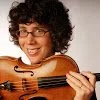
Nadje Noordhuis Interview
This link takes you to the podcast, video and show notes for this interview. The transcript is below.
Nadje Noordhuis:
I never wanted to be a trumpet player, but the reason why I didn't is because I never saw myself represented in the music. I never saw women perform and thought, oh, I could do that. In fact, I was in my first or second year of my production degree, so I was going to be a sound engineer and a producer that there was an all female jazz quintet came to this small town and they had to sort of move the pool table and in this pub to fit the band in. And I remember just thinking, oh, I didn't know we could do that.
Leah Roseman:
Hi, you’re listening to Conversations with Musicians, with Leah Roseman, which I hope inspires you through the personal stories of a fascinating diversity of musical guests. The Australian-born trumpeter/composer Nadje Noordhuis is renowned for her playing, composition, and teaching, and in this conversation you’ll hear her reflect on all three. As well as her own projects, she regularly tours with several ensembles, including the Maria Schneider Orchestra, Darcy James Argue’s Secret Society, and the Anat Cohen Tentet. Nadje’s unique blend of experience, empathy and humor has made her a sought-after educator, having honed her skills in teaching individualized lessons based on pedagogy of her brass mentor, Laurie Frink.She also spoke candidly about some challenges she’s faced as a woman across the music industry, as well as how she overcame some serious challenges in her student years. I’m a big fan of her music, and you’ll be hearing a few clips throughout the episode; the track names and albums are detailed in the timestamps. You can watch the video on my YouTube or listen to the podcast, and I’ve also linked the transcript.It’s a joy to bring these inspiring episodes to you, and I do all the many jobs of research, production and publicity. Have a look at the show notes of this episode on my website, where you’ll find all the links, including different ways to support this podcast, and other episodes you’ll enjoy!
Hey, Nadje thanks so much for joining me here today.
Nadje Noordhuis:
Oh, you're most welcome. Thanks for having me.
Leah Roseman:
I found out about you from Sara Caswell.
Nadje Noordhuis:
Excellent. Yeah,
Leah Roseman:
She was on this podcast, I can't remember, maybe two years ago, and her composition, South Shore from one of her albums. I loved it. Not her composition, your composition, and I loved it so much, and I was like, who's this composer? She said, oh, Nadje is a friend of mine. She's great. And then since then, I started listening to your music and following you. So that was that connection.
Nadje Noordhuis:
Oh, that's awesome. Yeah, I mean, I wrote that for her quite some time ago, so it's like one of these tunes that sort of had been on the shelf for a long time, so it was nice to have it dusted off and recorded.
Leah Roseman:
Yeah. So I'm curious about your Dutch family connection. You have a Dutch name?
Nadje Noordhuis:
I have a very Dutch name. It's a shame. I don't actually speak any Dutch. I feel a little bit like a fake Dutch person, but my father's Dutch. He came to Australia when he was a kid, so that's where that comes from.
Leah Roseman:
So it is Noordhuis (Nordhouse).
Nadje Noordhuis:
Noordhuis, yes.
Leah Roseman:
I do speak some Dutch.
Nadje Noordhuis:
Do you?
Leah Roseman:
My elder daughter lives in Rotterdam. She's been there for many years.
Nadje Noordhuis:
Oh, fantastic.
Leah Roseman:
Yeah, I started learning a bit. It's fun when you visit a place to know a little bit.
Nadje Noordhuis:
Absolutely. I have visited quite a number of times, and whenever I try and speak Dutch, they just sort of answer back in English. They can tell immediately that I'm struggling.
Leah Roseman:
So I thought maybe we could start with Multitudes, your latest album with James Shipp. You guys have such a beautiful artistic partnership.
Nadje Noordhuis:
Thank you. Yeah, Yeah. We decided to record Multitudes as a follow-up to Indigo. So Indigo was our first record, and it was quite a number of years between the two records, and we thought, wouldn't it be fun to just have a bunch of layers of ourselves? So really recording something that we couldn't recreate live was our interesting goal. I think this is, maybe this is sort common these days, but when sort of collaborating when you're in different places, sort of throwing ideas into a Dropbox and going back and forth is something that we did for a while. And then we would get together and work out a few things, and then he would record some synth parts along. And then actually when we went into the studio, we had had quite a bit already recorded. So then we would go in and record some more layers and then record even more layers on top of that. So I think at one point we were both overdubbing at the same time. I think I was playing recorder and he was playing sleigh bells, and at the end of the take he said, we're not reporting to anyone, are we? It was just we've worked together for so long that we encourage each other's crazy. So we'd listen to something and we're like, oh yeah, church hall choir, we're sort of speak in this kind of code. We're like, yeah, boy choir. Yeah. Recorders. Yes. So that's what sort of Multitudes was all about. Yeah.
Leah Roseman:
I think a clip maybe from something like Run Together because you
Nadje Noordhuis:
Oh yeah!
Leah Roseman:
You have this interesting use of percussion. Maybe speak to who James is for people that aren't familiar with him.
Nadje Noordhuis:
So James Shipp is a vibraphone player who also plays percussion and synthesizers and often at the same time. So he's sort of unusual in that respect, a very unique human being, very funny, very witty, very smart, and just a great person to be able to play music with.
Leah Roseman:
And you do perform live sometimes as well?
Nadje Noordhuis:
We do. And actually, if I could speak about Run Together, we were actually commissioned in the pandemic by this person in England that we didn't know who wanted us to write music to her partner's artwork as a birthday gift. So she sent through maybe eight artworks. And so at the time I was in Australia and James was in Brooklyn. And so again, it was sort of this sort of Dropbox idea where I would look at the artwork and write some music and then he would respond. And so we sort of went back and forth. And so that's where Run Together came in. So that was actually based on some artwork. (clip of Run Together from Multitudes)
Leah Roseman:
Okay.
Nadje Noordhuis:
Yeah, that's a
Leah Roseman:
Cool commission to
Nadje Noordhuis:
Get. It really was. It was just sort of out of the blue and we were just like, oh, we've never done anything like this. We'll give it a go. Never say no. Well,
Leah Roseman:
I really love the album. There's so many interesting tracks and textures and unexpected things, but I have to say you're known for your lyrical writing and playing, and To Say Goodbye is so, such a beautiful ballad.
Nadje Noordhuis:
Oh, thank you very much. Yeah, I'm trying to think how I come up with that one. I think it's just one of these things that I just sort of sit, and I don't think I have an interesting story about it other than I just sort of sit and think and try. And sometimes I pretend like I'm Pat Metheny. What would Pat Metheny write, especially when it comes to ballad writing? So I think I was just trying to write something beautiful. (clip To Say Goodbye)
Leah Roseman:
I was wondering if you wanted to talk about the loss of your dear friend Lois Martin recently?
Nadje Noordhuis:
Oh, sure. Yeah. Lois and I had been friends since her partner's passing. Her partner was my teacher, Laurie Frink, and we became friends. Really, it was like the next day or the day after. It was sort of funnily enough with Sara Caswell. Sara invited me to a lunch that was happening at Lois's place. Sara was part of string, Sara and Lois and some others were the string group for Espanza Spalding's Chamber Music Society. So they were all gathered together and me, and so I knew Laurie and no one else knew Laurie, but I didn't know Lois and everyone else knew Lois but not Laurie. So it was sort of this weird, sort of weird combination. But yeah, I just figured I was there to help Lois do whatever she needed to do to memorialize and sort of keep Laurie's legacy alive, and that's exactly what happened. So I helped run the grant in Laurie's name. We award $10,000 every two years to an up and coming brass player.
And then, yeah, we just became good friends. I rented Laurie's studio in her apartment to teach out of once a week. And so then I would go over, and then inevitably it turned into dinner and sitting on the couch for hours chatting, and then I would go back to Brooklyn. So in the pandemic, I ended up staying with her at her cabin upstate. I thought I was going to be up there for a couple of weeks, and I was there for seven months. So we became very close. And then I went back to Australia for a while, and then when I moved back to New York, I moved into the back room of her apartment. So she was a very, very close friend and a dear friend. And so yeah, she'd had some health problems for a couple of years, but she was a person that I texted every day. So it's been a little bit unusual to have just in this last month, something will happen and I want to text her and I can't. Yeah, it's a big loss for sure.
Leah Roseman:
I'm so sorry for your loss.
Nadje Noordhuis:
Thank you.
Leah Roseman:
Are there things you'd like people to know about Lois as a musician or a person?
Nadje Noordhuis:
I mean, so many people know of Lois as an incredible violist, and especially a violist that if there's a jazz record with strings, she's on it. So Chris Potter, Michael Brecker. Yeah, Esperanza Spalding. Yeah. She was part of a really fantastic project. One of her last projects actually with Ryan Truesdell, who recorded, I think it was 17 commissions by jazz composers for String quartet. So she was part of that epic recording. I think it's like a multi disc recording. So many people know her of that, but I know her more, even though I was obviously around her and would hear her practicing, I know her more as a person, just sort of her sort of vivaciousness and just when people think of her, they just think of her incredible spirit. And she was a great host, so there was always gatherings at her apartment, and she would make big pots of lasagna and would always have charcuterie boards and cheeses and wine and stuff. So yeah, I think that's one of the things that she'll be definitely remembered by.
Leah Roseman:
Yeah. So do you want to speak about Laurie Frink who you studied with, because she also played in the Maria Schneider Orchestra, and you played with her as well?
Nadje Noordhuis:
Yes, yes. So I play Laurie's chair, third trumpet in Marie's band. Yeah, Laurie was an absolutely incredible teacher. And at the time, I mean, I studied with her from 2003 to 2005, and I actually moved to New York to study with her. I didn't really know that much about her, so it was a pleasant surprise when I realized how amazing that she was. So many people talk about her teaching and just the way that she was able to put everyone at ease, and at the same time, she was watching you and analyzing what you were doing and could assign a series of exercises that you would just go away and play not to think too much about it. And then you would come back the next week and you play it again, and then she'll assign you maybe the same ones or sort of a progressive exercise, and over time, your chops would come together. So it was sort of this magic that she was able to do. So she's also very deeply missed, and I've been doing a PhD on her teaching for a few years, so hopefully cross fingers in the next couple of years, I'll be able to at least release some of that information. And there's going to be more information released in time in different formats. But step one is sort of just to finish this dissertation on her teaching philosophy and why she taught the way she did and how she taught, not necessarily the exercises themselves.
Leah Roseman:
Yeah, I was just checking my notes. I read something that you were doing research, I think, on her teacher as well, right?
Nadje Noordhuis:
Yes. Carmine Caruso. Yeah. So I've, I've discovered all this fantastic information, but for an actual dissertation, it's too much to talk about.
Leah Roseman:
Okay.
Nadje Noordhuis:
So I've had to keep, I mean, it's changed so many times over the last couple of years, but I certainly can't talk about Laurie's teaching without talking about her mentor Carmine Caruso.
Leah Roseman:
So our principal trumpet player in my orchestra is Karen Donnelly, and actually, she was one of my first guests on this podcast, and I said, oh, I'm interviewing Nadje Noordhuis, do you know who she is? She said, well, of course.
Nadje Noordhuis:
Oh, well, that's lovely. That's lovely to hear. I always just sort of think of myself as a third or fourth trumpet, so I'm always sort of surprised if people have heard my name.
Leah Roseman:
Well, in the brass world, as someone you're known mostly as a jazz musician, but you definitely bridge different styles and also as a pedagogue and frankly as a woman.
Nadje Noordhuis:
Yeah, I mean, I think being able to do each of these things, I think is great in order to keep a career interesting, and they all compliment each other, these different facets. So yeah, I've just essentially followed my nose, so to speak, and I feel like each of these different areas of my life, whether it's playing or composition or teaching, it seems to come in waves. Certain years I'll play more, certain years, I'll write more. Then certainly I'm sort of in a teaching and a research phase at the moment, so I'm not looking to book tours of my own music or anything like that. Right now. I'm sort of a little bit underground as well as working on three records, but certainly just trying to juggle all these different projects. And I wouldn't say I am very successful at juggling that with any sort of balance or consistency, but I'm doing what I can.
Leah Roseman:
Yeah, I mean, so many people I talk to think about the seasons of the cycles of work or life. I think sometimes it can't be like every day, but it could be a block of weeks or months or years even when you do so many different things. But you do still play with the Anat Cohen Tentet, and you're just were touring with them.
Nadje Noordhuis:
Yes, yes. We were just in San Francisco and then just an hour away at a university. And before that, we were working on a collaboration with an organization that works with blind and visually impaired people. So that was really fascinating.
Leah Roseman:
That was my next question about that.
Nadje Noordhuis:
Okay. Yeah, so essentially Oded Lev-Ari, the musical director, had written some music for us, some new music for us, and so we were rehearsing that as well as going into a place called Visions. And so we would play in front of a blind and visually impaired audience, and then get their feedback on what they were hearing or what they would like to hear, or what they would like or what they don't like. So it was really incredible. Actually,
Leah Roseman:
It might be interesting to talk about your childhood in Australia. So I understand as a very young child, you were already teaching piano to some other little kids before school.
Nadje Noordhuis:
I know it's a little bit ridiculous to when I look back at it, but yeah, I started playing piano very early. There was a piano in the house, and I just sort of crawled up and thought this was fun, and I've got very supportive parents, luckily. And so my mom enrolled me in a Yamaha Music school, and there I had an incredible piano teacher. She was absolutely just wonderful. She was a second mom, really to me. So I played piano, classical piano. And then in third grade, there was a program in Australia where every public school student learns a band instrument. So my piano teacher's husband played the trumpet, so that's why I picked the trumpet. So because I'd had years of piano training, then I was like, oh, I've just got to read one staff at a time. This is easy. So I think my band teacher was like, can you help some other students?
So I had five students before school every day. I had a student for half an hour. I think I had maybe three piano and two trumpet or something like that. I can't quite remember. And then I had a recorder class of second graders. When I was in sixth grade, I would go over to the other school and teach this class. So I, I've taught from a very young age, and then that became sort of my job. So instead of working at a chicken shop or something, I just taught lessons, and that's how I got my pocket money together.
Leah Roseman:
I heard that the very first time you picked up a trumpet, you were able to play a C major scale, which is very unusual.
Nadje Noordhuis:
And I mean, I can't give myself any credit for that. It's just something that I was able to do, just like some people can do back flips or something or run fast. Yeah, I just was able to sort of play through. And I remember my sound as well. It was actually more mellow, but I liked the sound aspect of it was something that was just an immediate thing. So it was just sort of something that happened quite naturally, not as a result of any intelligence or hard work or anything, but certainly building on that over the years was the challenge. But it was great just to have that octave.
Leah Roseman:
So I was wondering if you'd be willing to share, I do understand you had stopped playing trumpet for many years and you had some bad experiences with sexism before you left Australia.
Nadje Noordhuis:
Yeah, I mean, I never wanted to be a trumpet player, but the reason why I didn't is because I never saw myself represented in the music. I never saw women perform and thought, oh, I could do that. In fact, I was in my first or second year of my production degree, so I was going to be a sound engineer and a producer that there was an all female jazz quintet came to this small town, and they had to move the pool table in this pub to fit the band in. And I remember just thinking, oh, I didn't know we could do that, even though I'd played in my high school jazz band, and we had some great gigs and did some things, and that was a predominantly, it was like majority female big band, three out of the five trumpets all female trombone section, three out of the five saxes.
So it was sort of normal for me to see on a high school level, but certainly professionally, that was a completely different story. So it wasn't until I'd seen this band, I thought, oh, I didn't know that that was a thing. And I think just that memory was just in the back of my mind. So when my production action, my efforts in production, I just sort of hit a glass ceiling pretty hard. The only job that I could get was distributing radio commercials through phone lines. That was the big technology of the time. And so I ended up getting fired from that job because the main producer was leaving, and I assumed after working there 18 months that I would take his place, but they hired another man, and I was told that the people on the board didn't think a woman could run a studio. So I was livid.
Don't think I've, well, I can't remember ever being that angry and for days too. But I went over to a friend's place for coffee and cake as one does after being fired for being a woman. I thought, what am I going to do? And she said, well, why don't you move to Melbourne and study improv? I'm like, oh, that's a great idea. I'll move in a month. And that's what I did a month to the day I packed up my car. I'd never been to Melbourne, and it was a 12 hour drive, but I moved and I moved seven months before the audition. So it was pretty confident, but I only knew two jazz records, and so I just played along with them. I never thought of taking a lesson or anything, but luckily I got in and then it was many years of trying to catch up. I just felt like I was running behind the bus. I didn't know who anyone was. I played by ear. I couldn't read chords, I couldn't transpose. I was like, what am I doing? So it was a lot of hard work and a lot of crying, at least in the first year. But I'm pretty determined. So if I start something, I'll finish it, even if it's not the most graceful thing you've ever seen.
Leah Roseman:
So those two records you were playing along with, one was Miles Davis?
Nadje Noordhuis:
Yes. Miles Davis Kind of Blue, and the other one was Dave Brubeck Time Out.
Leah Roseman:
So you were essentially transcribing the solos without realizing that's what you were doing?
Nadje Noordhuis:
I think I was just playing over the top of them. So yeah, I never transcribed what they played. I just used it as a sort of a harmonic basis for my own sort of meanderings.
Leah Roseman:
So when you went into the audition, what did you actually play?
Nadje Noordhuis:
So I played Take Five. That was one of them. And I don't even think I really realized it was in five. There was some gaps in my knowledge
Leah Roseman:
Instinct.
Nadje Noordhuis:
It was 99% instinct and 1% luck, I think, or maybe the other way around, actually, yeah, I can't remember the other tunes I played. Yeah, I think there was at least three, but I can't remember what they were. I just remember Take Five, because I look back and I'm like, wow, if I knew it was in five, I probably wouldn't have played it.
Leah Roseman:
So at the Victorian College of the Arts in Melbourne, you did get some good guidance. You did get into Manhattan School after that?
Nadje Noordhuis:
I did. Yeah. I remember just after about six months of, in my mind, I was chasing the bus that everyone else was on, I asked a teacher, what's the fastest way that I can catch up and learn everything? And he said, transcribe.
So I went to the library every day for an hour for at least a year, and I didn't know who anyone was, so I would just pick random CDs off the shelf. Sometimes it was classical percussion or sometimes it was saxophone, or I just sort of really went quite random on it. The first one I did though I remember was Miles. I'd heard of him, and I think it took me an hour to transcribe maybe eight bars, and he probably played four notes or something. But I also didn't realize that a lot of people transcribe with their instrument. But I was obviously in the library and trumpets aren't exactly encouraged there, but my ears had already been pretty good because of all the ear work that I'd done over the years, plus some sort of natural ability that I can't take credit for, so, so I would just sort of write it out, and then eventually I would learn.
It took me a while to be able to hear what the other instruments were doing other than melody. I was always very melody driven, and so it just took me, I'd have to listen to it. I would just, okay, I'm going to listen just to the piano, and then I listened again. I'm just going to listen to the bass. Okay, I'm just going to listen to the drums. So I would just listen to things on repeat and really try and isolate what each part was doing. And so yeah, we'd write them out and then we'd try and write out the chords, and then we're try and write out, try to analyze as best I could, what are they doing? What are the chord tones? What are not the chord tone? How are they getting from chord to chord and that kind of thing. So that was very helpful, very, very helpful, highly recommended.
Leah Roseman:
Wonderful. I have to say, I love all your albums and I've listened to them so much, but your album Full Circle, I think might be my favourite.
Nadje Noordhuis:
Oh, that's wonderful to hear.
Leah Roseman:
It's such a special album.
Nadje Noordhuis:
Oh, thank you.
Leah Roseman:
So this is not on your record label, your label Little Mystery Records,
Nadje Noordhuis:
Right? Yeah, it will be. But yeah, so it's on Newvelle Records at the moment for five years. And so yeah, that's been an amazing label to be on. Elan Mehler runs that label, and he does such creative and wonderful work. He asked me to record, and he said that you could record as soon as next week is what he said. And I said, well, are there any other dates that I could pick? And he kept asking, and I said, what's the furthest date? Because I was actually going on tour for six weeks. So there was a date, essentially two days after I get back, and I'm like, that's the one. I'll take that one. So while I was on the road, I was just searching old voice messages that I'd usually write at the piano. I'd just improvise and record things and then go back and Is there anything here?
So I was on this tour where we would be in a van for nine hours a day, so I'd just be working on charts and trying to put it all together. So I knew that I had to be very organized because I would have one rehearsal, and then just this one afternoon, they were going to mix it the next day. So there wasn't a whole lot of room for error. And also it was for vinyl too. So I've had time restraints too. So just working out which tunes were going in, what order, and more than what side of the record and solo order really planning things much more than I usually would. So that's how that all came about.
Leah Roseman:
So it's a quartet album, and the pianist is Fred Hersch. So great. Had you worked with him a lot before that?
Nadje Noordhuis:
I worked with him on Leaves of Grass Project, so I played in his ensemble and I knew him. I'd known him for about 20 years at that point, through friends and would always go to his gig at the Vanguard. But I was lucky enough to play in his Leaves of Grass project. We had some tours. Yeah, I don't play on the original record, but I did gigs that I think the original trumpet player couldn't do. So yeah, that was amazing with Kurt Elling and Kate McGarry. So that was wonderful just to be on stage with all these monsters. I remember just we were playing at Lincoln Center, and I'm just sort of looking around at everybody going, oh, this is nice. I need to remember this moment. (clip of Little Song from Full Circle)
Leah Roseman:
I've heard you speak on other interviews about your experiences at Manhattan School when you were really poor and really struggling financially, and how hard it was. Are you willing to share about that?
Nadje Noordhuis:
Oh, sure. Yeah. I mean, I had moved over from Australia with what I thought was enough money through grants and some family assistance. I thought I'd have enough for a couple of years, but I think I got a bit too excited about being in New York, and I sort of blew through it all in seven months or something. So then I'm like, no, what am I going to do? So as an international student, I could only work at the school for 20 hours a week. So I worked as an usher and then eventually stage manager, and I could do some teaching through the school as well. So I was really living on, it was like $200 a week, which is for New York. Especially now, I don't know if that would be possible, but I ended up living in a place that was very cheap, but also had some friends, some little creatures that would often visit and stay.
And I just had to really, I'd been, when I was studying my first degree, I thought that I would move up there and then I would get a job locally and be able to support myself that way. But in this little country town where I was in, there was no jobs. So I ended up having to keep going to Sydney and then worked in a supermarket and laser tag and saved up all my money, and then that's what I would live on for the rest of the year. So I was very used to operating with very low overheads and budgeting and things like that. So that experience really helped me when I was trying to be able to do my finances in New York. What was that, 5, 6, 6 years later? I can't, yeah, something like that. Maybe a few more. So yeah, it was a tough time. Yeah, I ate a lot of rice and beans. It was a Cuban Chinese place across the street, so I think it was two or $3, and that would be a couple of meals and a lot of porridge. So I don't like oatmeal now. I don't like it. I find it very triggering.
So those were some tough years, and then just really busy at school trying to get all my work done, and then also work at the school. I think I probably averaged about four hours of sleep a night. So when I had finished the degree, I'm like, I'm done. I want to earn some money. I'm sick of being so poor. And so I ended up working at the school as a program coordinator for the distance learning department, and that included the recording studio. So it was sort of like this production thing always sort of never went too far away. But yeah, those were some tough times, made me strong.
Leah Roseman:
I was just thinking, I mean, do you think Laurie or other teachers realized how bad it was for you?
Nadje Noordhuis:
I'm sure I never mentioned it.
It wouldn't be something that I mentioned. However, I did mainly talk in my lessons with Laurie, so it was almost like a therapist rather than a trumpet teacher. But that exactly what I needed at that time to be able to cope with everything that was going on. So she was all about teaching the individual. So certainly providing a space for me to vent was more important than flexibility exercises at that particular point, although she did give them to me so I knew what they were. Whether or not I did them was another thing. But yeah.
Leah Roseman:
So you did start playing again, and then I understand you couldn't break through that glass ceiling again as a trumpet player.
Nadje Noordhuis:
Yeah, it was always, I was just thinking of head scratching. I'm like, what is going on? Because the only people that hired me were all women bands, and that wasn't something that I was used to in Australia. So I played with Sherrie Maricle and the Diva Jazz Orchestra, so I played with them for about 10 years, and I played in a club date band run by Kit McClure, and so that was based on the International Sweethearts of Rhythm. So yeah, it was just sort of, I wasn't sure what was going on. And then I also wasn't sure whether or not it was ever going to work out for me being able to stay in the States and play music. And I wasn't even particularly sure of my own musical goals other than I just wanted to play music and travel around and have fun. So yeah, it wasn't until 2007, I think. So it was like two years after I graduated when Darcy James Argue asked if I could sub on a rehearsal, and I was like, this is my big break. If I'm seen to be playing in a band run by a man, it's going to give me some credibility. And that's what happened, which is super weird, and it's not something that I believe would happen today. The scene is very different now than it was pre me too. To me, there's a clear line of sort of pre 2017 and post 2017, I think that was the time when it was more likely that people would look around and go, oh, half the population's missing. That's weird. Maybe we should do something about it, rather than just not thinking about it and hiring their mates.
Leah Roseman:
I'm curious in terms of the pipeline. You said in high school there were all these women in the jazz band, but at Manhattan when you did your Master's, what was the division like gender wise?
Nadje Noordhuis:
There was one other woman at, when I started, there was another woman, a drummer, and she made it through one class and quit, and I was so upset. I was like, oh, no, then it's just me. And in the whole year, and then in second semester, there was a transfer student who's a Korean pianist, Mijung Lim. And so we became very, very good friends, and we actually just made a record that that's just come out. So yeah, these friendships are long lasting, but so then it was just the two of us, and there was a vocalist as well. So sorry, in my mind, I'm always talking about instrumentalists, but there was a woman vocalist there as well. So yeah, it was all just quite odd to me because coming, I mean, I went to VCA in Melbourne, was a small program. I think maybe around 20 people in the year, but I would say maybe six, five or six were women. So I was the only trumpet player. So it wasn't weird. No one was like, oh, you're a woman. That's weird. To play the trumpet. It would be more likely, why are you playing jazz? That's weird.
Australia's very into their pub rock, where I came from, especially, so I just felt like I'd time traveled. I'm like, oh, I'm back in the fifties. I'm like, where's my apron? It was very odd. Yeah, yeah, weird.
Leah Roseman:
So actually a fairly large percentage of my listeners live in Australia. I've had several Australian guests, so people especially there, will be interested. Where did you grow up? What part of the country?
Hi, just a quick break from the episode. I wanted to let you know about some other episodes I’ve linked directly to this one in the show notes, with: jazz trombonist Naomi Moon Siegel, Australian artist, composer and curator Lawrence English, Dutch jazz singer and pedagogue Ineke Vandoorn, and jazz violinist Sara Caswell, among so many episodes since 2021. It’s a joy to be able to bring these meaningful conversations to you, but this project costs me quite a bit of money and lots of time; In the show notes you’ll also find a link to sign up for my newsletter, where you’ll get exclusive information about upcoming guests, a link for my Ko-fi page to support this project directly, where you can buy me one coffee, or every month, and my podcast merchandise store. You can also review this podcast, share it with your friends, and follow on your podcast app, YouTube, and social media. All this helps! Thanks. Now back to my conversation with Nadje.
Nadje Noordhuis:
So I grew up in Sydney and in this part of Sydney, weirdly, we sort of identify ourselves by our closest beach. So I would say I'm from Manly, which is from Manly Beach, which is just down the road, and it's part of the northern beaches of Sydney. So it's north of the Harbour Bridge. And in this area, sort of weirdly, it's very sort just, I just grew up in sort of a middle class, the middle class suburbs, but there was a lot of music going on, and especially the schools that I went to had really fantastic music programs, especially my high school program had some fantastic teachers, and one in particular was the conductor of the jazz bands and the concert bands and everything I learned about ensemble playing, I learned between grades seven and nine. High school in Australia grade is grade seven through 12, and he was also my trumpet teacher. So I learned a whole lot in a very concentrated few years. And those are the skill sets that I ended up drawing on a decade later. But there's a local jazz festival, the Manly Jazz Festival, that was my first gig in fourth grade playing When the Saints, walking down the street, and I got a Swatch watch for that. So I was like, oh, music business lucrative.
So there's always music, but there's also rock and rock band INSX. Went to my high school, Michael Hutchence was in a neighboring school, but there's Midnight Oil. So it's a very musical little section of the world.
Leah Roseman:
I was surprised to hear that you started band Instruments in grade three. Would that be at the age of nine?
Nadje Noordhuis:
Seven?
Leah Roseman:
What? Really!
Nadje Noordhuis:
Yeah, so I was seven. I know in the States, and I suppose too, when I was teaching band programs, it was grade five, so people were more 10 or something when they did it, but in the early eighties it was like, yeah, third grade. So it was okay.
Leah Roseman:
Yeah, I'm in Canada, so I played the oboe in band, but we didn't have band until grade seven when you're teenagers. But I just can't imagine a little 7-year-old holding a clarinet or
Nadje Noordhuis:
Yeah,
Leah Roseman:
French horn.
Nadje Noordhuis:
Right, right. Yeah. I mean, my sister was a trombone player, and her arms weren't long enough to reach seventh position, so she'd kick it down to her foot and then kick it back up.
Kids, they'll find a way. Yeah, there was low brass. I mean, there's maybe in the concert, I mean, there was a concert band, so yeah, it would be grades three to six, so there would always be sort of bigger kids to play larger instruments. But for trumpets, I think there was 11 trumpet players. In fact, in fourth grade, they're like, we've got too many trumpet players, but we don't have a bass clarinet. Will you play bass clarinet. So for a year, that's what I did, but I wasn't into it, and then I ended up back in the trumpet section.
Leah Roseman:
So you have a teaching job now at Lawrence University in Wisconsin.
Nadje Noordhuis:
Yeah.
Leah Roseman:
I was wondering if that landscape reminds you of Australia at all?
Nadje Noordhuis:
Well, right now it's covered in snow, so it looks very different to the beach, which I'm sort of used to. No, to me, it just looks like a movie. Even if I'm traveling around the Midwest and there's these large open corn fields and farms, I'm in my head, I'm always hearing Bill Frisell and Pat Metheny, or I'm just thinking that I'm a character in an indie movie. I like to sort of think about that. I think I read somewhere, it's nice to sort imagine yourself as a main character in a movie. Sometimes that can sort of explain away sort of the madness. But yeah, I've been here, this is my second year living in Wisconsin, however, I'm only really here, maybe half a year. I do travel around and play with different ensembles and sometimes do guest artist work with local big bands, and well, local to them, not so much local to me. So yeah, I'm essentially just traveling from a different airport, but just one with 10 gates rather than a hundred. It recently expanded, it was five last year. It was five gates. This year is 10. So it's moving up in the world.
Leah Roseman:
And your students play different styles of music, right? It's not just jazz.
Nadje Noordhuis:
Yeah, so it's a mix of a, of genres, mix of majors. So a lot of my students play in say, orchestra and jazz band, which I really like. I like to teach the trumpet. It's the same notes. I keep saying, especially if usually if people have had a lot of classical training, the thought of improvisation or jazz phrasing is quite intimidating. So I do try and make it a little bit more accessible by reminding them. I'm like, it's the same notes. You just got to phrase it a little. It's just different articulation. So I really like that about Lawrence is that they can play whatever style they like. Yeah, so often in the recitals, they're covering a lot of genres. So it's quite unique in that way, I think.
Leah Roseman:
Do you want to talk about your group Fifth Bridge? Are you still involved with them? Unusual ensemble.
Nadje Noordhuis:
Yeah. So Fifth Bridge is a five piece trumpet ensemble. It's an electroacoustic ensemble, and the pieces that we play are commissioned for the group. So we're in the middle of, we're just about done with our debut recording. And weirdly, they're all sort of space themed. I dunno, we didn't, that was never an intent. But maybe when people hear trumpets and electronics, they're immediately thinking sort of celestial sounds. I think that's what it is. Yeah, all very angelic, like we're known to be, so that's been super fun. So we've got a mixture of classical and jazz professors. All of us are teaching full-time, and so when we can get together, we're playing these commissions. So I've been in the band the shortest amount of time, so just a couple of years. But yeah, it's super fun to hang out with other trumpet players and electronics and make weird sounds and try and work out how to play difficult music.
Leah Roseman:
Cool. I wanted to also mention your Gulfoss album, which I believe you recorded in Switzerland, and Maeve Gilchrist is on Harp.
Nadje Noordhuis:
Yes.
Leah Roseman:
Yeah, it's unusual. You have Jesse Lewis on guitar, and actually James Shipp is on that right, with percussion, so it's such a neat sound, and yeah, do you want to talk about that project?
Nadje Noordhuis:
Sure. Yeah. The album Gulfoss came about because there was a Swiss promoter that came to a gig that I was playing at the 55 Bar, and he said, if you're ever in Europe, come by and play at my club. And I'm like, okay. So he would email every six months or so, are you coming to Europe, I'm like, no. And then eventually he's like, do you want to come to Europe and make a live record? I'm like, yes. So I had to think, what sounds do I want on vinyl? I was very much sort of stereotypically much warmer sounds. Yeah, thinking of the storytelling aspect of what story can I tell in 20 minutes? And then they've got to go flip the record and then what happens? So sort of making those sorts of creative considerations as well.
So I remember having a hard time trying to work out the band to put together, and I think it was my sister who just said, well, who are your favorite people to play with? And I'm like, well, James and Jesse, and Ike and Maeve. And then she's like, okay, all right, leave me alone. I'm at work. I'm like, okay. So then I just wrote music for them. So I think that it's lovely to be able, it's sort of a luxury really, to be able to write music and knowing that I can just put a lead sheet together and then they will add their stamp on it.
So yeah, we played three nights in this club. Musig im Plegidach is the name of the club in Muri Switzerland. And so we would just play the one set, and then I would record it and listen to it, and then we'd make some tweaks and changes, and then do the same set the next night. And so the record is mostly the last night. I think there was maybe just one tune that was from a different night, but I remember being worried that the sound wouldn't be as good as a regular studio record, but I didn't have worried because I mean, they had fantastic gear and fantastic engineers, so it was great. Yeah, it was really, really fun project. (audio clip: Seven Miles from Gulfoss)
Leah Roseman:
Your engineering training must affect the way you come into recording spaces.
Nadje Noordhuis:
It really does. I'm always thinking about sound, and I think the hardest thing for me is to listen back to my own sound, because often what I hear is not what other people hear behind the bell. So that's been sort of a tough thing to grapple with over the years. But just finding engineers that, especially that I feel like can capture my sound well, that's just so important. I will arrange my schedule around being able to work with certain engineers and working out what mics and the placement and all that kind of thing. But I mean, I love making records. That's what I wanted to do. So it's, I think when I wasn't imagining what I wanted to do when I was a teenager, I never thought of myself as being the musician that I was recording. So that's been a wonderful surprise to be like, oh, it was me all along. How about that? I never thought that was possible. So that's been really lovely.
But yeah, it's always an area that I wish I knew more, and sometimes it's sort of hard if I'm wanting a certain thing. To be able to explain that in a studio setting is such a skillset. And sometimes I remember working with an engineer and I couldn't say, oh, it's this frequency that I want a little bit more, or how many db or that I was just more like (singing) or just trying to use some syllables to try and explain. He's like, oh, yeah, yeah, yeah, okay, I got you. So it's always a work in progress, but I think that's why I love music on the ECM record label so much is just 'cause it's so magnificently recorded and such sort of pristine sound. And even just the details, those few seconds of silence before the music starts on track one. And that's why, I mean, Jan Erik Kongshaug is the engineer that recorded 90% of the 99% maybe of ECMs catalog.
And as much as I've always wanted Manfred to have called me. I haven't got that call yet. So I'm like, well, if I can't be on the label, maybe I could still get the sound. So I remember emailing Jan Erik saying, would you like to mix my record? And he's like, sure. And I'm like, wow. So that was my first record. So I was in Europe with Darcy James Argue and then tacked on a few extra days and popped over to Oslo with this massive hard drive, because now that obviously the hard drives this big, but wasn't the case back in 2010. So yeah, so he mixed my first record, which was very exciting. And then he also mixed my record with Luke Howard, the duo called 10 Sails, which has sort of had a life of its own.
Leah Roseman:
Yeah, I was going to ask you about that. You recorded in Berlin?
Nadje Noordhuis:
Yes. So
Leah Roseman:
He's a well-known Australian composer, and
Nadje Noordhuis:
Yes, Luke, yes, yes. He's a really beautiful piano player and composer. And yeah, we went to VCA together, but we never played music together at that time. I think we were friends for about 15 years where we're like, maybe we should do a gig and remember turning up and we're like, oh, wait, some of our music has got the same chord changes. And we played and we're like, oh, we kind of can't tell whose tunes or who's our aesthetic was so similar. So he was living in Berlin at the time and said, oh, if you're ever over here, I'm like, well, actually, I'm going to be over there at the end of the year, or whatever it was. And apparently Luke said, I was just saying that he tells me later, but I was like, oh, okay, yeah, I'll come over and record. He's like, oh, okay. Well, alright then. So again, putting tunes in a Dropbox and then rehearsed for a couple of days and then recorded for a couple of days. And it was just this one. It was in someone's apartment and it was just one room, and his piano had an extra layer of felt like all the cabinetry was off, so you could just see the mechanics. And it was very close mic, so you can hear, it's a very sort of intimate sound.
And I was like, oh, I dunno how this is going to go with a trumpet. So there was a baffle between us, so we couldn't actually see each other, and I was playing the softest I'd ever played in my life, which is exhausting. It's really, really exhausting and just listening to the sound in such a detailed way that I'm like, oh, if I was playing the articulations need a little bit more definition, so I'm going to use a trumpet mouthpiece in the flugel just to give it a little bit of something. So often the sounds that I recorded, people are like, is that trumpet or flugel? I can't really tell you I don't remember. But also if it could have a trumpet mouthpiece or if I recorded any trumpet with a flugal mouthpiece, but they could have been. So I was just trying to make it sound okay. And I think at the end of the two days I had to lie on the floor. I was just absolutely exhausted. And then I also had to play quite loudly until Luke said, can you stop? I just needed a cleanse. But weirdly from that point forward, I feel like it opened up this whole section of my playing where suddenly my dynamic range was this rather than just this. So being able to play and get entrances really clean at an incredibly soft volume was sort of this unexpected skillset that I never knew I needed. But it certainly came in handy even on records like Multitudes. It was that same sort of approach where I'm just playing with as much control as I can at a very soft volume.(clip of Rainbow from Multitudes)
Leah Roseman:
What are your feelings about trips back to Australia and life as an immigrant?
Nadje Noordhuis:
Yeah, I think it's hard. I think of myself as an expat. I think that's sort of the category that I put myself in. Yeah, it's a weird place to be because when people say, where's home? I'm like, well, my immediate answer is Sydney. Sydney will always be my home. I'll have my childhood home, and that's likely where I will return to at a certain point. So yeah, I like to think of myself as on a very long working vacation. I mean, I lived in New York for 21 years, and I moved out of Australia when I was 26, and I've lived in Wisconsin for, well, this is my second year. So it's sort of getting to the point now where I've almost been away for as long as I lived in Australia. But, and not that I want to sort of separate myself from my identity as an Australian person, but it's this weird thing that I am never like, oh, this is my home forever and ever. This is always like, oh, this is where I am right now, and I like it and it's good people and stuff. So I think it's sort of a state of being that I'm very used to at this point. Yeah.
(clip of Full Circle) Yeah, I mean, I think I was raised in a family of very strong independent women and my dad, who's also very strong and independent, but certainly I was surrounded by many women. I was sort of an extended, extended family situation at home, which was wonderful. Just really lucky to have that. So that has always just been my default, and so it doesn't seem unusual to me and to just sort of have an idea and to go for it. Not thinking of society doesn't want me to do that, therefore I shouldn't or whatever. There was never any considerations like that. And that's why I think hitting glass ceilings was such a surprise. It had never dawned on me, and that's obviously happened in different fields.
So yeah, I think it was a really lovely way to be brought up, basically sort of like you could do what you want. That's always my advice. Sometimes if I am working in a elementary school or something, they're like, oh, do you have any advice? I'm like, yeah, do what you want. And they're like, no, don't say that. I'm like, yeah, but big picture, I don't want you to be sort of stuck doing someone else's taxes if you want to be doing something else with your life. And I think that's obviously sort of operating from this sort of place of extreme privilege where I've always had this backup net of like, well, if it doesn't work out, I can just go home. So I've always had that and I've got a great family, and so it's like I've never felt like, if this doesn't work out, I'm going to be on the street. So that freedom has allowed me to take more risks than maybe seems like a good idea, but to me I'm like, oh, I'll just give it a go. Oh, that didn't work out. Okay, well we'll find something else. Yeah.
Leah Roseman:
Well, thank you so much for this today, Nadje.
Nadje Noordhuis:
You're most welcome. Thanks so much.
Leah Roseman:
I hope you enjoyed this episode. Keep in mind, I've also linked directly several episodes you'll find interesting in the show notes of this one. Please do share this with your friends and check out episodes you may have missed at LeahRoseman.com. If you could buy me a coffee to support this series, that would be wonderful. I'm an independent podcaster and I really do need the help of my listeners. All the links are in the show notes. The podcast theme music was written by Nick Kold. Have a wonderful week.