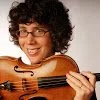
Michael Stephen Brown
Below is the transcript of my 2025 interview with pianist and composer Michael Stephen Brown. The button link just above here takes you to the podcast and video versions of the episode plus the show notes!
Michael Stephen Brown:
I look back at my Julliard days and I am horrified at myself for not going to more plays because Julliard also had dance and drama, and I'm like, why didn't I not go see plays and why did I not go to the dance shows and why didn't I do this? I mean, I try not to be too hard on myself, but at the same time, I see that as a missed opportunity for broadening the people I met. You don't do that when you're 18 and 19. You kind of stay in your lane and you're overwhelmed. I remember the first time I played in Mr. Lowenthal's studio class was one of the scariest things ever to get up and play for - much worse than playing a concert - get up and play for 30 pianists in a room. It was hell.
Leah Roseman:
Hi, you’re listening to Conversations with Musicians, with Leah Roseman, which I hope inspires you through the personal stories of a fascinating diversity of musical guests. Michael Stephen Brown is both a fantastic pianist and composer, and in this episode you’ll be hearing some excerpts from his upcoming album Twelve Blocks, which is a very personal project for him of chamber music and solo piano pieces. You’ll hear the stories and personal connections with each of these works that he's composed. He shared his experiences at several inspiring arts residencies including living in Aaron Copland’s house unplugged from the internet, his close friendship with the late Shirley Perle, and his research into Felix Mendelssohn’s relationship with Delphine von Schauroth and her compositions. We talked about the importance of removing the stigma from getting therapy and providing more affordable access to mental health support to those in the performing arts through his support of Creative Care. and his longstanding collaboration with cellist and comedian Nick Canellakis; you’ll also be hearing a clip of one of their performances. At the core of this interview are Michael’s broad interests and how he reflects his curiosity and love of storytelling in his creative work. There’s lots more to this in-depth episode, and all the music you’ll be hearing is composed by Michael; have a look at the show notes for the links. Like all my episodes, you can watch this on my YouTube channel or listen to the podcast on many podcast platforms, and I’ve also linked the transcript.It’s a joy to bring these inspiring episodes to you every week, and I do all the many jobs of research, production and publicity. Have a look at the show notes of this episode, where you’ll find all the links, including different ways to support this podcast! Hey Michael, thanks so much for joining me here today.
Michael Stephen Brown:
It's an honor to be here. Thanks so much for having me.
Leah Roseman:
You are, I was going to say rare, but I think less rare now that you're very active as both a composer and a pianist, and I was interested to learn that your very first piano teacher actually was also a composer and encouraged you as a young child to compose as well.
Michael Stephen Brown:
Yeah, absolutely. I began writing music from the very first day that I started learning the piano when I was five because my teacher on Long Island, Herbert Rothgarber, who was just a wonderfully warm and gracious and generous man, was a pianist and a composer, and he really encouraged me to look at music from both of those angles. So we would learn eight bar or 16 bar piece by Mozart or Minuit Ng, and then I would write a kind of spinoff on my own to kind of understand the harmonic progression, even if it was one to five and five to one. Those were my first little childhood compositions. But I have to say I'm very grateful to him because now that I'm older and teaching myself, I can appreciate being exposed to that kind of thought. That's not just all of this, but includes the kind of mental and broader engagement of the music itself, actually what's going on.
Leah Roseman:
So before we get into your current project, I just want to talk a little bit about your background. It's interesting to me that when you went to Juilliard as an undergrad, you were already doing a dual degree composition and piano. That must have been a lot of work.
Michael Stephen Brown:
It was a lot of work I admit. It was a lot of work, but it was the sort of thing where I kind of just applied to all these schools for piano and composition because you don't really know yourself when you're 17 years old and applying to colleges. And I thought, well, let's see what happens. I have no idea what's going to happen, but I got in for both areas and we asked the school, can I do that? And they were like, yeah, sure, why not? So basically it was a lot of work, but I had kind of the same courses, but then I just had lessons. So I was studying with Jerome Lowenthal on the piano side and I'd love to talk more about him and Samuel Adler on the composition side. And so they actually kind of fit really brilliantly together sometimes when Dr. Adler, my composition teacher, if I wasn't always prepared writing a whole new string quartet every week I would take a piano piece to him and say, Hey, I learned Copland's piano sonata. Can I play it for you? Can we analyze it? And he studied with Aaron Copland. So it was kind of thrilling for me to experience that from his compositional point of view, not just playing it for a pianist.
Leah Roseman:
Yeah. And one of your many chamber music albums, you're on this album of Samuel Adler's music and also piano solo stuff. So was that your initiative to get that project together?
Michael Stephen Brown:
Yeah, I've been playing. I mean, he's been a very important mentor and guide and teacher in my life for such a long time. I've been playing his music since I was a student. He's written two piano pieces for me. One is called Fantasy. This was a while ago. And then I've just commissioned another one from him that he completed in the spring around the time of his 97th birthday. So yeah, I love his music and I love his spirit and always engaging with him. So I'll continue to play and champion his music.
Leah Roseman:
That's wonderful to hear he's still writing. That's -
Michael Stephen Brown:
Yeah
Leah Roseman:
super inspiring. So Jerome Lowenthal, I know that connects with your exciting new set of albums coming out, so do you want to just dig into that?
Michael Stephen Brown:
Absolutely. So Mr. Lowenthal, as I'll forever call him or Jerry known to some is a legendary pianist and incredible intellect and scholar and of French poetry and just knows everything. And he's - during the pandemic, he and his partner, great pianist, Ursula Oppens, they live almost 13 blocks away from each other in Manhattan. And of course with social distancing, they formed a pod and they would walk every day to visit each other. And Jerry recalls, I asked him, what did you do on your walks to visit Ursula? And he says, well, I would sort of go through my memory of French poetry or poetry that is important to me. I would recite sort of mumble to myself from memory. So I got very excited about this idea of putting it into a piece and writing them a piece which I call Twelve Blocks, which is written for them and their relationship.
It's a one piano four hands piece with narration. So there are spoken moments where each of them recite poetry, the poems that Jerry liked to recite on the walk to each other, and they switch parts in the middle. So who was ever playing the primo part then becomes playing the secondo part in the middle through. And they've played this piece all over the world, and it's coming out on my new album in February, 2026, which is also called 12 Blocks. So they kind of live more like 13 blocks away, but the number 13 has these kind of negative connotations. So I round it down. (clip of Twelve Blocks Ursula Oppens and Jerome Lowenthal)
Jerome Lowenthal:
(music) A thing of beauty is a joy forever. Its loveliness increases, it will never pass into nothingness, but still will keep a bower quiet for us and asleep full of sweet dreams and health and quiet breathing. (music)
Leah Roseman:
And I understand every work on this program has some kind of narrative, some kind of story. Can you share some more and we're going to be sharing clips of some of that music?
Michael Stephen Brown:
Yes, absolutely. So I've already discussed 12 Blocks and how it's written for these two wonderful, legendary people who visit each other. I've got a piece for Clarinettist and conductor Osmo Vänskä, who is the former Minnesota Orchestra music director and his wife Erin Keefe who's a violinist. They had commissioned a piece for clarinet and violin from me. They were doing a whole project of putting together commissions of music that they can play together for that combination of instruments. And I thought that I would put some of their personalities into the piece and write it about their relationship. So it's somewhat more broadly about relationships between two people in general than specific to them. But Erin is a little bit more of the rough, brutal type, and I say it with love and Osmo is the sweeter one, and she'll agree with me on this. So there's a movement called the Argument where the two kind of fight with each other and the violin has the last word. That piece is called Relationship. So it's again, another piece for a couple. And I've been fortunate they've been playing that around as well. (music clip of Relationship)
And what else is on the program? Then we have some three solo piano pieces that I play myself. One is called Four Lakes for Children, which I wrote in the summer of 2024 at the Yaddo Artist Residency in Saratoga, New York, which is a phenomenal, very special place on planet earth for artists, not just musicians. A lot of writers and filmmakers and visual artists go there as well to kind of disconnect and live in the woods in their own cabins and get mosquito bites, but they can work on their artistic projects. So I went there actually for another project called The Carnival of Endangered Wonders, which we can talk about later. But while I was there, there were these four lakes on the property. And the story of Yaddo is the founders, the Trask family, all four of their children died before the age of 10 tragically, and didn't get to grow up, didn't get to have fully formed personalities. And each one of these four beautiful lakes on the property are named for each one of their children, there is Lake Alan, lake Spencer, Christina, Katrina. And I thought as I walked around these lakes every day I could imagine their personality kind of invent their personality, what would've happened had they lived past, in some cases infancy. So that became a kind of poignant, Yaddo inspired piano piece that'll be on the recording. (music, clip Lake Alan)
And I have another piece called Breakup Etude for the Right Hand Alone, which is an older piece, but it's inspired by, as the title says, a breakup in my life, but also a hand injury that I was dealing with during the pandemic. And so it's a real virtuoso piece for right hand alone with spoken interjections. It's began maybe in a kind of grieving way, but now it's kind of a comic piece, I think when you have space. And I have a short encore style piece called Pour Angeline, who is actually my fiance that I've written. Also on the concert, on the concert, excuse me, also on the recording, you could view it as a concert if you like, but it's a recording. I have two pieces with voice. The first one is a song cycle called Love's Lives Lost, and it's written for great American soprano, long-term friend of mine, a longtime friend of mine, Susanna Phillips, who is a fantastic American soprano. And it's based on texts from a friend of mine named Evan Shinners, who is also a pianist from Julliard who goes by the alias WTF Bach, and is an amazing person. So I commissioned him to write text about two former lovers essentially who meet later in life and don't connect in any way that they don't know anything about each other anymore except for partnering and putting on this song cycle. That's the basis for that. And that was premiered in Calgary in 2023. And I can go more in depth about it's eight movements. It's inspired by Schumann's Frauenliebe und Leben , which was a piece that Susanna and I studied and worked on at Marlboro together at the Marlboro Music Festival. I commissioned these poems from Evan Shinners to illustrate how two people who used to be in each other's lives, whether they're former lovers or former friends, they go off on different paths. One person goes one way, moves away, one person goes to another place, they lose touch for let's say many years. They come back together and yet this chemistry still lingers even if they know nothing about each other. It's just even unspoken, and you can't even put it into words. And that's something that I feel with Susanna very strongly, who's singing the cycle. So the poems reflect this concept that yet she and I really don't know much about each other anymore, but we can still connect through music. It's our shared language. It's not exactly the daily text updates. So the poems that he wrote, Evan's poems all reflect that concept in that spirit of reconnection, nostalgia, and yet it kind of simultaneously pays homage to a past, but then also to this idea that two people have different recollections of their past, and there's often like you make of the past what you will and you create your own narrative. So it's about that reconnection. There's some funny songs in it. There's one called Kalamazoo, because Suzanne and I were once in Kalamazoo, and it's a sort of little romp about you're stuck in Kalamazoo, what's there to do in Kalamazoo? And the final piece on the recording is the newest of pieces. It's called Pas de trois, which means steps for three. And it's actually a dance just like a Pas de deux, and it's commissioned by the SPA Trio, which is Susanna Phillips again, and the violist, Paul Neubauer and pianist Annemarie McDermott. I commissioned this piece for Annemarie's Festival in the Ocean Reef Festival in Florida, which is in the Keys right by Key Largo, and it was premiered in January, and it's a set of three songs. Each one is about their instrument type. The first one is Text by DH Lawrence called Piano, which is a very nostalgic poem, hearkening back to someone's youth, missing youth, and reminiscing about that. The second poem is called The Violist, and I was looking for a poem that described an arrogant violist because I wanted Paul Neubauer, who always loves to play, always loves for other people to play a little softer than maybe you think, and he loves to kind of shine in the spotlight. And we always joke around about that. I play a lot with Paul at the Chamber Music Society of Lincoln Center. He's one of my favorite people, but I had to kind of poke fun of him and his desire as a violist to kind of stand in front of the ensemble at all times. So I wrote that poem myself. I couldn't find a poem that worked, so I wrote that poem called The Violist, and Paul loves it (Music)
Susanna Phillips:
(music) A violist strolled down the quiet lane, his viola in hand, he grinned in vain, he played for the trees, The birds in flight (Music)
Michael Stephen Brown:
, and the final song is Soprano. That's the name of the poem by Rita Dove. And it's a very beautiful, again, nostalgic poem about a soprano and the sound that she makes. And Susanna is so beautiful throughout the whole thing. So it's been thrilling to have them record it and tour it around.
Leah Roseman:
Yeah, I know that you read a lot and you're really into literature, so it seems like the narrative must help you as a composer.
Michael Stephen Brown:
I've always found that being inspired by a poem, whether setting the text or just using it as a starting place for inspiration, I've been doing that for a while, gives me a starting place. It grounds me, it gives me something, I guess abstract. This is all subjective and abstract to work with as a composer, but I also have written many pieces that don't do that, and it just depends on where I am. But I'm more and more, as you can see, I guess the through line of this album is personal relationships. It's stories from my life that instead of writing an autobiography, it comes out this way.
Leah Roseman:
Now when you slammed your left hand in the car door, that must've been so brutal and scary.
Michael Stephen Brown:
Yeah, it was brutal and scary, both of those words. Yeah, because it was pandemic times, so all the concerts were canceled anyway. And the one thing that I was really looking forward to every day was practicing and learning pieces and writing pieces. And I found that was giving me a lot of joy and solace during that very difficult time. And I couldn't do that with both hands for three months. And it was one of these injuries where I thought, okay, well, maybe in five days it'll be better, but it didn't get better. But then finally it got better, and I learned that I had tore a tendon, so I learned that, and that just needed time to heal, and it's healed perfectly, and there are no issues there. I am not saying I'm glad it happened, but it certainly opened when something like that happens, it opens up another avenue. And I wrote that piece, the breakup, Aude for right hand alone. And I studied other pieces for right hand alone. And so I kept making art in other ways, (Music: clip from Breakup Etude for Right Hand Alone)
Leah Roseman:
And most of that one headed repertoire is for left hand alone for piano.
Michael Stephen Brown:
That was also the unfortunate thing. I was looking up pieces to play, and basically there's hundreds for left hand alone and six for right hand alone or 10. And I was like, well, that's a little bit imbalanced. So I wrote one myself. I tried to learn this Alkan piece, but it was just too hard.
Leah Roseman:
Now this year, you're a McDowell Fellow 2025. So where and what does that look like?
Michael Stephen Brown:
So I went already to McDowell, which is another artist retreat like Yaddo. It's in Peterborough, New Hampshire. I went in February for the month of 2025, and it was great. It gave me a cabin in the woods, and a lot of great people had been in that cabin. There are these ledgers, you can see all the people that had been there, people like Ned Roram and Aaron Copland and Ellen Swilling, and I think Ruth Crawford Seeger was in my cabin in the twenties. It was over a hundred years of people that had been living and working and writing, and a lot of composers in this cabin. It was a thrilling place to go work on different projects. I spent most of my time writing this Carnival of Endangered Wonders, which is a, I would say my biggest project at the moment. It's a co-commission for four organizations, and I'm happy to talk in depth about it if you'd like, if thhis is the moment, or I'd just say one more thing about McDowell, because it's place where you go and you're isolated in the woods in the middle of winter, and it was all frozen over. The conditions for serious work is nothing else to do but work. But then you go for breakfast and you go for dinner and you can mix and talk to the other writers and filmmakers. And I have to say that is where a lot of the magic happens. I have to say a lot of my process with my piece, I discussed my work with poets and different people were like, oh, have you considered this animal? Have you thought about, I wrote a poem about the Cassowary, this vicious Western Australian bird. You should read my poem. So then I did, and now I'm putting that in my piece. So that kind of cross genre crosspollination for art is something I love and need. And I would say McDowell and Yaddo were both perfect for that, to kind of let an idea marinate and not just kind of stressfully meet a deadline.
Leah Roseman:
So the subtitle is a Zoological Fantasy, and it's for large scale chamber ensemble?
Michael Stephen Brown:
It's a piece for the exact same combination of instruments as Saint-Saëns' Carnival of the Animals, which is two pianos, string quintet, flute, clarinet, and percussion. So 10 players and Saint-Saëns actually uses Zoological Fantasy as his subtitle as well. I have the manuscript, but somehow in the last a hundred plus years that has gotten swept away. People know it as the Carnival of the Animals, but I like that subtitle, A Zoological Fantasy, and I'm put it back in mine if people have the print space.
Leah Roseman:
So you'll be recording this.
Michael Stephen Brown:
Yeah. So actually come April, 2026, the premier will take place in Sarasota, Florida at a festival called La Musica, which is run by artistic director Wu Han, who also directs the Chamber Music Society of Lincoln Center. And we're going to do it there in an aquarium with some of the animals behind us. It'll be visible like manatees, which should be super, super cool because the piece is basically, instead of using the swan and the elephant, like Saint-Saëns, I have manatees and blue whales and axolotls and sawfish and cassowaries a amur leopards. I have endangered species that have come up with a list animals that I've either encountered in my journey as a traveling musician or things I've read about or from a poet at McDowell, things that really inspired me and my story, my piece tells a story of a 24 hour kind of zoological journey as if you start at 6:00 AM in a jungle in Borneo with the orangutans, and you wind up in 6:00 AM in the rainforest in Puerto Rico with the call of the parrot. So the piece is not 24 hours long, but it goes around the world as if you experience a day in the life of these endangered animals. So it's a piece that can be for children, for adults, for a whole mix of people.
Leah Roseman:
Are you thinking of doing any multimedia, like with projected images when you play it live?
Michael Stephen Brown:
This has been discussed and not decided upon just yet, but it's in the works. Yes, we're thinking about some graphics and some multimedia as well.
Leah Roseman:
That's great.
Michael Stephen Brown:
And at least some visuals in the program that people can take with them. And we're working with some local artists and aquariums. So the idea is to make this not just a piece for a concert hall, but something that can be a different experience and it could be a companion piece to the sense songs, so they can both be done in the same program. And we have a lineup of four, I think, performances in the spring with Sarasota and Palm Beach, Florida as another co commissioner, Music at Menlo in California and Kansas City Friends of Music will be doing it this summer and New York the following season.
Leah Roseman:
Obviously it was an inspiration for you to pair it with a Saint-Saëns, but it's good strategy marketing wise because people know that piece and they'll come hear it.
Michael Stephen Brown:
Well, I hope so. Well, this was my idea from the start, which is I played as a pianist, the Saint-Saëns number of times, and it's such a great piece. It's such an unusual piece. I don't know any other piece for that combination of instruments. You have to get two pianos, which is already something that a presenter, organization, most of them don't have two wonderful pianos. So you already have to do that. You have to get strings, flute, clarinet, and percussion, and then that's the only piece you can do, basically. So I thought that would be a kind of fun idea to kind of reimagine, but in my own way, in my own voice.
Leah Roseman:
Yeah. When you mentioned the program, like here in Ottawa, we don't, it's digital programs only, which I don't like, but they've really moved away from any paper programs. Do you find most places you're playing, they're still paper printed programs?
Michael Stephen Brown:
I would say most places I'm playing have paper programs. I have seen places that have digital programs. I've not seen people be thrilled about that or even, I mean, I don't like to have my phone scanning when I attend a concert, scanning a QR code and just sitting and looking at my phone. I feel like a concert is a time to not look at your phone and turn your phone off and just be present where you are. So yeah, I wonder what will happen with all that. I was not aware.
Leah Roseman:
Yeah, I mean the argument is you're not wasting paper, which I get. I was thinking for your program maybe it would be good to have sort of a mini website with all those images and I could see where it could exist online as enhanced experience. I was just curious about that.
Michael Stephen Brown:
Yes. I think that we're going to do that. I'm going to create a website or a Substack or something for this.
Leah Roseman:
So if we could just go backwards a little bit in your career. So I understand Andràs Schiff was a mentor who really helped you with your first major international tour.
Michael Stephen Brown:
Yes. He was just a mensch, what can I say? He's a great artist, and I used to be going his concerts all the time in New York City and hearing him play the complete Bach, was transformative for me, and through different ways, I got to meet him and kept meeting him and played for him a few times. And he started this thing in Europe. Well now it's not, it's probably more than 10 years old called Building Bridges where he would choose a couple of pianists every year and help them get some concerts, and that was really great. I think one year I played eight or so recitals in Europe and under his umbrella, and that was a great thing, made nice connections for me.
Leah Roseman:
Did he advise you in terms of programming at that point in your career?
Michael Stephen Brown:
A little bit, yes. He was supportive of my compositions. I played in one of my pieces. He thought playing my music on my programs was a good thing to do, and I think he, yes, he did have, I know where his true spirit in music lies. It tends to be in more of the Germanic side. So we kind of veered in that direction with Beethoven heroic variations and pieces along that vein. But he was open-minded and I appreciated that.
Leah Roseman:
Now, I believe you have a new album coming out with music of Delphine von Schauroth.
Michael Stephen Brown:
Yes.
Leah Roseman:
So that's a kind of neat story with Felix Mendelssohn, if you want to tell that.
Michael Stephen Brown:
Absolutely, yes. So I've been kind of a Mendelssohn junkie, Mendelssohn addict for a long time, and I just adore everything about Mendelssohn, and I feel a real connection to him as a composer. Played a lot of his music, a lot of his chamber music. And in preparing all this Mendelssohn, like the Rondo Capriccio and first piano concerto, I kept seeing the name Delphine von Schauroth in various things. Her name was listed above the Rondo Capriccioso, as a dedicatee, and I was just curious who she was. And I started researching her a couple of years ago and realized there was, I wasn't getting very far, there was not much information written about her. It was all kind of murky and unfinished it seemed. But I did find one piece of hers online, opus 18 Songs Without Words that were composed for Mendelssohn, and I thought they were just beautiful and worthy of pairing with Felix Mendelssohn's work. So that's what I've been doing a lot on recital programs. I play her pieces. They were written, they met briefly. I'll just tell the quick overview about who she was. She was a wealthy young lady who was a phenomenal pianist. Mendelssohn was very taken with her fast fingers when she was 11 years old. She played for him and he was 16, and then they met again when she was 16, and he was 21, and he was still blown away by her playing, but also was quite taken with her beauty. And they began writing Songs Without Words for each other. Basically. She would write in his notebook and he would write in her notebook, and it was this musical love exchange. And Mendelssohn even proposed marriage to her mother, but her mother was unsure of letting her daughter marry a traveling musician. She wanted her daughter to marry a doctor or a lawyer.
Felix Mendelssohn was pretty heartbroken about it. He forbade his friends from uttering the name Delphine von Schauroth, the rest of his short life. And that's another reason why she's not mentioned a lot and there isn't much about her, but apparently she was a phenomenal pianist. A lot of people compare her to Clara Schumann in Europe at the time, but married three times and did not have the opportunities or the performing career that a man would have at that time. And I think that's very sad. But I think her music is absolutely wonderful, and I've been trying to find more of it, and I've succeeded in finding a few other short pieces from German libraries, but not that much.
Leah Roseman:
I thought I'd heard you say Michael in another interview about the story that Mendelssohn had written a piece for her that she didn't receive or something. There was some sort of,
Michael Stephen Brown:
Yes, there was a Venetian gondola song, the G Minor Songs Without Words of Mendelssohn that he had written and mailed to her as a showing of love. And I believe she didn't, if the story is true, she never got the letter and she married someone else. So that's a pretty dramatic showing of love. And could you just imagine receiving a Mendelssohn handwritten? I can't. It's such an amazing thing.
Leah Roseman:
Hi, just a really quick break from the episode. I wanted to let you know about some other episodes I’ve linked directly to this one, which I think may interest you, with Thomas Cabaniss, Anthony Brandt, Julia MacLaine, The Cheng2 Duo and Martha Anne Toll. In the show notes you’ll also find a link to sign up for my newsletter, where you’ll get exclusive information about upcoming guests, a link for my Ko-fi page to support this project directly, where you can buy me one coffee, or every month, and my podcast merchandise store with a design commissioned from artist Steffi Kelly. You can also review this podcast, share it with your friends, and follow on your podcast app, YouTube, and social media. All this helps spread the word! Thanks. Now back to my conversation with Michael.
I always love those Mendelssohn Songs Without Words, really beautiful.
Michael Stephen Brown:
Yeah.
Leah Roseman:
Let's talk about the Aaron Copland residency where you wrote your piano concerto, which is also coming out because I understand you said "I don't want any internet in this house while I'm here".
Michael Stephen Brown:
Yes, yes. So the Copland house is the house where Aaron Copland lived from 1960 to 1990 where he died, and it's pretty much unchanged. It's in upstate New York in Peekskill, New York, which is about an hour north of New York City. It's a very beautiful spot, a lot of nature, a lot of trees and birds and a yard to walk around. I think it's actually like a historic landmark now and can't be touched or torn down. Speaking of which, the house has not been updated since Copland lived there, so it's quite an outdated house, but you walk in there and you feel transported into another time, and it feels like the time where Copland lived there, there's a big, big wooden barn style rustic desk that he had built where he would put his scores on. There's a music room, which is great, and has a fantastic library of recordings of American music.
They have a lot of CDs. It's a great place to listen to CDs and a CD player because it's all functioning in that way. And you sleep in his bed and you cook meals in his kitchen, and you can see the manuscript of Fanfare for the Common Man on the wall, and nobody bothers you. So I went there because you apply to the Copland house as a residency, I got selected. I think they select basically one a month, about 12 a year where people go and rotate and live in isolation. So it's different than McDowell and Yaddo because you don't have a community to have dinner with or breakfast with. You're not sharing ideas. You're literally alone in the woods and you have to make your own meals and your own cleanup. So it's a totally different thing, but it's a different experience. But it's also wonderful, and it was very creative, and it was where I was really studying Beethoven and Copland's works and came up with this idea to write a sort of Beethoven classical concerto inspired piano concerto that I could use as a vehicle for myself to play with string orchestras.
And I, as you said, I had them remove the wifi because I was worried about going on Netflix and Facebook and squandering the opportunity of being there. And I wanted to feel, look, I'm no martyr about technology, that I'm not so great. I have my pitfalls too with technology, but at this moment in my life, I thought it was very important to really try to be there, not squander this special opportunity and get rid of the wifi and just be present and read. And so instead of scrolling, I was reading and I was reading whatever books he had there. I assume they were his books
Leah Roseman:
And his piano?
Michael Stephen Brown:
No, it had a different piano. It was like his piano. It was a Baldwin seven foot. It was nice piano, but they said it wasn't his piano.
Leah Roseman:
So I'm assuming when you're composing, you're mostly at the piano with some manuscript paper, and then you go over to your computer. How does that work?
Michael Stephen Brown:
That's how I do it. Yeah. I'm usually at the piano with manuscript paper. I've been enjoying more and more sketching a lot by hand at the piano, and then I'll take it to the computer and work like that. That's usually the way I do it. They usually go back and forth.
Leah Roseman:
Well, one thing I noticed, you're an Artist Ambassador for Creative Care to help afford mental health care, so it's helping to reduce the stigma, the need for mental health care, and the fact that it's very expensive, especially for artists to afford.
Michael Stephen Brown:
Yeah. I got involved with this organization a couple of years ago. They're all classical music lovers that go to lots of concerts of the Met Opera and Chamber Music Society of Lincoln Center. And they introduced themselves to me as this startup group to help artists, not just musicians, but dancers and all types of different artists, particularly in their twenties, that would like therapy or mental health professionals and basically can't afford it because it's so expensive if you don't have it covered. I mean, I didn't have it covered and for myself. And so what their mission is, and I believe in it incredibly, is that they're fundraising to kind of bridge the gap, meaning that they can help. If therapy costs 300 an hour, they can pitch in 250 and someone would pay a copay. And that has grown unbelievably in the last couple years. They started out kind of as an idea, but I've done benefit concerts for them where all the proceeds go to their organization and yeah, they're doing a wonderful thing. I think it's growing each year, and I'm happy to support it and however I can.
Leah Roseman:
Yeah, that's great. Yeah, I donate to a similar organization in Canada and I live, we have socialized medical care, unlike you guys in Canada, but mental health care is not included. I mean, if you have serious psychiatric problems, that's different, but for your average person, if you're depressed or anxious or whatever, you can't access. It's not paid for as part of medical care. It's always separate, which is, I know in some European countries that's not the case, for example.
Michael Stephen Brown:
And also just, it's not something, I went to Julliard and they did have therapists if you wanted it, but at that time it was like, oh, you're going to do that. Something's wrong with you.
And it's not normalized to have therapy or any kind of mental health work or kind of any kind of body or spiritual work in school. It's just not in the curriculum. It's an afterschool thing. And I don't have been removed from school for a long time now, but if I were a person making decisions about what kind of stuff to include in a curriculum, I would talk about nerves. When you play a concert or the stress of traveling, I would put the doubts you have. I would find a way to create a course or a mental health where people can actually share experiences and you talk on a kind of practical, real level in addition to hours of this, which is important. Of course, I think there are breathing classes and lots of different ways that people can enhance their art form and their wellbeing as people, because it's all interconnected. So I support what they're doing and I think it's going well, and I hope that they can keep building and gaining momentum and normalizing these types of conversations for musicians and artists.
Leah Roseman:
I was looking at their website, so they are looking for more artist ambassadors. If anyone listening is interested, they should,
Michael Stephen Brown:
And it would be great. Maybe in this segment we can share this with them.
Leah Roseman:
Yeah, it's a clip or whatever. Yeah,
Michael Stephen Brown:
Yeah.
Leah Roseman:
Now you mentioned nerves and the stress of traveling. Two things I often bring up with performers. Has that changed for you over time? I mean, they're separate issues. What do you want to speak to first?
Michael Stephen Brown:
Has it changed? I would say the nerves are always there. Even though, I've done it before. I've played a concert before and I've survived it, and I've gone back to the hotel or my house or whatever, but it's there. It's like a learned behavior. Nerves, it's like concert, cold hands, nerves, even if it doesn't make any sense, even if I know people that come to watch me are not out to get me, and they're there to have a good time, and at the end of the day it'll be fine. So they're irrational, but they're there. They're worse if it's something that's new or haven't played a lot.
I also get weirdly very nervous when I'm watching my own pieces and not performing. In some ways I get more nervous just sitting in the audience watching a piece of mine. It's like watching, I would imagine a birth of something and I'm like, this is all on me. If this works out. It feels like a lot of pressure. And in terms of how do I deal with that? I would say when you keep doing it for a while, you gain a little bit more of a perspective and a little bit more of a, you keep learning about yourself in terms of what works and what doesn't work in terms of what you need on a concert day. I always need a 30 minute nap, and I'd like to be alone. I don't like to take care of other people's needs leading up to the concert. And you kind of learn about that in terms of traveling, that also just takes experience because that can be exhausting. A lot of things can go wrong, and you just have to keep learning what works for you. You talk to performers and do they say different things? They must say different.
Leah Roseman:
It's different, yeah. And we don't just have classical musicians on the podcast, so it's interesting talking to people who are in the folk realm, And I remember it came up like, you're being billeted because there's not the budget for hotel, but then do you engage? That takes emotional energy. You want to give back to the people who are hosting you, but then you have to save. It's always about engaging with fans, engaging with your public, and boundaries and learning what works. I mean, for me, playing in an orchestra, you know we're a big family and I'm friends with these people, but I've learned I can't just be talking to people right before I go on stage about whatever, even though it could be very interesting or important, because it takes away from my focus. So I just, yeah, keep to myself. But it's interesting. You do master classes when you travel sometimes, but you don't have time to teach regularly. I imagine.
Michael Stephen Brown:
I teach a couple of people ad hoc regularly, but I'm not affiliated with any schooled university at the moment. But I do a lot of masterclasses when I travel pretty much anywhere I go into a school and give a piano masterclass or a composition masterclass. And I really like that. It's like being an uncle. You get to to hear them suggest things and send them on their way. But I love teaching. I've done a lot of it in different festivals and programs, and I, especially coaching chamber music and yeah, I've worked with young composers, so I hope to do a lot of that in my life.
Leah Roseman:
I was curious, you sort of made reference to Julliard and that they had some counseling available, but there was a stigma. I mean, it's known as kind of a pressure cooker. Did it help you as a performer to also be in the composition stream in terms of having both identities?
Michael Stephen Brown:
Yes. I think having the perspective of mixing with composers as well as performers was helpful to me and got me out of the little tunnel world of which I was living. And I imagine most performers live in when they go to a conservatory, especially when they're 18, 19, 20, and they're very young and probably don't know themselves very well yet, and they're learning, they're trying and experimenting, and I think that's great. But I think it gave me a broader perspective. I look back at my Julliard days and I am horrified at myself for not going to more plays because Julliard also had dance and drama, and I'm like, why did I not go see plays and why did I not go to the dance shows and why did I do this? And I mean, I try not to be too hard on myself, but at the same time, I see that as a missed opportunity for even broadening the people I met or the friend group or to try to, but you don't do that when you're 18 and 19. You kind of stay in your lane and you're overwhelmed. I remember the first time I played in Mr. Lowenthal studio class was one of the scariest things ever to get up and play for much worse than playing a concert, get up and play for 30 pianists in a room. It was hell.
And then it got better over the years just by doing it, just by knowing that everyone's in the same boat or a similar boat, and it's nerve wracking for everybody, and you're there to learn and grow, and that's what it is.
Leah Roseman:
Do you often listen to archival recordings of concerts that you do?
Michael Stephen Brown:
The only reason I would listen to myself is if people send, now everything is recorded and pretty much videoed, which is different than it used to be 15 years ago, especially with the video component. But now you go play and then a video or an audio arrives in your inbox within 24 hours. They say, please listen by this date, or it's going to be made public, or listen to this recording as CMS of Lincoln Center always sends the recording. So I have to go through them and if you can request edits. So that would be the reason that I would listen. It would only be if I didn't want to allow something to be released, but it's not like I'm like, let's make a chicken dish put on one of my recordings. I'd rather listen to someone else.
Leah Roseman:
No, I was just curious in terms of perfectionism versus we need attention to detail and how you deal with that at such high level playing.
Michael Stephen Brown:
Oh, well, I mean, when I'm preparing for, let's say a concert I did a couple weeks ago, all the 13 Fauré Nocturnes in one concert, which was kind of an experience, I would be, the way I practice is I record one on my phone, I listen back and I follow the score. I mean, it's one of the ways I practice. I usually hate everything, but it's a starting place. So I use that as part of my preparing process because I find that even when I click the red button on my phone, it makes me feel a little bit more like a concert simulator. 'm like, okay, now I can't stop and start, and now I actually have to play the piece from beginning to end. Let's see how it goes.
Leah Roseman:
Yeah. Well, let's talk about your relationship with Nick Canellakis. You've put out a couple of wonderful recordings. Of course you guys have your online relationship with so many people have seen his reels and also you've done these interviews with super famous musicians. Your friendship goes way back with him, right?
Michael Stephen Brown:
Yeah. I mean, Nick is a great cellist, comedian. He's doing great as an influencer these days. And let's see, our relationship goes back to our days as students at the Ravinia Festival, north of Chicago, 2008 at the Stains Institute. Nice shout out to the Stains Institute. A great organization, great people. Nick and I were not exactly friends the first week we met. He was more abrasive. I was more shy and sweet. And over the years we met sort of in the middle and started doing lots of projects together, playing together. And he's been a supporter of my own music, which has been great. And then we started doing some comedy videos, and that took off in a certain way. And now we've been actually doing a hybrid multimedia live show, which is super cool called Humor and Harmony, where we show some of our short comedic videos interspersed with our playing and our live banter, which encompasses our raw, humorous, and often abrasive nature with each other.
Leah Roseman:
And I think those reels, they really resonate with people because it's emotions we all feel, and I really think you're both great in them, but one of the ones I was enjoying, I found it really touching. You must know this one where he's in a therapy appointment and then the therapist has taught, what would you say to your younger self? You know that one?
Michael Stephen Brown:
Oh, yes. Oh, yes, yes. And actually the younger self is my nephew. August plays the voice of the younger self. Yes, that's one of Nick's I would say. I shouldn't speak for him, but that's one of his favorite videos that he's made. That is very true. And he's a person that has a lot of interests. And again, as a young person has to choose, you spend so many hours, whether it's the cello or the piano, down one path when you maybe could be broadening and doing a few different things. So that's something that now he's really a, I would say we both are in our lives kind of exploring, not just being instrumentalists, but seeing what other creative pursuits kind of work alongside that.
Leah Roseman:
Yeah, and even what you were saying about a Julliard, if you had broadened out in terms of the kind of performances you're going to and the kind of people you're interacting with, I mean, certainly when I was in university, just felt like I never had enough time to practice. I never had time to finish all my assignments, and it was like crazy how I didn't take advantage of the things I could have when I was there. Yeah, both universities I went to. But that's the thing. We can only live one life,
Michael Stephen Brown:
But even if one has that realization later, it still, you can use that as an opportunity to learn new things. And so we weren't reading Shakespeare when we were 18, or I wasn't at least thoughtfully, and I was kind of rushing through the humanities class and kind of doing this and just so I could do this and this and survive those two things. And now I've been, I have a book club and have a reading list, and I'm trying to, I don't want to say make up for lost time, but I'm trying to at least broaden my perspective, not just look at life and music from the same lens all the time.
Leah Roseman:
A few minutes ago we were talking about cellist Nick Canellakis. There's a couple of pieces, your Prelude and Dance.
Michael Stephen Brown:
Yeah!
Leah Roseman:
We could include some of that for people.
Michael Stephen Brown:
Sure, I would love to include, and I mean, Nick is a great cellist and I've written numerous pieces for him, actually a lot for cello and piano. So I'd be thrilled to include something and hear him play and, and we keep cooking up more projects for the future too. So (Music: clip of Prelude and Dance with Nick Canellakis)
Yeah, I'll talk about my book club if I may for a second,
Leah Roseman:
Please!
Michael Stephen Brown:
Because it started with my very special friend, a kind of grandmother type in my life, a woman named Shirley Perle, who was married to a wonderful American composer, George Perle, whose music I played a lot when I was a kid. I had met them because I was playing his music, and I put out an album of his works, and I really championed it for a while. And then he passed away in 2009, and I kept this friendship with her. And she passed away actually a year ago in September, 2024 at the age of a hundred, but up until a hundred, I mean, she was in some ways my best friend. I mean, we were meeting weekly for tea and four hands. I mean, she was a pianist who went to Curtis, who studied with Rudolph Serkin, who did not have a performing career, but instead had a very rich life of, I would say, emotionally supporting great artists and pianists of the past, including Eugena Stellman and William Kapell and Leonard Bernstein, and a whole slew of important people.
But she was in and of her herself a very special, very smart person that had a whole, I would say, beautiful network of people that she mingled with and was a real, she was the glue. She was like the nucleus of this universe. That was very special. What she invited me into this world where we would have New Year's Eve parties and tea parties and music salons. And so Shirley was a great avid reader and always thought that I could deepen that side of myself. And so we formed a book club in the last couple of years of her life with two friends of hers, one who is a retired English professor from Barnard, and his wife, who is an art historian. So the four of us would dive into classical literature from Homer to Dante and lots of Shakespeare and lots of different classics I never read. And we would Chas her, we would sort of read and discuss and meet weekly. And that was very special and gave me another avenue to learn deep. And it was another connecting thing for me and Shirley. And she remains, she still looms very large in my life. Yeah.
Leah Roseman:
Yeah. That's beautiful. So did she teach?
Michael Stephen Brown:
She taught some people piano, sort of beginner piano. She was just a real personality. Everybody knew Shirley in New York City. She would come to the concert, she would look elegant with her hat and her outfit, and she was unbelievably smart and opinionated and I would say in the most loving way, uncompromising and opinionated and difficult, but in such a honest and beautiful way. So when you got a compliment from Shirley, you knew it meant something. Every time I'd play something in public, I'd go and play it for her first. Many times, that's the way I would prepare. I'd go play Shirley. I'm going to play this. She's great. And she'd sit there with the score and she'd say things. But mainly the most inspiring thing that I took away from it was not so much her comments, but just the fact of having her presence. I could see she was zeroed in on what I was doing.
Leah Roseman:
I'm curious, in terms of your creative process, do you improvise?
Michael Stephen Brown:
I improvise in the compositional, when I compose as part of that process, but I wouldn't say I improvise in the sense that I would invite anyone to check it out and listen to it. It's not something that I feel confident in a way I want to express myself, but I do like doing it just for myself.
Leah Roseman:
Yeah. So is it always kind of generative? There's a point you're playing in order to generate stuff you want to write down?
Michael Stephen Brown:
Exactly. I usually do improvise and record those voice memos or whatever, and then I'll go back and they'll be like, oh, that was a total nonsense. But actually at the end of that, there's something I can develop, and I usually then, okay, I have a starting place. I'll go with that.
Leah Roseman:
Yeah. You have this orchestral work, American Diaries, and I believe some of the writing in there is your grandfather's wartime diary. Do you want to speak about that part?
Michael Stephen Brown:
Sure. Yeah. My grandfather, Julius Brown, on my father's side was a foot soldier in World War ii, and we discovered my family a couple of years ago, this diary that we didn't know we had, which was his writings about the daily occurrences of being a foot soldier in World War II in Italy and North Africa and all these places. They had a grueling schedule. He writes about getting up at four and not sleeping, and the gunfire going overhead and his literally best friends getting shot right in front of him and bullets whizzing by him. And I was commissioned by the New Haven Symphony to write an orchestral piece that included American texts as a source of inspiration. That was in the idea they were interested in the Amistad because the ship in the Slave Revolt docked in New Haven. So they wanted me to include something about that. And I then made the concept of the work a little more broad about American concepts in general, including texts by Langston Hughes and Maya Angelou and John Quincy Adams, who writes about the Amistad. And then I thought after I had found this journal of my grandfather's, I would base a movement off of him as a kind of memorial. He passed away almost 20 years ago now, but I did know him pretty well, and it was something I wish I could have discussed with him. This journal, there was a lot in there.
Leah Roseman:
You were in Composer in Residence with the New Haven Symphony?
Michael Stephen Brown:
Yeah, the New Haven Symphony was great. They had me for three seasons to write works for them, and also developed this program for high school students where I would go to New Haven and teach composition for very talented. We had a small class, maybe six to eight students, and they would write, they'd work on pieces all year to write, and then we'd put on performances at the end of the year. It was a string quartet one year, and a woodwind quintet we did the second year. And just to get them to understand and how to write for instruments, we'd bring in special guests and different in instrumentalists from the New Haven Symphony to demonstrate the clarinet and things like that.
Leah Roseman:
When I was looking at your touring schedule, I noticed you're playing quite a bit with Pinchas Zukerman and Amanda Forsyth, and they were here in Ottawa with me. So for people that don't know, I'm a member of the National Arts Center Orchestra. So Pinchas was our music director for almost 20 years, and Amanda was our Principal cellist, and often played solo with us. So I have strong memories of touring Canada with him playing many concertos, but especially Beethoven. And every night it would be different. He was always so inspired.
Michael Stephen Brown:
I mean, Pinchas and Amanda are just two of the most inspiring people I know, not only musicians. I mean, I just took a trip with Pinchas to Lithuania. We played at the opening of this Jewish museum together, and on the plane talking about Beethoven, he was literally showing me how he would conduct different passages of different symphonies and what to look for. And we talked a lot about Beethoven and his knowledge and what's him and from his friends, like Zubin Mehta and Daniel Barenboim to reading he's done recently. So it was really inspiring. And also I heard him play Beethoven last year. The 10th violin Sonata was incredible.
Leah Roseman:
I have you yourself thought about conducting?
Michael Stephen Brown:
I only thought about it when I was talking Pinchas about it. He was showing me things about my arm. He was sort of giving me a, it was this overnight flight, and I was completely sleep deprived. I was trying to sleep, but he somehow just wanted to give me a conducting lesson somewhere over the Atlantic at three o'clock in the morning, or God knows what time it was. And he was like, wake up. And he was showing me this thing about dropping your arm, and I was like, Pinchas, I'm trying to sleep. And it was really funny. But I do think about it because I do like it, but I haven't really dabbled in that world just yet. But we'll see.
Leah Roseman:
Yeah, I could see that being in your future. Well, thanks so much for this today. Really appreciated it.
Michael Stephen Brown:
Thank you so much. It's been delightful to talk to you and to be on your show. It's a huge honor. So thank you.
Leah Roseman:
I hope you enjoyed this episode. Please share this with your friends and check out episodes you may have missed at LeahRoseman.com. If you could buy me a coffee to support this series, that would be wonderful. I'm an independent podcaster and I really do need the help of my listeners. Keep in mind, I've also linked directly several episodes you'll find interesting in the show notes of this one. All the links are in the show. The podcast theme music was written by Nick Kold. Have a wonderful week.