Mary Beth Orr: The Singing Horn, Appalachia and Resilience
This transcript is linked to the podcast and video versions with show notes.
Mary Beth Orr:
We had just done Songs of the Wayfair with Grand Rapids Symphony, with Rune Bergmann and this incredible Norwegian soloist. And I was like, "This would sound great with horn. Does this exist?" And so I looked and boom, there it was. And I was like, okay, this has to be the first part of my program. This has to be Appalachia into Songs of the Wayfarer into Wayfaring Stranger, because what better way they're all telling the same story.
Leah Roseman:
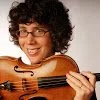
Hi, you’re listening to Conversations with Musicians, with Leah Roseman, which I hope inspires you through the personal stories of a fascinating diversity of musical guests. Mary Beth Orr is a wonderful award-winning horn player and folk vocal artist. Throughout this moving episode you’ll be hearing short excerpts from her album “The Singing Horn” which celebrates traditional Appalachian songs with Mahler and contemporary works composed for Mary Beth through Vox Novus’ Fifteen Minutes of Fame Project. Mary Beth is currently 3rd Horn of the Grand Rapids Symphony, and she shares the best advice I’ve heard about succeeding at orchestral auditions. This is a longer conversation; Mary Beth experienced a serious accident that threatened her life and then her ability to play the horn and she shares many other difficult personal challenges. I was so moved to hear her story and wisdom and I encourage you to come back and listen to the end. You can watch the video on my YouTube or listen to the podcast, and I’ve also linked the transcript. Have a look at the show notes of this episode on my website, where you’ll find all the links.
Hey, Mary Beth, thanks so much for joining me here today.
Mary Beth Orr:
It's good to be with you, Leah.
Leah Roseman:
So you're outside.
Mary Beth Orr:
I am, which is really apropriate because what I do when I do my solo thing is really tied to nature and I'm big into my pollinating plant.s So this is kind of actually perfect.
Leah Roseman:
As we record this, actually we're planting this all native plant micro forest in our tiny urban garden today. It's quite exciting.
Mary Beth Orr:
That's awesome. I love that. I love that so much actually.
Leah Roseman:
I just wanted to say I've so enjoyed listening to your album, The Singing Horn. It's such a special project. And I think I'll just let you summarize a little bit in your own words and then we can let people hear a little bit of that first track.
Mary Beth Orr:
So the first track Appalachia by Lydia Busler is very much horn on a mountaintop sharing the sounds of the holler. And the holler is that valley between mountain ranges and it's definitely where my granny comes from. So it's very near and dear to my heart.(Music: clip track , Appalachia and Wayfaring Stranger Lydia Busler) And it works its way very seamlessly for me into Wayfaring Stranger. Wayfaring Stranger is very much the searching, the processing of grief, the processing of life. (Music: clip of track 1,Appalachia and Wayfaring StrangerLydia Busler , all music from The Singing Horn, linked in show notes)
That then leads directly into the classical iteration of that by Gustav Mahler, the Songs of the Wayfarer. (Music: clip of track 2, Songs of the Wayfarer: I. "My Sweetheart's Wedding Day"Gustav Mahler, trans. Michael Drennan) And truly all of the... And then that actually finishes with O Death, which you can't beat ending with a death wail. That's pretty much how the mountain folk really put a nice exclamation point on life itself. (Music: clip track 6, "Oh Death"Traditional)
So this whole first few tracks really lends itself to be more like a song cycle. I wanted to really share the story of a life and all of the ups and downs that go with that and also very truly how complimentary classical music and a classical instrument like the horn can still occupy that folk space and the space of music that's really for the people that is more of that very visceral, earthy, powerful place. That is the music of my family, my granny and grandparents, aunts and uncles up from Shelby, North Carolina and Lexington, Virginia. (Music: clip track 3, Songs of the Wayfarer: II. "This Morning I Went Through The Fields"Gustav Mahler, trans. Michael Drennan)
The entire synthesis of how I came to this was very much born from feeling as uncreative as possible in the standard orchestral life, especially as a freelancer. And I was working a lot with music theater and working with students that were workshopping so much solo literature, working on authenticity and truth and honesty and performing. And they were doing these incredibly exciting things. And I'm like, "Man, I don't even know who I am as an artist." And who I am is someone that was heavily influenced by Chopin, Beethoven, Rachmaninoff. I mean, I was very, as a young girl, very obsessed with all of the really biggest, darkest romantic composers for piano and for horn. But my real start was hearing my granny singing mountain music on her front porch as we literally... I mean, this is a very southern trope, but snapping beans on the front porch.
We would go out to U-pick farms all over Charleston, South Carolina and come back to the house and slice tomatoes, can peaches, snap beans. And she would always be singing. I'm going to preface this by my granny couldn't sing her way out of a paper bag. However, the spirit of what she was singing and there was always Dolly Parton playing on the radio. And all of my family comes from either the Shenandoah Valley or the Blue Ridge Mountains. So Lexington, Virginia or Shelby, North Carolina.
Grew up listening to a lot of Sheila Kay Adams. I just love her. So anybody that is looking for really traditional, I'm talking just music coming from the holler in between the mountains in Appalachia or Blue Ridge Mountains in North Carolina. Sheila Kay Adams, most of her albums are either just straight banjo or just acapella singing. So it's about as pure as you're going to get in terms of real... I mean, for me, ancient storytelling. This is stuff that we think have roots in America, but they really have that Celtic and English background, a very strong immigrant background. So these were both parts of me, really, really substantial parts of me. They were parts of me that represented both where I came from and also where I wanted to go.
And when it came time for me to, I kind of felt like I needed to make a change in how I was doing this music career, how being a professional musician. And I realized I needed to figure out who I was first and then who I was as an artist. And synthesizing those parts of myself, I started to realize, well, if these things live in me so seamlessly, why can't they live outside of me so seamlessly? And they really matched these things that kept coming back to me is that both classical music, I guess I hesitate to say classical music. I would say orchestral literature.
Orchestral instrumental music really has so much of the same inspirations as folk music. That music was the music of the people. It was really in a lot of ways the music of the poor because I mean, very few of these composers were rolling in it. You know what I mean? Most of Mozart's operas were premiered in brothels. And Beethoven had a love affair with pastoral music and mountain music specifically. And I preface it by mountain music because there's country music, there's blues and there's bluegrass. But this mountain music has a longing to it a lot of times that I haven't found in some other types of folk music, but it's still rooted in storytelling. I know that my granny, when someone died, you sang. When you were having joy, you sang. When you were having trouble and suffering, you sang. It's how you coped with what was happening and how you celebrated what was happening.
So I figured if those things were super connected, if I found that connection, I had to believe that I might have the possibility of connecting others that felt fairly opposite by telling these stories.
Leah Roseman:
Beautiful. And most of these, the compositions where you're both playing horn and singing, it's not simultaneous. So I'm assuming some of these, when you perform, you actually put the horn down and sing then.
Mary Beth Orr:
Yes. So when I do Apalachia, Wafering Stranger, España and any of the 15 Minutes of Fame Pieces, those are Horn, go right to singing, go back to Horn. And the 15 Minutes of Fame pieces were commissioned specifically for me to do that very thing. And that was a really fascinating project that I was really excited to do, but yeah. (Music: clip track 15, Robert Voisey's Fifteen Minutes of Fame Project: "Season of Ice"Brian Holmes)
Leah Roseman:
And was the original album conceived for those compositions?
Mary Beth Orr:
The original album, the album was conceived as in if I'm going to show people who I am, if this is the only opportunity I have to create something and put it out into the world, I want it to be the fullest realization of me that it can be.
And so everything on the album is what I would consider... I almost would consider the album more of a concept album where it really should be experienced from start to finish, going on a journey. I wanted it to be a really complete story of a life. The twists, the turns, the ups and downs, really coming full circle in all the things that make a life truly full. Because I would say definitely my life experiences have already been full for the short time that I've been here. And I really wanted to honor all of that. And so the album really was, this is who I am. I want to open up every single part of myself and share it with you. That's really and truly what it was. And the 15 Minutes of Fame Pieces came before the idea of doing an album. The 15 Minutes of Fame Pieces came first and then Parma Recordings approached me after they saw the, I think after they saw the performance that I did in New York for Manhattan Public Broadcasting, which was the premiere of those pieces.
So I guess you could say maybe those 15 Minutes of Fame pieces helped facilitate the album being created at all, I guess.
Leah Roseman:
Yeah. Yeah.(Music: clip of track 13 Robert Voisey's Fifteen Minutes of Fame Project: Fox Den, Matthew Murchison) And Parma submitted this as a Grammy nomination consideration.
Mary Beth Orr:
They did. They did submit it for consideration. I was very touched that they put the time and the resources into submitting that for me because that's not something I think I would've... That's not a world that I have previously been a part of and pretty foreign to me. So I don't think I would've done that on my own.
Leah Roseman:
So after we record this conversation, what I'll be doing is I'll be editing short clips of some of the tracks for people. And of course the album will be linked with your website in the show notes. So I encourage people to listen through. It's an ambitious more than 70 minutes of music. Can we talk about the Mahler? I'm curious, is he one of your favorite composers as a horn player?
Mary Beth Orr:
Oh, 100%. When I meet people that have never been to an orchestra concert before, I'll say, "Okay, maybe you want to come to a movie soundtrack first to kind of get your feet wet." I was like, "But then if you want your life changed, come see a Mahler symphony. It will take you everywhere. It will take you up and down and around all the way through." And so when I found, and actually we had just done, Rune Bergmann was conducting us and I'm sad that I cannot remember the soloist's name, but before some of this happened, it was actually right before I was finishing up a master's degree at MSU, which is where I was really developing this idea of who I was. And I was trying to figure out, I was trying to put together my master's recital, which I wanted my master's recital to be, this is who I am.
This is my brand as an artist. This is what you can expect from me. And I had found Appalachia first because I was actually putting together a planetarium show and we needed a break. It was a horn quartet planetarium show and we needed a break in between. So I was going to do something recorded that would give us a tiny chop break before finishing on. And I found this piece by Lydia Busler because of Lin Foulk Baird's website, horn pieces by female composers. And I saw a piece that said Appalachia. And I'm like, "Hell yeah. I'm going to check this out. " And it was amazing. It's like this is exactly the different sounds you would hear in a holler. It's that valley. It's not even a full valley. It's just like the sides in between a mountain near the mountain chains. And this is absolutely experiential.
This is absolutely pastoral. It's fully rooted in nature. And I was like, "This is amazing." And one day I was just in the kitchen and Wayfaring Stranger just, I was thinking about, I was like, "Oh, what can I do with this? Singing is also a part of me. " I don't know. It's something it just started to flow. I was just in my kitchen cleaning up, heard my cats kind of fighting. And I just started singing Wayfaring Stranger. And I turn around and my cats were just staring at me.
All the animals in my house just were sitting there staring at me. And I was like, "Oh, okay, this could really work." We had just done Songs of the Wayfarer with Grand Rapids Symphony, with Rune Bergmann and this incredible Norwegian soloist. And I was like, "This would sound great with horn. Does this exist?" And so I looked and boom, there it was. And I was like, "Okay, this has to be the first part of my program. This has to be Appalachia into Songs of the Wayfarer into Wayfaring Stranger because what better way... They're all telling the same story.What better way to show people how complimentary folk and classical music are than showing how folk has evolved across a century or two? So Mahler was a shoe-in for me. Songs of the Wayfarer was like, oh, this is a song cycle from Appalachia through Wayfaring Stranger Songs of the Wayfarer.
I was like, if I do this with staging all together with no applause, this is a full story. This is a song cycle. This is a folk classical song cycle. So that's how that came about. (Music: clip track 4, Songs of the Wayfarer: III. "I Have a Burning Knife"Gustav Mahler, trans. Michael Drennan)
Leah Roseman:
And Mahler wrote this out of heartbreak, these songs.
Mary Beth Orr:
He did. He experienced so... I feel like I really get him because he felt so deeply and he was trying so hard continuously to thrive at a time, a very tumultuous time where the entire world was just surrounded by death all around them. World wars, disease, plagues. And he felt all of it to his bones, to his internal organs. And the thing is though, even in the despair that he had and the deep sadness and the grief with which he wrote Songs The Wayfarer and some of his symphonies, there's still so much hope in it. There's still this, okay, this loss is here, but I'm still here too. And there are these other things still here too. So there's this weird... I almost find that there's still a thread of peacefulness even inside all of that for him.
Leah Roseman:
One of the things I've thought about recently with Mahler, I don't think I realized this when I was younger. I mean, he couldn't compose except for the summers because he was busy earning a living conducting. So imagine if he'd had more freedom to create. He already created so much great stuff.
Mary Beth Orr:
I don't know. Sometimes I'm better with a deadline.
If I have too much, COVID is a perfect example of that, but if I have too much... I mean, it does take time and space to create. I haven't created anything in a while. I have tidbits of songs in my head going a lot that I take voice notes for and I'm really dying for a chance to get to work on them. But it takes that time and the kind of space to sit down and just breathe for a second before you really kind of get into it. But at the same time, a lot of stuff on my album, some of the things that I enjoy the most on it were written after my son was born, 15 minute intervals in between him breastfeeding or being content in his jumper. I didn't have very much time to do it. It was like get on it and do it.
Sometimes creativity happens when you have more structure and maybe that was true for him.
Leah Roseman:
Let's talk about Good and True, one of the last tracks on this album, which you wrote when you're expecting your child.
Mary Beth Orr:
Right. That song came about really struggling to have a child. I'd gotten some, I don't know if advice is the right word, but I'd gotten some comfort from a friend that talked about something she read where there was... It's actually, I did some research on it, the Dagara Tribe in Africa. When women wanted to have a baby, they would go off on their own vision quest and they would not come back until they heard their baby song. And I though that was just a beautiful idea because I've heard over the years, Native American, many tribes, the men, when they want to become men from teenager to man, they will go to do their own vision quest, that type of thing. But it was the first time I'd heard something in reference to tribal to women, something that women would do for a transition, a major transition in their lives.
And I was doing a lot of Kundalini yoga and meditation and energy work and thought I would kind of ad this into just this idea into that. And sure enough, this melody came to me and I would say probably within two days the song was written. And I would say maybe three months after that we had a successful IVF and I got pregnant with my son and it was a beautiful pregnancy.
I started recording this album after I was pregnant. So the whole pregnancy is me recording this album. And then a lot of the editing was editing last minute recordings or additions to things, layering in on some of the folk arrangements that came after he was born. And actually recording Good and True, this is really funny. I hadn't recorded that one yet prior to him being born because I wanted to add some horn parts to it and I really wasn't entirely completely still sure what I wanted to do with the arrangement. And I got approached by a recording engineer that had done something for me on a live performance and said, "Hey, I think you'd be a really good fit for this documentary I'm shooting about different recording styles. Recording style for radio versus acoustic classical sound. Would you be interested?" And I said, "Yes." He goes, "Great.
I'm going to send you a form. If you can fill that out, it's going to help organize who I have for this documentary." But I happened to go into labor with my son and kind of missed that deadline because I was having a baby. And he said, "Oh man," because afterwards I said, "Hey, is there still any way of getting in on this? " And he said, "I'm technically full right now," but he goes, "I guarantee somebody's going to cancel." And sure enough, somebody canceled. So five weeks postpartum,
He sent me a message saying, "Hey, I've got room next week if you can come in and record." And so it'd be free recording. It was free recording for me and he was going to do a variety of different things with it. So I had my guitarist friend, Greg Scheer, who's on the album doing all kinds of things. He had a group that was doing something on this Renaissance Redux is the name of the documentary that I think is still an editing process. I think it's taking a while for it to come out, but he was doing something too. So he said, "Yeah, I'll already be there. I'll just hang around." So I came with my breast pump and cooler and everything and my horn and we just three hours pumped out the recording and did an interview for it. So that was pretty crazy.
But yeah, that song, I would say I definitely have a hard time doing that song live without crying, but I have to learn to pull back a little bit when we go to perform. (Music: clip track 25, Good and True by Mary Beth Orr)
Leah Roseman:
Well, in terms of all these short form works, I really love the format actually. I guess you were saying before, even with the Mahler, if there's no applause between the first track, but how do we... I find a lot of audiences now, they're new audiences to classical music, so they tend to clap more. And you go with it and it doesn't bother me, but some people feel like, oh, they need to learn about the respect and that you don't clap between things. If you're playing a sequence of very short pieces that are a minute long, do you think it's better if people hold their applause? I mean, each one should be celebrated.
Mary Beth Orr:
Yeah. I will tend to put something in the program saying this is going to be done with staging and in a continuous format. Please sit back and enjoy the journey.
Sometimes I'll have somebody make that announcement before I start. But I also add, if you are moved to applaud or even say something, please do. If you are called and moved to do that, please do. I incorporate staging and when I can lighting, that sometimes helps people understand that this space being held for something else that's coming. And what I really like to do is when I end with Oh Death, I like to do a blackout at the end of that. And then when the lights come up, I'm all, yay. Very clearly over now. But yeah, I've had a variety and I have a mix and usually regardless of what people do, I haven't found it's changed the experience. And the second half of my program is very, "Hey y'all, how you doing?" And it's very much sharing, talking with the audience. It's such a deeply personal, it gets very relaxed and very personal in the second half.
So it balances out the intensity of the first set, I would say, for people. So they leave with just a little bit of everything. It feels I think probably I would like to think, I can't speak for my audience, but it is my intention that it feels very full circle that they leave. I think I would describe it, I want people to leave with this feeling of when you've had the most well curated and also satisfying meal of your life. And that could be a meal at your grandma's, like the most epic Thanksgiving or Christmas dinner, or it could be a five star restaurant. But whatever feels like from start to finish, somebody cared for you so much through every single course of that meal. And it not only tasted good, it wasn't just decadent, but it was also really sustaining and nourishing so that when you leave that meal, you're like, "I am so complete now and satisfied." It just changes. It can change the lens that you view the world in for the rest of your day. That's what I want to try to do with music for people.
Leah Roseman:
That is a beautiful analogy. I love that. Well, let's talk about some of your arrangements. I assume it's related to relationships and friendships. I mean, two bass, horn, voice, fiddle, these combinations are a bit quirky.
Mary Beth Orr:
Yeah. I will say from necessity comes invention, right? Structure comes creativity. And originally, some of these arrangements came about during actually a lot of my, I'm going to say COVID made me really brave. COVID gave me a ton of courage. I had never arranged before, before COVID. I'd done some songwriting, dabbled in some songwriting with my degree at MSU. I did a songwriting workshop and realized, "Oh my gosh, I'll actually really enjoy this and I could do this. " But time is a problem, right? Having the time to do that. So during COVID, our orchestra was doing something called From Our Home to Yours. And I was doing this full classical thing. And when you don't have literature written for you, what are you going to do? Well, I guess I'll have to write my own, figure out my own. So I took hymns and I took songs that I loved. Really, it's just stuff I love, stuff that had impact for me.
And there's a couple in the orchestra and Mark Buchner and Jenna Buchner. And Mark is playing on the album. He plays that gorgeous bass solo at the beginning of Wondrous Love. (Music: clip of track 7, Wondrous Love, Traditional, arr. Mary Beth Orr)
And we decided we were going to get together and do a trio and do some things together. So they did a couple of duets. She's a violinist and he did a couple of solo things. And then we did this kind of... So I kind of curated the show pretty much with my friends and we had an amazing time doing it. And we would go to people's neighborhoods. People from a neighborhood could get together and I think it only cost maybe three or $400 to bring a small group from the symphony out to your neighborhood to perform a 45 minute concert. And it was amazing. It was a really great way to connect with our patrons. And it was the motivation I needed to kind of, okay, standing on my own two feet about what it is I like, what it is I want to perform, what I want to say.
And so when it came time to do the album, I really wanted Jenna to play again on it, but she's like, "Look, I'm really not a folk fiddling violinist. I'm really not comfortable doing it. " And there was another violinist in our orchestra, Susan Mora, she is just an absolute badass. She can play classical literature amazingly well and she can shred so naturally like no other. So Susan was like, "Hell yeah, I would love to do this with you. " So we did so many of these things too, really in one take.
I mean, she's just amazing. She's that good. (Music: clip track 24 When the Mountains Cry, Al Dunkelman, arr. Mary Beth Orr)
And with the bass, we just wanted to beef up the bass a little bit more. And so Mark just kind of came in and once we got into post-production, Greg wasn't available. And so we wanted to just beef up some things and then just add a couple of things. And Mark's like, "Yeah, I'll come down and do some stuff." Because I realized I wanted to add bassline on Appalachia to really set that very mist in the mountains type of atmosphere. So Mark came in and was just kind of playing around just adding Mark magic to a bunch of stuff. And then Greg obviously did guitar. So for me, the violin and the bass was just, I loved how it worked. I loved the simplicity of it when we did the sidewalk serenades over COVID. And I wanted to keep it because I just didn't... I'm big into if it ain't broke, don't fix it.
And so I'm like, "I just don't need to overcomplicate this. Let's keep this. " And also too, I mean, I think most people that have an education about really traditional folk music, especially mountain music, people didn't have a ton of different instruments. And in fact, they wouldn't have had a big upright bass. Somebody would've had a fiddle that came over a violin that came over that they just kept in the family passing down. But you would take a wash basin, put a hole in it with a broomstick and do some sinew, some leather line or twine down through there to make a bass. So my relatives, kind of what they played on, on the porch, you might have a banjo, something like that. But even with a banjo, I love working with mandolinist and banjo players. I can do these arrangements live with a really large variety of instrument combinations.
But for me, the melodic capabilities of the violin, the rhythmic capabilities and the sonority of the bass, and then adding some horn in there for some things like the horn chorus. I love the horn chorus and I'll Fly Away. It was so much fun to do. (Music: clip of track 26, I'll Fly Away, Traditional arr. Mary Beth Orr)
Those for me just seemed the truest, most authentic voice for me to use. And that is kind of my barometer. If I start feeling like I have kind of a rule to myself if I'm working on something and if I start questioning it too much and if I start wondering what people are going to think about it, then I've set it down and I walk away. Because then it's not my authenticity anymore. It's going to be overproduced. It's going to be contrived. And I really wanted a little bit of that the simplicity, the live quality, very much not overproduced. Have some of the rawness in it, make it not be perfectly clean. I mean, because that's just not how it would be on somebody's porch.
Leah Roseman:
Actually, I wanted to ask you about the vocal technique from the region where at the end of phrases it's kind of like a half yodel. What is it? Oh
Mary Beth Orr:
Yeah, yeah, yeah, yeah.
Leah Roseman:
Hi, just a really short break from the episode; please note I’ve linked a few episodes in the show notes for you: with Euphonium soloist Bente Illevold, trombonist Hillary Simms of the American Brass Quintet, songwriter Jean Rohe, trombonist Naomi Moon Siegel, Grammy-winning composer Carla Patullo who has overcome major personal and health challenges, and the Emmy-winning composer and trombonist J Walter Hawkes with his story overcoming a near-death experience, and finally songwriter, violinist, author and disability rights activist Gaelynn Lea, among so many episodes since 2021. Sign up for my newsletter, where you’ll get exclusive information about upcoming guests, consider buying me a coffee on my Ko-fi page, or buying some unique podcast merch. You can also review this podcast, share it with your friends, and follow on your podcast app, YouTube, and social media. All this helps spread the word! Thanks. Now back to my conversation with Mary Beth.
Mary Beth Orr:
Yeah, I will tell you it is not when I do it. I mean, I'm a classical musician, so when I'm working on something and how I want to do it for recording, yes, I will really make some decisions and be mindful and purposeful about it. But these are just things I heard my granny do. So in terms of a musicological education for me about it, that's not what I have. It's just simply I heard what my granny did. Those inflections were hers. And so that's what I do. That's what I heard my aunts doing, my granny. So it really is that simple. Those inflections, it's not super on purpose, if that makes sense.
Leah Roseman:
No, I mean I Googled it. I was curious about it.
Mary Beth Orr:
I'd be interested in what you Googled about it because I have never Googled it.
Leah Roseman:
I Googled it and it came up like Appalachian. I didn't do a deep dive because it was like Appalachian Mountain style singing vocal feathering, half yodel. These words came up for describing what you were doing, but I didn't go into it too deeply. So I was just kind of curious with what I was hearing.
Mary Beth Orr:
Yeah. I know that I'm kind of really called for the half yodel on the ends of a phrase. It's an exclamation point for me. It's like guttural. I think, what I love so much about doing it is that on horn, I have to be so careful. I have to be so... it's such a beast to play. Sometimes I hate the horn if I'm honest. Sometimes I just do, but I love it, but I hate it. I'm stressed. I mean, I probably shouldn't be out in public or whatever, but if you see me performing live, know I am stressed as hell about the horn side of everything. I am perched and ready. I am hardcore focused. I am on 11. But whatever I'm singing, I'm just having so much fun. I have zero judgment. And actually that's the thing, the vocal stuff again on the album, I didn't do many retakes of that.
I was like, yep, I'm good with it. I'm not going to micromanage it because it just needed to be of the moment in that way. And I love it. It's this great balance to the stress that horn brings me to have the release with singing.
Leah Roseman:
So I've had quite a few brass players on the podcast and I've tried to have some women, but I actually haven't had a horn player yet. So you're the first French horn player. And I'm an orchestral musician, so I'm well aware of how hard it is and how stressed they are. So not everyone listening will be familiar with that. Why do you think it's a smaller mouthpiece, there's more resistance with all the tubing? What's going on there?
Mary Beth Orr:
So I think the physics is pretty much 100% the physics. So the ratio of the mouthpiece to the amount of tubing and then the size of the tubing and how that tubing changes and the fact that we have a four octave usable range. And I play pieces where I'm pretty much called to actually Appalachia pretty much uses almost all of that four octaves. And the way the partials are, actually I teach at Hope College and I have a trumpet student that's changing over to horn. And we had an introductory lesson before the summer and he's like, "Oh, this can go all kinds of different ways. When you're playing one note, it can bend so many different ways." And when you're on other brass instruments, they slot. You can play every single note with every single different fingering. It's incredible. So you have to be really precise.
You have to be incredibly precise and also precise where your tongue is, how the air is moving. There's so many different moving parts and it can just go... I mean, it really is like having to hit three pointers over and over and over and over and over again. And especially on third horn in orchestra, I call it the sniper position. And any third horns out there watching this podcast when it comes out, you know exactly what I mean. You are usually called on after a bunch of rests to kind of ping in on a high note on the worst fingering at the worst dynamic completely out of context and you just have to be there. And you get no bow, no glory, nothing from it. Your goal is to not screw up and ruin the moment for everybody else and then be fine with that in your soul and walk away. This is literally all of third horn land. And so I mean that's part of what makes it really, really challenging. Yes, it takes it does, I would say probably because of the physics, we are air capacity. The amount of air we need to use against the resistance is also probably a factor. I would say that I think anybody that's playing horn though, I wouldn't agree that it's the hardest instrument. People will say that all the time. Oh, I hear that's the hardest. No, because I think I would need to be seriously medicated if I tried to play violin. I don't think I can do it. I literally don't think I'm built for that instrument. I just don't.
Leah Roseman:
I think that excellence on any instrument is... But in terms of brass instruments, there's a special difficulty with horn. So when I said hardest, I meant in the brass world, it has particular difficulties.
Mary Beth Orr:
Yeah. I do think it's really the ratio of the physics and the amount of range we have and that the precision required to sound just basically good. Just have accuracy, basic accuracy is probably about 100% the biggest challenge. And then outside of that, I mean, I think anatomy can make a huge difference too, whether your anatomy is inclined for it or not.
Leah Roseman:
And how about transposition? You guys constantly have to be transposing.
Mary Beth Orr:
Yes. Opera, Verdi especially lots of transposition and very awkward transposition. So you figure out tricks for that. I don't know though. I would say I would have a harder time doing different clefts, like having to read tenor cleft. I'm a pianist, so I've been a pianist since I was seven and was a double performance major in college. So bass clef and trouble cleft bam, I'm right there. You add any other clefs in there? And I freak out. I can't do it. That I'm like, nope, I never learned that. I don't think I can start now. So I'm intimidated by cleft more than transposition because I think with horns where the era of time where you have a lot of transposition, it's the type of things we're playing. Dvorak has some tricky transpositions because they're a lot more chromatic and that gets confusing. But once you start doing it, you're kind of like, "Oh, this notes that, this notes that." And there's a certain structure to how the music's laid out that it makes sense, like the one and the five. So harmonically, it kind of lays out within the same scale within the same chord. That's that early classical literature into early romantic literature. And then once the vault horn came about and valves came into play, then that went away.
So it's not too terrible. It's not too terrible. I feel for the trombonists, the violas and the bassoons that have to do the clefs and stuff. That wigs me out.
Leah Roseman:
And in terms of women in the brass world, one of your mentors was Gail Williams or -
Mary Beth Orr:
She was an inspiration for me. I have never had a chance to study with her. That's still a bucket list thing. I just need to call her and say, "Hey, can I come play some things for you? " I will say just recently had the just, there's no words I could say amazing privilege, beautiful. I could say all kinds of, but it was just transformative to play third to her on Mahler six this past, I think it was late February. It was incredible. She's incredible. Actually, that was the beginning of March. She was playing principal. She came in to play with Grand Rapids. And the things I learned from her just sitting near her, playing unisons with her, for me, I think she's a lesson in how, because we talked about this. She always said that she wanted to be a singer. And I was like, "But you are because you do this on horn." And we just got to sing together and it was amazing.
And her ability to sing and with so much freedom and with so much ease, that was transformative for me.
Nancy Faco has become a dear friend of mine, also a former principal horn of Chicago Symphony. Incredibly, incredibly strong woman. Liz Freimuth out of Cincinnati, she's now teaching at Rice. Julie Landsman, amazing, amazing inspiration. I would say what's unfortunate though still is that I could list maybe on my two hands the female principal horn players that have been in our industry and it's increasing, but I just want to say out loud that I would not have the privileges that I do now in my career without the road that they paved. 100%. They've done it with grace. They've done it with grit and integrity.
Leah Roseman:
Yes, that's great. I'll be linking some other episodes directly to this one in the show notes, including with some of the women brass players I've featured, like Bente Ilivold, Euphonium player and Hillary Simms Trombone and some other people.
Now are you willing to talk about you had a really serious car accident in 2018?
Mary Beth Orr:
100%. Leah, I have zero boundary, zero filter. So you really can ask me 100% about anything because I do believe sharing everything about us is the thing that even the not glossy things that are on social... Social media is so glossy. So much of our world is showing all the glossy stuff. And there's quite a lot of my life, not glossy. And I think society loves to look at things through the movie workout montage, the movie makeover montage type of thing. They love to see that, but that's not very real and that can be very alienating for people that are struggling. So yeah, happy to talk about this accident because it is kind of a miracle that I'm here.
Leah Roseman:
And it affected... I mean, you almost died, you were in a coma, but also it's your life as a horn player, right? It was in jeopardy.
Mary Beth Orr:
Yes. So this was May 5th, 2018. I was actually on my way to volunteer for a veteran's equine therapy group. I was going out to a horse farm, beautiful sunny day. And I have no memory of waking up that morning by the way,
But I was T-boned going through a stop sign on a rural country road. I had a collapsed lung, a broken C6 and C7 vertebra, but it was a closed, they call it a closed transverse fracture. So it was like a crack inside of the bone. Collapsed lung, lacerated liver, kidney. I was in a coma for three days. They didn't know what the outcome of that was going to be. And I bit entirely through this part of my bottom lip, severed muscle, everything. And then this tooth is an implant that completely lost that. And we found out later this one was cracked, so they decided to crown this one just so I wouldn't have to go through the whole process, the rest of the process again. And as crazy as this sounds, I honestly wish rather than my tooth, I'm going to stand in my truth on this as crazy as it is and I'm not necessarily proud of it.
I would've rather lost my foot. I would rather lost my toe. Now I'm like, I'm okay. Now I'm happy it was just a tooth. But in that moment, I mean, I had just gotten tenure with Grand Rapids. The one thing I do remember right before I went to sleep the night prior was how much I love my life. I was like, I love my life. I'm finally extremely happy and really, really balanced. Yeah. So I mean that took a lot out of me because I'd just finished my master's at MSU. I knew exactly what I wanted to do as a soloist. I'd booked some performances, solo performances festival, and I lost all of that momentum, which was frustrating. And I did have to, through that process through the summer, they wanted me to do Invisalign so that I could get my teeth back in alignment because I had bit down so hard it shifted everything.
So I had to do Invisalign during that time before they were willing to do the implant. And they wanted me not to play for a year.
I said, "Oh nope." I'm telling you, I have the most amazing dentist. His name is Dr. Ray Ribitch. And Dr. Ray, he was like my mad scientist working in his basement. He's like, "Okay, you need to... " He's a rockstar. But he said, "You've got to realize this is so against all standard of care protocol." He said, "We are so off the beaten path on this. " I was like, "Are we Google Incognito tab right now so far?" He's like, "Yes, ma'am, we are. " But he was willing. He knew what this meant to me because I went to him two days after I'd gotten home. I was calling dentists on the way home from the hospital. People kept telling me to rest all of this stuff. I was like, "No, you don't get it. There's no way I can rest until I have somebody that can care for me, that knows what to do, that has a plan.
Even if it's not right away, that's fine, but I need someone in control of this, otherwise I can't rest." And he sat in the lobby, held my hand and said, "I know exactly what to do and we've got this and I've got you. I don't want to cry just thinking about it.
He's the reason why I've been able to do all of this. And he was willing to fashion a bridge for me that I could play on that wouldn't put pressure on that implant at all. So I had the accident May 5th and I was back playing with the orchestra by October 7th.
Leah Roseman:
Wow.
Mary Beth Orr:
I kept buzzing. I got a plastic surgery to repair the mucus plug that had formed around the sutures. All this extra tissue had formed on the inside. It looked like I was chewing tobacco. And so I had to get that removed. And I did red light class four laser therapy that a friend, she's actually a dear friend that she was a photographer at my wedding and did my headshots actually, all my professional headshots. She's also a horn player, very talented, talented woman. Her and her husband had opened up. She'd had class four laser therapy on her knees after a knee surgery that just went terribly. And she said, "I think this could help you. " And it did. It sped up my scar tissue healing by two years within just a few months.
And so once the surgery happened, we fashioned an implant. I'd been buzzing. Once my lip healed, I'd been buzzing. I'd been experimenting and trying to keep things together. And if I could say anything to anyone, and I've written some blog posts on my website about this, some pretty, I would say pretty raw things about the trauma element of this accident and just what it was like to wake up, what it was like to process some of this. I still have to do some things on the technical side, like the science and medical side of things. But I kept trying to follow... I did a lot of deep diving. I had plenty of time. So I was researching what I should be doing, what I should do for my lip, what is the method for coming back to playing? I couldn't find very much, if I'm honest.
I really could not find very much that was very relevant to my situation. There wasn't a lot out there. But I found some things about how to get back in shape after an injury or things like that. It wasn't working for me. It just didn't click. It didn't feel right.
I felt like a caged animal in a way trying to do it. It just wasn't right. And so if anything I could share to anyone is that sometimes it's okay to chart your own path even if it's not recommended by people around you. Even if people think what you're doing is kind of foolish. I think you have to trust your own intuition about that balance between what deep down inside you know you have to do versus a compulsion that you're feeding. Because sometimes I think I did some stupid stuff that was feeding a compulsion as opposed to a healthy choice, but it was still all part of it. It was still real, honest, ugly, dirty and miraculous. It was all those things. Times that I almost threw my horn across the room, times that I definitely threw my music across the room. Sometimes I was so mad because I couldn't get an upper register note that I needed that I shoved the mouthpiece into my face.
That's not what I should be doing. Yeah, I probably came back to the orchestra to play too early. But the problem if had I not come back to the orchestra, I learned so many valuable things that helped my dentist adjust what was going on with my teeth based off of what I was doing in orchestra that I would not have known was a problem just practicing at home. Because in an orchestra, it's so different than solo, right? Because you are in control of nothing. You are now balancing all kinds of variables from what the conductor wants intonation that's different than what your tuner had for you at home.
God bless our orchestras, but I mean, this is a living, breathing thing. Nobody, not the best orchestras in the world don't play exactly every single tiny thing at A440 all the time. So those adjustments need to be made. Tempos are different. Dynamics are different. How long you're sitting before you play is different each time. So that gave me valuable information and I had to make that call for me. So it was like balancing my physical and mental health. And I don't regret any of it. I don't regret any of it. I'm not saying you shouldn't follow a method, but I am encouraging people to throw the method out if it's not working. And it's okay even if you feel like you're walking around blind and you're unsure of everything and it's terrifying. It still is okay to go with your gut and chart your own path because I do believe that there's a light at the end of the tunnel for that. (Music: clip track 12, Robert Voisey's Fifteen Minutes of Fame Project: "Dream of an Epiphany", Lydia Lowery Busler )
Leah Roseman:
I was just remembering a couple of other guests I've spoken to had near death experiences, including J. Walter Hawks. He's a trombonist and composer in New York who fell off a cliff in his early 20s and yeah, almost died. And I think the realization that he really wanted to be doing music was really strong after that, that he needed to get back to it as well.
Mary Beth Orr:
I would say, yeah. I remember sitting looking at a sunset and people would say, I've written some things about this, about the well-meaning things people would say that just made me want to punch something. And one of them was, "Well, even if you can't play horn again, you still have piano and you can sing." The ignorance of that when you worked how many years, taken how many auditions to win a full-time orchestra job and you were finally in a place where you were so happy. And the fact that horn, as much as sometimes, like I told you, I'm very angry at the horn and I'm like, "Why won't you just work for me? " And how stressful it is.
It's still one of my voices. It's still one of my voices. And to take one of my voices away, that would be a serious mourning period. And I just remember looking at the sunset being like, "This sunset is beautiful. I acknowledge this sunset. I also don't give a shit about this sunset unless I can play my horn again." And that was an interesting time too. Brain trauma is a very interesting thing because I do have a TBI, traumatic brain injury, and it pops up in really I would say fairly minor ways, though I am an increased risk for dementia and my mom passed from Alzheimer's. So it's something that I would say is a definite stressor for me. I try to take care of and I worry about a good bit. But the craziest thing about that time before I started playing in the orchestra again, I could not feel.
I couldn't connect emotionally, truly to anyone around me or anything I was doing. I felt like I was a ghost observing my life happen.
I definitely didn't want to be around large groups of people because that level of energy, I couldn't match it in any way. And I was always a person before that that would. And I'd be down for the party. And I just really couldn't do that. I mean, I didn't even want to be around some of my friends very often either because I just didn't have very much to offer reciprocally. And I just couldn't... Even if I was doing something, I could say I intellectually know I enjoy this, but I never actually felt it. It is a really hard thing to describe. It's very hard. Even things that food I enjoyed. I intellectually acknowledge that I physiologically enjoy the taste of this, but it brought nothing else. There was no... Again, I really don't have the vocabulary for it. That's really the best way I could describe it.
Leah Roseman:
It kind of relates to grieving though, right? Because a lot of what you're describing and you were grieving the fact that you had this accident, that you lost so much.
Mary Beth Orr:
I think that's probably a very good point because I'm dealing with, and we've talked about this, I'm dealing with quite a bit of grief right now and I have actually currently... There's been a lot that's happened in my life. Very intense things have happened in my life since that accident. It's like that accident was like a catalyst for the movie part of Mary Beth's life, I think is what it feels like. And I would say I've almost reached a threshold now where I cannot be sad anymore. I can't be... And I've talked to some friends about this and there's a small part of me that worries that it might make me seem callous, but people have asked me a lot, how have you gone through what you've gone through and you are still doing or able to do all the things that you're doing?
Because I've had a lot of loss. My sister we talked about, she just passed and I've been planning my entire life around caring for her. Since the time I was seven, between seven and nine, I realized I was going to be the only one to take care of everybody in my family. Having my son, then losing my mom to Alzheimer's when I'd lost her 10 years prior to. I'd lost her every day for 10 years. Shortly after my mom passed, over the next eight month period, we lost all three of my dogs that raised as puppies. And then I just recently suffered a pregnancy loss barely a week before my sister passed. Actually really about four days.
I think this is another level of survival instinct. I am kind of at this place now where kind of like I told you, if I put a pause on my life to grieve every time, especially recently, every time I've lost someone or something, I don't think I would have anything in my life. It would almost be more stressful to try to build those things back. And I have my ugly cry moments for sure, but the day is gorgeous today. I have gorgeous plants. I have a beautiful son that needs me. I'm playing with Grant Park next week. I'm playing a solo show at the Ann Arbor Music Fest where I'm going to get to be around all kinds of amazing wonderful artists. I've never gotten to perform there before. I have songs I want to write. I want to live. I cannot be sad anymore.
I'm so tired. I'm tired of being sad and I'm tired of grief. I feel like I have this pragmatic part of myself that will just shuts it off like a valve.
I cannot do this right now because I actually want to try to enjoy something. I can't live in this space anymore. And I just have to go with that flow, just like I said about it's okay to not follow a method. It's okay to chart your own path. Even if somebody says you should or you shouldn't. This is what I have to do right now because I do still want joy. I do still want joy. And I think I have a hunger for living in joy that maybe other people chemically don't have. I don't know. I can only speak for myself. And so knowing myself in that way, I think it's easier that I just accept it and accept that part of myself and that the grief will come. (Music: clip of track 18, Robert Voisey's Fifteen Minutes of Fame Project: "Oh Lay me Down" Erik Branch)
Leah Roseman:
It's not linear. It's...
Mary Beth Orr:
No, it is very not. I was telling somebody the other day and we could probably draw an analogy to performing and art in this way, but for me, grief feels like emotional CrossFit. I feel like I'm in an emotional CrossFit world championship because grief for me doesn't ever get lighter. I actually miss my mom more now than I did two years ago. And I know I've been missing my sister for quite a while because she had dementia towards the end. And so I didn't get the things with her that I was hoping I would have once she moved to Michigan. But it's like this really thick, heavy, wet, hot blanket that you're carrying around all the time. It's this pack that isn't going to get any lighter. It's probably just going to get piled on because we are safe from nothing. I used to think maybe there's some kind of cosmic order, but I think things are still just going to happen and we're not necessarily protected from anything.
And so I can't say to comfort myself, "Well, this is probably going to be it for a while so I should be safe from losing anybody else or anything or hardship or a suffering." No, I got to be prepared for the suffering to come again tomorrow. And I know that sounds really dark, but that's why I live today. I still worry about plenty of things. I'm a Virgo, man. I like to have my bills paid. I like to have things in order and predictable to a certain extent. But when it comes to something like grief, I just recognize that I just keep doing the weightlifting, keep doing the training, and I will be strong enough then to ad onto the pack because the pack's not going to get lighter. The weight's not going to get lighter. But I can fortify myself stronger. And so maybe the joy that I seek is the fortification.
It helps balance out the weight maybe of the grief.
Leah Roseman:
But that's beautiful, Mary Beth. I was thinking your sister before she had dementia. I mean, she lived with disability for her whole life. She had cerebral palsy. So maybe she taught you something too about that, about overcoming.
Mary Beth Orr:
She taught me not to waste time, not to waste anything, partly because I knew I was preparing to take care of everybody. So there's a part of it there. But also too, she had such an amazing intellect, genius level IQ. She has a master's in theology from Emory University. Archbishop Desmond Tutu was a special mentor of hers because he was there getting cancer treatments at the time that she was at Emory. And they had a very special relationship. And she would've been an athlete. She would've used her body in all kinds of ways. She worked her mind the way she wasn't able to work her body. And I did not have a conventional childhood. I did not get to do what I wanted to do just whenever I wanted to do it, which I think is a good thing. The world did not revolve around me and that's a good thing.
I don't think we should feel like the world revolves around us. Though I had a great childhood, felt very loved and special by my parents, but we were a team. So there was always this emphasis on we take care of each other. It's a team.
Also being really creative, learning how to play games together as kids when she's a full quadriplegic. So we learned how to put, because that was the encyclopedia generation, everybody. So we put two encyclopedias together and I would put uno cards in there so that she could point to the uno card that she was going to play, but I couldn't see them. We found ways to get into trouble together in unconventional ways as kids. And she taught me to be a defender and a warrior for those that could not fight for themselves. And taught me not to waste a moment, not to waste time, not to waste my body, waste nothing because we're promised nothing. So if you have it, use it. Be creative. Be unafraid of everyone and everything that's different. Be unafraid. Be really with people that are different than you. Because a disabled population is - A complicated way, I want to find a way, an equitable way to say this without alienating people, but if I want to be my truest self, I will just bluntly say most of the world does not want to understand what it's like to be disabled or not to be able-bodied. Handicapable is a word that's used sometimes, but to not have the equitable use of your body the way others do and to need to depend on all kinds of accommodations in order to be able to participate in society. That's an uncomfortable thing for many people and people I have found in general as not 100%, but in a majority percent, don't want to be uncomfortable. And so she taught me take the chance to be uncomfortable, to discover someone amazing. And so I think because of that, I have a very, very, very broad collection of amazing humans that probably would not necessarily get along together, but a variety of different types of humans because she taught me to see past what I see so I could see through to the human underneath.
Maybe that's why I want to tell human stories in unlikely ways or unexpected ways. I never actually... Thank you for that because I never actually put that together before. I don't think I ever though about it that way before until you asked that question.
Leah Roseman:
Well, I interviewed Gaelynn Lea, the disability rights advocate and musician and author a couple times for this podcast. And we talked about her recent memoir, "It Wasn't Meant to Be Perfect". So thinking a lot about the stuff recently.
Mary Beth Orr:
That's a great title too. That's a great title.
Leah Roseman:
Well, she was born with the Imperfecta, the disease where your bones are brittle. So when she was born, she had so many broken bones and they didn't even know what was wrong with her, the doctors. Anyway, that's a whole other thing, but yeah.
Well, if we could go back a little bit to your younger self, Mary Beth. So you went to this very special high school, right? The governor's school?
Mary Beth Orr:
So that was just a summer program. Somebody else has asked me about this recently and I find it really humorous that where I grew up in Charleston, probably a year after I graduated high school, they started the North Charleston School for the Performing Arts. It's a magnet school. I was like, oh damn. And same thing with governor school. So that was a summer program. So that was a full on two and a half month program that really gave you... The goal was to give you pretty much a bachelor's, a bachelor's of music, performance, education, pretty much everything you could possibly get in that time. Very coveted place. And I actually went there for piano. I did not go for horn.
Once upon a time, I wanted to be a concert pianist and then I realized I hadn't been studying technique from the time I was three. So I was pretty much out of the possibility for me. I also realized I wasn't very special on piano, but then that was probably not going to be the right path for me. But yeah, the year after I graduated, they opened up the year round school. So I missed up on that chance. I am a public school child. So the Governor's School for the Arts was just a summer program that I did, but it was amazing. It was absolutely amazing place.
Leah Roseman:
I was just curious, you freelanced quite a bit before your job with Grand Rapids. So if you had audition or career advice from a horn playing perspective or just as a woman, just as a person.
Mary Beth Orr:
As a human, the thing that I think I can have to offer, because I used to think I really didn't have much to offer because I wasn't very successful at full-time orchestral auditions. But someone said to me, "Well, that's the reason why you should talk about what changed things for you to win Grand Rapids." Because I did struggle for a long time. As a freelancer, I was incredibly successful. I could do the job. I knew I could do the job, but something wasn't connecting when I went to audition. Now for a while I was a low horn specialist. And so I very much did not take high horn auditions. I just kind of really stayed with low horn because that seemed to be where I was most successful. And it wasn't until I started branching out to do solo work, solo competitions, this idea of I need to kind of change my direction and my focus rather than trying to win an orchestral audition.
I need to be focusing on who I am as a musician, what I want to say and standing on my own two feet artistically and musically. And that maybe success for me, what is it that I really want? Is it to play in an orchestra or is it to play amazing music with amazing musicians at the top of their field? There may be other ways to do that other than playing in an orchestra. And I think the thing that held me back so much prior to that point is that I was such a pleaser. I was still in that educational space of trying to do everything that any person I'd ever played for wanted me to do.
That is not realistic, but I was still in that education mind instead of making my... I though maybe I could hack the system by even listening to other people's audition recordings. Okay, well, I'll play it like that. It's like I was trying to hack and cheat on a process that really required me to do the work of figuring out, but how do I want it to sound? What do I want it to be? How can I play this that accentuates what I do well? Because we all do things maybe a little bit differently. We have different strengths. And so how should I be playing something to accentuate what it is I already do well?
And then when I started doing solo things, I didn't have anybody else really to listen to. I'm like, "I'm not trying to win a job here. I'm just taking doing this competition. I'm just doing this recital. I get to do whatever the hell I want. That was really fun." And I started to have a really good time with that. I never did a lot of... I wasn't really into horn solo stuff in college because I was a pianist. Piano solo literature is way better. I love piano solo literature. I was like, "There's nothing on horn. The piano still sounds better." But as I grew up a little bit and realizing that horn was one of my voices and that I could say something as a soloist that had impact that was different, that started to change things. And I remember taking an audition for Dallas Symphony, I believe.
And I was assistant music directing for the musical at Central Michigan University. And they were really upset that I needed to be gone for a couple of rehearsals when they hadn't really given me an organized rehearsal schedule prior to anything starting anyway. And I was just hustling so, so much doing 18 hour days nine months out of the year. And as a collaborative pianist, there was nowhere else for me to go. This was not really going to change this life and what I was doing. And it was very clearly sabotaging because I played horn. I mean, I flew in the morning of the audition, took a train from the airport to try to get to the hall to make. There was not a snowball's chance in hell this was going to go well. Split in too many different directions. So I kind of realized I needed to give a sign to the universe that I'm making a big change, that I am opening myself up to where it is to the thing that needs to come to me now.
And so I talked to Corbin Wagner at Michigan State University and he and I played together in Detroit because I subbed there. I played there, I think almost every concert for about four years and played next to him quite a lot. And I said, "Hey, I'm thinking about the university distinguished fellowship at MSU. I need to make a change. I want to really focus more on horn and I really think we could work well together." And he said, "Hell yeah, let's do this. " I had a couple of lessons with him and he was amazing about saying he didn't say, "Play it like this. " He said, "What are you going for? " And I would tell him and he said, "Well, that's not what I was getting. I'm getting more of this. Try something else." He would not tell me what to do, which was perfect for what I needed at that time. And he could pick out if something color-wise was inconsistent and then he could actually explain physiologically how to change color. First time I'd had somebody ever really, it's mouth space. It's manipulating mouth space. And then it got me thinking about how vocalists manipulate mouth space for upper register. Certain vowels don't phonate. So it just got me thinking about horn in a very different way. And then after maybe about... I started manipulating that mouth space and all of a sudden I'm getting this high register that feels pretty damn easy doing all this solo literature that requires high register and it feels pretty good. And then within a one month span of time, I took the audition, got the University Distinguished Fellowship.
I was in the finals for Chicago Lyric and then I won Grand Rapids.
Leah Roseman:
Wonderful.
Mary Beth Orr:
And I will tell you the audition for Grand Rapids, I went in there with the intention of playing a recital. That's how I looked at doing the audition. I prepared the audition that way where every excerpt, I determined something that I loved about it. I had to access that emotional space for me, that love. I had to access that and feel like I was sharing something with the panel behind the screen because the difference between performing and sharing is very different. So if I felt like I was in a place of joy of like, "Oh my gosh, I love this excerpt. I can't wait to play this for them. I can't wait to play this moment for them." And it was a lot of rounds. I mean, I think there were four full rounds on the day of semi-finals and finals. And I just stayed in that place of I had a mantra I used focus, precision, warmth, because I wanted warmth of my soul, my heart and what I was playing warmth of my sound.
I wanted precision in being mindful about what I was doing and staying in the present and focus, staying focused and just stay with the line in the melody in the moment, singing the line. And so a mix of all of these mental things with finally having the courage to stand on my own two feet, do the emotional and mental work to be like, "No, I want it to sound this way. This is how I love this to sound." And then treating the audition as a recital that I'm sharing with somebody as opposed to a round where I could fall to my death at any moment, which is how auditions feel. I think those are the big things that changed. I couldn't shortchange the work anymore, the real deep work, because that was not what worked for me. Copying other people was not what worked for me.
It might work for other people. I can't speak for anybody else, but for me it did not.
Leah Roseman:
That's so great. And I have listened to so many auditions on being on panels for so many years and the rare person who can achieve that we so appreciate it. So I think it's the best advice I've ever heard actually from anyone about playing orchestral auditions. So thank you for that.
Mary Beth Orr:
Yeah. I mean, it only takes one. It only takes one. But I mean, I auditioned for over a decade before I won my position. But I remember Jerry Folsom, I studied with him at Aspen my first summer out there in 2000. And he said to me, "Look, the path to an orchestra job is littered with the rotting dead corpses of musicians, of talented musicians. They aren't," he said, "but not for the hardworking ones." And he said, "It's a game of numbers. If you stay with it and you really want it, you can have it, but you have to stay... But I relied on that because there are plenty of times I could have been like, "Man, it hasn't happened in 10 years. It's not going to happen." But I think the combination of the fortitude and the grit to stay with it with the realization from my mentor at CMU, the head of the music theater department, she was the one that was kind of the inspiration for moving past what others expected from me and finding my own path. Annette Thornton is her name. She was huge in nurturing my creativity and also nurturing me to embrace all the things that make me who I am. And until I did that, the singing, the playing horn and being a pianist, creating, arranging, the orchestra job wasn't going to happen. And what's funny and it's a shame that my undergrad music education, it was at a time, it was in the late '90s where I think the conventional method of winning an orchestra job was find this one thing to focus on, put your all into it, don't stray from this path.
And I'm sad that I didn't have... They didn't really know what to do with me, if I'm honest, and I get that. I'm weird. I'm okay with it. They didn't really know what to do with me, but I am sad that I didn't have more encouragement to embrace all the things that made me unique. I mean, I wonder we talked about Mahler had he had more time to compose outside of having to earn that living, what else could he have created? I wonder what else could I have been doing had someone said, "No, let's stay with this. How can we put..." Really pushed me to do the work of discovering and learning who I was as an artist and creating who I was as an artist, an authentic artist when I was younger. But I mean, they didn't know. Everybody was doing what the method, circling back to methods don't work for me, apparently, that this is what you do.
This is an accredited music education. This is what you do. Focus on one thing and be great at that and then you'll be happy forever and ever. Amen.
Leah Roseman:
Yeah.
Mary Beth Orr:
Unfortunately, no.
Leah Roseman:
Well, certainly some of my motivations for doing this podcast are to show the world that there's such a depth and a breadth, is what I meant to say. Because I was shown a tiny box that I managed to fit into, but I wish I'd had different kind of mentorship. So thank you for that. So thanks so much for this today.
Mary Beth Orr:
Thank you so much, Leah. I have been looking forward to talking with you for a very long time. I really love what you do sharing the stories of artists in every kind of discipline. I think it's special and important.
Leah Roseman:
Thank you.
I hope you enjoyed this episode. Keep in mind, I've also linked directly several episodes you'll find interesting in the show notes of this one. Please do share this with your friends and check out episodes you may have missed at Leahroseman.com. If you could buy me a coffee to support this series, that would be wonderful. I'm an independent podcaster and I really do need the help of my listeners. All the links are in the show notes. The podcast theme music was written by Nick Kold. Have a wonderful week.