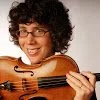
Lena Jonsson Swedish Fiddler on Folk Covers
Below is the transcript of my interview with the Swedish fiddler Lena Jonsson with a focus on her album Folk Covers as well as an overview of her career and life in music. This button link takes you to the podcast, video and complete show notes with many important links.
Lena Jonsson:
That was one of my favorite courses of the whole education. It's a course in three steps. So first it's dancing, and then it's dancing to music, and then playing for dancing. And then I love the playing for dancing because it's kind of a masterclass. So you play solo and then the other ones are dancing or walking to your music, and then you get feedback on your playing from a dancer's perspective. And it's so helpful, and you can also, it was really interesting to watch the dancers and how the way I play affects how they move to the music.
Leah Roseman:
Hi, you’re listening to Conversations with Musicians, with Leah Roseman, which I hope inspires you through the personal stories of a fascinating diversity of musical guests.The Swedish fiddler Lena Jonsson has created a unique style inspired by traditional Swedish music as well as many other influences. Today we’re focusing on the wonderful 3rd album by her trio, “Folk Covers” which celebrates many great folk music composers of today. I think you’ll really enjoy this uplifting conversation which features a lot of music, including Lena giving us some spontaneous house concert experiences, and clips from the new album, with insights into the process of curating and interpreting these folk covers; please note the timestamps have the tune names. You’ll also learn about the Swedish folk scene and regional differences, her experiences studying both in Sweden and Boston at Berklee, her love of creative design and how to dance a Polska. I want to let you know that I’m going to be taking a short break for a couple of weeks, but I’m very excited to bring you Season 6 of this podcast at the beginning of January 2026. Like all my episodes, you can watch this on my YouTube channel or listen to the podcast, and I’ve also linked the transcript.It’s a joy to bring these inspiring episodes to you every week, and I do all the many jobs of research, production and publicity. Have a look at the show notes of this episode, where you’ll find all the links, including different ways to support this podcast!
So your beautiful new album is covers, it's not your original material.
Lena Jonsson:
Yeah, exactly.
Leah Roseman:
So the first thing I did, I'd listened to your other albums and I was familiar with your music, and I had a chance to hear you live this summer, which was so great. But then I listened to this album of covers, not knowing who you were covering or those tunes, but then afterwards of course, I went and looked everybody up in the original versions a little bit just to hear.
Lena Jonsson:
Oh, nice!
Leah Roseman:
So that was so interesting to hear your stamp on it.
Lena Jonsson:
Yeah.
Leah Roseman:
Do you want to, I can include short clips of most of the tracks if you want to talk through the album a little bit as well as some other stuff, or do you want it to have less of a taste for people?
Lena Jonsson:
Oh, no, that'd be fun. I mean, yeah, I think that could fun and I can talk a little bit about the process.
Leah Roseman:
Yeah, let's do that. So the first one, and I won't try to pronounce it, it comes from the unaccompanied singing tradition that you have in Sweden.
Lena Jonsson:
Yeah, yeah. The acapella singing called trall where you sing with no words, but you can do it for dancing, and it's by a band called Kongero, and the tune is called Äntligen!. "Finally", Emma, she wrote it when I think in the pandemic when it was time for the first festival after the pandemic, and she felt like finally she could see all her friends and jam and listen to great music. (music: clip of Äntligen!)
Leah Roseman:
I thought for people that don't know you, it would be interesting to get to know you. So what I think we'll do is we're going to alternate a little bit about your history and past projects with this new project, and then people will hear a little bit. So your parents were fiddlers growing up and you played for weekly dances, and they also played it, was it the Bukkehorn?
Lena Jonsson:
Yeah, cow horn.
Leah Roseman:
So can you describe that for us?
Lena Jonsson:
Yeah, so my dad plays the cow horn and he plays old herding music on it. And so he would play every day before we went to school. And then I grew up very rural area, so not so many neighbors. And then sometimes when me and my brother would be playing around in the forest, he would play on the cow horn when it was time to come back to eat or if someone was calling or something. And then they also play fiddle, both my parents.
Leah Roseman:
And I imagine there's a singing tradition as well.
Lena Jonsson:
Yeah, my parents don't really sing that much though. Just mostly instrumental music for dancing.
Leah Roseman:
But in your community?
Lena Jonsson:
Yeah. Yes, but mostly instrumental music. Were in jams and things like that. It's different here. If I'm in England or Scotland or Ireland, it's so much more singing tradition in jamming situations. And I feel like in Sweden it's not as much yet.
Leah Roseman:
Okay. Yeah, I was reflecting on this album of yours Folk Covers because there's some Swedish music, but there is music from different countries, and I was thinking there's this kinship that you have with world musicians that you've brought together on this album that's Sweden, and you even have Québécois and Scottish.
Lena Jonsson:
When we did this album, I asked friends that I've met and friends from a long time ago and new friends if they wanted to be a part of it. And so I love all time music and I love Québécois music, and so it was fun. Yeah, it was fun to include that in this project.
Leah Roseman:
So in your youth and in your community, it's Hälsingland, the part of Sweden that you're from?
Lena Jonsson:
That's also where I live now.
Leah Roseman:
So there was quite a bit of music. And is that still in the community or has that been cut some of those programs?
Lena Jonsson:
No, no, it's very thriving here now, and that's really great to see. My brother is involved in a big youth program, youth folk music program where they have two different projects and they have more and more teenagers that wants to take part of it every year. And when I was maybe about 15, I think these programs were just starting and it's so fun to see that they're still going and that there's so much interest. And so now there's all generations playing. So you see it at the festivals and no, I think that's so great that there's not really an age gap. There's like 80 year olds, 70 year olds, and all the way down to 10 year olds playing tunes and going to these dances. So yeah, it, it's very alive here. And it's not like that everywhere in Sweden, but I think these youth programs here have been just really successful, and that's so fun to see.
Leah Roseman:
And are they successful, honestly, just because they're there or is it the way they're done?
Lena Jonsson:
I think, well, I think it helps that there were already a lot of fiddlers in the area, and there were already dances happening and concerts happening. So there was already a community and networks and people who could play folk music. But then I think just the way that they started the program and really they knew how the community worked. The people, the leaders or the teachers who started it, they already had a big community, so they had an idea of, I think these teenagers, they would think this is fun. And they were right and they were super inspiring. So I think a combination.
Leah Roseman:
And for yourself, having grown up in this very musical family, was it different going to play with your peers as a child? Did it feel more like your thing instead of your parents were, you'd hear them play, you know what I mean?
Lena Jonsson:
No, it very, it's a's not so many people, so everybody kind of knows everybody here anyway, so it all kind of melted together, I think. But I think when I went to these youth programs, it was kind of an eyeopener to see that there were so many other people my age that were interested in this music, and it was like, wow, they're from (Hudiksvall) and they know the same tunes. Of course, it's fun in that age also to do something on your own, not following your parents to everything. So yeah,
Leah Roseman:
I wanted to talk a little bit about traditional Swedish fiddling as a violinist myself. So you definitely have some cool microtones and even things that change within a tune, even the ornaments, and then you have these asymmetrical beats that gives it such an interesting groove. We had talked briefly that maybe you'd be willing to play a tune.
Lena Jonsson:
Oh, yeah!
Leah Roseman:
Since it's the beginning of the interview, would you be up for that, or?
Lena Jonsson:
Yeah, I could do that. I just have to go get my fiddle, but just give me a minute.
Leah Roseman:
Okay, sure.
Lena Jonsson:
Yeah, I could play a tune maybe with some micro tonality. That could be fun. Yeah, I'll play a Waltz from Älvdalen, it's called Silkesvalsen.
Leah Roseman:
Yeah, just before you do that, just explain. Most people will know, but for those people that don't know, so it might sound quote out of tune because it's purposely using different notes.
Lena Jonsson:
Yeah, exactly. So between, for example, let's say C and C sharp, there are three microtones. There's one that's right between C and C sharp, and then there's one closer to C and one closer to C sharp. And then you can kind of use these different microtones depending on what you feel like in the moment or maybe where the melody is going, if it's going up or down. And so yeah, we'll see what I choose to find. So this is Silkesvalsen (Music)
Leah Roseman:
Thank you. Yeah, that was really, it's really special. It's really different,
Lena Jonsson:
And I love this color or texture or I don't know, I don't find the word now, and it just adds a special feeling that I really like on my latest album with my trio on Elements, I think it's the first track called Regnig dag. I'm using a little bit of micro tonality on that track.
Leah Roseman:
I had notes on some of your other albums on Stories from the Outside Track nine, Vidderna-Jakten. Do you have a lower tuning there?
Lena Jonsson:
Oh, no. I think I'm playing on my five string.
Leah Roseman:
Do you ever tune down or use different tunings on the violin?
Lena Jonsson:
No, not very often actually. Sometimes I tune up just the G to an A, but yeah, it's not as common in the tradition here in Hälsingland. And also it's more common in Old Time music to use open tuning. But in some parts of Sweden it's more common to do like AE AE or A EAC Sharp. But yeah, I usually just play on standard tuning.
Leah Roseman:
And the very first guest I had 2021 was a nyckelharpist, and she's actually Canadian, Kirsty Money. But I'm curious in terms, does that influence the way you don't use vibrato, for example? So is that the way fiddlers play in Sweden? Is that influenced from the nyckelharpa? Is there any connection there?
Lena Jonsson:
I don't think so. With the vibrato, you mean? I've never thought about it, but I don't think so. It's just now some people use little bit of slow vibrato to create a specific tone, but no, I don't think it's, it's not very common. I've never made that connection, actually.
Leah Roseman:
Somebody else had suggested that could be the case, so I was,
Lena Jonsson:
Oh, interesting. Well, maybe, I don't know, it was just, but I think, well, actually, some tunes from Hälsingland that were very classically inspired and tunes in B flat and in positions and stuff, I think those fiddlers who played those tunes probably used vibrato because they wanted to sound more classical, but nowadays it's not very common.
Leah Roseman:
So that actually brings me, I discovered you through Brittany Haas when I was researching her for my interview with her, and I'll link that one. You guys have done a couple of duo albums, but in the recent one, The Snake, there's this Bach inspired set of pieces.
Lena Jonsson:
Yes. It's so fun. It was so fun to write it together. It was something I've been thinking about for a long time that I wanted to do that, but I just, it was hard to start doing it on my own. And then when I was there visiting her, I asked her if she would like to try and do this thing that I've been thinking about, and she was like, yes. So then we just started and came up with new melodies as we went, and it was super fun.
Leah Roseman:
Yeah, really great.
Well, let's go back to the Folk music covers album. The second track is a tune of the Finnish Accordionist that you also play in a duo with Johanna Juhola. I can't pronounce people's names.
Lena Jonsson:
Johanna Juhola
Leah Roseman:
There we go. And can you say the name of that tune?
Lena Jonsson:
Yeah, it's in Finnish and it's Neljän Minuuttin rakkaus. I'm not a Finnish expert, but something like that. It means Four Minute Love Story. (Music: clip of Neljän Minuuttin rakkaus)
Leah Roseman:
Yeah, she has a really charming YouTube video in her version, I noticed.
Lena Jonsson:
Yeah. Oh yeah, it's great. That one was really fun because her music isn't really, like a lot of her music is very pop or tango oriented, and the tunes are not specifically A and B part. And so when we were trying choose which tune to take, we really think and was like, how can we do these tunes? We couldn't really see ourselves playing it or interpret it. And then Krydda, the bass player, he heard this one and we were, me and Erik were like, really? He's like, yeah, this is the perfect one. And it was so far away from anything we've done before. So it was a really fun challenge. And then we just moved around all the parts, and it starts with the B part as an intro, but it worked out in the end.
Leah Roseman:
And your bass player has a jazz background.
Lena Jonsson:
Yeah. Yes.
Leah Roseman:
So how do the collaborations work when you guys make arrangements?
Lena Jonsson:
It's been different for the Folk Covers album and the other albums, but for the Folk Covers album, we've listened first through the artist's catalog and tried to decide together which tunes, maybe we choose between three different ones, and then everybody listens, and then we decide together which one we wanted to do. Then we've been jamming them and just maybe learning the melody first and then trying to invent ourselves in a way. I mean, because when we do my tunes and the albums that we've done in the past, then we try to invent new ideas and we try to break new grounds or whatever, be very experimental and see where the tunes can go. But then with this project, the creative process is the opposite. We have to try and invent ourselves. How do we actually sound like what would Trio do if this was one of our tunes? And so we just kind of tried to find a groove that worked for us, and it was really interesting process, and sometimes it took very, very long because all the tunes that we chosen have chosen are already so great in their original form, so you don't want to destroy the tune. So yeah, it was hard, but I think very inspiring for us as a band.
Leah Roseman:
Yeah, that's interesting. I was thinking, I mean, counterintuitively, it's like more work, even though you're playing other people's compositions, but even just the choosing, the curating
Lena Jonsson:
And a few tunes, we just, for example, the tune by Genticorum, it's a waltz, and that was kind of the tune that we felt, oh, this is maybe closest to us, but we don't want to do it exactly as they're doing it already. So great, so how can we change it? Then I was playing around with the tune, and then I thought, maybe I can try and do a polska out of this tune. So I kind of changed the groove and changed it into a pulse guy and then sent it to the guys and we're like, what do you think about this? Do you think we can do this? That's how that idea came, and then we've just been changing the tempos or changing keys and things like that too.
Leah Roseman:
Yeah, it's interesting to hear what a change it makes, even just the tempo, the whole feel of it. Yeah. (Music: clip of Fortcalquier)
So Genticorum they're actually Canadian, and I didn't know about them. I'm not so tuned into the folk scene here.
Lena Jonsson:
Yeah, they're great. From Québec,
Leah Roseman:
Yann Falquet, the guitarist. That's who I heard you play with.
Lena Jonsson:
Yeah, exactly.
Leah Roseman:
And did you have that connection with him before from, because you hadn't toured in Canada before?
Lena Jonsson:
No, no. It's the first time we toured in Canada with the trio in summer, and now we've been teaching together at a music camp in Ashokan, and that's kind of how we started playing together through mutual friends also.
Leah Roseman:
Yeah, when I met you, you were going to this legendary, it was the Blue Skies Festival,
Lena Jonsson:
Right? Yeah, yeah, yeah. We were on our way there.
Leah Roseman:
I think the air was rather smoky from forest fires, if I remember, but it was at a good experience?
Lena Jonsson:
Oh, yeah. Oh yeah. It was amazing festival, really fun. And the area there is so beautiful. It was kind of in the forest, and as I was driving there, I was like, oh, I hope my GPS is showing me the right way. Is it really all the way in here in the forest? And then I just came there and this whole festival area just opened up and it was really amazing festival. It was nice also, it was all ages, so there's lots of kids and very family oriented and just very friendly festival and lots of great music.
Leah Roseman:
I understand they own the land and it's very grassroots. I don't even think they have a website. It's just kind of word of mouth.
Lena Jonsson:
I know. And they always sell out. I ask them, do you want me to do any promotion? And they're like, no, you don't really have to. We always sell out. I'm like, great.
Leah Roseman:
Amazing. So was there time to jam or you just kind of did your shows?
Lena Jonsson:
No, I mean there was also workshops and yeah, I think jammed a little bit with Laura Cortese, a friend of mine who was there. Yeah.
Leah Roseman:
So in terms of doing workshops and teaching, do you have regular students or is it more just when you do special?
Lena Jonsson:
I teach once a week. It's called folkhögskola, which is kind of pre-college level after high school, pre-college level schools, which is a really great school system here that we have. And so it can also be any age and that folkhögskola as you can study crafts or music or dance or theater or languages and lots of different things. And yeah, it's really fun. You don't have to do tests and pass the courses in colleges, so it's very free for the students, and I think that's great.
Leah Roseman:
I had another Swedish folk musician on this podcast, and I don't think you will have crossed paths. Ida Gillner, she plays a saxophone and piano and she's in, I'll say it wrong, but Gothenburg.
Lena Jonsson:
Okay. Yeah. Oh no, I don't know who she is.
Leah Roseman:
Okay. Yeah, she does a lot of klezmer. She's not Jewish, but she got really interested in that. And she also studied traditional Swedish folk music and anyway, very interesting person and she does other stuff, A lot of interesting collaborations also with Finnish tango accordion player who's Swedish, but got to know her Finnish roots, whose name I forget now. But yeah, I have had musicians from over 30 countries and I do try to make it more international, although most people that ask tend to be from Brooklyn. It's like this, the center of the music world. Actually, let's talk about your time in Berklee.
Lena Jonsson:
Yeah. Yes.
Leah Roseman:
You had some important mentors, you discovered some different music. What was that like for you?
Lena Jonsson:
Oh, it was incredible. It was such a great experience. I was there for three semesters, and so before that I had studied Swedish folk music in Stockholm at the Royal Music Academy there for three years. And then I kind of felt why I wanted to go to Berklee because I felt like I wanted to have more skills than just Swedish traditional music. I played some classical before also, but I was like, I want to work with music my whole life. I love playing music, but I think I need more tools and I love Old Time, and I had some friends who had been there. So yeah, I studied with Darol Anger and with Bruce and Matt Glaser and Rob Thomas, who is a jazz violin teacher. And it was so great, and it was very challenging because I was playing jazz and I'd never played jazz. And I mean, Swedish traditional music is very modal, and the education was just very melody oriented. So this whole world of chords and improvising on chords was just totally new to me, and I was a total beginner, and it was hard in the beginning.
I was so limited in what I could express in this new genre, but it was also what I really wanted. So it was a great experience. And then I also played Old Time with Bruce, and they had an Old Time ensemble there, and I just met some amazing musicians. And what was also really fun for me was that these people who were playing Old Time and Bluegrass, they loved, for example, Väsen and a lot of Swedish traditional tunes, and I know a lot of traditional Swedish tunes, so it was a really fun exchange too, because I wanted to learn all the Old Time tunes and play in all the jams, and then I could have something to give back to that community. So that was also really fun.
Leah Roseman:
I had Daryl Anger on this series a couple months ago, and I watched lots of his videos he's done. And there's one with you where you teach in the tune.
Lena Jonsson:
Oh yeah, it's up there on
Leah Roseman:
YouTube.
Lena Jonsson:
Oh yeah, I forgot about that. Yeah, that's great.
Leah Roseman:
Was it like a culture shock? How was your English at that point?
Lena Jonsson:
No, I mean, we study English here since we're nine years old, and I'd been traveling in the US before, so yeah, so I think that was fine. We had to do English tests the first days, and I was a little rusty, but it worked out fine.
Leah Roseman:
Yeah, I was just curious about that. Yeah, my older daughter, she lives in Rotterdam and in the Netherlands, they don't start foreign languages till they're like 12, but then they learn so many.
Lena Jonsson:
Yeah, they know so many languages. I think here. I mean, Sweden is only 10 million people, and then you kind of have to learn another language to be able to travel anywhere except Denmark and Norway. They would understand. But
Leah Roseman:
Let's go to Burdland. Kinnaris is a Scottish all women band.
Lena Jonsson:
Yes. Yeah. This is one of the latest ones that we did, and it's super fast their version. So we kind of quickly decided that we're going to slow this down. I think we play it, I mean more than half, less than half the tempo. And we kind of turned this into a Norwegian gangar, and I tried to learn Norwegian gangar bowings and doing this on these tunes, and it worked out I hope pretty well. And my brother is actually an amazing hardanger fiddle player, and he lives just 20 minutes away. So I went to him for some consulting on Norwegian bowings for this tune.
Leah Roseman:
And how are they different?
Lena Jonsson:
A lot of the bowings are over the bar line, for example, (singing) for example. And also the ornaments are very different, whereas a lot of ornaments in our hardanger fiddle. For example, if you do a on the D string and then you ornament with the first finger on the A, like DI can't really see it, but you'll hear it in the tune. That's not common ornament in Swedish music. So I try to add some Norwegian ornaments into hardanger fiddle ornaments into the tune as well.(Music: clip of Burdland)
Leah Roseman:
So did your brother live in Norway? How did he get that proficiency?
Lena Jonsson:
Yeah, well, he lived, worked at a farm, and the farmer, the guy who owned the farm, he was a hardanger fiddle player, so he just learned lesson and had cassette tapes that he was listening to every evening and just playing hardanger fiddle all the time. And then now he's just playing on his own at home. There isn't really a big scene for hardanger fiddle here, but he just played in Oslo, actually, and a folk club there. Yeah, but he's really good at hardanger fiddle.
Leah Roseman:
Yeah. Have you tried it?
Lena Jonsson:
Yes, I'm not very good. It's really hard. It's completely different technique for bowing, for example. And the bridge is also flatter. You always play on more two strings and you have to play very soft with the bow. And also the tunes are much, it's very complicated and very long, and it's a different kind of build structure on the tunes, but I love it. But yeah, my brother can do it.
Leah Roseman:
They use a lot of different tunings too, the way they tune their strings, right?
Lena Jonsson:
Yeah. They often have more than one hardanger fiddle in different tunings.
Leah Roseman:
Okay, that makes sense. In terms of Burdland, did you know that band that Kinnaris
Lena Jonsson:
Kinnaris Quintet? Yeah, I know my friend Laura Wilkes or was in the band, and I've heard them and I love their music, and they're all great musicians, and it felt fun to have. And then we had some music from North America and Scandinavia, and then it felt like Scotland was kind of in between, and it's a good music tradition too, and that was fun.
Leah Roseman:
So you mentioned going to the Stockholm Royal College of Music for Swedish traditional music, I know over the years you've also done a lot of work in terms of listening to archival recordings and learning specific fiddler styles. Do you want to talk about that a little bit?
Lena Jonsson:
Yeah, A lot of the times there, the process of learning a new tune would be to listen to an old archive recording and learn exactly the same, learn exactly everything, all the bowings, all the ornaments, intonation and everything. Just copy it right from the archive recording or from your teacher. You would record the teacher and then you would try to copy exactly the way they play. And yeah, I really loved that process. And then once you've learned the tune, then you can do what you want with it and interpret it in the way you want. But it really gave me a deeper understanding of how to take tune, take it to, I dunno how to say it in English, and then really learning it on a deeper level and then try to express the tune from yourself after really learning it. And that was great.
Also, when I wanted to learn Old Time music, I felt like I really had the tools, how to learn a new music tradition. I knew how to listen to bowingss and not just if it's up or down bow, but what is the quality of this specific bow I could hear Is this a long or the speed of the bow? And I just learned all those tools in Stockholm, and that really helped me to learn the groove and the style of all time. I'm not an expert in all time, but I felt like I could learn the tunes and understand how to make it sound not like a Swedish Scottish, but more like an all time tune.
Leah Roseman:
In terms of your program in Stockholm, was it, I imagine it was pretty small, but maybe not?
Hi, just a really quick break from the episode. I wanted to let you know about some other episodes I’ve linked directly to this one, which I think may interest you, with Ida Gillner, Brittany Haas, Alexis Chartrand, Darol Anger and Kirsty Money.In the show notes you’ll also find a link to sign up for my newsletter, where you’ll get exclusive information about upcoming guests, a link for my Ko-fi page to support this project directly, where you can buy me one coffee, or every month, and my podcast merchandise store with a design commissioned from artist Steffi Kelly. You can also review this podcast, share it with your friends, and follow on your podcast app, YouTube, and social media. All this helps spread the word! Thanks.
Lena Jonsson:
Yeah, it's pretty small. In my class, we were maybe eight or 10 people, but they have both Swedish traditional music, but they also, you can also study music from other cultures, traditional music. So that was someone playing flamenco guitar or Iranian singer, but most of it is Swedish traditional music.
Leah Roseman:
As a young person, was it interesting going to Stockholm after growing up more in the countryside?
Lena Jonsson:
Yeah, I mean, it's more concerts and more just more people playing. It was also fun to meet other folk musicians from other parts of Sweden who just had a totally different tradition. I mean, where I'm from in Sweden, it's kind of like south of the middle, and there are some other regions close by that also has a lot of really strong tradition like (Dalarna & Jämtland) and for example, they're all kind of lots of fiddlers and lots of traditional music historically and now, so I already knew some people from this area, but then, I mean, Sweden is, it's a long country, so it was fun to move there and just the people from all over. And also to see, I mean, everybody wasn't doing only traditional things. Some people were more experimental. And that was kind of new to me at that time, and that was really inspiring to see.
Leah Roseman:
And I was thinking about, we had started talking about how you grew up listening to traditional dances and your parents playing. So that sense of marrying the dancer's movements to the music from the very beginning must have affected your sense of groove and rhythm.
Lena Jonsson:
Yeah, we also learn dancing in the college. It is dance music, so the groove is always important. Yeah, actually, that was one of my favorite courses of the whole education. First, it's a course in three steps. So first it's dancing, and then it's dancing to music, and then playing for dancing. And then I loved the playing for dancing kind of a masterclass. So you play solo and then the other ones are dancing or walking to your music, and then you get feedback on your playing from a dancer's perspective. And it's so helpful and can also, it was really interesting to watch the dancers and how the way I play affects how they move to the music. It was incredible and very helpful for having kind of a calm groove and see how much you can pull the measures or pull the timing that are falling over. And I think that was one of the things that helped me the most, I think. And also to shift focus from my own playing. And I'm sure this, it's so easy to get very focused on what's happening right here or all the fingerings and la, la, la, la, and it was just very a nice experience to just, okay, it's not so much about what me or it's about what we're creating together. And yeah, that was really, really interesting course. And it was with Ellika Frisell, who was my fiddle teacher and then a dancer, (Ami Petersson Dregelid )Very inspiring.
Leah Roseman:
Well, let's go on to Bubbles in Central Park. Dreamers Circus rather.
Lena Jonsson:
Yeah. Yeah. This was also one of the first ones that we did in February, 2021, I think. Well, I've known those guys for a long time and always loved their music, and so I already knew some of the tunes, but I didn't know so many tunes from this album. And yeah, we listened through a lot of their tunes, and some of it is more like ostinato oriented, but this was one of that has had a very clear melodic, strong melodic focus, and we really liked it. And this one, this was actually one of the hardest ones to do because it's kind of similar to their version. It is a polska, so we play it a little faster than they do. And we also have a different instrumentation, but not so much. I mean, they also have fiddle, and we have fiddle and guitar, but bass instead of piano. But it was hard because we tried to reharmonize the tune, and I mean, it was like a puzzle to try and not do the same as they were doing because we don't want to copy their chords. And we just played it and wrote it out and tried to change it and arrange it in a different way. So yeah, this was one of the hardest ones to do, but I think it felt it was fun to turn it more into a power polska a little faster and more uptempo.(Music: clip of Bubbles in Central Park)
Leah Roseman:
And could you describe how a polska is danced to us? What is that dance?
Lena Jonsson:
Oh, yeah. So it's a couple dance, and you walk like this and you walk on one and three, and then first you just walk in a big circle, and then you dance on three steps around, and then you walk a little bit and then you dance around. And then there are some different variations depending on what kind of polska it is. Sometimes maybe you spin your partner a little bit and you dance in a slower tempo, backwards and yeah, it's kind of hard to describe, but yeah, what can be hard is that because so much rotation in the couple. So it's harder if you compare to contra dancing, which it's more maybe inclusive at first. There is a caller and you can kind of join in because there's so many other dancers who already know and they can kind of help you. But in polska, it's like just you and this other dance partner. And so oftentimes you have to take maybe a polska workshop before going to the dance to just learn the basic steps. But I love dancing polska. It's not very show off dance. It's very calm and you're just dancing there with your partners. It's maybe not so good for stage, but Norwegian dancing, for example, it's more show off, but Halling for example. But yeah, I really like the dance and it's a nice dance.
Leah Roseman:
I was thinking your previous album Elements got best album at Folk and World Music Award, and it's sometimes fun to see listeners' comments. I'm a big fan of Bandcamp, as my listeners know, and one of the listeners was in Australia and said that they heard you on an alternative radio station there, and then they discovered the album and went to Bandcamp and bought it. So not that one, but one of your other albums
Lena Jonsson:
Oh, cool. Yeah, it's so weird. Sometimes you can see on these platforms, the statistics are how they analyze where your listeners are, and it's like, how do they find my music there? I've never been there. It's interesting how music travels. It's great.
Leah Roseman:
Yeah, I find it very meaningful and such an intimate medium as a podcast to know that these people all over the world are listening and maybe discovering your music.
I should have asked you right away the way you pronounce your name, it's not quite Lena, it's "liˈjɛnə/" like that?
Lena Jonsson:
Yeah, it's liˈjɛnə/ (Lena)
Leah Roseman:
liˈjɛnə/. (Lena).
Lena Jonsson:
But it depends what you are saying. When you're saying Lena. Is it like Lena Jonsson or the melody of how you say it means different things? So it's a bit confusing, but something like Lena (liˈjɛnə/),
Leah Roseman:
Give me some examples. I'm fascinated. What do you mean?
Lena Jonsson:
Okay, so if you want to say, so if someone's calling my name, can you come here? They would be Lena, or if they would maybe just present, this is Lena Jonsson or Lena. I've never done this before, but it really, yeah, the melody of the name in Swedish shifts, depending on in what context you're saying the name. So that's why it's hard to say how to pronounce it because it's different. Very confusing!
Leah Roseman:
The stress moves is what you're saying. In Spanish, it would be written with an accent over either the E or the A, you know what I mean?
Lena Jonsson:
Oh,
Leah Roseman:
Some languages show the stress.
Lena Jonsson:
Okay. Yeah. Maybe, Lena. Yeah, I've never really talked about this before. It's interesting.
Leah Roseman:
I'm really interested in languages. I find it so interesting. I even studied Icelandic for nine months.
Lena Jonsson:
Oh, well then you maybe understand a little bit of Swedish
Leah Roseman:
A tiny bit. Yeah, I started watching a Swedish show recently. It's about the history. It's based on the history of the first women police officers in Stockholm.
Lena Jonsson:
Oh!
Leah Roseman:
It's on Netflix. And of course sexism.
Lena Jonsson:
What's it called?
Leah Roseman:
I have to look it up. It's some Swedish title. But yeah, it's quite interesting. It's like 1958, I think.
Lena Jonsson:
Oh, wow. I haven't heard of this series.Cool. Is it good?
Leah Roseman:
I only watched the first episode. I thought it was good. It was of course uncomfortable. The sexism was pretty horrible. But you have to think, how did this start, right? I take it for granted that we have female police officers, but I'm sure there's still quite a bit of sexism.
Lena Jonsson:
Yeah, probably unfortunately.
Leah Roseman:
Well, let's go back to oh, Hawktail. Actually, it's interesting. I did talk a little bit with Brittany Haas about the role of women in Bluegrass, and sometimes it was a little bit gendered, or you have to kind of stand up for yourself as a gender minority. You don't find that in your circles like being a woman.
Lena Jonsson:
No, not now. Sweden is very, I think the folks in here is very, do you say equal,
Leah Roseman:
Egalitarian? Equal,
Lena Jonsson:
Yeah. But then, and I also had great role models growing up who were female. I mean, mostly male fiddlers, but there were some females who've gone before me and paved the way. And now it's a lot. Now there's so many female, especially fiddle players. When I started at the college, there were more male fiddle players or students than female. But now I think it's maybe the opposite. But then there's other instruments where there are more, maybe comping instruments are more male and singing more female. But yeah, it's really nice to see that. It just feels very equal and not an issue. And also the festivals are great at booking equal artists and making sure that there are not only all male bands on the main stage and stuff like that. So yeah.
Leah Roseman:
Yeah, I've heard that the classical scene in Sweden was more made a point of having female conductors and composers in Stockholm. I heard that from a musician there. So back to Hawktail, such a great band and a fact,
Lena Jonsson:
I love them.
Leah Roseman:
And Antelope, I think I featured a clip of that on my podcast with Brittany not knowing it was your tune.
Lena Jonsson:
Ah,
Leah Roseman:
Nice. So now let's talk about the cover you did.
Lena Jonsson:
Okay. Yeah. Well, we took one of their polksas, maybe that was too easy for us. No, but I love Unless. It's such a beautiful, melody is such a great tune. And I'd heard it way before we even started this project, and I actually kind of played the tune a little bit. So yeah, it's so great. But then we were like, okay, well maybe we wanted to make a medley, so we put it together with The Tobogganist, that's the schottische. So we kind of put those two tunes together and to, I remember we just took down the tempo and try to make it sound very trad. And then with, unless, yeah, that was also hard to how are we going to make it different from their polska version? But yeah, just tried different kinds of bowings and different ornaments, and I think maybe we played slightly faster and try to rearrange it a little bit. But yeah.(Music: clip of Unless/The Tobagganist)
Leah Roseman:
Now I thought it might be fun to talk a little bit about fashion and your sort of creative branding. You have such a sense of style, all your photos, and even when I saw you in person, such a great outfit. Do you have Swedish designers? You wear their clothes or?
Lena Jonsson:
Sometimes on our latest photo shoot, I reached out to a Swedish designer on Instagram and asked if I could borrow some of her designs for the cover of this Folk Covers album. And yeah, she was very positive and said, yes, you can borrow whatever you want. And yeah, I think it's interesting. I've always been interested in that side of artistry. And during the pandemic, I took a course on a folkhögskola in sewing and design actually. So when I couldn't travel around playing fiddle all the time, I did that for a year. And that was really fun. And I think it maybe adds something to the music or to a show if you go see a show, if I see a show I always appreciate and to see, and if they some sort of creative idea with their clothes or it's not so common in folk music, but in other genres more. And yeah, I think it's fun. And when I play with Johanna Juhola, for example, she's also very interested in, what do you call it, design or, yeah, so we have a mutual interest in it, which is fun. So we'll always talk about what colors and we should have or what to do to do for photo shoots and stuff. And it's fun to have. Someone else is also interested in that.
Leah Roseman:
Where did you meet her?
Lena Jonsson:
We met in Denmark, and we were both teaching in composing workshop for Danish folk musicians. And yeah, that was maybe 2021, 2020, something like that. But we've known about each other for a long time. But that was the first time we kind of met for real and played a tune right before we had to leave. And then a year later or something, I got a gig for my trio. They couldn't do it. And then I asked the promoter if I maybe could come with someone else, and then he said yes. And then I said, can I come with Johanna Juhola? And he said, I love her. Yes. And I said, we have never played together, but he was just like, it doesn't matter. It's going to be great. And then since then, we've just been playing together and doing shows.
Leah Roseman:
That was a risk to admit that to him. You could have faked it.
Lena Jonsson:
I know. I'm too honest.
Leah Roseman:
So have you played in Finland with her?
Lena Jonsson:
Yeah, a little bit. Yeah, we did a tour and then we've done a festival too.
Leah Roseman:
I was curious about the different culture, because Finland is such a different language and I think pretty different culture than the Nordic countries, well the Scandinavian
Lena Jonsson:
Yes and no. There's lots of tunes that are similar. I mean, they also have Polskas and 16th note polskas, for example, lots of that. But we don't have Tango here, for example. It's a big, but they have a strong fiddle tradition in Finland too. And yeah, really good education at Sibelius Academy in Helsinki, in folk music. And I think that's kind of a similar way of teaching than in Stockholm, for example.
Leah Roseman:
Let's talk about the Morgenslått. I can't say it
Lena Jonsson:
The Gjermund LarsenTrio,
Leah Roseman:
So their version is slower. And then you have this energy.
Lena Jonsson:
Yeah, I love their version. I love that album. It's so great. And yeah, this is also one of the latest ones that we did, and we listened through that whole album, and there's so many great tunes. But finally, we decided we were going to do , the Morgenslått, and then I was kind of, because is not, our version is not very Scandinavian sounding, so we wanted to speed it up. And then I was just experimenting with the melody and trying to play it maybe a Québec tune or more like an old time tune or I don't know, maybe it's somewhere in between. And then we just started jamming it and trying to find a good tempo and try to get into this field. This is not really the style that we usually play in, so it was challenging to find this type of groove. So we had to work a lot on just locking in to this type of groove. But I think the tune, it's interesting how well, I think the tune works in this style as well, so that was kind of fun. It was fun to realize that.
Leah Roseman:
Yeah. (Music: clip of the Morgenslått)
Yeah. I wanted to ask you about in terms of especially all the traditional tunes, you know so many, how you file them in your memory. You spoke a little bit about analyzing and using that analytical part of your brain, but of course there must be the intuitive side of the memory. But in terms of just remembering which tune it is, how do you do that?
Lena Jonsson:
Well, I'm really bad at remembering what tunes are called, but sometimes I categorize them by where their tunes are from. That can kind of help me sometimes, or which fiddler it's from, for example. So I know that I have a lot of tunes from (Snickar Erik), for example, or I know a lot of tunes from Älvdalen and they're kind of somewhere in my brain. And then also sometimes when you see someone that you have a common repertoire with, then the tunes can just come to you, which is also very cool. Like, oh, we went to this. Or if you went to at fiddle camp or something when you were younger, and then you see that teacher, or you see someone you were there with, and you can just out of nowhere, just remember this random tune. So yeah, I think my tune memory is pretty good. I have really bad memory otherwise, but I do somehow melodies tend to stick to my brain.
Leah Roseman:
Okay. Yeah. You play a little bit with Eric, how do you say his name? Rydvall?
Lena Jonsson:
Yeah, Erik Rydvall.
Leah Roseman:
Yeah. He has this group Nordic Lights.
Lena Jonsson:
Yeah, it was just a project for this festival, but we studied together at the Royal Music Academy in Stockholm. Yeah. Yeah. That was a fun project. It was for the folk festival in Germany and Denmark, and he just put together this group of folk musicians. And we met up a few days before the festival and just worked up a repertoire together, and we'd sent some stuff before and just arranged it together. It was super fun. We have a big common repertoire together also from before.
Leah Roseman:
And do you play a little nyckelharpa, or have you tried?
Lena Jonsson:
No, I was actually thinking a few days ago, maybe I should buy a nyckelharpa and try to learn. But no, I don't really know how to play it. I've tried a few times, but I just find it's so hard to hold it and it just doesn't feel very ergonomic. It just hurts my back. But I'm sure if you know how to do it, it's probably fine.
Leah Roseman:
Yeah, it's so funny. I mean, just looking at it, to me, it looks like it might be more ergonomic than the violin, but I don't know. I
Lena Jonsson:
Maybe I'm just holding it wrong.
Leah Roseman:
Yeah, I don't know. I've never held one.
Lena Jonsson:
No, it's weird. You have to hold. I mean, I can't see my hands, but yeah, I just find it really hard to balance, and then you have to press the keys, but hold the instrument up and yeah, it's just very hard.
Leah Roseman:
In terms of Swedish cultural things, one thing you're known for is this Midsummer Festival. Very important. Do you want to speak a little bit about that?
Lena Jonsson:
Well, it's mostly, I mean, it's maybe Sweden's biggest holiday where everybody, it's not so family oriented. Most people get together with their friends and have a big party and yeah, it's not so much. And then there are always some folk music that is actually maybe the time where just any random Swedish person would see folk music and folk costumes is at Midsummer, and they maybe don't even know that it exists all year round. So they connect folk music with midsummer where they've seen it growing up or So that's kind of, yeah, folk music is definitely a subculture in Sweden.
Leah Roseman:
So when you do your regular teaching and when you do workshops, do you teach in the same way you were taught?
Lena Jonsson:
Yeah, I had some really great teachers growing up. Like in spelmanslag, which is Fiddle, translates into Fiddle Group, there were fiddle groups in all different levels where you learn by ear in a group tunes and maybe a second harmony, and you sit there and play every week. And then there was all these youth programs and it would go to a weekend camp or stuff. And there were so many great teachers. Gun Hedlund had was my first violin teacher, and then Örjan Hans-Ers was teaching the Fiddle group. And then this youth bands was Jonas Olsson very inspiring. And just watching them teach kind of taught me how to learn, how to teach, I think. And then a mix of the teachers from my college, also Ellika Frisell and Mikael Marin, for example.
Leah Roseman:
Do you think it helps you as a player to be teaching?
Lena Jonsson:
Yeah, in some ways. I mean, I have to analyze what I'm doing and try to hold my fiddle in the right way when I, yeah. Yeah. I mean, it's good to reflect on my own playing and yeah, definitely.
Leah Roseman:
And the final track on this album is by the harpist Maeve Gilchrist. Brenda's Abbey.
Lena Jonsson:
Yeah.
Leah Roseman:
So where do you know Maeve from?
Lena Jonsson:
Let's see, I probably met her when I lived in Boston first. Yeah, she was teaching at Berklee at the time, and then we've seen each other around, and I love her playing. She's so amazing and so inspiring. She does so many cool projects, and it seems like she always breaking new grounds and it's very experimental. And she did this project, the Ostinato project, maybe that's what it's called. And it's just so interesting, her playing and her music and her composition. So it was fun to kind of try and choose. But then when we chose that track, it was also kind of, that tune was the one that felt easiest for us to do. We had a few different options, but then it just felt like it would require so much arranging to do them. So this was more like a tune, and it's such a beautiful tune. So yeah, it's very pleasant to play.(Music: clip of Brenda's Abbey)
Leah Roseman:
And your trio, you've been together for a number of years. You have that nice chemistry
Lena Jonsson:
Since 2018,
Leah Roseman:
And how did that come about?
Lena Jonsson:
Well, the first album came out 2018, and that's just kind of my solo album. I wanted to just make an album with my own compositions. That's kind of how it all started, because I'd been playing on all these different bands, and then I wanted to just have something that was just my own album. And me and Erik had been playing together when we started together at the college, and we've known each other since I was in high school, and I love playing with him. And we've just been playing so much together in jams. Then I wanted to have bass, I think maybe because I had been playing so much in the US and where double Bass is a very common instrument in folk bands not so common at all in Swedish bands because the guitar usually kind of covers all, it's usually maybe two melody players, one who plays Melody and one who plays Harmony, and then one person who plays chords.
So the combination of guitar and bass is not common at all, but I love Krydda's playing, and we are playing together in this big folk band called Folk All In Band. So I knew him from that. And then, so I asked them, do you want to play on my album, my tunes? We rehearsed maybe two or three days for the tunes and kind of arranged them together, and then we went to my brother's house and recorded the album, and then I wanted to make a release tour for the album and all these people that were like, oh, yeah, great. This sounds really fun. And then we played and just enjoyed it so much. So we decided to just form or name it The Lena Jonsson Trio. And yeah, it's wonderful to play with them. I mean, they're so great. It's so nice to have a band where you just feel at home and it's easy to play, and we have a common sense of groove and timing and yeah, it's so fun. I'm so lucky. I feel so lucky that I get to play with them. It's really inspiring, and they're just great people and amazing musicians, so it's a true joy.
Leah Roseman:
Now, the only thing that we didn't really touch on is your compositions, because we were talking about the Folk Covers album, and I want to point out that people can actually buy your music. I have some of it, some of your tunes on your Bandcamp, you can get the PDFs and at live shows, you actually have printed music. Right?
Lena Jonsson:
And on my website too,
Leah Roseman:
And your website, but maybe we could have a clip of one of your tunes. I don't know. Do you want to pick something? I had some sort of things written down, but
Lena Jonsson:
Yeah. Which ones did you have written down?
Leah Roseman:
Well, I was curious on your Places album Track seven, Brakpolskan is almost Baroque kind of
Lena Jonsson:
Thing. Oh, yeah. Brakpolskan. Yeah. Yeah, I can talk about Brakpolskan. So a lot of the tunes from Hälsingland where I'm from are inspired by Baroque music, so I have a lot of those tunes in my repertoire. I remember writing this tune. I was thinking that I wanted to write a tune like that, so I had that in the back of my head. I write tunes sometimes if I get stuck, I try to sing a little bit or just not be with, because I usually just have my fiddle, and then I play all the time and try to figure out, but then sometimes I have to put down the fiddle and sing and see, feel like where the tune wants to go. I think from just knowing so many tunes, I hope I have a sense of when a tune feels good. If it feels good to play, then it is usually a good tune.
And sometimes you get stuck and you write something and it feels a little generic, or then you have to kind of dig a little bit and try to find tools to make it more interesting, or just throw it away and start writing something completely new. But I love writing tunes. It's almost like when you are in it and you're a hundred percent focused. It's almost like meditation kind of get into this mindset, and when you're just totally focused on how this melody should go and what kind of feel it should have, or sometimes you see something, I see something that's inspired me to write, I can play a tune that I wrote that's also kind of baroque inspired. It's called Ispolskan the Ice Polska. (Music: Ispolskan)
Leah Roseman:
Yeah, I love that one. You have such a fun video of it on your YouTube as well.
Lena Jonsson:
Yeah. Oh, it was so cold when we filmed it. That's my winter tune.
Leah Roseman:
Well, thanks so much for this today. Was there anything I didn't ask you about you wanted to talk about?
Lena Jonsson:
No, I Think you covered it all.
Leah Roseman:
Okay, great. I hope you enjoyed this episode. Keep in mind, I've also linked directly several episodes you'll find interesting in the show notes of this one. I'll be back with Season 6 at the beginning of January, 2026. Please do share this with your friends and check out episodes you may have missed at LeahRoseman.com. If you could buy me a coffee to support the series, that would be wonderful. I'm an independent podcaster and I really do need the help of my listeners. All the links are in the show notes. The podcast theme music was written by Nick Kold. Have a wonderful couple of weeks.