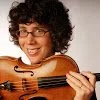
Interview with Jayne Dent (Me Lost Me)
Folk Creativity in the 21st Century: Embracing a Playful Life
This is the transcript of my interview with Jayne Dent. The podcast and video versions are linked above, with show notes with links to Jayne Dent, Me Lost Me, other suggested episodes, and more!
Jayne Dent:
Well folk is of the people and it's kind of whatever the people are making and its traditions are not just the objects. It's like an ethos, this way of making physically creating things with what you have to hand, the materials you have to hand and it's not necessarily, it's not for profit. They can be, but it's not at its core, it's not a money making scheme. It's like I feel compelled to tell stories or share stories. I'm going to do that with the things I have to hand. And whether that's singing or whether that's like coding a cool website, building a mini game because you've learned how to do that on YouTube. That to me is folk and I think we've always just used the technologies we have to hand and it's easier to play a free software synth than it is to acquire and then learn a hurdygurdy. What is the more folk instrument now? Is it a software synth? To me it would be. I mean, I love a hurdygurdy obviously, but
Leah Roseman:
Hi, you're listening to Conversations with Musicians with Leah Roseman, which I hope inspires you through the personal stories of a fascinating diversity of musical guests. Jayne Dent is a wonderful British interdisciplinary artist, singer and composer, and I was absolutely delighted to explore ideas around a creative and playful life with her. You'll be hearing clips of music from Me Lost Me with inspirations from folk culture old and new. She opened my mind to what folk creativity and community can mean in the 21st century. You'll also hear about community music making, collaborations with dancers, experimentation with e-textiles, and the challenges and joys of her career path. I was really struck by her creative and curious spirit and you'll be hearing about some of her chance-based writing tips and her varied interests from creating costumes to medieval sword fighting. You can watch the video on my YouTube or listen to the podcast and I've also linked the transcript.
It's a joy to bring these inspiring episodes to you and I do all the many jobs of research, production, and publicity. Have a look at the show notes of this episode on my website where you'll find all the links including different ways to support this podcast and other episodes you'll enjoy.
Hey, Jayne. So great to meet you.
Jayne Dent:
Nice to meet you too.
Leah Roseman:
So you're presently in London for a gig as we record this, but you're based in Newcastle upon Tyne like it's different than ... There's different Newcastles.
Jayne Dent:
Yeah, there's an under Tyne which is a bit further south into the west of Newcastle upon Tyne, but yes, that's the one I'm at.
Leah Roseman:
Yeah. And there's one in Canada and there's one in Northern Ireland. Yeah. I was just curious to see where you were based. Yeah. And you had moved there originally for visual art many years ago.
Jayne Dent:
Yeah, I moved there in 2013 I think to study fine art, which was more ... I was interested in a mix of things and ended up doing a lot of sound art and performance art, which kind of gradually became more music. Well, it still flipped between the two, but yeah. So it was always a little blurry I think.
Leah Roseman:
I was so interested to discover your work and I'm super interested with all the intersection of your creative practice. So I'm hoping we'll get into a couple of Me Lost Me's projects and some of your community collaborations. I thought a good place to start, especially for those people that don't know you or your fans would be actually your 2023 album RPG. For people who haven't heard it, maybe you could say in your own words kind of what the project's about.
Jayne Dent:
I always joke when I do it live that I set out to write an album about video games and it is kind of, but it's also mainly about the weather. So many of these songs are about the weather because they're about I guess place and environments and whether that be a real air quote environment or one that's been created in a virtual world. Yeah. It's about exploring these places and kind of exploring yourself through exploring these sorts of places. I come from a folk music kind of family and I'm really interested in technology and those two things kind of used throughout the Me Lost Me music. But yeah, this album was leaning more into ... I guess I played a lot of video games during lockdown and ended up writing songs about them directly or indirectly. So that was this album was kind of the lynch in of that kind of holding it all together. Yeah.
Leah Roseman:
I listened quite a bit to This Material Moment, your more recent album, which we're going to get into later in the episode and also RPG and it's not knowing what to expect. We hear the beautiful close harmony acapella and then the electronics coming in and then clarinet. And it's such an interesting mixture of textures and I don't know, it's very immersive music. I thought though it would be cool to start with a clip of you have this old song, I assume it's middle English, Mirie it is While Summer I Last.(Music: clip of track 5, RPG)
So is that middle English?
Jayne Dent:
Oh, I think so. I always get them confused when the borders of, I think it's middle English or old English, not a historian, just a fan of history. Yeah. So it's one of the oldest songs kind of recorded songs that is secular written in an English language. There's a couple, also summers are coming in appropriate because today is the 1st of May as well as around the same sort of time and this song was found, a fragment of this song was found. It was only recorded because a monk took interest in it, wrote down the notation of this verse in a Bible and it was found years later. So this is kind of a rare little snippet. There might have been more to the song than this one verse, but yeah, I took the melody and added a bunch of set it for eight or nine voices and had to play around with this one verse that got saved with this song.
Leah Roseman:
Yeah. I was curious about the close harmony. So since most folk music wasn't notated, certainly not harmony, is that just the oral tradition that we know about that?
Jayne Dent:
Yeah. I mean, so the harmony is very much, they came about organically. So a lot of how I write songs or arrange songs of other people, I guess, is through improvisation. I'm not really like a notation gal. I sing the song. I mean, I can read music, but I like to learn by hearing songs. So I also write by singing. So I recorded the main melody and just kind of in Ableton and layered up a bunch of different harmonies, kind of very improvised, very like ... And there's maybe a few notes I was like, "Well, I'll take that one out. " As I arranged it and then kind of notated and gave it to the singers who performed it on the album. So it was very much like an improvised harmony rather than a sensible, historically accurate one.
Leah Roseman:
Yeah. That's interesting, Jayne, but actually my question was more to ... I guess you maybe don't know the answer to this, but how do we know how people sang in folk settings in terms of the harmony? Is it influenced from the church? You know what I mean? In terms of ...
Jayne Dent:
Yeah. I mean, I think the exciting thing for me is that we don't ... I love not knowing things and I think it's so beautiful that we can get this one snippet of melody and realistically there's probably a thousand different iterations of the song. If people weren't notating it, people weren't learning it as such. They were also probably improvising the melodies around harmonics that they understood and knew. So I guess I was kind of doing the same really. They weren't consciously fitting a style or a harmonic structure. They were just like, "This sounds right to me now," which I think is pretty cool.
Leah Roseman:
And on RPG, so the use of electronics, you definitely have some really whimsical video game sounds coming through. Are those imitations from games you were playing or samples or you just went your own way on that?
Jayne Dent:
It's a mix of nothing's directly sampled from a video game, though on this is very nerdy, so there's a song that's specifically about Legend of Zelda Breath of the Wild, in Ableton has a function where you can take an audio sample and it will imitate the reverb, the echo that is on that or it takes the shape of the wave form and there's this common recurring sound of a drip that's very, very, got this huge reverb on it and I copied that reverb a little and transplanted it into that song, which is such a tiny, silly, nerdy detail, but everything else is built to ... They're sounds inspired by the world, but they're not taken directly from them, but they're supposed to echo that kind of space, I guess. (Music: clip track 2 RPG)
Leah Roseman:
And you had a residency in Aarhus in Denmark?
Jayne Dent:
Oh, I did a couple of residencies there because I studied there on my exchange. So I did a couple of little trips back to make work there, which was nice.
Leah Roseman:
Yeah. And we'll get into your academic life because you're doing your doctorate now. So those residencies were part of your master's or earlier?
Jayne Dent:
They were in between, so they were after my ... Well, I studied at the Art Academy in Aarhus on my undergraduate and then went back after I'd graduated to do these residencies to make work.
Leah Roseman:
Okay. So do you know some Danish?
Jayne Dent:
Not a lot, not a great deal. It used to be better.
Leah Roseman:
Yeah. So the Oldest Trees Hold the Earth. It's so beautiful. I understand the way you co-wrote it with your friend, is it Ditte Elly? How does she say her name?
Jayne Dent:
Ditte
Leah Roseman:
Ditte. Okay. So you were in the woods in Denmark and you had this creative proces to write this song together?
Jayne Dent:
Yeah. So me and Ditte met actually in the UK and by some strange coincidence ended up, she also ended up in Aarhus and so we met and I stayed with her for a few days. We've sung together for years and we decided to try and write something together. And so we sat in this woods, which is this amazing place where it's woodland and then it suddenly drops off in a cliff and then it's beach and then it's a bay. It's a really amazing instant change of kind of biome. It's really beautiful and we sat there and passed a piece of paper between each other and we just sat in silence. I wrote a line, she wrote a line, I wrote a line and then we took it back to her house and we sang it. We just improvised around it and yeah, it was a really lovely way to write a song and you think you know where a lyric's going and then you get the piece of paper back and you're like, "Oh, that's not where I was going with that at all.
" So then you have to like pivot. It's really creative and inspiring. (Music: clip of track 8, RPG)
Leah Roseman:
Yeah. Actually, it might be interesting to talk about your work in the community, like you do music workshops. I'm sure you do different things with that.
Jayne Dent:
Yeah, I do lots of ... I like to think I get brought in sometimes as a kind of disruption to often it'll be community groups that regularly meet and do songwriting in a very chorus verse bridge chords, rhyming structures type way. And then I get brought in to cause a bit of chaos and to be like, "What if you only need one chord throughout the whole song? Do you need a bridge? Have you tried playing with this? " So I quite like gently introducing a bit of chaos to what people understand as music and play around with it, try and introduce improvisation or electronics. And yeah, I kind of always want it to be very accessible. And I think sometimes the kind of traditional way of understanding songwriting can be difficult if you've not had proper music training in quotes. So I like this kind of idea that anyone can write a song, anyone can be creative, everyone's voices are important and interesting and they have stories to tell and finding ways of supporting people to tell their stories is really important and it doesn't need to have a bridge and a chorus. It can be however you want it to be. Yeah.
Leah Roseman:
Exactly. That's great. And what kind of improv exercises do you do with people in community settings?
Jayne Dent:
Ooh, I guess there's a lot of kind of fun games that involve the voice because I'm a singer and a lot of people say they can't sing because they got told once when they were six years old that they couldn't sing so they don't use their voice, which I think is a shame. And so I try and do a lot of games where you kind of almost like tricked into singing or using your voice in an unconventional way. I think that's a really fun and exciting thing to do. It like relaxes people and doing a lot of ... I think a lot of the exercises I like doing are things where, because having a blank page is scary. So you make a word cloud of different words that you can bounce off or creating all these structures for yourself so you don't need to stare at a blank piece of paper or sing into an empty room.
You've got things to hold onto, try and provide like a framework in the improv. I think that's important. Don't just say improvise because that's terrifying. I would hate it if someone did that to me.
Leah Roseman:
In terms of, you describe your music as future folk and I understand like this DIY aesthetic, so you're redefining what folk means. Do you want to talk to that a little bit?
Jayne Dent:
Well, folk of the people and it's kind of whatever the people are making and its traditions are not just the objects. It's like an ethos, this way of making and it's kind physically creating things with what you have to hand, the materials you have to hand and it's not necessarily, it's not for profit, they can be, but it's not at its core, it's not a money making scheme. It's like, I feel compelled to tell stories or share stories. I'm going to do that with the things I have to hand and whether that's singing or whether that's like coding a cool website, building a mini game because you've learned how to do that on YouTube, that to me is folk and I think we've always just used the technologies we have to hand and it's easier to play a free software synth than it is to acquire and then learn a hurdygurdy what is the more folk instrument now is it a software synth to me it would be.
I mean, I love a hurdy gurdy obviously, but yeah, I think it's important to talk about accessibility within folk. I think it's intrinsically. Yeah. It's at what the core of folk is.
Leah Roseman:
Yeah. So with Me Lost Me, you've been touring for almost 10 years.
Jayne Dent:
I have. Gosh.
Leah Roseman:
So you sometimes do it solo, but you have collaborators you work with as well?
Jayne Dent:
Yes. Yeah. So quite often I play with John Pope and Faye MacCalman who are absolutely incredible musicians that come from a more jazz background and also more recently I've been playing with Ewan on drums, which is really nice. It's very nice to have live drums in that. It's quite nice. We all have quite different musical backgrounds because it brings such a nice flavor to it. I love playing live with them. It's a very different experience. I spend most of my sets giggling when they're there with me.
Leah Roseman:
Okay. Well, so you're doing your PhD now, so you're based at the Open Lab in Newcastle University School of Computing. That's true. So what is your doctorate about? Are you free to speak about that or is it still in progress?
Jayne Dent:
It's very much in progress. That's the scariest question to ask someone doing a PhD. No, I-
Leah Roseman:
We don't have to go there.
Jayne Dent:
Oh, no, no. I'm happy to talk about it.
Leah Roseman:
Okay.
Jayne Dent:
Whether it'll be the same answer next week or the week after, who knows? Yeah, a couple of years, I'm just about two years in now. So my work is looking at how technology can be better designed to support people's wellbeing as a very general broad description. So I'm kind of looking at folk or folk culture, craft culture, particularly actually non-league football, that collaborative song, making banners, those sorts of practices as an example for how technology could potentially be created in a way that is less centered on making a profit and also replacing people. There's a whole AI thing, right? It's very like an antidote to AI, this kind of handmade technology, can we use technology in a way that is better for us basically. So it does feel sometimes like I might be shouting into a bit of a void on the technology side because I'm sort of like, "But what about people?
" And maybe we don't need to be making things fast and efficient. Maybe we could be making cool, beautiful, meaningful things with this technology as a way of making art and that kind of thing. So it's very fun and difficult working on it.
Leah Roseman:
I do feel like there's a pushback now that people are more interested in things that are made by hand created by individuals or communities across arts and crafts and all the things.
Jayne Dent:
Yeah, definitely. And I also think specifically I'm not saying we get rid of technology. I think that's a lot of people who are sort of saying, or I've seen people say, ditch the technology back to old ways of doing things. And I'm not necessarily in that camp. I'm in a, we have all this cool tech, we could incorporate it or what mad things could we, what beautiful light up sound response costumes could we make? Or how could technology actually integrate and benefit us instead of saying, "Nah, let's go back to analog everything." Yeah, because I love technology. It's great, like I said, building a little web game or like something that's so exciting as a art form.
Leah Roseman:
So let's get into your work in e-textiles because you've done exhibits in galleries and also your recent album. So how did you get involved with that?
Jayne Dent:
How did I? So on my masters I did a bit of creative computing and started to try and build. I actually had an Appalachian Dulcimer from my dad that had broken because my dad, everyone gives him instruments. They have an instrument, they're like, "We'll give it Jack." He's got loads and he started passing them onto me and this was a bit broken this dulcimer and I thought it would be really fun to try and rig it up to be a kind of MIDI controller. So I looked into e-textiles ways of making strings or making this elastic that was responsive and built a little bit of code that sort of made this horrible synced sound awful, this like really whiny sine sound. But that was kind of the first attempt in e-textiles. And I've loved textile work for a long time and I make clothes and costumes and banners and things.
And so it was a very natural, I guess, marrying of interests, this sound thing that I had and then this textile thing.
And so I've now made quite a few installations and instruments that are kind of soft objects and they're also quite good as accessible instruments because they don't look like instruments. So no one has the fear that you get when presented with a keyboard, "Oh, I can't play piano." You have a bunch of shapes on a banner and you're like, "Great, I'm going to play them." And then you get people improvising in a gallery space and it's playful and lovely and they're not hit with the, "I'm bad at music fear." So it's a really fun way of getting people to play, I guess.
Leah Roseman:
Yeah. And of course your website will be linked so people can see your current installations. I was just taking notes as you were talking clothes, costumes, banners. What? Let's get into that.
Jayne Dent:
Yeah. I just love sewing. I just have a lot of hobbies, collect all the hobbies. What else can I learn how to do? I just love learning. Yeah. So particularly for this most recent album and for the music videos and for live shows, I've been doing a lot more designing and making of costumes and clothes for that. I got into just making clothes a few years ago and then realized that I could design this whole bunch of costumes that linked everything together aesthetically and add to this world of the album because I've been making banners for a while for myself and art stuff, but also commissioned by people by bands and organizations to make banners. So it seemed like an actual, again, little way of building a world.
Leah Roseman:
Yeah. You mentioned your family and your dad's instrument collection. So what was that like growing up in your house singing?
Jayne Dent:
Chaos. Yeah, my parents were ... So my mom was a Morris dancer and my dad used to play Concertina for the Morris dancing team. My mom danced in. So I was constantly ... I'm an only child, but I was just constantly with a thousand not related aunties and uncles and cousins. It felt like this big foggy family. We'd go to days of dance and go to pubs to sing folk sessions as a child, I'd just be at a pub surrounded by the folk music. It wasn't a job, they had normal jobs, but it was just kind of their hobby and their passion. I feel very privileged to have grown up around parents who were so invested in their hobbies. I think it's a really beautiful thing to see as a child to see adults very passionate about making stuff and being creative and having lots of friends and that sort of thing.
Yeah, I feel lucky and I feel like as a teenager, I was like, "This is rubbish. I don't like it. I'm goth now." But obviously that didn't last long. Then I got back into it very quickly.
Leah Roseman:
So did you learn to do the Morris dancing as a child?
Jayne Dent:
Did do a bit of Morris dancing? Yep. I've dabbled. I've dabbled in Morris dancing. Yes.
Leah Roseman:
I've never seen it. What's it like?
Jayne Dent:
Oh, well, there's lots of different kinds. My mom was in a northwest Garland clog dance group, they had these big heavy clog shoes with bells on. So it was a lot of kind of slow stepping and walking and they had big garlands and they'd be in a group of six and they'd walk in amongst each other. Yeah, it was quite slow and calm. There's some that are a lot more crazy and shouting and jumping and doing some flips sometimes. But yeah, there's was this really, I guess quite a steady dance. And yeah, I joined in with that and tried a few other little versions of Morris dancing as well.
Leah Roseman:
Yeah. I've listened to bits of folk music like a lot of people, sort of more popular acts growing up, but I'm not in the folk community in Canada. I'm sure many people here could answer this question. But my impression as a Canadian is when we think about the British Isles and folk music that was brought here, it's Ireland and Scotland and we don't talk about the rest of the UK and Wales. And there's obviously this rich folk traditional music and dance that I'm sure got brought over to North America, but I don't know.
Jayne Dent:
Yeah, I'm sure.
Leah Roseman:
It seems like this Celtic connection because of a lot of the immigrants.
Jayne Dent:
Yeah. I think it's so regional. It's village to village sometimes. Those things, I guess, can get lost because often there's only 30 people doing them sometimes. So I'm originally from Darbisher and there's a tradition there called Well Dressing about this time of year where they put flowers, they decorate the village well. With flowers, floral scenes, really elaborate floral scenes, quite often biblical scenes. Sometimes last year I saw one that was the Toy Story themed. They also do popular culture once too. And then Morris dances like dance at them and they are blessed by the local church. And this is a very Darbisher specific tradition. Every village will have one. But then once you get beyond the boundaries of the county, it's not a thing. So they can be so localized that I think sometimes they can get lost in the way it disperses, I guess.
Leah Roseman:
Well, let's get into ... We were talking about e-textile. So let's talk about This Material Moment. So I was interested in these automatic writing techniques that you did a workshop with Julia Holter. Yeah.
Hi, just a really quick break from the episode. I wanted to let you know about some other episodes that I've linked directly to this one in the show notes for you with Lena Jonsson, Jean Rohe, Lawrence English, Eliza Marshall, and Maya Youssef. In the show notes, you'll also find a link to sign up for my newsletter where you'll get exclusive information about upcoming guests. A link for my Ko-fi page to support this project directly where you can buy me one coffee or every month and my podcast Merchandise Store with the design commissioned from artist Steffi Kelly. You can also review this podcast, share it with your friends, and follow on your podcast app, YouTube, and social media. All this helps spread the word. Thanks. Now back to my conversation with Jayne.
Jayne Dent:
Yeah, that was a really inspiring trip. So CAMP France is an incredible place. It's in the Pyrenees Mountains in the South of France, which is very nice. And they run residencies that are kind of guided by artists. And I went and did two weeks back to back, one with Julia Holter about nonsense and non-words and kind of writing, different approaches to writing. And one with Tashi Wada, which was about alternate tunings as well. And both of them were quite influential on this album. So some of the techniques were things that we learned with Julia on that residency and that I then took and played around with in a new way as well because she'd kind of said, "Oh, this is a John Cage one or this is ... " She was taking them from the learning of somebody. And then I was kind of taking them and also running with them in different directions as well to try and see what else could come with them, which was fun.
Leah Roseman:
And these artists residencies, I mean, there must be this cool cross pollination in the community. Have you found that?
Jayne Dent:
Yeah, definitely. And you also meet lots of amazing people from all over the world, which is really lovely. I've got friends all over the place from going and meeting this place in France, which is amazing. I know that if I wanted to go to San Diego, I'd probably have someone who could put me up. It's really nice to have this community that we kind of still keep a little in touch. I keep an eye on what people are making. Yeah. It's this lovely kind of community built with people from all over the world, which is nice that you just suddenly get dumped in a place for a week and live together and eat together and go for walks and make music. It's nice. Yeah.
Leah Roseman:
So I had to look up Mesostic.(Music: clip of track 10 This Material Moment) So you talked a little bit about that, like using chance-based writing strategies, right? So in your show notes for the album, it said that it became unexpectedly personal feelings of burnout and overwhelm. And I'm wondering, you have been in school a long time. Is that part of it, the academic overwhelm or just being a touring musician?
Jayne Dent:
Yeah, I'd say it's more the latter. I think it's so hard to be a freelance anything, but a freelance artist and musician and that balance of never knowing where the money's coming from always, or like, oh, it's very precarious. And I think that was doing a lot more damage to me than I realized. Even though I loved so much of it, it's that I'm working all these amazing projects, but you're like, in two months I have nothing planned. What if I don't have anything planned? It's this real ... Yeah. So I think it's probably the precarity of that and then that being quite difficult. And also I think that's why one of the reasons I was drawn to these chance-based strategies is because they give you ... Someone else can do the decision or something else. The initial decision is made for you. It's this nice improvisory technique where you're not in charge for once.
I'm putting this out of my hands and then I'm going to respond to these words that something else has given me, a process has given me these words and it's not up to me this time. This is out of my hands. And then it ends up being all about you. It ends up being so ... You read it back and like, "Oof, where did that come from?" But I think having that initial spark not being in your hands is a very freeing thing I think, especially when you're constantly just trying to get work, trying to make stuff, trying to beg for money, you're like, "Please hire me, " whatever. So yeah, I think it was therapeutic in a lot of ways actually writing like that.
Leah Roseman:
Yeah. So maybe we could get into some of the tracks. Even the last track, Have You Been Changing?
Jayne Dent:
Yeah, that was a Mesostic poem. So that was one that I wrote the lyrics to in France, but I hadn't got a melody for. I'd written a poem using one of these strategies and it's one of two on the album that are written using a book that was like a manual for making hand tools. So it was like how to make a hand clamp or how to make something for your workshop. So it was very practical doing instruction words basically. So this poem sounded very materials based. It's got a lot about like color and texture, sharp edges, like all these different kind of physical properties that it's sort of describing in this book and then kind of turning that into an emotional or like a metaphorical kind of thing through this process of turning into a poem and then improvising in response to that poem and seeing this kind of thing emerge that felt very, I don't know, have I been changing?
I have, I haven't. This conversation with myself kind of emerged from it, I guess. (Music: clip of Have You Been Changing track 12 This Material Moment)
Leah Roseman:
And touring this album which came out last year, was that some of the bigger touring you'd done since the pandemic lockdowns or was it RPG before that?
Jayne Dent:
Oh, I mean both, I guess. I've done a bigger tour once a year for the last few years as well as a couple of little shorter ones and particularly tour supports for people, which were always fun because you get sitting around in a van. But yeah, it's definitely one of the longest, the last two tours were the last sort of like after the albums were the longest kind of biggest ones I've done in a while or ever actually really to be a couple of weeks away. Yeah.
Leah Roseman:
And just in the UK or in Europe?
Jayne Dent:
Just in the UK. I played a festival in Denmark, which was really lovely, not last summer the summer before, but no, it's become a bit harder to tour in Europe since Brexit, unfortunately. It's definitely doable working on it, but there's a lot more hoops now to jump through. So hopefully you'll get a proper European tour soon.
Leah Roseman:
I know it's a big problem for Canadians because our country's so incredibly big and it's like you can't ... Yeah, even regional tours are difficult and it was always difficult for us to go to the States, but now of course it's much harder. But I imagine in the UK it's so much more densely populated.
Jayne Dent:
Yeah, you can do a pretty decent tour and everyone kind of knows each other eventually. The DIY touring scene in the UK is so tight-knit, which is lovely. And quite often, even if you don't know someone in a city, your friend will. You can be like, "Oh, do you know anyone in Cardiff who can put me on? " And then they usually do, or at least someone you can ask. So once you're in this sort of network, I mean, it's difficult because a lot of people are venues are closing. Venues and promoters are struggling. I wouldn't say it's easy to tour in the UK, but it's a very lovely, passionate community who try their best and I think that's very valuable.
Leah Roseman:
If you were gifted a certain large sum of money that had to be used to create a new venue for performing arts, what would it look like?
Jayne Dent:
Oh, that's so nice. I love that. Oh, I think it would be really cool to find a beautiful neglected building and bring it back. So it's got a bit of history and I've played a couple of gigs that I always joke that I'd love to do a tour where it's only buildings that have an info board, like a history info board in, because there's been a couple of venues where I've played in museums or I've played in historical sites. I think that's very fun. So I would maybe find somewhere that's got a bit of history and then kind of turn it into a lovely, immersive audiovisual accessible space. That would be very nice. That would be lovely. And it'd be in the north specifically because I love it all.
Leah Roseman:
And you're playing with your Faye MacAlmon on clarinet and I thought track four, Painting of the Wind features her quite beautifully.(Music: track 4 This Material Moment)
Jayne Dent:
Yeah. It seemed to make sense with it being a song about wind to have a wind instrument. It's very, very literal. I was like, "You know what? I feel like this needs the air and it needs the quality of the clarinet in particular." And I also wanted it to feel quite romantic. It's supposed to be this paintly, slightly this pretty sweet thing. So I kind of thought that's kind of how I wanted it to be in the arrangement and have this lovely ... Yeah, I love the clarinet. It's such a beautiful instrument, so I just want to drench everything in it, to be honest. And Faye's so great. She's an amazing player.
Leah Roseman:
And John Pope on bass, and he plays both electric and acoustic on this if I'm-
Jayne Dent:
He does. Yeah. Before this album, it was just double bass and then I kept joking that this album or a couple of songs on the album were my rock opera, songs that were very dramatic when we were recording them and I was like, I feel like this just needs a bit of electric bass actually and the drums. I wanted it to be a bit more dramatic, a bit more, have a bit of a different feel, which was really nice. And I've been writing, I write bits of parts for them, but there are some songs where I'm just like, "Do your thing, I trust you. " And particularly for the electric bass, I'd never written for it before and I was like, "Just jam." And he did great things, which yeah
Leah Roseman:
And I made little notes on some of the tracks, but if you want to talk about, I'm happy to include little clips and encourage people to check out the whole album. Are there a couple more tracks from this material moment that you want to talk about like Ancient Summer?
Jayne Dent:
Yeah, we do. Yeah, that feels appropriate. Yeah, Ancient Summer was actually the first song I wrote for the album and it's the first time I used this technique, this mesostic poem technique. And so this song was written in its entirety in France after I'd been to visit a Roman aqueduct and this song is, so the lyrics are taken from the tourist pamphlet for this Roman aqueduct, which is why the vocabulary in it is it's so hyperbolic, which I love. It's like Marvel, wonderful, beautiful. It's using all these words that are trying to persuade you to go to a place. It's very like, Wow! But that's genuinely how I felt when I was there. It's an amazing place and I felt really like I got to swim in the river that's under this aqueduct and it was a really beautiful moment for me. And then this song kind of came out of, I took this tourist pamphlet for the following week to Camp France and made this song this hyperbolic love letter to people and history, like our history and the things we make that last and the joy you can find in those things, these like marvels.(Music: clip of track 7, This Material Moment)
Leah Roseman:
Beautiful. Did you get more into synths and looping and stuff during the pandemic like a lot of people?
Jayne Dent:
Ooh, I'm not sure I did. What I did get more into during the pandemic was online, like building websites and building things that you could access online. So I was doing my masters when lockdown happened and we were supposed to have a show, an exhibition of our work at the end of it, which obviously did not happen, but in some ways that was great for my learning because then we were like, right, we need to build an online audio visual installation. How do we do that? So I had to learn how to code websites in a way that would reflect what I creatively wanted to do. So I made this website that had a variety of different sounds and a variety of different images. And every time you refreshed it, it would be a different collage of those things. So it was like randomized kind of audio visual time-based thing.
And so by necessity, I had to kind of do a lot of the ... Yeah, I was much more interested and I am generally interested in being in a place and being immersed and experiencing something in an embodied way, but it was really interesting to have to then move that online and what that means, like how do you immerse someone? How do you give someone that experience in a web browser that's very hard. So it was kind of a fun, I guess, challenge to figure out how to translate that liveness, the electronics that I think fill a room in a beautiful way. How do I actually make that, make people feel things on the internet, I guess.
Leah Roseman:
Now I was thinking about your ... Now there's a dance collaboration, I don't know if it's current, Abundance. And so when you're performing, you're improvising with electronics in that setting.
Jayne Dent:
Yeah.
Leah Roseman:
The description says it's an intergenerational dance performance that it invites audiences to slow down, rest, and reconnect. And then it says there's three professional dancers and three volunteer dancers, but from what I understand, the three volunteer dancers are chosen before. It's not like they get up from the audience and suddenly to do it.
Jayne Dent:
Yeah. They're involved in the kind of making of the piece as well. So we had it in three different places. There's one more performance of it in the summer, but the initial stage is we had three groups of volunteer performers who attend dance classes in the kind of locations which were around the Northeast of England and we kind of collaboratively ... I was doing the music at the same time. They were kind of coming together to make this work all at once. So the volunteers were in the room. We were talking about different improvisatory techniques and ideas of abundance, like puts as abundance to you and developed this sort of semi-improvised work around it. So they were very much involved in the making of the piece. It was shaped. It was so shaped sometimes in the room without them, but they came with these ideas and yeah, they have this ownership of the piece.
It's a really beautiful work that I'm really proud of being a part of everyone that worked on it's really created a beautiful environment for working. So it's very, very nice.
Leah Roseman:
So it's intergenerational. I'm assuming there's some older dancers who are usually excluded from professional dance.
Jayne Dent:
Yeah. So I think the youngest dancer was 23 and the oldest dancer was 82.
Leah Roseman:
Wow.
Jayne Dent:
Yes. Yeah. So it was very much this spread and this celebration of different bodies, different women's bodies at different kind of times and a lot of it focused on play and watching adults be playful, which I feel like is a scene generally actually. But yeah, this idea, lots of the feedback was like, it's so nice to se older women being really expressive in their bodies and joyful and childlike and like other emotions too, but this kind of ... Yeah, we really wanted to present this range of bodies and range of ages and range of feelings. It's a very emotional work. It's really nice.
Leah Roseman:
Have you talked to anyone who does somatic therapy like therapy with dance and movement to help with emotions?
Jayne Dent:
No, I haven't really. I'm aware of its existence, but I don't know much about it, no.
Leah Roseman:
So in terms of your more experimental music, because we were talking a lot about songs before earlier, Worm Saliva as your sort of project. So experimental improvised music and I was listening on Bandcamp and there's a track Brass Neck Melt. I thought we could just include a little bit of that to get people to hear a little bit of that type of music making.(Music: clip of Worm Saliva Brass Neck Melt)
Jayne Dent:
I wanted something I think it came from, as I was doing more and more Me Lost Me gigs, there was, I guess, this expectation that I would play the songs and that felt like a place I wanted to know the shape of the gig. I wanted to know what songs I was playing, create this specific narrative maybe through the songs. And then I kind of missed something that was in the earlier Me Lost Me stuff, which had a bit more improvisation and wanted a kind of outlet for that, for experiments. So the Worm Saliva stuff is very much like I get offered a gig, I say yes, and then I make something and it disappears into the ether and it might turn into something else. I think it's quite an important part of my creative process now, even for songwriting for me, lost me, or whatever it feeds into other things, but there's something very nice about it just existing in that instant.
And so the things that are on Bandcamp, I can't perform again and I won't perform again. That's not kind of their function. They're like documents of these instances of improvisation and experimentation.
Yeah, it's nice to have ... I like having these big project, medium project, little project this last 40 minutes and then it's done. I think it's nice to have multiple levels of creative process length because you get bogged down the album release cycle and all these big things that are more out of your control, whereas Worm Saliva is just me playing around throw away in a nice way.
Leah Roseman:
One of the tracks has somebody giving a lecture I think about worms. Is that where it came from?
Jayne Dent:
The name. The name actually, the name is very silly. The name came, so I said yes to a gig, to an improv gig and I was like, "Well, I don't want to be Jayne and it's not Me Lost Me. That's not what this is. I want it to be something else." And I asked on Instagram for suggestions
For what it could be called. I was completely like, I don't know. And my friend Debbie who performs is a part of Burd Ellen whose works amazing, she suggested worm saliva and I got a few other suggestions and then I took it out of my hands entirely, put a poll up what should I play as and Worm Saliva won. So I had absolutely nothing to do with the name of Worm Saliva, but then I actually ended up finding it quite inspiring and then it's like, right, well, got really interested in silkworms and what is worm asaliva? Conceptually, I kind of took it and ran with it a bit, which was very playful and fun. Yeah.
Leah Roseman:
And how about the name Me Lost Me? How did that come about?
Jayne Dent:
So that was, again, this is a very silly and throwaway actually, but when I was living in Denmark, my friends were making fun of me. So from Darbisher, originally my accent's gone all over the place now, but I say me instead of my, so me this. And I also lose things a lot. I'm very bad at losing things and I would always be like, "Oh, I've lost me keys. I've lost me phone, whatever." And my friends were like, "Me lost me keys, me lost me, me lost this. " I'm always losing things. And it was this very silly sort of almost like nickname type thing and because me lost me really started kind of how worm saliva started, which was like, "I'm going to put something out. " I don't know, doesn't know, I'll just put a thing on Bandcamp, I'll make a little improvised thing.
It might not become anything. So it started as this quite ... Yeah, I'll use that, this throwaway thing. And it's quite funny because some people have come to me and be like, "So deep, is it about being lost in yourself?" And I feel a bit bad admitting that it's actually a bit of a bit of a joke. I mean, it's not and I love that people take more from it's really nice, but sadly it was just a bit of a throwaway nickname that stuck.
Leah Roseman:
I'm curious about your beautiful tattoos. Would you mind talking about them a little bit?
Jayne Dent:
Yeah, sure. I've got a bunch of them. This is Hildegard von Bingen in a painting that she did of Jesus with Father Son and Holy Spirit. This is a little guy from a manuscript of folk song This is an ace of ones. They're all kind of woodcut style. This is a Guidonian hand, which is a way of So monks used to improvise. So it's kind of like notation. So they'd learn what each note, each part of the hand was as is on the diagram and then the person leading them would kind of point. So they'd know what note they were supposed to be singing. So it's a kind of way of conducting. So they're all very nerdy. They're all extremely big nerdy tattoos.
Leah Roseman:
Are you working on a new album?
Jayne Dent:
I've not had much kind of brain space to write lately, but my plan for the summer is to take myself away somewhere. I think I find that I write better when I'm out of a day-to-day life when there's not dishes to do. So I think residencies really suit me. I'll just knock out a bunch of songs. So my plan is to take myself off this summer. I don't know where or when yet, just maybe for a week and try and get some things written. I have some seeds of ideas that I'd like to water and try and grow, but it's very hard in day-to-day life. I think for me right now to find with doing a PhD and other things, it's hard to put time aside for it. But I feel like writing, so hopefully I will.
Leah Roseman:
Good. I remembered what I was going to ask you because you had mentioned about polls on Instagram for band names. And I was curious about your relationship with social media.
Jayne Dent:
I hate it. No, in some ways it's a tool and all tools are useful for things. They don't do everything and they can't do everything and there's always drawbacks. So I think it can be used in a really great way. I've met a lot of collaborators. I've met a lot of great musicians, met promoters. I've got opportunities through Instagram, through social media, but it can be a really hard place to be and you have to do so much thinking about it. I used to use it a lot more as more of a creative diary type thing and I quite like it. I like being able to look back through it as this kind of documentation, like diary of what I've been up to and the making process as well. But yeah, it's always hard when you're trying to sell something, especially when it's something that's very personal like music or art.It feels like, "Here's my soul, please like and comment." It feels very ... Yeah. So I'm conflicted. It's a useful tool in some ways and some ways it's soul destroying.
Leah Roseman:
Well, I think that we were talking earlier about the democratization of DIY culture and also integrating technology and it does relate to that too, right?
Jayne Dent:
Massively. And it's one of these things with a lot of folk technologies or folk uses of technologies you need to ... Often the way you do it is by existing within these systems that are often corrupt or capitalist or like these systems that you don't necessarily agree with, but you've got to figure out a way of using them. There's ways of using them, kind of being a bit cheeky with them, kind of sneaking in the work you want to do. It would be amazing if we had an alternative kind of platform, but it's very hard to build one with the same reach. Yeah, it's been incredible for a lot of people and for a lot of spread of folk culture and folk ways of expressing yourself. Memes are folk art and that's the hill that I die on is that a meme is a piece of folk art.
You express something, someone else changes it, modifies it, it lives across. Yeah. So I think I find it really interesting. Yeah.
Leah Roseman:
Okay. And you mentioned you're just so curious and you're always learning. Are there other things you like to get into like cooking or different kinds of making or ...
Jayne Dent:
My most recent, I've started a medieval long sword class, beginning class. I'm three weeks in. It's great fun. Yeah. So that's my most recent ... That'll be my hobby moment. So yeah, I really enjoy it. It's really good fun. So yeah, I do lots of different things, but that's my current surprise new hobby. And I'm also really quite invested in non-league football and that's kind of ended up becoming part of my work as well as like community creativity stuff. But yeah, just always collecting things to do.
Leah Roseman:
So the long sword it's like a martial art, like you're learning to fight?
Jayne Dent:
Yeah. It's based on some German medieval manuscripts. So specifically German style, which is different to Italian style I've found out in the last three weeks. That seems like a contentious issue that I don't quite understand. Maybe I'll learn more about it. But yeah, it's just a big two-handed sword. Great fun. They give you plastic practice ones. They don't give you the big metal ones. I've not been given a big metal sword yet. It's just a plastic one.
Leah Roseman:
Okay. The closest I came to that when I used to do Tai Chi, I did a sword form and it was a metal sword. It was pretty flimsy, but it was like that feeling. It felt pretty cool.
Jayne Dent:
It feels very cool. Yeah.
Leah Roseman:
Well, thanks so much.
Jayne Dent:
No, thank you so much. It's been so nice to talk to you.
Leah Roseman:
I hope you enjoyed this episode. Keep in mind, I've also linked directly several episodes you'll find interesting in the show notes of this one. Please do share this with your friends and check out episodes you may have missed at Leahroseman.com. If you could buy me a coffee to support this series, that would be wonderful. I'm an independent podcaster and I really do need the help of my listeners. All the links are in the show notes. The podcast theme music was written by Nick Kold. Have a wonderful week.