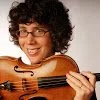
Donna Weng Friedman: Interdisciplinary Artistry and Music Education with the Award-Winning Pianist
This transcript is linked to the podcast and video versions of this interview, with show notes.
Donna Weng Friedman:
I have been performing since I was 10 professionally, and my passion, the joy of my life besides my family will always be classical music. When I play it, when I hear it, when I perform it, it brings me to tears the way nothing else can. It makes me smile. It warms my heart. But when I play with this Joy Luck Trio and I play the pieces that Gao Hong has written expressly for us, these are based on the Chinese folk tunes. I was born here and I will tell you, the connection is so strong. The tears that I cry are the tears of finding my home again, finding the roots of my parents. I can't really describe it as much as I am loving playing everything else from Bach to Beethoven to de Kenessey, and that is truly wonderful. This is a different feeling.
Leah Roseman:
Hi, you're listening to Conversations with Musicians, with Leah Roseman, which I hope inspires you through the personal stories of a fascinating diversity of musical guests. The award-winning pianist, Donna Weng Friedman, enjoys a distinguished career as a soloist, chamber musician, educator, curator, producer, and filmmaker. She was selected as one of Musical America's Top 30 Professionals of 2024 for her outstanding contribution to the performing arts and was also inducted into the Steinway and Sons Teacher Hall of Fame. She spoke to me about many of her inspiring projects, including the Joy Luck Trio, Microvids, with composer Stefania De Kenessey and collaborators, including violinist Curtis Stewart. You'll hear how she got into filmmaking and her award-winning personal film "Never Fade Away" about her parents featuring Chun Wai Chan, the New York City Ballet's first Chinese principal dancer. Donna shared great advice for fellow music educators and students, how she came to be mentored by Radu Lupu, and perspectives on her career choices as a parent, and many initiatives to amplify women composers and conductors. You'll also be hearing clips from some of her solo piano albums. You can watch the video on my YouTube or listen to the podcast, and I've also linked the transcript. Have a look at the show notes of this episode on my website where you'll find all the links.
Hey, Donna, thanks so much for joining me here today.
Donna Weng Friedman:
Thank you so much for having me. I'm so delighted to be here.
Leah Roseman:
I first connected with you with the Microvids album that came out last year, and it's such a beautiful and special and unusual project. So people will be hearing clips of different iterations of it, but I'll let you describe it in your own words.
Donna Weng Friedman:
Yeah. Well, Microvids is 19 short miniatures composed by Stefania de Kenessey. She composed them during the pandemic, and it was only for solo piano at that time. And she wrote it with vulnerable communities in mind, with people who were feeling isolated for teens and tweens who they were out of school, a lot of the graduations were virtual. It was a very tough time for all of us. And each of these miniatures between 20 seconds and one minute in length, I call it classical music's answer to TikTok. Each one reflects a different feeling and emotion that we were all going through back then, but we still continue to on a daily basis. So when she called me, we've been friends for decades and she said, "Would you mind playing these and possibly recording them for me?" So she sent them to me and I fell in love with them.
I really believed then, and I believe now that there is something so extraordinarily special about this set of 19 short piano solos. So of course I told her that I would record them and I recorded them. But when I start, I don't want to say getting obsessed, but it is sort of like an obsession. I don't stop thinking about music. And I think about how we can communicate in so many different ways. The way she writes, the 19 miniatures, each one is a little different in even style. She's very versatile. It's very tuneful, great rhythm. And really there's some jazziness in it. There's even some of the responses that we got back from audiences later, there was a little bit like a Beatles thing going on. And of course it was a tribute to Béla Bartók's Mikrokosmos. So I started thinking about our repertoire for family concerts for kids.
And to me, this could be an incredible addition to the orchestral repertoire because since Carnival of the Animals, there hasn't really been anything quite like it. And so I said to Stefania, I said, "I really think that this can be the next Carnival of the Animals, but then of course we would need an orchestra part." And she thought it was a great idea. And she wrote a phenomenal orchestra part. And the piano solo stays the same. The orchestra is not at all an accompaniment, but it breathes new life to each of the miniatures. And then I said to her, "This is fantastic, but you know Carnival of the Animals had poetry that I loved." I said, "It would be so nice if we had some poetry to introduce each of these miniatures." And she listened and three days later she sent me these fabulous rhyming couplets that she wrote herself.
I mean, they were extraordinary. So I said, "This is incredible." So I've performed the solo piano part. I performed it with the narration, the recitation for the poetry. And then we got together with Maestra Helen Cha-Pyo, and she is the conductor of the New Jersey Youth Symphony because again, a lot of the message is for our younger audiences. But of course, it's not only for younger audiences. But I spoke to Helen. She came to the premiere of my performing Microvids choreographed by Ariel Rifka Dance. The choreographer is Ariel Grossman. So we had microvids with dance and piano and she fell in love with it. So we decided to do a concert together. And then the recording, we started thinking about recording. And it was always part of what was going on in my mind that there would be more to it than just a recording.
The natural progression was to have, because this is for children, this is for audiences worldwide, to have the poetry translated. So we had it translated to Spanish and we recorded the Spanish version with New Jersey Youth Symphony. (clip of number 7 "En Llamas" New Jersey Youth Symphony, Helen Cha-Pyo, and narration by Lola Lopez Guardone)
And then we recorded the English version with solo piano and Krystal Joy Brown, who's a Broadway actress. She was Eliza in Hamilton, Gussy and Merrily We Roll Along, and Diana Ross in Motown. She's fabulous. So she recorded the poetry with the solo piano. (clip 9 Running on Empty with Krystal Joy Brown narration)
And then Stefania and I went to a concert in Merkin Hall performed by violinist Curtis Stewart, who neither one of us had heard of before. And he comes down with his violin. He's walking towards the stage from the audience playing this incredible music. And the entire evening with his improvisations and the way he has the style and charisma and the ease and the joy. For me, there are so many great performers out there, but the ones I want to collaborate are the ones who feel that joy because that's why I do it, because music gives me joy. And that's how we communicate to the audience. So after the concert, I grabbed Curtis and I said, "Look, you're fantastic. Let's meet and let's talk." And we did. And with Stefania, Curtis and me. And I said to Stefania, who, again, is a dear friend of mine and so open to ideas, anything that resonates with her, she's very open to discussing.
And I said, "Well, the piano solo part is phenomenal, but it lends itself to other iterations." Stefania wrote it for flute and piano. I performed that with flute and piano for string orchestra, chamber ensemble and cello and piano. And she wrote a violin piano part too. And I said, "But wouldn't it be phenomenal if Curtis would be interested in improvising, improvising his feeling over each of the piano miniatures?" And of course, a lot of it was based on the violin part, but it really comes from Curtis. And Curtis was all in. Stefania loved the idea. And that's what we did. We went into the studio, recorded. It was so much fun for me because I'd never quite done that before. I don't think classical musicians are used to performing with improvisation. And it is a pity. When I was a kid growing up, Julliard pre-college, I've always wanted to compose and I've always wanted to improvise.
But I was on a very, very kind of tight track of repertoire for young classical pianists, competitions. You did this, you did that. And I do think that improvisation should be part of every pianist's repertoire because it frees you and it makes you feel like you're able to create. And that's the one thing I think I've been missing through most of my childhood and young adult years, which is why I love creating things so much because it gives me an artistic ability to create and express myself in a particular way. So the album has three parts to it. The first disc is Curtis's improvisations on violin with the solo piano. The second one is Krystal Joy Brown reciting the poetry in English with solo piano. And the third one is another actress, Lola Guardone Lopez, who recites the poetry in Spanish with orchestra and piano.
So it's a huge album. It doesn't quite fit any category, but it wasn't meant to. (clip of number 8 The Grand Opening with Curtis Stewart)
Leah Roseman:
I've really enjoyed listening to it. And when it first came out, I knew about Curtis because I started to, as a classical violinist, I started to improvise during the pandemic. And my interest in that has gone deeper and I've done some performances and albums. So I knew about his playing and his improv. So that's the version I've listened to the most of Microvids. Of course, I've checked out the whole thing. But that was right away I wanted to hear what he did. Now, you mentioned you were friends with Stefania for a long time. She's also a pianist as well as composer. How did you meet? Do you remember?
Donna Weng Friedman:
We tried to figure this out. I mean, I went to Princeton undergraduate and she was there for a graduate since she got her DMA there. I don't remember if we met at Princeton or through mutual friends later, but it had some sort of connection. But I don't know. We actually tried figuring that out. Couldn't figure it out. But she's been a wonderful friend, an incredible collaborator. And it takes a while for me to process through all these different iterations and it keeps growing. Microvids, she even said to me just the other day, "I'm amazed you're not even sick of it by now." And I'm not because first of all, it's just beautifully written. I think it must take so much skill and discipline to be able to compose something 20 seconds to a minute and create an entire story. For me, everything is about stories.
And each one of these tells a full story and it communicates to the audience. We've had the most incredible audience responses to every iteration, the flute, the solo piano, recitation, dance with all the different orchestras. And something that's very important to both Stefania and me and which I do a lot of work. My work really spotlights women. Women composers, women artists, and women conductors. Very intentionally, our last few performances since the New Jersey Youth Symphony with Maestro Helen Cha-Pyo have been with women composers. I love creating stories about what stories need to be heard. And one of them is Dr. Anne Lundy's story. She is the first Black woman conductor to conduct the Houston Symphony. But more importantly, she conducted the Houston Symphony side by side with her own Scott Joplin Chamber Orchestra, which was the first, and she founded it. It was the first all Black orchestra in this country that she created so that Black musicians had a home.
She was a violinist. Her sister was a flutist and they were not allowed to play in orchestras. So I spoke with Anne, Dr. Lundy, and this March I went to perform Microvids with Scott Joplin Chamber Orchestra and to film because now my latest film project is called With a Wave of Her Hand. And it will be the story, the untold story of Dr. Anne Lundy.
She's an extraordinary woman in her 70s and she continues to make music, but a lot of her incredible history making the records were destroyed in the floods in 2001. So anyway, I think it's a story that's vitally important. And as we celebrate our 250th, there are so many stories that are not part of that history that need to be brought to life. So this is my current project, my current film project, which also, of course, Microvids is involved with that. The other orchestra that we performed with, that I performed with in March was the Virago Symphonic Orchestra. The last all woman orchestra in Europe. And it conducted by Maestra Pascale Van Os. And that is a wonderful community, this orchestra. We went to Antwerp, Belgium. That's where it was. And it was just.
Performing there was really one of the most joyous experiences because people love music there. I mean, everywhere we find great audiences, no question. But the kind of response was extraordinary. And again, the music is so tuneful and the poetry is so captivating what's not to love. But that was a beautiful weekend interacting with the musicians there and learning about the story of this phenomenal orchestra that was single-handedly created by one woman, a very young woman. And her story needs to be told too. There's so many stories. I don't have enough time to make films for all of them, but I hope to. And I also created this initiative, the Brava Maestra Initiative to help women conductors, especially from our AAPI community, form a network.
After I performed with Helen New Jersey Youth Symphony, I realized that this was the first time I performed with an Asian woman conductor. And that's when I started becoming very interested in finding other Asian women conductors. And then it dawned on me, I never performed with a Black woman conductor. And that's when I found Anne. So exploration for me is so important. And we have so many technology tools that we can learn deep dive into whatever questions pop up. And I'm always exploring questions of why haven't I done this? Why haven't I performed with this? That sort of thing keeps the motor going. And it's been just so rewarding getting to know these women, collaborating with these women, hearing their stories, and hopefully sharing and shining a light on them. And there's so many extraordinary women. And then Microvids keeps going because the way she wrote the piano part, it's just so easy to hear other musicians and other musical instruments combined. (clip of number 11 Pura Alegria)
I recently founded the Joy Luck Trio. And if you can figure out what that could be about by the title, it is the first trio made up of pipa, erhu, and piano. And I am so excited by this incredible sound world that we create. And I met the two most extraordinary artists on Facebook.
Leah Roseman:
Okay. That was my next question about them. Yeah.
Donna Weng Friedman:
So I heard Karen Han, and I didn't even know that she was the legendary Hollywood erhu artist. Her music, you can hear in the Joy Luck Club, The Last Emperor, Memories of a Geisha. And when Katherine Bigelow was accepting eight Oscars for The Hurt Locker, it was Karen's music that played. And the story is quite remarkable that the Hurt Locker originally was just going to be very much like a documentary with no music. And then Katherine Bigelow went to Hollywood Bowl and heard Karen perform, and that changed everything. So Karen's, the way she plays, it's like she's playing on my heartstring. So I heard her. She heard about my film, Never Fade Away, and we became friends on Facebook. But at the same time, I also heard Gao Hong, who is one of the leading pipa virtuosas. And I had never heard too many pipa artists before.
And I don't know if people out there know what the pipa is like a lute. It's plucking. And the kind of harmony that it can create when you have that dexterity is incredible. So Gao Hong and I were talking about a collaboration and then it dawned on me, I said, "I have recently become friendly and wanting to collaborate with Karen Han, this extraordinary erhu artist. What about forming a trio?" Gao Hong says, "Karen and I went to school together in China. They went to conservatory in Beijing. So we all got together and our chemistry right away was unbelievable because we have the idea of being all Chinese American artists. They were both born there. I was born here. But still we have the same values. We have the same family traditions. We were laughing constantly talking about the superstitions that our mothers handed down to us.
And then finally we started talking about repertoire and what we wanted to do. And it clicked because what was important to me was sharing the stories of our heritage and folktales and the Chinese ancient instruments blending with the Chinese traditional folktales and contemporary music. That is what I was interested in. And that was what they were interested in too. In fact, that's what Gao Hong does with her solo pipa, and she also composes. So we started just working virtually because Gao Hong lives in Minnesota. At the time Karen lived in LA and I live in New York. So we just started working together virtually. (clip of Pastorale)
Leah Roseman:
So on YouTube, I think your inaugural concert is up there. People can see, but you have an album coming out.
Donna Weng Friedman:
Well, the album is not coming out yet. Our single, we are right now in the middle of signing the contracts for the single to be released first. And that I think is on schedule to be released right around the Lunar New Year in February. And then there'll be another one. And so we are working out all these details. It was very fast because we did a soft launch of Joy Luck Trio May 2nd, May 3rd in New York. That YouTube was from the Glow Cultural Center and that was our first premiere. And that went so beautifully. Congresswoman Grace Meng gave us these wonderful recognitions. So I felt like we were recognized as a real trio right away. And the performances were a spectacular thing. It was just so much fun. I have been performing since I was 10 professionally. And my passion, the joy of my life besides my family will always be classical music.
When I play it, when I hear it, when I perform it, it brings me to tears the way nothing else can. It makes me smile. It warms my heart. But when I play with this Joy Luck trio and I play the pieces that Gao Hong has written expressly for us, these are based on the Chinese folk tunes. I was born here. And I will tell you, the connection is so strong. The tears that I cry are the tears of finding my home again, finding the roots of my parents. I can't really describe it as much as I am loving playing everything else from Bach to Beethoven to de Kenessey. And that is truly wonderful. This is a different feeling. So the interesting thing was that after the first two concerts, the audience response was people were crying. They were crying at Barge music. People were holding back tears.
They had never heard anything like this before. And they couldn't have, but the idea that we were able to communicate our feelings and our hopes and dreams of connecting east and west, not in a corny way, but in a really heartfelt way, it worked. Yeah.
Leah Roseman:
Do you know Sylvia Cheng?
Donna Weng Friedman:
No, I don't.
Leah Roseman:
She's a New York-based pianist and she's in a duo with her brother, the cellist Bryan Cheng. I featured their duo on this podcast a couple years ago, Cheng Squared. So there can Canadian Chinese, and they have done some beautiful arrangements of traditional Chinese folk tunes for cello and piano. And she's in New York, you should connect with her. Yeah. No, I
Donna Weng Friedman:
Think it's wonderful that there are several. There are many, many people who are doing Chinese traditional, but we're the only ones that doing Chinese traditional with the piano, with music written for us.
Leah Roseman:
No, I understand that. Yeah, I'm just saying that -
Donna Weng Friedman:
Yes, of course. No, of course. And there's just so many incredible artists out there. And the music, I think, can be very accessible to audiences who have never heard these instruments before and the sound. We have a different harmony as well. So part of the program, we selected three of the Microvids. So this is where Microvids comes in and they improvise over it. And that, again, for me was just incredible, a little nerve wracking because they do things differently each time. And sometimes they would do the intro and they just told me, "You come in whenever you want. You just feel it." So every time it's different and every time it's special. And it was really quite extraordinary. So I'm very pleased that we work so well together and that things are moving along a little quickly because I wasn't expecting all of this. But yeah, so that's something that was a lovely surprise just from Facebook.
Leah Roseman:
I was in China. Our younger daughter was adopted from China, sort of the end of the one child policy. And one of my strongest memories was in Beijing. It was a park and it was people learning to play erhu. It was like a sort of a learning circle, but everyone was kind of loud because they were sort of competing with their neighbors, sort of practicing outside. It's really, really something else. But it was like a wonderful, joyful, public kind of like the way people are there just dancing together in big public spaces and this sort of thing.
Donna Weng Friedman:
Oh, that's wonderful. I think China really does care very much about music, very much about arts and music. The erhu, two string violin, I guess you call it, right? Such a difficult instrument to play. So difficult. And to make that sound, it's really quite extraordinary. And I told Karen, I said, growing up, both my parents are from China. My dad always told me his favorite instrument was the erhu. And now I know why.
Leah Roseman:
Well, I'll be linking a few episodes to this one in the show notes for people. And one of my very first guests five years ago now was with Patty Chan, the erhu teacher in Toronto who wrote the first English language book about teaching erhu to people. And she's very involved with the Chinese orchestra in Toronto and all this stuff. So I'll link that.
Donna Weng Friedman:
Wonderful.
Leah Roseman:
Yeah. She demonstrated different types of erhus, different sizes and so on and talked about it a little bit.
Donna Weng Friedman:
That's right.
Leah Roseman:
Yeah. So I'd love to get into Never Fade Away, your beautiful film. I really enjoyed it. It was very touching. And I was wondering, Donna, would you be willing, in another interview, you spoke about the kind of trauma you had at the beginning of the pandemic that kind of led to this.
Donna Weng Friedman:
Yeah. Yeah. It was very early on in the pandemic. And I remember it was in March. And that was in the very beginning when all these stories, these rumors of what we called the coronavirus back then were filtering in like crazy. And everybody was scared. And I was walking my dog through Central Park 1:00 PM. Middle of the day was a beautiful, sunny day. And out from nowhere, this large, very large man lunges towards me. And he started screaming at me. He called me every racial slur in the book. And he started screaming that I should go back to where I came from or get what I deserve for bringing the coronavirus here. He blamed me for that. And if it weren't for a few passerbyers walking by, I don't know what would've happened. And then he fled. So I wasn't hurt, thankfully. And then that was the time when hate crimes against our API community were rising like crazy.
So I went home with my dog and I didn't leave my apartment for seven months. My husband said, "Let's go out together. Let's walk the dog together. I'll be with you." And I couldn't do it. And it was really because I didn't want people to look at me and say that I caused this. I did not want to be blamed for whatever pandemic was happening.
But I have to say, there was a silver lining. While I was home, I listened to a lot of music by Asian composers. I was born here. I never once felt different. I never felt like anyone treated me with prejudice. I guess I've been very lucky that way. But this opened my eyes and really I started thinking almost obsessively about my identity as an Asian American. And what came of that was I decided that these racist episodes, these attacks, these assaults, I don't forgive them because you should never do that to another person. But I think they all stemmed from ignorance and fear of the unknown.
So I started thinking about sharing our stories because I thought, if we shared more of our stories of heritage, we all come from somewhere. People would see that we're more alike than we are different. So I created Heritage and Harmony and the first series was with WQXR because I had another mini series on women composers with them right before the pandemic, before the studios shut down. And so I created a video series for them shining a light on the stories and the music of Asian American classical musicians. And then I created an education, a virtual education program for the National Women's History Museum, Heritage Harmony, Her Art, Her Voice. And this was a role model program for school age girls of color. And I invited these wonderful, wonderful women from the arts, from our AAPI BIPOC communities. Misty Copeland joined. Krystal Joy Brown joined. Fashion designers, musicians, even like the first Latina rap artists.
And so these were the programs that I started creating on my own. And I produced my album, Heritage and Harmony, Silver Linings, featuring the music of composers from our AAPI and BIPOC communities.
Leah Roseman:
I want to get to that album, but I did want to talk about Never Fade Away.
Donna Weng Friedman:
So I'm leading to that.
Leah Roseman:
Okay. Okay.
Donna Weng Friedman:
Yes. So during that period, during the pandemic, when the world was closed, I did, I think maybe 40 or 50 online performances and talks. And I started sharing my father's story.
Leah Roseman:
Hi, just a really quick break to let you know that I’ve linked a few suggested episodes in the show notes for you with erhu musician, educator, composer and author Patty Chan, pianist and songwriter Vienna Teng, filmmaker and koto player and educator Shirley Kazuyo Muramoto, conductor Jessica Cottis, the Cheng2 duo, pianist, scholar and cultural innovator and founder of The African Concert Series Rebeca Omordia , among so many episodes since 2021. Sign up for my newsletter, where you’ll get exclusive information about upcoming guests, consider buying me a coffee on my Ko-fi page, or buying some unique podcast merch. You can also review this podcast, share it with your friends, and follow on your podcast app, YouTube, and social media. All this helps spread the word! Thanks. Now back to Donna.
Donna Weng Friedman:
My father's story, his immigration story about how he came to this country and how a radio and a Waltz changed his life. And I would perform the Waltz. And I was floored by the response. And people were writing to me, "This is my father's story. This is my grandparents' story, my cousin's story, this is my aunt's story." And so when the doors open, I started performing this story with the music in person, live concerts. And then someone said to me. And then I spoke with. Oh, I went to a concert by Ariel Rifka Dance. Stefania is the resident composer, so she invited me. And I just fell in love with this dance group. So I spoke with a choreographer who basically only choreographs music to living composers and specifically women. It's an all female dance group. And I told her about my story and my dad's story.
And she said, "Okay, I'll choreograph it." She choreographed it and we worked with two wonderful dancers that she knew.
And I did concerts and people were crying. And after one of the performances, a woman comes up to me who I never met. She goes, "I'm a filmmaker and you have to make a film about this." And I said, "Oh, I don't make films. I've never been to film school." She goes, "Think about it. You'll do this." So I started thinking about it. And the dance was all of four and a half minutes long and I would tell the story. So I said, "Okay, you know what? I will do that. I'll make a four or five minute film, a short film." And so I started booking the venue where I knew I could have the dancers. And then I spoke to the two dancers that I've been working with and they couldn't make it then. I booked it six months in advance, but they're on tour with troupes.
I said, "Oh my goodness, what am I going to do?" And I said to myself, "Well, if they can't do it, I have nothing to lose." And I called my really good friend, Alan Moverman from Julliard, another pianist. He's the pianist for New York City Ballet. And I said, "Alan, would you kindly make an introduction with me and Chun Wai Chan?" Chun Wai Chan was the first ever Chinese principal dancer of the New York City Ballet. At my age, I don't care if people say no. I feel like I have nothing to lose. So I had a nice phone call with Chun Wai Chan. I told him about it and he said, "Well, send me the script." I sent him the script. He called me 24 hours later. He said, "This is my story too." So when I finally revived, I was like, "Oh my God." I realized having Chun Wai on board was a dream come true, but I needed to expand the story because he needed to be in it.
And I said to him, "Would it be possible for you to improvise just a dance scene of when my father first gets to this country?" And he goes, "Absolutely." So I literally started writing this short film from the back end, from the end to the beginning.
I do think that as a classical musician, we are very disciplined. And that discipline and the understanding of musical form helped me make this movie. Everything I do is about music. And this piece, this short film, 12 minutes in length, is literally a musical piece to me. And it was the most emotional project of my life. I think, and I'm going to start crying again. I cried every day, every single day making it because I was going through photographs. When my parents, they didn't have video cameras. They didn't have anything. I had to just pull out the old photographs and I had to be creative when it came to telling the story of my father coming here and leaving China. But it was so. Both my parents passed away years ago. So it was emotional every step of the way. And then it came to the world premiere at NYU Tish, which was astounding to me.
And that day, I told my husband, my husband is not a musician. He's a mathematician. The most supportive man.
And he's in the film. Not he's not in the film, but he has something to do with the film, which was very funny. But I said to him, this is the morning of the first night. It was on for three nights at NYU. I said, "I'm pulling it from the program. I can't do this because I'm not a filmmaker. Who am I to say that I made a film and people should see it? This is a personal project and I can't do it." And he said to me, "It is so beautiful. You don't have to be a filmmaker to be able to tell a story like this. You put in your heart and soul. People will love it." So after I kind of calmed down, we went to the premiere and it was part of Areil Rifka Dance's spring season. So I performed Microvids with the dance company.
And then it came to the screening. And I sat between my daughter and my husband.
And I think I was numb and I couldn't even breathe. And then I heard people sighing. I heard people laughing where they're supposed to laugh. And then I heard people gasping. And I think I just cried. I think you call this imposter syndrome. And I had this imposter syndrome for six months. After that, I started sending Never Fade Away. They tell me, oh, you should send it to film festivals. So I started sending it into one or two, three, and it just started winning. Winning one festival after another. At the end of the whole. I said to myself, "I'm only going to do this for one year." And in one year, it won 44 awards from film festivals worldwide. I don't think it was until the sixth month that I started enjoying it, watching it. And when I started really enjoying it, it was like, Oh my gosh, this is something that was so close to my heart, that was a tribute to my parents.
It was honoring them, their story, but it was also honoring everyone who came here to this country before us.
Sharing these stories. I could never have done what my parents did. Come from another strange country to a strange land, not speaking the language without any money, no jobs, no connections of any kind. And look at the life they were able to give me, a life filled with opportunity. So yeah, this was an amazing, amazing experience for me. And then I get an email that inviting me to send Never Fade Away, to be archived at the Statue of Liberty, Ellis Island in perpetuity for universities, institutions to research and to have. And that was extraordinary. I mean, I don't even understand it, but I am so grateful. So I think that I had an incredible team of artists who worked with me. My editor, Ciyi Chen, my cinematographer, Garrett Parker, Ariel Grossman, the incredible choreographer. And people asked me later, "Why didn't you get a Chinese choreographer?" And this is really important to me.
It is my father's story. He is from China, but it is for every person from every background. And so Ariel's family, their story, different background from the Holocaust. This is important because everybody feels so deeply the connection to my father's story in their own way. That's what it was all about. It isn't just being Chinese. It's being citizens of the world. So at the end of the film, the credits were very important to me. And with each of the artists that joined me on this journey, I feature their families as well because we are about community.
I'm always amazed when I got the email from Shorts TV asking to sign a four year contract for Apple TV and Prime Video. I mean, all of these things come out of nowhere. And I am just flabbergasted. I feel very, very blessed. And I really enjoy the film festivals. That community, the film community is so different from my music community that I've been part of all these years, that I love, I grew up with, and they are extraordinary people. I will say I was older than most of the filmmakers by 20 years, but they were so accepting of me. They embraced me because I thought I was so embarrassed because I would be on the panel with all these filmmakers who'd gone to school and had all this training for years and I had nothing, no experience. And here I am winning best short film and talking about my experience.
But I would always let them know very honestly how I'm in awe of what they do. And what I did was just very simply tell my story through music and dance. But they were so welcoming.
And so I really feel more empowered now than before about exploring different artistic expression, forms of expression. I think part of my frustration through my young adult years performing, and of course I love performing, but when you're in your master's at. I was at Julliard for my master's and as a solo pianist, you're put on the competition circuit. And in the competition circuit, you're required to play a piece by Bach, by Beethoven. It's not as this Romantic, Contemporary , Etudes. And not that I don't love all of that, but I always felt restricted. And I wanted to play pieces by women composers. I wanted to play music from other cultures, but that was never part of it.
So I always had a little bit of frustration. And I didn't know until way later that I could explore cross-discipline, cultural performances, create different opportunities to combine dance and music. And I didn't know about this. Of course, we have the internet now, so it does make it easier. So then I made another little film last year, A Silent Cry. And that was based on clouds, one of the miniatures from Microvids.(Music: clip of Clouds with Curtis Stewart, Microvids)
Because the soundtrack is Curtis's improvisation over the piano for clouds. I was obsessed with that. I heard it everywhere I went. It was so moving to me. So one night I just sat down and I made a music video. I started thinking about it. My daughter, who is an AI, she has her own AI startup. She lives in San Francisco. She posted an Instagram story. She created a little AI, three second video of a globe spinning with ice all over the place in clouds and gold. It was like a music box. And I loved it so much. And I started thinking, oh my gosh, I really want to create something like that based with that AI, but not with the same visuals. And I started reading articles about the Himalayas and climate change and how it affects the world and the animals. And I started getting very obsessed with the idea of putting together a little music video, a piece, a short film, whatever you call it, spotlighting some of that.
So I asked her if she could please create a short video. And I told her exactly what kind I wanted with the globe spinning with clouds, but put in a different way. And she did. And she can only generate a three to five second video. So I had to learn how to loop it. And then I put together, I guess, a two minute little piece. You can call a music video, a short film. And I called it A Silent Cry. And I sent it. It was just really for my own pleasure. I sent it to a film festival and then it won for best music video. I mean, then it actually won 30 awards. But what was so astonishing to me was that I created it all on Canva. And I was so embarrassed when I went to the film festivals because when it played, it screened at the Regal Union Square Theater.
And I was thinking, oh my God, I'm going to go there and there's going to be a blank screen because I did it on Canva, but I had people rework it a little bit. And it was beautiful on the large screen. And I got up on the panel afterwards and they said to me, "So what is your biggest secret about this? About creating this?" And I told them, I said, "Well, I created this on Canva." And people started cheering. And I was so embarrassed about that before. I didn't tell anybody before. But now I realize that it gives everybody a chance to create something themselves because I don't have any technical prowess in any way. I'm really a tech idiot. I know how to use Canva. And it's a simple, intuitive program. And through layering, from experimenting, I was able to make A Silent Cry.
Leah Roseman:
Yeah. I enjoyed it. I watched that too. Just before we leave Never Fade Away, I just thought it might be interesting for people and for yourself. There's a really moving, relatively new museum in Rotterdam in the Netherlands that's dedicated to migration. And it's really very cross-disciplinary. When you first go in, they have hundreds of old suitcases people have donated, and then everyone submitted their memories of their family member or themselves migrating. And you put on headphones and it's very moving and you can listen. And there's children and older people and all kinds of stories. And they have galleries. There's all kinds of art and incredible photography. And I think they have rotating exhibits, but it's really like an artistic expression about the experience of migration internationally. My
Donna Weng Friedman:
Goodness. Oh, that's beautiful. Can I see any of that on YouTube? Do they have any?
Leah Roseman:
Maybe. Yeah. Our older daughter is an artist in Rotterdam, which is why we're there. And so she took us and it just opened and yeah, it was really moving.
Donna Weng Friedman:
How wonderful. Do they do exhibits elsewhere or just there? They don't have traveling exhibits today?
Leah Roseman:
I wouldn't think so, but I mean, maybe they're connected. There are other migration museums. I've been to a couple. There's one in Halifax here in Canada, but this one's really quite extensive and it's quite a beautiful building. So I'll just put that out there if people are interested in that.
Donna Weng Friedman:
Absolutely. Well, I'd love to see it. Maybe
Leah Roseman:
Maybe you could connect with them too.
Donna Weng Friedman:
Yeah, I would love to. I would love to. That's wonderful. Thank you for sharing that. Yeah. I mean, these are the stories that connect us.
Leah Roseman:
So speaking of having grown up on this narrow track, I did want to talk to you about you're a very renowned teacher, about your approach with your students and if that differs from the way you were taught.
Donna Weng Friedman:
Oh, absolutely not. Since I was six years old, I started playing the piano because we had a pet parakeet Green Spot and he died. It was my first loss. And my first concert, coincidentally, I performed Robert Schumann's First Loss. And the story of my losing Green Spot came through the music. And that was the first time I can feel I felt this connection with the audience. It was my first concert, but it was so powerful. And people, I was six and a half. People were crying. I was crying. And that was when I realized that I can tell stories through music. So when people ask me now, what do I do? I usually say one of two things. I'm a storyteller or a gap filler because when I find something that's missing, I like to fill it in. Like when New York City Back in 2007, they cut back the music education programs in the public schools by 135 million.
That's when I created my interactive classical music apps and I went into schools like a door to door salesman and people loved it and teachers were using it for creative writing. And that was the first time I actually felt like I could do something that could make a difference as an individual artist. But really when I started that young, every single piece of music I would create a story for. And that's what I teach my kids. That's what I teach my students. I ask them to connect with their music, their pieces, and tell me what kind of story do they hear. And then after they tell it to me verbally, I say, "Now tell it to me playing it." And the difference is amazing. It's extraordinary.
Leah Roseman:
So with my teaching, Donna, I find for me, this is more natural, but it isn't for a lot of students, but I don't want to feed them ideas. But sometimes I'll say, "Well, I'll give you an example of what I would see." But then you know what I mean? I find that hard sometimes with some people.
Donna Weng Friedman:
Oh no, I think it's very good to give an example. I think it's very important to give examples. If they're struggling, because I teach a lot of students who are very shy. I was very, very shy. The music opened doors for me. It opened the world to me and it can do that for everybody.
It can. As a teacher one-on-one, you know this. We get to know our students so well, one-on-one every week. And I teach them from kindergarten all the way till college. So they become my extended family. And I know each one and what their capabilities are for how they can verbally express themselves. And I can also know, I know very well how they are receptive to my giving them an example. Some of the students, I don't have to. They come bubbling right out. Some of them takes a little coaxing. Some of them want to hear from me. So each student is different, but the end result is always the same. And once they get it, they start thinking about music in those terms. And it's just such a rewarding feeling when I see them performing and they're smiling. They're not worried. I tell them, as long as you're prepared, the hard work comes before.
When you're on that stage, I don't care what you do. I want you to enjoy it and think about your story.
Leah Roseman:
I know so many musicians who never feel prepared talking about that imposter syndrome, no matter how expert they are. So there's also that element. How do you deal with that with students?
Donna Weng Friedman:
Well, I am very fastidious about practicing towards performance. And I prepare them way in advance. I'm not the kind of teacher that will give them an assignment, a new piece a month before a performance. I will never ever do that. I have a couple of students who are incredibly stage fright, incredibly stage fright. So what I actually do is I try to find out what triggers them. What is going on in their head when they're on stage that's different from when you're playing at home. I also explain to my students, and this is absolutely true for all of us, if you are performing really well at home, that doesn't mean you can do that on stage. Because the difference about being on stage is that you have that extra layer of awareness. When you're at home, you could be thinking about what you're going to have for dinner or your homework and you could play perfectly.
You could just be having fun and playing, but that's not being mentally aware. When you get on that stage and you look at the keyboard, sometimes you start thinking, "I don't even know where Middle C is." And that all comes from practicing. So you learn the piece. And I also tell my students, you don't have to memorize music. This is something that is not, I don't think, a deal breaker to be a performer anymore. People go up there with their iPads. It's fine. It's what counts is how you project the music. And because of that, for some concerts, as a role model, I like to model for my students. So I use the music. I don't want that to be a taboo and I don't want that to be the deal breaker. But you have to know the music. You can't sight read it. So once you've passed the test of actually learning the music and memorizing it, the most important thing is that awareness.
How can you reproduce that at home? By videoing yourself.
I record myself constantly. I record myself audio. I don't really care to see myself. I just want to hear it. But for the students, they like to video themselves. When you record yourself and then listen to yourself again, you become much more aware. When you're sitting there playing and you're recording, you become so much more aware. That level, that added layer of awareness really helps. And then the other thing that I've discovered with some of my students who have stage fright, who will play beautifully in lessons easily at home, get on stage and just have blank out. I talk to them about what it is that's going on in their minds when they're playing on stage. And I said, this happens to so many people and it's just a way for me to understand how their mind is working. And most of the time they start thinking about how to practice what they're practicing.
And I tell them that doesn't work on stage. So playing the piano has different degrees of learning and practicing. Practicing for practicing to learn. You have spot practicing to perfect sections. You have practicing to be able to play the entire piece from the beginning to the end. But once you're on that stage, it's not about thinking about the practicing. It's not about thinking about fingering. That'll kill you. It's about only one thing, the music and how that makes you feel. The parts that make your heart sing or make your heart cry. You have to just be with the music. The motor control will kick in. Your absolute concentration and focus that you have practiced, hopefully recording yourself should kick in too. But you have to be in the mindset where it's the musical, the melodic line. And I also have to make sure that they practice, that they can start from many different parts of the piece.
Really important because if you make a mistake, then you find it. You don't fumble, you go find a place nearby and start. Nobody cares. There's so many layers of practicing for performances, but knowing your music well enough that you can start anywhere. And also with these iPads, sometimes you turn two pages. I don't use iPads on stage because it's just too much. But I do think that there are many, many ways to prepare students and anyone who wants to perform to get on that stage and have successful performances. Not perfect. There's no such thing as perfect. But success to me is that you come off enjoying yourself because why would you want to do it if you don't enjoy it?
Leah Roseman:
And you had mentioned your Heritage and Harmony, your Silver Linings album, beautiful album. Chinery Ung, the Cambodian American composer. I had not heard about him before and I'd looked him up.
Donna Weng Friedman:
He's extraordinary. And what is he now? Is he 90 or 80 something? He's an extraordinary composer. His whole life story. I mean, that's why I featured him with Heritage and Harmony on WQXR. It's amazing. Most of his family was killed during the Cambodian. And if it wasn't because he was at Columbia and they offered him another award to stay here and study, he would've been back there with his family. I mean, it's just an incredible story, but his music is stunning.(Music: clip of Space Between the FIsh and the Moon by Chinary Ung)
Leah Roseman:
Yeah, it's a really powerful album. And the soprano Indira Mohajan. Yeah. So were you friends with her?
Donna Weng Friedman:
In 2019, I had the miniseries with WQXR, Her Music Her Story. And I co-created it with Soprano Allison Charney. And so that was about telling the stories, sharing the stories of women composers past and present. Again, it's because I looked up statistics and in the entire world, less than 3% of the concerts were programmed less than 3% women composers. Maybe it was actually back then one and a half percent. Now it's gone all the way up to 3%. But anyway, so that's why I did that. And then we had a special program for the 4th of July, and we did a special tribute to women artists. And Allison invited Indira to join us. And that's when I became friends with Indira. And just the loveliest woman, beautiful voice. And I invited her to be on Heritage and Harmony, Her Art, Her Voice as well. So we became very good friends.
And I wanted to do these two Florence Price songs with her on Silver Linings. So when you work with artists that you share, I always say we share the same heart. A lot of artists, we have different styles. But if you have the same heart, if you feel the same passion for art and what's important in art, and that's the human connection to me. Not just playing fast notes. I mean, that's great. That's not what I look for. Then you create lifelong friendships and collaborations.(Music: clip of Night by Florence Price soprano Indira Mohajan)
Leah Roseman:
I listened to your Quiet Poems album with music by Kim Sherman, Solo Piano. I really enjoyed that. But there's another companion.
Donna Weng Friedman:
So it's the pieces that Kim wrote are part of her piano, solo piano folio called Unfathomable Things. And there are a couple of sections to them. The first one is Quiet Poems, which I recorded. And the second one is Four Moods. So the idea also came out. Kim and I were friends. I commissioned a beautiful trio for soprano and violin and piano for Her Music, Her Story. So Alison Charney, the soprano, who I created Her Musical Story with, we commissioned this from Kim. And I loved her music so much. So I said, "You know, Kim, I think it would be great for music, solo piano for older kids. Again, with the teens in mind. New music is something that I truly believe we are lacking in that age group. I teach at Mannes Prep and I sit on juries every single year. And sometimes they're required to play a contemporary piece.
I've heard every single one of Philip Glass's Etudes hundreds of times. There are more pieces in the contemporary repertoire, but not necessarily suited for younger people. So Kim's album is really for that. That another purpose, in fact, Four Moods was written for two of my students. She came into the piano lessons. She talked to them. She learned their style. And she wrote two piano pieces for each of them. And they were, I think in seventh grade, eighth grade, ninth grade, tenth grade. So again, this is the idea that I have for trying to beef up the repertoire for that age group for new music. And her music is so beautiful. Very different from Stefania's. They both have incredible harmony. For Quiet Poems, I think she opens up this world of sound created by the piano. And it starts resonating in the piano. And then for the first one, it has this incredible glow.
And then each one in Quiet Poems, there are three of them, she takes away the music part and adds more silence. And for the third one, even more silence. So the silence becomes so much part of the listening experience, which is so important for students to learn. So yeah, she's extraordinary. She's a wonderful composer, a dear friend. And it was just so lovely to record those and I performed them. I had this series that I started called Five Composers and a Pianist, where I perform solo music by five composers, women usually. And I invite all the composers after the concert to talk about their pieces with a panel discussion. And people love it and I love it, but there's just so many hours in a day that I can pursue all these things. But I will get around to another one, another iteration soon.(Music: clip of Water Circles by Kim Sherman from Quiet Poems)
Leah Roseman:
I wanted to ask you, you had studied when you were younger with Radu Lupu.
Donna Weng Friedman:
Oh yeah. So I've been so privileged to having the greatest teachers from the very beginning. Julliard Pre-College, Jean Rose, and then Leonard Eisner. They both passed away. And then my master's, Adele Marcus. In between, I studied at Fontainebleau with Nadia Boulanger, which was an experience that I will never forget. It was the scariest experience too because she was scary, but it was extraordinary. She was the one who told me that I should go to as many voice recitals and masterclasses because all we are trying to be, every instrument should be like the human voice. And then I was privileged to have been coached by Radu Lupu for my New York debut. And then from that point on, we became friends. My New York debut was at the 92nd Street Y. And I wanted to play Schubert. And I had never performed a large Schubert work before.
And I had this opportunity to meet Rada Lupu. And he said, "Okay, I'll come to your apartment." I was living in a studio back then that was in, I think it was 1990. My debut was 1991. And he said, "But I can only stay for a little bit. I have interviews." He was in town to do one of his concerts, Carnegie and with New York Philharmonic. So four o'clock, he shows up and he says, "Okay, what would you like to play?" He was doing this as a favor for a friend. And so I sat down and I played Bach Toccata. Now, Bach is probably my favorite composer that I would. Desert Island composer. And I played so much Bach and every single concert since I was little, every full concert, I would always start with Bach. So I'm very comfortable with Bach. He doesn't perform Bach, but I said, "What the heck?
Do what you're good at." So I played the Bach Toccata in D major. And then afterwards he looked at me and said, "Well, I can come back later after my interview if you're interested." And I said, "Of course." And I said, "What time?" He said, "Well, I have that and then I have to do something." And so maybe around 7:00 PM. Said, "Okay." So he left and I was teaching. And at that time, I was very young. I was going door to door.
I look back at my younger days and I'm thinking, what was I thinking? And I didn't cancel my students because I needed the money. So I went door to door, exhausting. It was winter time because he always performs in January or February. And then I come back, come home, and two minutes later he's at my door and he comes in. And he says to me, "I like your playing because you don't play gray. A lot of pianists play gray." I think that is the single greatest compliment of my life. He said, "So many pianists who are famous play gray, but you don't play gray." So we worked on the Schubert. He taught me so much about Schubert. And then I played other music for him. We played music until 3:00 AM. I was so grateful that my wonderful neighbors were always happy to hear music, even at that hour.
And then after that, we ordered out food. I ordered. He's very kosher, so no dairy, just lox and bagel. And then we started gossiping about pianists, and that was so much fun. And he told me about every pianist. I knew he knew what he thought and how he thinks about his own playing, which is very interesting. He said, "Murray Perahia is much better pianist than me." And I said, "Well, maybe so, but you're the greatest artist." And that's how I always viewed him. He's not a piano player. He's not a pianist in the sense of the piano playing. What he creates is art.
I've been to every single one of his concerts at Carnegie and at Avery Fisher, back then Avery Fisher. And I will always walk away with probably one of the most memorable experiences more than any other artist. And he creates that kind of emotional impact, I think, on all listeners. So yeah, I've been very, very, very blessed. And I am so grateful that I get to continue to do what I love. And what I do, what I love has expanded a little bit more from just playing the piano and teaching, and of course that I'm grateful for too. And for meeting so many extraordinary artists from all over the world, all disciplines. Every time I meet someone new, my world opens up a little bit more. And I think that's what makes life so beautiful, even during the times when things are not easy.
Leah Roseman:
Yeah. I was curious, Donna, you've had children who are now grown up.
Donna Weng Friedman:
Yes.
Leah Roseman:
And I was curious if that impacted your career. Did you make choices around being a mother in terms of being a
Donna Weng Friedman:
Yes. During the time when I was raising kids, I cut back on performing. So this is the interesting thing. I did cut back because I didn't want to travel without them. I don't like traveling anyway. I really never liked touring. And I toured Europe, South America, China. It's a very lonely profession for pianists. I think some people are more acclimated to it. For me, it was going from the airport, hotel, rehearsal, hotel, concert, hotel, airport. I love the audiences, of course, and I love meeting people afterwards, but I miss my family. I miss my home. And the traveling, it wore me down. I was very lucky to have one concert in Florida, in Flagler Museum, where the great pianist, Shura Cherkassky, attended. And he loved my playing and we became friends. He said, "Touring is not for everybody." Radu Lupu hated it. Shura says he does it because he has to, but it does take a certain kind of personality to be able to do it year in, year out. So when I had my kids, I became known as the vacation pianist. I would take my family with me. Winter break, I would perform in St. John's, in Flagler, in Palm Beach. So I managed to do that. And then it turns out one of the parents at the same school that my kids went to, Trinity, was Carter Brey, the principal cellist of New York Philharmonic. And we did a benefit concert together for Trinity. And we got along so well. We played so well together that we started doing more concerts. And so I went with him and we did some concerts at Northwestern. And I told him that I'd like to bring the kids. So he was very sweet.
He scheduled it during our breaks. It was a lot of fun. Then we did a lot of tri-state concerts. So that was really wonderful for me to keep playing in New York. How lucky was I that I could play in New York City at Weill, at Merkin, at Lincoln Center? I was the pianist also for St. Luke's Chamber Ensemble with these incredible artists, like a part-time pianist, but full-time mom. How lucky could that be? And then when I created my classical music apps, Carter recorded with me. These were apps that I made stories. Again, stories to music. I wrote stories to go with short pieces of classical music. Carter recorded The Swan with me. Liz Mann, the principal flutist for St. Luke's Orchestra recorded Flight of the Bumblebee. Claire de Lune. We recorded it, had it animated. The drawings were based on my daughter's drawings, who was a great artist.
And it was recorded and produced by David Frost, who has won 25 Grammys now. And he's a dear friend of mine from Julliard. And we created these apps. I was one of the first apps on iTunes, but I didn't know how to do it. So again, it took me two years to learn. Is
Leah Roseman:
Is this the Music Bee Club? Is that the one?
Donna Weng Friedman:
Yes. That's right. So what happened, and it was beautiful, but I didn't know anything about grants back then. So I funded everything myself and it was so expensive. So after three of them, I had to stop. But I did go from school to school, as I mentioned before, like a door-to-door salesman, and showed the apps on the big whiteboards. And it was just wonderful. The kids loved it. But how lucky was I to be in this music world with the top artists being able to do this while I was raising my own kids? That's why I made these apps, because my kids grew up with music. And the idea that music classes were being cut to these communities where that's where they get their music, I couldn't take it. That was just too much.
Leah Roseman:
And you've put out several beautiful albums of Sonatas with Carter Bray, people can listen to.
Donna Weng Friedman:
Yes.
Leah Roseman:
And I'm curious about his career because he was a soloist for a long time before he became principal of the New York Philharmonic.
Donna Weng Friedman:
He was, will always be my favorite cellist. I mean, there's just nobody plays like him, plus the nicest person. That's the other thing about great artists. The greater the artist, the greater the person. That is just such a wonderful gift to have, to know extraordinary artists who are such wonderful people and who have been part of my life for so many years and continue our friendships, our collaborations. It's extraordinary. And Carter is retiring. I went to the Concert Artist tribute to him and Anne Marie McDermott, which is beautiful, just beautiful. And they're both such deserving artists. They've given so much to the world, but they will continue and Carter will continue, but on his terms now.
Leah Roseman:
So Donna, in terms of upcoming projects, so you have your Joy Luck trio. We talked about the couple of films you want to make. Are there other upcoming projects you want to talk about that are exciting?
Donna Weng Friedman:
There are a couple, but they're in the very beginning stages. So I will have to have another conversation with you at another time. But there's always something because every time I meet someone new and interesting, there's always that little flash bulb that lights up. Every time I read about something that's upsetting to me, that a community or something is missing somewhere. And if I can do something to fill in that little gap in my own way and at least raise awareness for it in my own small way, then I start that process of thinking. And it takes me a little while, like Microvids. One to thing led to the next, to the next, to the next, and I created these videos for Microvids. Besides after Silent Cry, I said, "Oh, I'm going to do them for other miniatures." And they gave me a lot of pleasure and they've done very well too.
So yeah, I think people always ask me, "When are you going to retire?" I have friends who are retired and they travel and why should I retire when I love what I do so much?
Leah Roseman:
I doubt you know many musicians who are fully retired.
Donna Weng Friedman:
No, I think we're so blessed.
Leah Roseman:
So Donna, thanks so much for this today. It was just such an honor and a pleasure to meet you.
Donna Weng Friedman:
Well, thank you for spending time and asking wonderful questions and for caring about independent artists and music. It's so important and I applaud everything that you do to shine a light on our incredible community. Thank you so much. Thanks.
Leah Roseman:
I hope you enjoyed this episode. Keep in mind, I've also linked directly several episodes you'll find interesting in the show notes of this one. Please do share this with your friends and check out episodes you may have missed at leiarosewind.com. If you could buy me a coffee to support this series, that would be wonderful. I'm an independent podcaster and I really do need the help of my listeners. All the links are in the show notes. The podcast theme music was written by Nick Kold. Have a wonderful week.