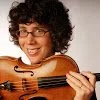
Coleman Itzkoff Interview
This transcript is linked to the podcast and video versions of this interview with complete show notes.
Coleman Itzkoff:
But the first time I saw Bobbi dance to Chaconne, I had tears flowing and I didn't understand why at all. It was just like she was speaking to me from somewhere beyond, from the beyond, and it was just extraordinary. And I knew then that I had to work with her and had to work with Or. And I totally fell in love with the way they conceive of art. And it just feels like a very natural part of my life now to be working with them and making art with them in a way that, like I said before, it was totally unexpected.
Leah Roseman:
Hi, you're listening to Conversations with Musicians with Leah Roseman, which I hope inspires you through the personal stories of a fascinating diversity of musical guests. I met Coleman Itzkoff when he was on stage playing cello and dancing for the contemporary ballet "Procession" with the National Ballet of Canada. He'd also curated the music and I was immediately curious about his path. I was also aware that he performed quite a bit with a previous guest of mine, Clay Zeller Townson of Ruckus Early Music. I got into a chat with Coleman backstage about his interest in new music, baroque music, dance, and theater. When we got to this interview several months later, I was intrigued to learn about his youth as a serious skateboarder, and you'll hear us explore several connections between that athleticism and both playing the cello and dancing. You'll hear Coleman share how he became a co-founder of AMOK, insights about some of the ways he's been able to access higher levels of creativity and tributes to many of his mentors, including Ralph Kirschbaum, Bobbi Jene Smith , and Or Schraiber.
We start the conversation with some beautiful connections with his very musical family. You can watch the video on my YouTube or listen to the podcast, and I've also linked the transcript. Have a look at the show notes of this episode on my website where you'll find all the links.
Hey, Coleman, thanks so much for joining me here today.
Coleman Itzkoff:
Pleasure to be with you, Leah. Thank you for having me.
Leah Roseman:
I was going to start with when I first heard you, but I think what's kind of cool is when I clicked on your website, these beautiful drawings of your aunt came up, and I know you're from this musical family. So your aunt Kris Yenney, who's also a cellist, do you want to talk about those drawings?
Coleman Itzkoff:
Sure, yeah. So I come from a long line of musicians on both my father and mother's side. My mother's sister, Kris, drew those little pencil sketches that are featured on my website. She is a cellist, she's an artist, she's one of these people that can seemingly play any instrument. Her house in Ashland is full of various gambas and nyckelharpas, and there's a suitcase bass and there's about six different types of cellos in there and keyboard instruments and old folk instruments and just anything, a hurdy gurdy, anything you can think of, she's got it. And she's certainly a source of inspiration for my own eclectic musical life. And I just thought, of course I want her on my website. Part of her is imbued within me in my artistic life, so why not have her featured there? But like I said, my mother and father are both professional violinists.
On his side, his sister, my father's sister is a violinist. His parents, Seymour is a cellist. His mother, Patricia, is a violinist. It extends probably farther back generationally than that, but it's very much the family business, this music thing.
Leah Roseman:
It's so wonderful. And I'm curious about when you were a child, you mentioned your aunt was in Ashland. Was that close to where you grew up? Were you able to try these instruments all the time or how did that work?
Coleman Itzkoff:
So she and my mother grew up in Palo Alto in the '60s, and I grew up in Cincinnati, which is where my father was part of the first violin section in the symphony there. So we would go visit my aunt and my grandmother in Palo Alto as I was growing up. And yeah, that's where she had many of these instruments. And her musical life was really rich there in the Bay Area. She was part of the Palo Alto Chamber Orchestra, PACO. Many musicians listening to this podcast will know about PACO. It's an essential part of their musical DNA. And she was not only a member of the orchestra when she was growing up in the '60s and '70s, but she then became, I'm talking about Kris Yenney, my aunt. She then became, I think, a conductor of one or two or three of the younger orchestras and a chamber music coach and a cello teacher.
So I'll go around and give performances here and there and meet people from the Bay Area and I'll tell them, "Oh, my aunt Kris Yenney is from there." And they all know Kris Yenney and they all look fondly upon their chamber coachings with her. And now I've gotten to go back to that area through various things.
I was part of the Irving Klein competition in San Francisco, which is a longstanding institution there. And so I've gotten to perform around the area and I was a part of Music at Menlo, which is a summer program there. And I'm even going back next season, next December to perform with PACO, some Vivaldi cello concerti alongside my colleague Alex Hersh, whose parents were also members of PACO So it's this big extended family, the PACO family that's been going on. Let's see, they're coming up on some big anniversary, which is why we're playing there, maybe a 75th anniversary, something like that. So it's wonderful to feel roots on that coast and that part of the world. I love Northern California, but I'm a Cincinnati boy. That's where I grew up. That was my upbringing.
Leah Roseman:
And you're based in New York now?
Coleman Itzkoff:
Now I'm in New York, yes. Although I'm speaking to you from Southern Vermont in the house of Clay Zeller-Townson and Matthew Aucoin, Clay, who you interviewed previously as part of. He's the founder of Ruckus, of which I am a part. And Matthew Aucoin is the founder of AMOC, which is another part of my musical life. And yeah, it's great to get out of the city every now and again and be in the country up here.
Leah Roseman:
Yeah, I definitely want to get into AMOC. Let's go there. There's so much to talk about.
Coleman Itzkoff:
Sure.
Leah Roseman:
I mean, yeah.
Coleman Itzkoff:
I met Matt first. Well, actually, I met Kier first. I met Keir GoGwilt, one of our violinists way back when, 2008 or nine at Bowdoin summer music program. But I really got to know him in 2015 at Yellow Barn. We played a Kurtag Moments Musicaux together, the quartet, and we played a Brahms piano quintet, and we became fast friends. And I was living already in LA at that point, studying under Ralph Kirschbaum, and I was doing work in the city. I was subbing with the LA Chamber Orchestra occasionally, and Matt had one of his pieces premiered with LACO and I was sort of the only musician his age in the orchestra at that time, so I guess we gravitated towards each other and got to know each other. And yeah, one evening in 2017, the two of them came over to my apartment and told me they were starting a new ensemble.
I'm not sure if it had a name yet, if we had found a AMOC yet, but all they told me was that it was going to involve singers, dancers, instrumentalists, and we'd all be gathering on a mountain in Southern Vermont and just be there and you'll get the rest of the story then. And so I said, "Of course, yes." I happened to be attending Yellow Barn that summer, and it worked out well that I could just, at the end of that festival, drive down and meet the gang. And then I met Zack Winokur, the other co-founder.
Zack and Matt were the two geniuses behind this whole thing happening. When I think of it, I think very much of the Ocean's 11 scene of George Clooney and Brad Pitt's character deciding to do a big heist and gathering their misfit crew of thieves all around the world, and that feels very much what happened. They brought all of these people from disparate disciplines together to do a musical heist, to do something that maybe hadn't been done in a long time, which is to try to redefine opera and to just do a startup, to do something without anyone else's permission and to make art with the people you love to make art with. So it was founded then, and I was immediately thrown in. I was told to basically learn a piece of Matt's in an hour, his bass cello duet, Dual, which he had written for, I believe, Yo-Yo Ma and the principal bassist of the Chicago Symphony.
It's not an easy piece, and they just said, "Here's the score. Learn it in an hour. You're going to perform it for everyone after dinner." It was totally trial by fire.
Leah Roseman:
Here's an excerpt from Dual by Matt Aucoin that Coleman has shared with us from a live performance he did with bassist Lizzie Burns. The full video performance is linked in the show notes for you.(Music: clip of "Dual" from live performance with Lizzie Burns; video linked in show notes)
Coleman Itzkoff:
And we later recorded it. I recorded it with our bassist, Doug Balliett. And then we sort of got to know each other, the dancers. I had never worked with dance before, so that was a revelation. There was one moment early on when Zack put me and Or Schraiber, one of our dancers, who was fresh off the plane from Tel Aviv, having just left the Batsheva ensemble there, and he put the two of us into a dance barn and a dance studio and said, "You have an hour, make a piece. The only rule is you're not allowed to play your cello." And the two of us didn't really know each other, but there was an immediate flow between the two of us, this language of movement of body that I'd never experienced before, but felt completely natural and intuitive. And in an hour, we had come up with a piece about 15 minutes long.
I'm not sure what it was about, but it was strangely compelling and it involved me moving, involved me dancing alongside Or. I think it begins with him holding the cello and just sort of slowly making his way towards me and me doing a series of movements, and it finishes after 15 minutes, the cello finally with me in its natural position, and right before I hit the string, it's over. So we stuck to Zack's instructions and thus began the major left turn of my life, which was to delve into the realms of dance and theater, which I had not predicted, had not even dreamt of, but is now a significant part of my life.
Leah Roseman:
So AMOC stands for American Modern Opera Company. How much singing is there in your productions?
Coleman Itzkoff:
There's a whole lot. We have four incredible singers among us. There's Paul Appleby, Davóne Tines, Julia Bullock, and Anthony Roth Costanzo. And we've gotten to work together in various formations over the life of AMOC so far, and even had other people singing. There's an amazing dancer I've worked with, Vinson Fraley, who is a wonderful singer as well, and he sings in one of our pieces, Broken Theater, very often. But a piece that AMOC makes can be as simple as a pianist alone on a stage with gorgeous lighting and playing Cage pieces with just thoughtful lighting, and perhaps a dancer will come in and perform duet with Connor for a moment and then leave. And that is opera for us. It could be two dancers and two violinists, or it could be all of us together. It very rarely is all of us together just because of our schedules and locations.
But there's always something AMOC-ky about what we do, no matter how many people are involved in the sense that we are thoughtful about the presentation of the music or the dance. It needs to collide with another discipline, and it needs to feel somehow immersive and theatrical and operatic, for lack of a better word.
So yeah, it's a real gift to be able to work with all of these people, each one of them, each of the instrumentalists, the dancers, the singers, I could go on for this entire hour about how much I admire and respect and love what they do and how they do it. And I feel very grateful and lucky to have been plucked up by Keir and Matt all those years ago into this wonderful world, and it's completely shaped the way I think about music and about my art making.
Leah Roseman:
So it's been almost 10 years.
Coleman Itzkoff:
Yeah.
Leah Roseman:
So when I heard you and met you, you were performing in "Procession" for the National Ballet of Canada here in Ottawa where I play, and you'd also arranged the music for the orchestra. And unfortunately, I couldn't see very much, but I did look on YouTube to see some clips to get more of an idea. I understand you were dancing. I think you did one of the pieces where people were seated?
Coleman Itzkoff:
Yes. The chair dance, which was set to the Tambourin of Rameau. Yeah. Yeah, it's this very intense unison dance with all of the men of the National Ballet of Canada. Yeah.
Leah Roseman:
So this is with Or Schraiber that is involved with AMOC. So Bobbi Jene, is she also involved with AMOC or is that a separate -
Coleman Itzkoff:
Yes, Bobbi and Or came as a package with AMOC. And "Procession", of course, is not an AMOC piece, but the reason the three of us were put together is through AMOC, of course.
Leah Roseman:
Right. Yeah. So I watched some of their choreography on YouTube, different pieces, and it really struck me this intimacy and expressive range. It was super inspiring. And I was curious, you mentioned how much it's changed your life to be involved with the world of dance and theater, but even in terms of movement, I mean, from your early moments of improvising with Or to now, what do you think's changed for you with that?
Coleman Itzkoff:
Well, like I said, I had no experience with dance before that summer in 2017. I had been a skateboarder for many, many years, a passionate skateboarder for many years. So I think there was already an engagement with physics and with dance in a way, with using your body to create art, which to me, skateboarding is much more art than sport, which is maybe why I gravitated towards it in the first place. But the dancers, I remember there were evenings where we would just sort of read chamber music, and they would always tell me at the end of those evenings, "Coleman, you're a dancer. The way you move, the way you flex your feet as you play underneath the cello, the way you sway with the music, you're dancing with the cello. Do you realize that?" And I thought they were kidding me until they started asking me to dance in these pieces.
The first time I performed as a dancer was a few summers after the founding of AMOC, Bobbi Jene, she brought some collaborators together on that same mountain. I think it was Keir, myself, and Asaf Avidan, who's a rock pop star from Israel who lives in France now, and six or seven dancers. And they brought us all together, put us in that same dance studio that I had met Or with. And in about two weeks, we had found a language together and found some kind of logic together and created an entirely new piece called Lost Mountain. And there's a few moments. In fact, my entrance into that world in the actual piece is I walk out and there's a mic at the front of the stage, and I stand there, and then I deliver a sort of bizarre Lynchian weather report in David Lynch's voice for whatever reason.
And at various points throughout the piece, I come up to the mic and I deliver other weather reports. At one point, I then do a gesture phrase, which is, it's like a dance, but completely with your hands and with your upper body. And that was my first time performing as a "dancer" in a piece. And we had a nice run at La Mama in New York City, the La Mama Experimental Theater off Broadway.
And yeah, since then, I've been engaging with Bobbi and Orr's work. There's something, I think the first time I saw Bobbi dance was with Kei. She and Keir had made a piece called Study on Effort previously, which is just a duet between a dancer and a violinist, and it's beautiful. It's a beautiful, simple piece. And there was something so moving about what she did, and I couldn't really explain why. I couldn't understand why. I had seen ballet previously. I sort of knew what that world was about, but I never found myself totally moved by it or excited necessarily. But the first time I saw Bobbi dance to Chaconne, I had tears flowing and I didn't understand why at all. It was just like she was speaking to me from somewhere from the beyond, and it was just extraordinary. And I knew then that I had to work with her and had to work with Or, and I totally fell in love with the way they conceive of art.
And they're two of my closest friends and collaborators, and we share times with meals and watching movies and talking about art. And it just feels like a very natural part of my life now to be working with them and making art with them in a way that, like I said before, it was totally unexpected.
And so yeah, Procession, when we met, that was the first time they had asked me to do anything like that. I had been in pieces with them doing small roles, choosing the music and whatnot. But this was the first time they asked me to really take the reins and curate the music for an entire piece and then arrange it for a modern orchestra, which is something I had never done before. But in this past decade, I've done a lot of things that I've never done before. And the big lesson in that is just to say yes. When you have an opportunity, when someone asks you to do something that you've never done before, don't be scared, do not fear, say yes. You will surprise yourself at your abilities, your ability to learn and adapt.
So Procession came about. It was a long process of finding the right music, the right tone for what they were going for and organizing it. We had a couple months together in Toronto with the National Ballet of Canada where we were building the piece and still making major changes to the order of events, to the length of certain pieces, to the orchestration. And that was just one of the most meaningful processes that I've been in a long while, especially coming out of the sort of trad classical world in New York where you get together, you slam together a piece in two or maybe three rehearsals, and then you perform it and then you say bye at the end of the day, which can feel shallow. And to be able to just live inside of one thing, one piece for a month and a half, there's nothing better than that.
We should all experience that more, I think. And then yes, we got to take it on the road and perform it in Ottawa, and that's where we met.
Leah Roseman:
As someone who sits in the pit and accompanies ballet a few times a year, we so often feel that the music's only serving the dance, and there's often no regard for the more natural flow of the music and that we take such a back seat. It can be frustrating. But I felt with Procession, I mean, you were very much on stage and it was sometimes maybe the dance was almost serving the music at moments. I know what I mean?
Coleman Itzkoff:
Yes, yes. It’s a sad part of these big institutions that there's so much separation between these forces and these humans, these artists. And AMOC was very much a response to that alienation. Especially in the world of opera, where there's 10 different teams of artists doing 10 different things but it doesn't always feel that we're part of the same team doing this thing together, lifting this all together, serving the art together. So I carry that with me wherever I go. It's like we're all trying to make art together and we're all humans and we've all got incredible stories and histories and values. And if we can meet and gather and connect on a very human level it will serve the art better. It will make everyone lift up. It will elevate everyone. And credit to them for setting that tone and having that value when they make a new piece. You're absolutely right. one does not serve the other exclusively. It's not like traditional ballet in that sense. It's very musch we're all in this moment together. And in fact, there were discussions early on where we wanted to have the orchestra even more involved. We wanted to have them processing. For example, there was a dream at one point for a band from the orchestra to be on stage playing the Mahler one excerpt and maybe some of them even processing down the aisles and that sort of thing. We were constantly trying to think of ways to incorporate the musicians down in the pit even more, but there's practicalities and logistics that prevented that sort of thing and union rules and whatnot. But I'm glad you picked up on that because it is so important. And this orchestra, by the way, was so fantastic to work with. Remind me the acronym for your orchestra, is it?
Leah Roseman:
Oh, it's the National Arts Centre Orchestra, so NACO.
Coleman Itzkoff:
NACO, yeah. You all are such chamber musicians and we could feel that energy coming from you and we could feel the give and take and the listening that you all had. And you can tell that not all orchestra cultures are that good, I have to say. Being an orchestra brat myself, having grown up in the Cincinnati Symphony and having gotten to know the various orchestras in North America, not all orchestra cultures are that positive. And that's a shame, but it really felt like NACO had that going. It felt like it was an orchestra of chamber musicians.
Leah Roseman:
Yeah, it always does feel that way. And I've heard that from other people coming in from the outside, so it's nice. Thank you. It's nice to hear. Yeah, I've been playing with the orchestra for 30 years and I also grew up in Ottawa going to concerts. I never imagined I'd end up back here, but life worked out a certain way.
There's so much to talk about, but I wanted to talk about these beautiful Dall’Abaco Caprices. You recorded a couple of them. First, I noticed them on Apple Music and then I saw on YouTube you had these videos. Maybe would we be able to play a clip of some of that?
Coleman Itzkoff:
Of course.
Leah Roseman:
Yeah. It was interesting this number six and you have this listener on the couch, the whole thing is focused on the listener and not the performer.
Coleman Itzkoff:
Yeah, that was a collaboration with a few different people, but over the pandemic, I began playing some Baroque cello.( Music: clip of Dall’Abaco Cappricio No. 6 Amour)
That's when my world started going in that direction. I had already had friends in this field, Rachel Ellen Wong, the Baroque violinist. And at that point I had met Clay and I had heard his band Ruckus, and we can get into Ruckus later. So I was just doing some personal experiments in Baroque Cello, and I came upon these Dall’Abaco Caprices, which are beautiful solo cello pieces in the sentimental style. There's a German word for this that I'm forgetting. They sound Baroque-ish, but they're a little bit more romantic than that. And I had a buddy, Daniel Zinn in Brooklyn who had some studio time, had a friend with the studio and said, "Hey, come over here, bring your Baroque cello. Let's record these." So I said, "Of course, why not?" We did. And about a month later, he had the idea to, and a space, a beautiful space in Park Slope to make some music videos, some simple music videos.
So we went there. I hired my friend Ariel Hahn, who is a bridal atelier. She's the person on the couch who I'm playing for in that sixth Caprice. Daniel Zinn was directing. It was very simple, just very simple assignment. Just look at each other while you're playing this Caprice and we'll make this sort of mysterious story between the two figures. And she's also featured, I believe in the first Caprice as one of the characters there lounging. Yeah, it's funny. I hadn't though of those videos in ages. It was just a sort of side project that we had because there was not much going on during COVID and we were just kind of inventing projects for ourself. But thank you for bringing those up. It's nice to remember those.
Leah Roseman:
Well, so Dell'Abaco when I looked him up, so he was the son, the cellist, right? His dad was the. And he lived till he was 95, and how unusual was that back in the day?
Coleman Itzkoff:
Didn't know that. That's very unusual.
Leah Roseman:
Yeah.
Coleman Itzkoff:
And from what I know, he didn't write so much more than that than those Caprices, but they're total gems and they've had a bit of a renaissance in the past decade, I'd say. A lot of people are recording them. And whenever I do a solo recital, I play one or two of them and people respond strongly to that music. They love that music. (Music: clip of Dall"Abaco Capprico No. 6 Amour) There's something hypnotic and so beautiful about those pieces, somewhat Bach-like, I'd say.
Leah Roseman:
How do you find it playing without an endpin?
Hi, just a really quick break to let you know that I’ve linked a few suggested episodes in the show notes for you: with Coleman’s friend and colleague Clay Zeller-Townson, founder of RUCKUS Early Music, violinist Yolanda Bruno with her tribute to Jeanne Lamon, cellist Juliana Soltis, tap dancer and percussionist DeWitt Fleming Jr. composer Anthony Brandt and co-author with neuroscientist David Eagleman of the book "The Runaway Species: How Human Creativity Remakes the World", and cellist and composer Margaret Maria, among so many episodes since 2021. Sign up for my newsletter, where you’ll get exclusive information about upcoming guests, consider buying me a coffee on my Ko-fi page, or buying some unique podcast merch. You can also review this podcast, share it with your friends, and follow on your podcast app, YouTube, and social media. All this helps spread the word! Thanks. Now back to Coleman!
How do you find it playing without an endpin?
Coleman Itzkoff:
I love it. I love experimenting with my setup. I'm not so fixed. So even with my modern cello, I'll often take the end pin out to Rostropovich length and see what that feels like in my body and my hands. And then I'll go down and make it very, very short, like a Jay Campbell short and see what that feels like. And it's a different acoustic experience and it's a different physical experience. And without the endpin, I do feel that there's. I notice all of a sudden, oh, there's a lot of movement in my lower body that's been restrained with being attached to the floor. That's interesting. That's interesting that all of a sudden there's this whole world of movement that I didn't really know about. So I love experimenting. It's not great for my back. I can feel my spine growing around the cello even more than it already is.
So I have to be careful about that, about my posture. But I've also, with Ruckus, been in situations where everyone is standing and I thought I'd like to stand too. It's no fair if I'm the only one sitting on the floor. So I've used an end pin with the Baroque cello, but I've just taken it out as far as it possibly goes and I've stood and played with it. In fact, there are a few sets that we play that I'm standing in, and there's even more movement generated that was in me that I didn't know about. You get to sway and you get to step a little bit, and it's really great fun.
Leah Roseman:
Isn't there that strap, Mike Block?
Coleman Itzkoff:
Mike Block, yes.
Yeah. Yeah, those are great too. My cellos are both very old and rather expensive, and the current Block strap has some metal on it that can scrape, so I don't always use those, but those are great.
Leah Roseman:
Okay.
Coleman Itzkoff:
Yeah, someday. I mean, he'll keep tinkering with it, I'm sure. But actually, my Baroque cello has one of those holes in the back that you'll often see on old cellos. In the upper part of the back, there's a hole and then it's been plugged in with a piece of wood, but apparently that's where cellists who were processing would take a piece of rope and maybe a piece of cork, stick it into the cello and be able to walk with it as it's strapped around their head. So it's not unprecedented what I'm doing. Yeah.
Leah Roseman:
That is super interesting.I never knew about that. Yeah. Well, you'd mentioned your youth in skateboarding, and I had read that you dislocated your finger before some NPR performance when you were younger.
Coleman Itzkoff:
Oh, yeah. I was maybe 13 or 14, and I was skateboarding in front of my house, and I had set up a rail, and I was grinding this rail, and it was about a week before I was set to play Chopin Polonaise Brilliante on From the Top with Christopher O'Reilly. And I fell awkwardly and I bent this pinky this way and saw it and just instinctively grabbed the pinky and straightened it back out and didn't tell my parents about that. And in that week, changed all my fourth fingerings, which I didn't like the fourth finger at that point anyway. So I just changed all my fingerings to third finger. And to this day, I'm not sure they know about it. But yes, that was the beginning of the end for my skateboarding career, unfortunately. There was a point in high school when I had to put it away, sadly.
Leah Roseman:
It's interesting with the skateboarding and the dance now. It's really quite a fascinating arc.
Yeah, I was curious, so was that your mom, Heidi, who was on tour with you when you came here?
Coleman Itzkoff:
Yes, yes. She came out to visit because she hadn't seen the piece in Toronto.
Leah Roseman:
Okay. Yeah, I didn't have a chance to meet her, but I was curious. And my husband is also a violinist with the orchestra and we had kids, so I know it can be hard when your parents are both musicians, and many of these kids don't go into music because of what maybe they see or the challenges. So what was that like for you? I understand your siblings didn't pursue music professionally.
Coleman Itzkoff:
Yeah, that's right. We all played, but for my older brother, he was more visual art inclined, and my sister played piano and violin for many years, but she wasn't as serious, I think, as I was early on. Yeah, there's great advantage to being brought up by professional musicians just in how much music I was surrounded by early on, and they sort of knew which festivals to send me to in the summertime, and they helped me connect with one of my early teachers, Eric Kim, who was at that time, the principal cellist of the symphony. So there's all sorts of a great advantage of being brought up in that culture. But of course, there's also inevitably that moment, which for me happened around 15, 16, where you think, "Okay, I've gotten this far on my instrument. I'm pretty good. I could probably do this professionally. Is it something I'm doing for me or is it for them?" And that was a moment, that was a tough moment.
It all kind of collided with the end of my skateboard career as I remember it as well.
But there were very important moments earlier than that when I connected with music in a very deep way. There was a moment, the first summer I went to Greenwood Music Camp when I was eight years old or nine years old or something like that, and I got to play music with kids my own age and play incredible music, Mozart and Brahms clarinet quintets and Hindemith quartets and Dvorak piano quintets, and just the great romantic repertoire in chamber music. And I came home from those experiences knowing that I loved music, that I really loved doing this, and that I could do this for the rest of my life, that I would be happy to do that. So in my angsty teen years, there were some difficult moments, but I'm very glad for it now, for this life and for this career, and I'm glad for their early instruction and guidance and inculturation.
Leah Roseman:
When you were younger, you were successful in quite a few competitions, and I was curious if that performative mindset on skateboarding, you think it helped you with that high pressure?
Coleman Itzkoff:
Yeah, could be. That's very interesting. I hadn't thought about that. There's a thing in skateboarding when you're trying something new for the first time, let's say you're approaching a set of stairs and you're trying to do a flip trick down the stairs. There's the first maybe 10, 15 tries, you're not committing to it. You're rolling up, you're jumping down, and you're kicking the board away, and you're not really trying. And then there's this moment when you have to say, "Screw it, I'm just going to commit. I'm just going to let my body do what it does. I know how to do a kickflip on flat ground.
I'm sure I can do it down this stair set," and you just go for it. You just let go, and something clicks in your mind, and you get into a kind of flow state, and it happens like magic. Yes, maybe there's something about having those experiences again and again and again and again as you're progressing on a skateboard that translated to going out into a competition and saying, "This is not about being careful, about being accurate, about any of that. It's about let it go. Let your body do what it needs to do, what it knows how to do, and let it flow and let rather than try to control, just let it through you." That maybe helped in those early competitions, that sort of mindset of performance.
Leah Roseman:
I was thinking with music, we can slow things down to minutiae, but with skateboarding, because of gravity, a lot of these things, you can't slow it down, right?
Coleman Itzkoff:
That's right. That's right. Yeah. If you were to slow it down, you have to do it in your mind or on video playback, but there's no slow practicing in skateboarding, sadly. Yeah, that's interesting. We are bound by physics in that sense, but of course, musicians are also bound by physics to an extent, and we play in that world and we have to play with physics. That's also been a huge part of my growth as a cellist, is learning to work with the physics of the instrument more and more and more as I get older. The older you get, the more efficient you have to become because you can't get away with the clenching and the overextending that one does early in their career, earlier in their life, when their bodies are still limber and their joints aren't aching and whatnot.
And it's actually great. The more you relax, the more ease you have physically, the more the music flows through you, just like the skateboarding analogy from earlier. It really is important to be in a relaxed state as you're playing this music, and you'll be shocked to see how many musical channels start flowing once you find that, once you discover that.
One of my big experiments during the pandemic was to start using earplugs as I practiced. This was a profound revelation for me. Something clicked the minute I put these in. I remember I was working on the C Major Bach cello suite and had gotten it to. And I was doing all of Anna Magdalena's wild bowings, unpatterned bowings. I don't know if you've ever gone through her version, her copy of the cello suites, but the bowings are all over the place. The patterns are very strange, non-intuitive, and I was really trying to commit to them and also play all of the notes correctly.
And I just found myself getting caught up in all of that and not really finding the longer arc. And for whatever reason, I just decided to put these foam earplugs in, and all of a sudden, my right and left hands felt completely coordinated. I could get around the cello with such ease on the left side of things, and the efficiency of my right hand was shocking. I was finding core and ease within the right hand that I hadn't felt before, and thus music was flowing anew, and my musical ideas were. It didn't feel like they were mine, really. It felt like it was from somewhere else, which is a phenomenon that many musicians talk about, but it was like the floodgates of music had opened. And I have my theories about why that might be, but ultimately, my body was more relaxed, and I was just more in tune physically with the tension down at the bridge, and with the lightness that one needs in the left hand, you don't really need to press down as far as we think we do, especially on cello.
So that was a radical experiment that I still use to this day. I'm still practicing often with earplugs to find the ease.
Leah Roseman:
So Coleman, share your theories about why you think this helps.
Coleman Itzkoff:
Okay. At the same time as I was having those experiments, I was thinking about. I had just heard about something called polyvagal theory, which is this sympathetic parasympathetic relationship to the body and the vagus nerve, the wandering nerve has both the parasympathetic and the sympathetic pathway. And my theory is that something about the tension towards the bridge and the amount of noise, this sort of scratching noise that occurs down there for cello in particular, and I think this also really applies to bass, those high tension instruments, something about that was slightly triggering to my brain and putting me into a sympathetic borderline fight or flight mode. And so my entire body was just a little too alert and in fear maybe. And so something about the earplugs allowed that system to shut down and to get me into the parasympathetic mode where flow is much more possible.
And it could be something about the tension or it could be the noise. Whatever it was, that channel was blocked. I was able to completely relax and thus music flowed naturally and freely. And then over time you can sort of incorporate that into your non-ear plug practice and just learn the lessons from that. But I can't tell you how profound a revelation that was for me in my own practice. As silly as it sounds, just these little foam earplugs, but it really made all the difference.
Leah Roseman:
Yeah. It's interesting. Body awareness is so very important. And I heard about a cellist, it was just an anecdote from somebody, and they said this person would practice and listen to other music and try to go with just the feel. And for myself, I was thinking about the earplugs because when I'm on stage with the orchestra and everyone's warming up, it's those moments that the volume is just really deafening and it'll stress me out, just the volume. So I started using earplugs just for those warming up moments on stage and it calms me right down. I think it's just removing the stress of the noise. But I don't like playing with earplugs in a rehearsal or concert if I can avoid it because we get a lot of subtlety, but that's interesting.
Coleman Itzkoff:
Yeah. In concert settings, it's less comfortable, I find. But it's interesting that you say the overstimulation of an orchestra warming up and then all of a sudden the plugs sort of help you calm down and sink down into your dantien and let your diaphragm sink a little bit and your breath. And then things can happen. Music, higher ideals can flow when your body is in a relaxed state, in a parasympathetic state. There's also that great story of Glenn Gould in one of the biographies I read about him placing two radios on either side of his piano, tuning them to different stations and then practicing. And it's funny, I hadn't related it to that, but in undergrad I would do that too. I would put in my earphones and listen to podcasts as I was practicing. And it was something like you have the podcasts up here and then the cello up here.
And somehow because the channels, you're just forced to focus on just these two things rather than the overstimulation of the room and of who's walking by the room and what you need to do for class tomorrow and what you're going to have for dinner tonight. And all of those things just comes into focus. It's like a white noise almost, and you're just forced into focus mode. And I remember when I did that, I could go hours and hours and hours of practice, of just rote metronome practice that otherwise would be completely tedious and I would be distracted by.
Leah Roseman:
You mentioned the Dan Jien. Do you practice Tai Chi or Qigong or anything?
Coleman Itzkoff:
A little bit of qigong through my buddy Keir, Keir Gogwilt, who is now I believe certified as a Qigong instructor. But before that, he was leading pre-rehearsal Qigong sessions. And yeah, that's also a great illustration of this point of deep relaxation. And once you get into that place, how higher levels of music making can open up for you. It's always something I'm trying to maintain and think about. Yeah.
Leah Roseman:
Is that the main form of meditation that you've practiced?
Coleman Itzkoff:
No, mindfulness meditation is the main form, I'd say. Vipassana. Is it Vipassana? Yeah, just focusing on the breath. Yeah, very simple. And I've done that since I was 17 years old, I'd say on and off.
Leah Roseman:
So you mentioned Keir Gogwilt. People who heard my episode with Clay will have heard Keir's playing. And I will link that episode to this one in the show notes. So do you want to talk a little bit about Ruckus?
Coleman Itzkoff:
Sure, sure. Well, I first came to Ruckus as a fan. I heard them do the Fly the Coop set at Harvard. I think it was 2018 maybe, and I was just totally in love with them and with that program. I'm crazy about Bach and the fun that they had with it and the beauty and the seriousness and the lightness that they brought to it, I was just smitten by. And yeah, it was a few years later during the pandemic when I started experimenting with Baroque Cello that Clay approached me and they said they had an opening for Cello. And I hadn't done any Baroque training up to this point. I think most of the members of Ruckus went through the program at Julliard, the early program.
But I loved the music of Bach and Fly the Coop is not exactly performance practice. So I found it easy enough to get on board there and start figuring out the instrument, the gut strings, the sound, the bow, and got myself a free education out of it in performance practice. I also joined 12th Night around that same time, which is a Baroque band run by Rachel Wong and David Belkovski. And just through them and through all of those experiences, I've learned about the style and I've learned more about Handel than I ever thought I'd want to know and learned about the wide wacky world of Baroque music and of its style and of its history and of its sound. And now since Fly the Coop, we've done the Edinburgh Rollick that Keir is featured on. We have a new album in the works that hasn't been released yet, but hopefully will be soon of Telemann Flute Fantasias that we composed Continuo parts for and an arrangement of Ligeti's Ricercare for solo piano for Baroque band and Baroque flute.
And it's a wonderful part of my musical life that I get to dip into every now and again and then dip out of and play contemporary music and then work with dancers and then help arrange a film score. And the variety that I get to experience in this musical life is a gift and they all sort of feed each other, I find.
Leah Roseman:
You recently premiered a double concerto by Christopher Cerrone for violin and cello as an example of new music.
Coleman Itzkoff:
Yes, yes. We did that. Anthony Marwood, the UK-based violinist has been a friend of mine for almost a decade. We met at Yellow Barn. We got playing there together and we've done things over the years since Yellow Barn. He brought me out to Australia to an amazing performance venue called UKARIA in the hills outside of Adelaide. And we had a Wigmore concert earlier this season. We played Tchaikovsky Trio there together. And actually it was during the pandemic that we first approached Chris about writing a concerto for the two of us. It's been many, many years in the making. And finally we settled with a double commission from LACO and St. Paul Chamber Orchestra. So yeah, we just performed that back in May and it was so much fun, so much fun to play with Anthony and to get to know Chris a little bit better.
He and I have been sort of floating in very similar circles in New York, but we never actually worked together. So that was a real pleasure and we'll get to do the piece again next season with SPCO.
Leah Roseman:
Okay. One of your chamber music projects I listened to was this album, Sonic Alchemy. And so I was curious, you played this piece, Castillo Interior by this Latvian composer, Peteris Vasks for violin and cello. It's really interesting.
Coleman Itzkoff:
Yeah, it's a beautiful piece. Vasks is an underrated composer in my view. The first piece I played by him was Das Buch, which is his solo cello work that he wrote back in the '70s. And the first time I heard that actually was a performance by David Geringas, the Lithuanian cellist, who was my teacher for a semester while I was at USC. Ralph was on sabbatical my first semester there, so David came in to teach for us and he gave a few solo recitals while he was there. I think he was in his late 70s at the time, and he performed this piece and it just knocked me out. And the second movement, it's very spiritual and tonal and beautiful and you're droning on a G and making harmonies on the D string and then harmonizing on top of that in a falsetto. And it's just one of the most magical pieces I played.
I put it in that early piece of Lost Mountain of Bobbi Jene's.
And so I knew about Vasks and I knew some of his music. And Mina Gajič, the pianist on that album, she approached YuEun Kim and I to do this project, and she knew she wanted Arvo Pärt and she knew she wanted Mozart. So I think I suggested the Vasks as a supplement to those pieces. It's something I had heard previously and loved and wanted to try and record. So I'm glad that worked out. And also on that album is Fratres for cello and piano, which is a piece that I grew up knowing and hearing Gil Shaham's recording with the orchestra. And I though, oh, that might sound really great on cello. And there is a version for cello and piano. So that's what we did.
Leah Roseman:
Yeah. You mentioned The Lost Mountain of Bobbi's. That was actually a filmed as well, right?
Coleman Itzkoff:
You may be referring to Broken Theater. Is that possible?
Leah Roseman:
Broken Theater presented as a feature length film. I see.
Coleman Itzkoff:
Yes. Yeah. So Broken Theater began as a film actually. It was also a pandemic project. So much changed during that moment. The opportunities that came up during that time really have shaped my career in the years since. So Bobbi was putting together this project around the corner here at Mass MoCA, and this project with a few dancers, and the initial idea was to do a sort of live stream film dance piece. And I was just driving up to hang out with Matt and Clay, and I gave a ride to a filmmaker who was going to film some of the project. And Bobbi just sort of casually asked me to step in and maybe play some music for it. And what came of that was not a live stream, but an entire film that became Broken Theater that then turned into a live piece. It's sort of backwards from the way it usually goes, but it became this film Broken Theater that her husband Or Schraiber really was the mastermind behind.
He edited all of that. And so then we knew we had something there with the film and how to translate that to a live performance. And slowly over the years following, we created this piece, Broken Theater, which like Lost Mountain is an immersive dance work with dance, acting, music.
And we've performed it in New York, in North Carolina, in Tennessee, and most recently in Copenhagen. And hopefully it will just keep going and keep growing as the years go on.
Leah Roseman:
One thing I didn't ask you about that I was hoping to get to, Coleman, was you had a lot of great teachers, and I was wondering if you wanted to reflect on any of the mentorship you received.
Coleman Itzkoff:
Yeah. Bless my teachers. They really formed the values that I carry through to today. Eric Kim, one of my earliest teachers back in Cincinnati, he put me through the wringer and his rigor and his integrity and his mastery as a cellist was incredibly inspiring to a disgruntled youth and put me on track to get into great conservatories. I got to then work with the great Canadian cellist, Desmond Hoebig at Rice University, who is a well-kept secret in the cello world. He's one of the most beautiful cellists out there. He was a principal cellist of Cleveland Orchestra for a time. He kept me in that tradition of a very rigorous cello playing, cello technique coming from the Rose line, the Leonard Rose line with whom he studied at Julliard back in the day, and set me up for success and put me on the path towards grad school where I encountered Ralph Kirschbaum, who is one of the great pedagogues of today, I think.
Cellists from all over the world seek him out for his instruction. And he gave me a lot. He gave me his ears, he gave me his careful listening to the ends of the bows, to the ends of your lines, to just always, always, always be listening, never doing anything automatically or just physically. It should always come from what you're hearing. And he gave me his integrity, his total approach to music, to hearing all of the parts of a sonata and to really making sure that your choices are conscious and deliberate and intentional. And yeah, he really sort of broke me down and built me back up at a critical moment of my life. And I credit him a lot with how I turned out because it could have gone the other way, especially coming out of Rice.
I was a bit hotheaded, I think. And the last thing I did at Rice was play Dvorak concerto with the orchestra, and it was just this sort of glorious moment. And I though, oh, the whole world's open to me now. I'm on top of the world. And I got to USC and he sort of gently smacked me down from that ego position and said, "That's just a drop in the bucket, man. You've got a long way to go. If you really want to go the distance, we're going to need to build some of your values a little bit more stable." And he sort of knocked down my flimsy house and built up a stronger foundation, a deeper foundation. And then finally I got to work with Timothy Eddy at Julliard, who was a very special man and musician and a kindred spirit in the way we think about listening and about music.
And he was just a very gentle and wise mentor of mine, and I'm very glad I got to work with him. He had previously worked with my Aunt Kris as well, so it was a bit of a connection there.
Leah Roseman:
Are you doing any teaching yourself?
Coleman Itzkoff:
I will occasionally give a masterclass. I gave a masterclass when I was in LA at the Colburn School, and I've consulted cellists over the years, cellists who are maybe just a bit younger than me, but in their professional lives and who just want some guidance on a piece here or there, which I love to do. I love, love, love teaching. But in terms of consistent a studio or anything like that, I can't really do that at this point in my life. I love teaching. I really do. But I think it's important to maintain consistency and with the amount that I'm traveling, it would be impossible. But I hope to make it a future part of my career, certainly.
Leah Roseman:
Was there anything we didn't talk about that you wanted to get to?
Coleman Itzkoff:
No, no. I mean, there's a few things in the works in the future. Matt is actually writing a piece for me. He delivered a first movement. Just the other night he left it on my pillow like a tooth fairy, a composer fairy, and that's very exciting. We'll premiere that at the Frick next season. But no, I think we covered a lot of ground and I'm grateful for the conversation. Thanks, Leah.
Leah Roseman:
Well, thanks so much.
Coleman Itzkoff:
Thank you.
Leah Roseman:
I hope you enjoyed this episode. Keep in mind, I've also linked directly several episodes you'll find interesting in the show notes of this one. Please do share this with your friends and check out episodes you may have missed at Leahroseman.com. If you could buy me a coffee to support the series, that would be wonderful. I'm an independent podcaster, and I really do need the help of my listeners. All the links are in the show notes. The podcast theme music was written by Nick Kold. Have a wonderful week.