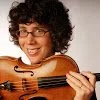
In One Take: The Art of Christina Petrowska Quilico
Below is the transcript to my interview with Christina Petrowska Quilico. The link takes you to the podcast, video and show notes for this episode of Conversations with Musicians with Leah Roseman.
Christina Petrowska Quilico:
When I went to Bayreuth after the opera, he gave me a ride back to where I was staying, and I said, I'm going again because I know some of the orchestra members at that time. And he said, okay, I'll arrange a place. You just don't want to sit on the floor. And he had a cushion on the podium because you can't see the orchestra in Bayreuth. That was one of my supreme exciting moments in my musical history, sitting on the steps of the podium with Pierre Boulez conducting Parsifal.
Leah Roseman:
Hi, you're listening to Conversations with Musicians with Leah Roseman, which I hope inspires you through the personal stories of a fascinating diversity of musical guests. I was honored to have this opportunity to talk to the pianist Christina Petrowska Quilico, about her extraordinary life in music and the arts. She shared wonderful and moving stories about Ann Southam Louis Quilico, Pierre Boulez, Jacques Isrealievitch, and her legendary teacher Rosina Lhévinne. . I was really struck by Christina's open-minded attitude throughout her long career to learning new music, culminating in almost 70 brilliant and powerful albums so far. It's amazing to learn that most of her recordings are recorded live in one take. Christina also shared how meaningful it is to her to be a mother and grandmother as well as respected academic. She's Professor Emerita and Senior Scholar at York University in Toronto. Among many honours, she's been appointed to the Order of Canada and the Royal Society of Canada.
Her curiosity and creative energy seem limitless. She's a poet and visual artist. She studied ancient Egyptian culture, and she lives her life spiked with humor and a down to earth attitude. We're also including excerpts from several of Christina's albums and performances, including music by Mozart, Art Tatum, Ann Southam, Meredith Monk and David Jaeger, all detailed in the timestamps with links in the show notes. You can watch the video on my YouTube or listen to the podcast, and I've also linked the transcript. It's a joy to bring these inspiring episodes to you, and I do all the many jobs of research, production and publicity. Have a look at the show notes of this episode on my website where you'll find all the links, including different ways to support this podcast and other episodes you'll enjoy.
Thanks so much for joining me here today, Christina.
Christina Petrowska Quilico:
Oh, it's delightful. Yeah, Ottawa was my hometown. I mean, I was born there, so
Leah Roseman:
Yeah, I was interested to learn that actually. Well, I was a little overwhelmed to prepare for this today because you've just done so much and you're such an incredible artist in so many realms, so hopefully I can help focus some of that. But more than 60 albums, so much music written for you. And actually a couple years ago on this podcast, I had Frank Horvat, and at that time you were preparing the More Rivers album, and we did about it a little bit.
Christina Petrowska Quilico:
Yes.
Leah Roseman:
So maybe we could start with Ann Southam and your relationship with her, because you recorded eight discs of her music, which led to this more recent commission.
Christina Petrowska Quilico:
Ann Southam, and I had a long, I would say over 30 year friendship, and I always give the story of how I met her because it involves the music. I had a student who was interested in playing her music, and she knew Ann and I was about eight, nine months pregnant at the time and was on bedrest. So she asked if I could go over the music, and then she told Ann and Ann wanted me to record some archival examples of her music. So when I looked at the score, there wasn't much written. The tempo was very slow. She wanted very slow. Well, it took hours to get through it at that speed. But for fun, I sped up some of the rivers that I thought needed to be faster, flowing rivers, stormy rivers and this kind of stuff. So when she came over, I figured that she wouldn't yell at me, can't yell at a very pregnant lady with another small child.
So I told her, Ann you might not like this, I've changed your tempos, and I've added dynamics and pedaling, and I, yeah, she had an expression, holy cow and yippy. So I played the Rivers for her the way I wanted, and she loved it. And it started a long collaboration. Ann loved speed. If you were in a car with her, I felt that sometimes you needed Gravol. She would, oh, well, I'm going to take the side roads, and she just would whip around and Glass House number five, I've played at seven minutes and something up to nine minutes. And I told her, this all depends on the piano action because if the piano is light and you've got some light Fazioli or a Bösendorfer or a great Steinway, you can play as fast as you want. And if it's hot, humid day and the keys are sticky, you are lucky if you play it through in nine minutes.
So she was always interested about that, and she gave me full access to do anything I wanted musically. She would write me an email, I have her a quote, I trust your musical judgment completely. And that really gives a performer freedom and to have a journey which is different every time you perform. And one isn't necessarily better than the other, but it's different. And that's exciting. It should be for a composer, I've had composers that I, who you can only play it at this tempo. And while you're doing this, well, the piano is not functioning at that tempo. So she was just delightful to work with, and she had a great sense of humor. And I felt that by giving me the ability to interpret differently each time or was similar, was a great gift as a performer. And the only piece that she really had comments on was a River number five, where she indicated a few things. This has got to be joyful. Yeah, that's about it. She just indicated a few spots that were supposed to be joyful.
You’re about to hear an excerpt from a live performance of Ann Southam’s Glass Houses Revisited #5, and the video on Christina’s channel is linked in the show notes. (audio clip: video linked in show notes, Ann Southam Glass Houses Rivisited #5)
Yeah, no, that's a funny scene. I've got to say this. I had four dogs. One was a pug puppy, and Ann, it was I think the day before the recording session, and she was sitting on the floor with the manuscript, huge manuscript on the floor. And of course, my pug puppy was being paper trained.So you can imagine somehow this pug escaped, saw the paper on the floor, thought, oh, I'm a good dog. I'm going to go pee there before we could do anything. Of course, Lizzie was her name peed all over Ann's score. So we got up, I was mortified. I mean, she was a close friend, but still the manuscript, it's shameful. But Ann was great. She picked up the dripping score and turned it to me and said, I hope that's not a comment on my music. I thought that was great. So we had a big laugh, and that's what she was like. But the other thing, the night after that, that night, maybe very late 11, maybe even midnight, she called and she said, I'm not happy with my endings of many of the Rivers. Can we go over them? I said, certainly. And she said, well, can you think of something to play?
I thought, no, but I tried and well, yeah, that's not too bad, and all that. Finally, I got a little bit tired By this time, it's 12:30, we had to be at the studio early in the morning, and there was one river number eight that she said, no, I really don't like the ending. I thought it was fabulous. Anyway, by the time we got to that one, she said, have you done something to it? And I said, oh, yes. And I played it exactly as she had written. And she said, well, that's not too bad. I kind of like that. I said, Ann that was your original writing of it, and I'm performing it just as you wanted. So we had very fun working relationship, which made music making even easier.
Leah Roseman:
That is such a good story, Christina, because I think it says a lot about how we can get in our own heads.
Christina Petrowska Quilico:
Oh yeah, well, this is a problem with pianists, all the performers, that we have expectations, we've heard other pianists play maybe the same pieces, and it's stressful, especially to record. I discovered early in my career, the first, and I was very young, I think the late teens or something, it was an LP at that time, and I was still at Julliard, and my teacher said, think of it as a concert. If you make a mistake, who cares? And so I did that. I played through the whole program, and then I played it one more time so that they have a safe take. And they said, well, we're done. We don't know. We've got this studio for a couple of hours, but we're actually done. You've done it. So I listened to it, and there was a Debussy étude, or Prélude, anyway, there were thirds and I didn't like them.
I said, I've got to do this one again after the fifth take the producer and the recording engineer, who was a famous stretch, David Quinney, said, you know what? We're taking the first take, whether you like it or not. No, no, no. And then they said, two months from now, or even two weeks, you won't hear that slight split note. And I was quite upset, but sure enough, two weeks later, where is it? Where is it? That's happened to me quite a bit because we can't judge ourselves, especially right after we play, and we have to live in the moment. Otherwise, you can get very nervous, oh, am I going to hit the right note and stuff. So I think most of the concertos, except the three with the Toronto, the Symphonia, Toronto were live. The Toronto Symphony was a live performance with a great Jukka-Pekka Saraste. I mean, that's another story. It was a lot of fun. And with Bramwell Tovi, I had 10 days to learn. The Glen Buhr concerto had never played it through. Most of the concertos were done live because who can afford to pay an orchestra?
Leah Roseman:
But I was curious, Christina, because even some of your more recent recital recordings with incredibly diverse repertoire, and we'll get into some of that, the quality of your playing live when you're not, nowadays, most people are doing a million takes. They isolate one note, and you don't tend to do that, it seems.
Christina Petrowska Quilico:
No, I find it gets worse, and it's not even a piano. I was doing a program of Tangos, and I decided to take ballroom dancing and learn Tangos. But anyway, York University, the film and theater director, the grad students, so we made a movie, and I wanted to show students that at any age, you can work and have fun with this project. And I had recorded them, so we used some of my recordings, but I would never be an actress, for example. So the stage director came over and he said, can you tell me about this project? So, yeah, yeah, I'm talking, it was pretty natural. And he said, can you do it again? So I started, but I changed the words, who remembers? You know exactly what you said? And he said, no, no, I want exactly what you said the first time. 11 takes later.
I couldn't remember my name. So he said, I think the first take was the best. I'm so angry. The same with piano. I find I like going into the studio, being prepared, and I usually do two takes of each, and then if there's a split note or something, you're not happy with a bar here and there, but I'm, I don't know, Dennis Patterson, David Jaeger can certainly attest to that. We're in and out in a few hours and we still have time to gossip and have fun in between. It's fresh when you do it right away, and I think it's honest and real. At some point, maybe we can discuss the Mozart violin of piano sonatas. I mean, that was really hard, but I know because I helped David edit, I think I had in eight hours two maybe slipped notes. It's because the mood, that was the last things that he had played, and it was heart wrenching, and I realized you're so into the music and you have this mission, and that's the way to play. So you end up playing much better.
Leah Roseman:
So Jacques Israelievitch the former Concertmaster of the Toronto Symphony, for people listening, you recorded all the Mozart sonatas for piano and violin
Christina Petrowska Quilico:
And variations.
Leah Roseman:
Yeah, yeah. You must have had a close friendship with him.
Christina Petrowska Quilico:
Well, yes I did. I think he retired from the Toronto Symphony and began teaching at York.
We just hit it off musically. He was quite intimidating. Some pianists said, well, but I remember he wanted everything fast. And I said, wait a minute. They're double sixths here on the piano. No, no concert tempo. I said, no, no, no. Anyway, we did a French program. That was the first thing we played together. And the Poulenc, I did incredibly fast for the performance. And he said, what the heck? You're playing it so fast? I said, you wanted it fast? That's fast. No, no, I don't want it that fast. So after that, we laughed about it, and we always discussed tempos. And with Mozart, it's the ornaments and performance practice. So I had been teaching baroque and classical ornaments. I mean, it's very complicated. And so we finally decided that we would use our intuition, and that was so much fun. He would play an ornament, and I'd say hmm, and then I'd play my ornament, and he'd say, maybe we'd just go back and forth and we'd find ornamentation that we felt was lovely and used it rather than going into my big books of specific ornamentation and sing. That's what singing the melodic lines was very important. So one of the, Gramophone complimented me on doing the slow Mozarts in an operatic way. I was very happy about that, but he was wonderful to work with. And this last, we did a marathon of all of them. It took eight hours and we weren't tired. At the end of it, we said we could do it again.
Leah Roseman:
So it was all in one day, but it was a little breaks, surely.
Christina Petrowska Quilico:
Yes, we had some bathroom breaks and snack break, but it started around 11 and we finished around eight.
Leah Roseman:
Wow.
Christina Petrowska Quilico:
An audience was there, some people were there from beginning to end, and it was just energizing. And so then we decided to record all of them, and we were doing it all at York University for noon hour concerts. So we recorded the rehearsal and then the concerts. So it was only two takes, really. So we had managed to record maybe four albums and two were released. And then, well, he was struggling with cancer, certainly for the last few, and then it got very bad, so he said that he couldn't play, and we had two left, and I stopped practicing the Mozart. It was too painful. And then he called and he said, I've got a little bit of energy. We've got to do the last two. And he only had enough energy for two takes, but most of them we did in one take. And that's with the emotion.
You forget about everything else. And so we managed to finish it, and yeah, he was crying like this is the last, and then we did one concert in Chautauqua at the festival in New York State, which has a, oh, they do opera and stuff. And we did the last four. That was the very last performance he did. And again, he managed to pull it off. It was just terrific. But yeah, there were tears at the end of it, and he passed away shortly after that. So yeah, I'm very proud of the Mozart. Certainly it was an emotional journey as well as a musical one. And all music should be like that, all performances, you got to find something that will sustain you rather than thinking about the notes.(audio clip: Mozart Sonata no. 32 in B flat major, K. 454, 3rd movement Allegretto)
Leah Roseman:
Now, Christina, your second husband, Louis Quilico, the opera singer, teacher, very well known. And because you'd mentioned that Gramophone had said you played in an operatic way, so you must have, first of all, I think the way you met Louis was quite interesting.
Christina Petrowska Quilico:
Should I tell the story? I was teaching a number of academic courses. One was called, I created it, Murder Mayhem, an Order in the classical era, dealt a lot with opera, right? And then romantic music. And I got a bit fed up with the students not knowing the opera plots, and I thought, okay, I'm going to make little synopses of each or certain operas, the famous ones. And I love drawing. I do a lot of art. So I had set designs and put in some drawings of Pavarotti and Domingo who were extremely famous at the time, and the book was going to be published, and the publisher wanted a forward by somebody famous. So my manager, Ann Summers, at the time, she knew Pavarotti and Domingo very well. So she called him and arranged for a meeting with me. Unfortunately, Pavarotti was very ill, had to cancel the Met, and Domingo was scheduled somewhere else.
So I flew back and she said, oh, Louis Quilico is in town, and so I made an appointment for you. So I brought my drawings, and the one thing she said, don't talk too much, keep it professional. Well, we talked for hours and hours about music and business and opera, and he loved my drawings, but he said, listen, you've got portraits of Domingo and Pavarotti, my guys that I sing with all the time. How about my portrait? So I said, well, that's fine, and I would love to. And as I was leaving, he took my hand and he said, you're going to marry an opera singer. I thought, oh my God, he's making a pass at me. But no, well, he was considerably older. But then Ann called and she said, oh, what did you do to poor Louis? And we just connected very much on a musical level once I started playing with him.
And also, we liked to talk a lot about music. And I think what was important for me, because I had accompanied a lot of instruments, certainly cello, violin, viola, flute, clarinet, all this, not so much singers, although I have funny stories when I did. But I learned a lot from him just by going to the Met with him. And when I was on sabbatical, I traveled while he went to sing all the different operas. It was such a learning experience. But even when I was playing the Rigoletto Fantasy by Liszt and Lucia di Lammermoor , I remember he came in and a lot of pianists play it really fast. It's virtuosic music. And he came in and he said, it's too fast. He said, you got to sing it. So yeah, that's how we met through art and a book, not through music. It developed, and we did a book, it's Conversations with him, because I thought it was important to have a record of all the stories and the way he taught.
So there are 23 episodes on Spotify of Speaking Personally, and it's coming out on YouTube as well. And he had such a simple way of getting to the heart of teaching and of opera. I love the story where he said he was called in at the last minute to do Il Trovatore. He said it was San Francisco, and they wanted him for a week or two weeks ahead of time for stage management. And he said, no. He said, I'm tired. He said, I've done Il Trovatore a million times. He said, when I come out alone on stage, who cares? I do what I want. I'm the only person on the stage. If a soprano comes, I give her the center stage, and then when the tenor comes out, we manage the three of us together. He said, what's so complicated? So they let him have the week off, but that was the way he was.
He went straight to the heart of whether it was acting on the stage and moving around or singing. It's all about the voice. And there was another book written, actually, I know her very well, knew her because she passed away, so I didn't want to write a biography. He wanted to explain a lot of things and kind of tell his truth about, I sound very tacky, by saying that, but he wanted to give his version of his life rather than journalistic. And so I said, well, just let's talk. And I just asked him questions like we're doing, and he went on for hours and hours and hours, and I didn't release them, although the book was published. But now I think it's important, even with things that might've been painful to hear on the whole, he was a kind and generous and loving man. So he loved everybody who he was working with. And so mostly, there's a lot of funny stories. I love opera stories and things that can go wrong, but the way he was singing it was so flowing, so easy. And that's the way pianists should play too, unless you're doing something that doesn't have flowing lines. But I keep coming back to rivers. It's all about the flowing line. So it doesn't matter whether it's Franz Liszt, you have to breathe and phrase properly. And so yeah, that was wonderful to have him there. Yeah, we connected very well. And in that respect, musically,
Leah Roseman:
I wanted to ask you about your life as a visual artist. You're a really fine artist, and you've done it your whole life. And I understand you also have synesthesia.
Christina Petrowska Quilico:
I don't have it, but what happened was that a composer, a Greek composer, had written, I did two CDs of his music, very complex, and he has synesthesia. And so I said, don't tell me what colors each piece is. Let me feel it. And I, hi everyone. Right. I did do a class on synesthesia and music color. I mean, quite a number of composers had it, but there are various stages of synesthesia. So we might, like I hear, C minor, and I see certain colors, but I don't have synesthesia medically. It's a condition. And so this composer, you had to play a very low note before the synesthesia happened for him. And it's like Scriabin, who saw colors, but there's controversy whether he really had it. But if you see the colors that they have maps, each composer will have different colors with different key signatures. So it's a complicated thing.
Leah Roseman:
I understand though. It's a spectrum, and I've interviewed a couple of people who had it, and one of my children has it, and I think you have it. I mean, I do not see anything when I hear music, literally. So I think you have an element of that.
Christina Petrowska Quilico:
Yeah, I think I do an element. Yeah, I can, certain key signatures set me off with visual colors. I've got a lot of paintings. So when CD covers are being made, for example, I wasn't able to do many because the company wants to do it, but Navona Records has been really good. So when I started with them, they sent examples and I said, well, this doesn't have anything to do with the music that's being played. And then I thought, well, I'll send them what I think. So the first was Sound Visionaries, and it was French music, and there was a special color scheme to it. And so they liked it, and I did help them design the other two because they just didn't get the visuals. And I don't want to put my paintings on. Every single one becomes boring, but I've done maybe eight and Alice Ping Yee Ho, I'm working on her second volume. I mean, it's done. We're just picking the CD cover. And so yeah, she said she was inspired by my painting and that of a Chinese composer. So yeah, I think my cover's going to be my painting. Yeah, I see it together very much, and it helps me interpret.
Leah Roseman:
So last year I had Katherine Dowling, another Canadian pianist, and we featured music of Alice Ping Yee Ho. But she actually wrote a concerto for you that
Christina Petrowska Quilico:
You
Leah Roseman:
Recorded.
Christina Petrowska Quilico:
Yeah, and for the second volume, she wrote me four pieces. So yeah, the Concerto will be premiered May 16th, and it's difficult, a lot of her music is still, I did the first volume of her solo piano music. So this will be the second volume.
Leah Roseman:
Looking through your extensive discography and doing lots of listening, it really struck me. Of course, you have this capacity to digest music, but you seem to have an appetite for new music as well that you can, you're not intimidated to just dive in again and again.
Hi, just a really quick break from the episode. I wanted to let you know about some other episodes I’ve linked directly to this one in the show notes, with conductor Jessica Cottis with a discussion of her synesthesia, Madeline Bruser, author of The Art of Practicing, Dr. Samantha Ege, the pianist and music historian best known for her award-winning work on Florence Price, the multi-faceted composer Frank Horvat, and the inspiring violinist, filmmaker and activist Lara St. JohnIn the show notes you’ll also find a link to sign up for my newsletter, where you’ll get exclusive information about upcoming guests, a link for my Ko-fi page to support this project directly, where you can buy me one coffee, or every month, and my podcast merchandise store with a design commissioned from artist Steffi Kelly. You can also review this podcast, share it with your friends, and follow on your podcast app, YouTube, and social media. All this helps spread the word! Thanks. Now back to my conversation with Christina!
Christina Petrowska Quilico:
No, I find it adventuresome. It's a challenge. I think we were talking about Jacques, about doing all the Mozarts. For him, it was like climbing Mount Everest and Hillary who had said, why are you doing it? Because it's there. So two years ago I did the Lutoslawski piano concerto and I thought, gee, this is pretty hard. Usually I'm quicker learning. And then I went to check which concertos were the hardest at several, I dunno, rankings that people have put out. And it was number five. It beat out Rachmaninoff third and that it's just, it's a beautiful piece. I love it. It's very difficult. And I'm very grateful that the orchestra, they had their parts learned before I came in because it's difficult. Some of it, aleatoric, he had special hand gestures so we could stay together. It was complicated. And so I was really happy to have that under my belt and I enjoyed playing it.
I think one of the most difficult pieces is the Pierre Boulez third piano sonata. And I was one of three in the world who Boulez told me that who was playing it. I was in my late teens, and Boulez was really very famous at that time, and he eventually became the New York Philharmonic conductor. But I met him in an odd way too relating to art. And that kind of got me started because it's serial technique, but of a very complex way. And I was teaching a class. I started teaching in Paris. I was about 19. And so I thought, okay, we're going to start with serialism, like nuts. And so nobody understood. So I did poetry in 12 tones, each letter, and it was like puzzles. And so they got an idea of what it was. And then I thought, well, visually I'll do it. And I started with these graphs and everything.
So I had visions of doing drawings of cities from ground to the complete city perspectives, and I studied Piranesi and that all by myself, and I gave it to an artist. I said, these are my visions. Can you do it? And he said, you've done it, just keep going. So I had written a letter to Boulez. I mean, I am embarrassed to say this. I was writing some articles for a Musicology magazine, and I was talking about Boulez, Della Piccola and Luigi Nono, and they had been talking about Marxism. And so I got all excited, and I thought that Boulez had made an error about his comments on Marxism. So I decided to write him a letter, and I explained everything, and I wanted him to know that I was a pianist, but I didn't want him to know that I was like a teenager.
So the program I had played in Paris, I had a really good review and all that. So I put that, but my photo, I kind of glued it or stapled it or something, and I sent off the letter, and then I was in Ottawa playing. And then Montreal and Francois Bernie, you probably remember the name, he conducted the orchestra, not the National Arts Center. Well, I can't even remember now, but he was involved in music, and then he went to created a festival in Quebec. Anyway, he knew Boulez. So he said, at that time, I had the drawings, but I needed permission for Boulez to use his manuscripts. So he said, oh, that's fine. I said, but I wrote him this letter. He would've never received this letter. Don't be upset. So I walk into the room, the green room, and there Boles looks at me, these blazing eyes, and he says out loud, so you're the girl that wrote me that letter. I just about passed out,
But that seemed to intrigue him. So I said, well, let's see the drawings. Well, he really liked the drawings, and we had a nice chat. And so he invited me to go to Cleveland and meet him after the concert, we continue. And so he was very generous. He contacted Universal that was his publisher, and I was able to do it. I was going to study in Darmstadt, and I ended up with Stockhausen, and then Claude Vivier was there. We became very good friends, and I was going to Bayreuth. So Boulez said, okay, I'm going to send you some tickets, which he did. I was amazed. And because I had met him also when he conducted the Ojai Festival just by accident. But we continued our conversation and he was very kind and generous, not like what people had said. I think it's because I was working on his music and I had studied everything, all the poets that he was influenced by, I read.
And so I was able to discuss on, certainly not on his level, but at least was trying to. So he did some coaching on the third piano sonata, and that's what he said. There were only three people, and we all did the same journey because you're given options with arrows. And he didn't say which one was the proper one, but I remember Claude Helfer was one of the pianists, I can't remember the third. But yeah, it was interesting. And in the score, I found a C major chord, and he said, not possible. I showed it to him. So he had a laugh, but when I went to Bayreuth after the opera, he gave me a ride back to where I was staying, and I said, I'm going again. I know some of the orchestra members at that time. And he said, okay, I'll arrange a place.
You just don't want to sit on the floor. And he had a cushion on the podium. You can't see the orchestra in Bayreuth. That was one of my supreme exciting moments in my musical history, sitting on the steps of the podium with Pierre Boulez conducting Parsifal. He said, just don't tell anybody. I don't want to do this for anybody else. But I was there, but that was one of the most difficult to play. And I was still, when I performed it in New York, it was a little Carnegie recital hall. I was still studying with Rosina Lhévinne because I hadn't finished school yet. And of course, she said, you have to memorize it. I mean, you can't play this with the music. And because I was playing everything else from memory, even, I think I did Schoenberg, but I did Liszt La Campanella I remember and stuff like that.
She said, you have to memorize it. Oh my God, I was so nervous. I did it. I practiced 10 hours a day at least memorizing this thing. And then I did it, and I thought the review's going to say, wow, she plays the Boulez third by memory, it didn't say anything. So when I played it a few weeks later in Montreal, I thought, I'm not going to go through this again. I'm going to put my music there. It's a very complex score and the little notes. And then I thought, oh, they're going to say, oh, pianist uses music. They didn't say a word. So I think having done so much repertoire, and one of the problems is you play a premiere and you never get to play it again. I have done so many concerts of new music, and then I never get to try it in a different way. So I'm always grateful if I can do some pieces again. And that's certainly the case with concertos only Larysa Kuzmenko's piano concerto. I got to do several times with different orchestras, Winnipeg, Toronto Symphony, and I can't remember the other one. But yeah, it changes your interpretation and it's so wonderful to have that experience.
Leah Roseman:
I was just curious. I mean, you've always championed the music of living composers from such a young age, and you did marry a composer, your first husband, Michel-Georges Brégent, who also is interested in poetry and all this. It's interesting, all the connections between the arts.
Christina Petrowska Quilico:
Yes. Yeah, no, he also proposed to me the first time I met him, but we connected over his piece Geste, which definitely was all about status. Status still points and crazy time. It was a graphic notation and it was in different colors, and I had to use a different language. I actually wrote a very long musicological article on it, which still people didn't understand. He was absolutely brilliant. He was a genius that came with difficulties. He was smarter than anybody, but he had a rock band.
And I sent some of the CDs that were made from his rock band pieces to the president of Navona when I saw him a couple of months ago. He just loved them. So Michel-George, I think we connected in that, that we were interested in so many aspects of the arts in general, and how important they are so that you can have a deeper sense of interpreting music or doing art poetry. I write a lot of poems. I mean, I'm working on a theater project with David Jaeger. The first was his Nocturnes, and he based quite a few of them on my poetry and then other poets. And then we had, yeah, that's my drawing on the cover.
Leah Roseman:
You're talking about Games of the Night Wind.
Christina Petrowska Quilico:
Yes, Games of the Night Wind. And I added, and it took me a long time to find pieces that evolved from one another, which was a lot of fun and very interesting, where you can start with Takemitsu's Les yeux clos, based on the painting of Odilon Redon. And then you've got Górecki. I added Alexandre Tansman with four miniature Nocturnes that are really beautiful. And so it made an interesting, you're not just stuck with a bunch of Nocturnes by one composer, no matter how much you love them, but it's interesting to have different, just a different perspective and continuity, because I did that program without a break, (audio clip ofTakemitsu Les Yeux Clos from Games of the Night Wind, album linked in show notes)
And now I'm doing, yeah, and it's going to be CD I'll probably record in the summer Late List. I love Late List. They were so connected with poetry, Brahms, and they of course, by list based on the Schumann. And David wrote like Dub based on Schubert, and it's all this poetry literature with the music, and then David's music takes off on it, the meditation, so he knows the theater director. And so yeah, I always wanted to have an actor read some of the poems. So we're going to include that in some of the artwork, visuals. So we're working on that project.
Leah Roseman:
I was wondering, Christina, did you go more of, you got your PhD and have been a professor for many years. Was that partly because you were a mom instead of being more of a touring pianist?
Christina Petrowska Quilico:
Yeah, and I didn't complete the PhD because I was a mom. I just had my baby daughter and Michel-George was supposed to come to Paris and look after her, and it just didn't work. And I had so many concerts at the same time. However, I had won a French government grant and a Canada Council doctoral fellowship, and I kept writing articles. I mean, I was a professor for a very long time. Yeah, the dean has given me Senior Scholar, which I, yeah, it's funny because there's always been kind of, not a fight, but you've got the music performance and then you've got musicology. I tried to go with both, and I think that was probably the best thing I could do, because had I stuck it out in Paris at the Sorbonne, I wouldn't have been able to perform. And I just, Rosina Lhévinne always said, and she got angry at one pianist, one of her students.
So she kicked out of the class because the woman left her husband and son to go have a career. And Rosina Lhévinne always said, you're a woman first, then you're a wife and you're a mother, and you have to experience life in all its forms, otherwise you have nothing to say musically. And that opened my eyes because sometimes when you're performing a lot, you've got good reviews and you're doing virtuoso repertoire, you tend to forget that you end up practicing a lot of the time and you're missing living. And then the music becomes really mechanical and just all the notes. I do a lot of adjudicating, and I do hear that, and people can play perfectly well, mechanically, perfectly, get all the notes, but you don't remember it.
It doesn't stir your heart at all. So I tend to agree with her, and I'm still performing at my age, which I find incredible and still finding interesting things about music and development. And my other teacher at Julliard once, and I used to tell students, this don't get, how can I put this politely? You have to get over yourself. That's what she would say, get over yourself. It's all about the music. It's not about you. And I found that extremely helpful. And then the other thing she told me, and I've told students many times, well, there's a saying, you're only as good as your latest concert. But that's true, because she told me I had all, and I, I'm going to sound vain, I don't mean to, but I was lucky. I had all good reviews from the New York Times, and then I was feeling pretty good about myself.
The technique was great. And that's when she said, get over yourself. And then she said they could say, the next time you play did not live up to potential. That just hit me like a boulder. And I really then got afraid. And so I said, help me. What do I do? And she said, well, first of all, there's nothing to do. Your technique's great and all this. But she said, think of the audience. If somebody has come to hear you play, even if they don't pay for a ticket, you owe them because they've wasted their time. So you don't want them to waste your time. You want them to have an experience. She says, if somebody has actually paid for tickets to your concert, you better do a really good show. She said, you've got to respect them, and that's who you have to play for, not inside your head where you're worried about perfection and stuff like that. So that I remember really, really well. One of the sayings, and I've had students that have played really well, and you see that attitude, and it's not appealing. That's what I've told them. You really have to get into the music.
Leah Roseman:
And Christina, I know you have been subjected to some sexism. Do you think that that has impacted your career?
Christina Petrowska Quilico:
Oh, yeah. I had long strawberry blonde hair and when I was a young girl down to my waist, and that attracted some unwanted attention. And people would say, if I played well, oh, you played just like a man. And that was supposed to be a compliment. And I thought, wait a minute. That's not a compliment. It's a backhanded compliment. So I cut my hair all off, dyed it brown, very short. So that was, yeah, and I would wear not glamorous clothes, but there was a New York Times article many years ago, and I hope things have changed since then where women had to be beautiful. I mean, there still is that feeling today about certain pianists who I don't want to mention, but would wear very revealing clothes. And I mean, men can wear anything they want. So I think that's always going to be there. Your appearance, I don't know if it's better. I'm hoping it's better,
Leah Roseman:
But just in terms of opportunities.
Christina Petrowska Quilico:
I think so. I mean, I lost opportunities when I was younger, and I don't want to mention the place, but I was in the finals for a university job, and I played the program and the faculty liked it. And then another, a man came in with the same background, and so they picked him. Six months later, they wanted to get rid of them, and they called me and I had heard what had happened, and I said, no, I don't want to go into a university that has that kind of sexism. But I dunno if it was the dean or the chairman's wife. Yeah, she had a lot to do with it because she said, oh, I understand you have a child.
I hadn't had the second one yet. And she said, well, she said, how are you going to be able to teach when you have a child? And I said, well, your husband has children. He's teaching. What's the difference? We make it work somehow. I mean, thankfully my mother was great about it and helped babysit my kids and the zoo that came with them with all the pets. But just making those comments was really not very nice. And I think so many people have had that. There's been a real fighter for women's rights. Lara St. John,
Leah Roseman:
She was on this podcast a couple of months ago.
Christina Petrowska Quilico:
Yes, I think she's wonderful. We got the Order of Canada at the same time. It's funny. But yeah, no, I'm glad she's been fighting those issues. I mean, I don't want to start talking about it, but I think each university has had a lot of that.
Leah Roseman:
It's some very bad behavior,
Christina Petrowska Quilico:
Very bad behaviors, a good way of saying it. Power, that's what I think a lot of it is, is power. And so I fought it, but I tended to do it nicely with a sense of humor. I thought that's the best way to do it. So when I got tenure very quickly, there was some mumbling about the senior profs, for example, the gentlemen, and then when I went for full professor, how dare she? She's too young and blah, blah, blah. But I managed to do it and still have my teaching career. I think if I hadn't been teaching for musicians now, it's very difficult to get jobs. I mean, there are hardly any university jobs. They're dropping all the courses.(audio clip: Paris by Meredith Monk from Retro Americana)
Leah Roseman:
Let's talk a little bit about some of your recent recordings when Retro Americana, such a beautiful album and unexpected, and I must say Meredith Monk. I kind of knew the name, but I didn't really know who she was. And then I was looking her up, talk about multidisciplinary.
Christina Petrowska Quilico:
Oh yeah, I love her. I think 80 something and still going strong. And I love that breath of music. You've got the romantic and then you've got kind of crazy stuff. It's just, yeah, no, I had a fun time. Those performances were all taken live. I didn't go to the studio. David Jaeger, when the CBC was recording a lot of concerts had access. He had all these tapes and during COVID, and he said, I'm going to use some of these. And surprised me, Vintage Americana too was all done and Sound Visionaries. Those three were done. But yeah, I loved jazz. I really didn't.
Leah Roseman:
So did you arrange like the Duke Ellington and the Art Tatum? Are those your arrangements.
Christina Petrowska Quilico:
No, that was Art Tatum's arrangement, although he did it differently every time. So that's just a moment in time, and it's really a humble tribute to him. I love him so much. His technique. Actually, Rachmaninoff was dazzled by it. I can't remember what other composer, but I remember Rachmaninoff, can you imagine? Anyway, he went to hear him. And so that's the latest little nugget I've learned, always learned something new.(audio clip: I'll Never Be the Same by Art Tatum)
Leah Roseman:
And the Duke Ellington on that album.
Christina Petrowska Quilico:
Yeah, same.
Leah Roseman:
So they're transcriptions of a live.
Christina Petrowska Quilico:
Yeah.
Leah Roseman:
Yeah. Okay.
Christina Petrowska Quilico:
He had made the transcriptions, so I followed that.
I can't do transcriptions like that. I can do Mozart, cadenzas and improvise, and Jacques and I did our own little cadenzas there in the Sonatas, and I recorded a number of Mozart concertos, and they wanted not to use anybody's. So I had a little bit of fun fooling around with the cadenzas that I can do. But the Art Tatum, jazz, it's a specialty jazz to do it properly, and also the ragtime. But the Ragtime composer was able to help me out. He was very happy. Apparently I got the ragtime right, so it's harder than it looks. You've got the leaps in the left hand, but it is a lot of fun. And Rzewski I love Rzewski too, and his protest pieces, Winnsboro Cotton Mill Blues, and yeah, he went to the past. (audio clip: Winnsboro Cotton Mill Blues by Rzewski from Retro Americana).
But he also has a piece that I recorded. It's on Vintage Americana, The Tortoise and the Crane. It's kind of an Asian look where you have very slow, but it's repetitive. And so there's a story about that as well. So that kind of interests me. Yeah, I like the mix of all the arts.
Leah Roseman:
So you mentioned David Jaeger a few times. So he worked as a CBC producer for many years as well as being a composer.
Christina Petrowska Quilico:
Yeah.
Leah Roseman:
I'm curious, Christina, in your very long career, mostly based in Canada. I mean, we've seen the CBC just be decimated in terms of funding. I am about 20 years younger than you, and when I was growing up, certainly many orchestras across Canada had a lot of their concerts recorded. Even I was able to do some recitals early in my career, and then all that just stopped. How have you seen the landscape change in Canada over the years in terms of support, not just CBC, but other funding?
Christina Petrowska Quilico:
Well, the CBC is a big one
Because of all the recordings. I mean, Two New Hours that David had. So you were able to listen to music from Europe and everywhere. I mean, when I was a small child, I listened to Boulez and Cage. I mean, that influenced me. The music from Europe I thought was very exciting. But for Canadians, Glenn Gould put Canadian recording, I think on the map. That was difficult when they stopped. I wouldn't have had those concertos with the Toronto Symphony and National Arts Centre and et cetera recorded if it hadn't been for the CBC, because you can't get money to pay the orchestra and you can't use it. So there are all these copyright issues. I played the Tan Dun Concerto and we're not able to release it as a recording because of another record company. And it's all, so it's getting harder and harder. Many people are doing it on their own. And yeah, you need grants and grants are not as available as they used to be. So yeah, I mean, the world is different right now. I'm just very glad I experienced it when I did. However, I went to New York, my granddaughter, my older granddaughter went to the Glenn Gould School, and she's at Mannes now, and she's working with the assistant conductor, of the Metropolitan Opera.
Yeah, she wants to be an opera singer. She's got a terrific voice. Anyway, we went to the Met, the Met Opera, it was sold out. All the two operas that I saw that week were completely packed with enthusiastic crowds. It was wonderful. The singers were great. I paid a fortune for the tickets, and it was lovely to see. So I don't know. I mean, I grew up in New York City, really. I mean, I was there from the age of 13 till 30. Then I went back and forth, and then Louis and I were there together back and forth. But yeah, some of the major cities are just, there's booming, but it depends on politics. So I'm not sure about Europe lately. It's hard.
I was supposed to go on a tour of China that was canceled due to politics and stuff, and I was going to go to Eastern Europe, and then the war started. I was going to record with it. So it's a tough time right now. And I see maybe smaller venues. I think that's the way to go for concerts because it's hard to fill the big halls. But opera's always been very popular, I think. So at least that's functioning well in New York. But the smaller venues are not as available as they were years ago, where you could, as a young artist, play concerts and get reviewed. You don't get reviewed anymore.
Leah Roseman:
No.
Christina Petrowska Quilico:
So it's all blogs and stuff.
Leah Roseman:
I'm curious to ask you about your ergonomics in terms of piano playing. You don't tend to have injuries or you deal with them?
Christina Petrowska Quilico:
I don't. I broke my wrist, but that had nothing to do with the piano. I slipped on the ice and fell, and I took the year off, and I worked for a magazine and wrote reviews and articles for them. And it's funny, it was a nice break for me. I came back refreshed with no problem. I think I had very good training. How do I explain it? I think I had a natural technique when I started playing. I did not want to be a pianist, so it was just fun for me. So when I got to Julliard, I ended up, during those years playing all the big concertos. I mean, in my teens, I played, let me see the big concertos Prokofiev first, second, the third piano concertos. I did a Strauss Burlesque with Boris Brott. Oh God, my brain, I can't remember.
I've played 55 piano concertos. So I'm trying to think multiple times. But those were the big ones. I did play the Rachmaninoff third. I didn't play it with orchestra, but I did play it for Rosina Lhévinne. I did the Chopin E minor. So I did a lot of the big concertos. Happily when I was at the conservatory, I played the Haydn Piano concert, I think I was 10. And then I made my debut with Murray Perahia, who's just, I went to school with him, a wonderful pianist and human being. I did Mozart with the orchestra, and he did Beethoven. So I had a really good technique. Now, the end of my teens, I was playing, no, I was maybe 15. I was playing Liszt Feux Follets, which is really difficult. And one of the students said, how the hell are you playing that? Oops. Suddenly I'm thinking, well, how am I playing it? I was doing all this repertoire, and suddenly I got all tight. So Rosina Lhévinne's assistant, Jeaneane Dowis, who's just godsend was a godsend. She passed away, but with technique, she made me understand what I had been doing before, and I spent a year relearning. And I'm very grateful because then I could teach it.
And I understood all the physical things. And if you play like that, that's tension. So you have to have that perfect balance, which means your posture at the piano, and don't play repertoire that you can't play. First of all, unless you work on the technique, then you can hurt yourself. If you've got a tiny, tiny hand playing Rachmaninoff third is not a good idea and something, Bartók. So you have to pick the right repertoire so that you don't injure your hand and feel into the piano rather than away. Everything comes from the fingertips. So you don't need to hit the key so loudly. You have to caress the keys a little bit, but not like this. Right? Because then if you make big motions at the piano, it takes away from the actual sound that you're creating. You need to focus on the sound of the music rather than your body moving around somehow acting at the piano is what I call it. And so if you look at some of the great pianists, they don't do that as much.
Leah Roseman:
So I'm curious, the way you learn music now, has that changed over time?
Christina Petrowska Quilico:
I'm a little bit lazier. Usually I look at the score first. That's number one. And I hate ledger lines as some composers think. It's nice to put all these lines, and then your eyes start to blur, and it's the whole page. So anything that sticks out at me that I can't read right away, I mark. And one of the most important things is the rhythm, the counting. I mean, I've done so much contemporary music, so I have to settle all the different rhythmic changes. However, it helps with classical music as well, because sometimes you forget to count and then you lose yourself, and sometimes you take too much rubato. And then when you listen back, you think, oh my God.
Leah Roseman:
I'm curious. When you're doing something with a lot of mixed meter and you can't use a metronome, how do you process that?
Christina Petrowska Quilico:
Well, usually you can go with a metronome down to 32nd. There is a,
Leah Roseman:
So use the subdivision and do it slowly. Yeah.
Christina Petrowska Quilico:
Oh yeah. And the subdivision is the best to make the phrase sound natural. And especially when you're playing with orchestra, you've got to be able to count. That's the most important thing, and discuss it with a conductor. I had an experience doing this Strauss Burlesque with Boris Brott. He was a number of years older than me, but yeah, I believe I was 50, and I had learned it in five weeks because somebody else was playing Chopin. He said, oh, I want to do this Strauss Burlesque. And I thought, wow, that was complicated. But it was being recorded live by the CBC, the hottest day in Toronto. And I'd flown in from New York, and one of the violinists said, if anything happens, I'll poke you with my bow. And you have to be aware. Well, Boris dropped his glasses as he was conducting. I could hear the orchestra going a little. Luckily I wasn't playing at the time, and I felt the bow, and he said, "Conduct us!". So I had to get up and get everybody back. And that was the time that I was very grateful that my teacher had yelled at me many times, count out loud, make sure you know exactly where you have to come in and that, you know, the orchestra part. And we got through it. Actually, when I listened to back to it, you couldn't hear really much. But yeah, Boris got flustered.
So these things happen.
Leah Roseman:
One of the composers on one of your recent albums is David Del Tredici, and I hadn't seen that name since I was a student at Tanglewood, and we did one of his, many, many Alice in Wonderland symphonies. I remember it really made an impression on me. There was a singer with a bullhorn yelling, playing the queen. It was this very stimulating but chaotic piece. Were you familiar with these works of his that he?
Christina Petrowska Quilico:
I think it was one of my teachers who suggested I do it. I knew Lowell Liebermann. He had written a sonata for Neal Gripp who was at the Montreal Symphony. We toured a little bit with the program and Lowell Liebermann, but I loved that piece by Del Tredici, the Fantasy Pieces. Yeah, they were lovely. But I, I knew the name, but I hadn't played anything. So that was the first time I played.(clip Fantasy Pieces - Allegro Minacciando by David Del Tredici from Vintage Americana)
Leah Roseman:
I was curious how you apportion your time. I mean, even your drawings are so intricate. You're writing poetry, you have all these dogs. I mean, just day to day. How does it work for you?
Christina Petrowska Quilico:
Well, when I was teaching, it was difficult, especially with children. I mean, I hardly slept. I did the drawings to give myself a break from life, I think. And I remember doing one of them very intricate drawing of buildings or whatever, and I had my bottle of ink, and my daughter was young at the time and jumped in, and the inks spill all over. I had spent weeks on it, but I didn't get angry. I thought, this looks not so bad. It was so spontaneous. So I made clouds out of it. But yeah, no teaching takes a lot out of you. And I must confess that was a hard time. And then when I married Louis and then I accompanied him and toured with him, I didn't know which way I was coming. But Louis had a great comment. He said, I don't need you to worry about the accompanying. He said, just play it once a day and by two weeks you'll have it. And he was right. So I would sight read the music with him, and of course he didn't mind singing. He didn't sing out when he was practicing. And the end of two weeks, yeah, I had the whole repertoire learned and was able to play it. And then you just have to take a deep breath and get into it. And I think we're very difficult on ourselves. I feel I never think I'm good enough or that I've played well enough.
And that's probably a good way to think of it, because then you think more of the music rather than yourself. I tell myself, just play the music. Don't get into your head. And then I listen to it and I think, well, not too bad, but I listen a few weeks later. I don't listen to anything I've recorded right away. It's hard then because I'll find something. I'm obsessed with a bar or two. I was talking with Alice, she said, it's fine. I said, no, there's a slight little note that No, it's fine. Yeah. But the time, yeah, my mother would end up cooking dinner, that's for sure. But you learn how to do it. And I wish I could have spent more time doing a lot of things, but you do the best you can. My daughters and granddaughters are all, I'm not going to sound again. Anyway, they're all brilliant. They're all wonderful and doing life. So I think I did something right. So that makes me happy. And yeah, we like to spend time together. But I think thank you to Rosina Lhévinne who forced her students to learn quickly and not spend a ton of time on it. Just learn it. So by studying the score before you play it, and I used to do that with my piano pedagogy and piano literature course. I'd give them a piece just in class two pages, an easy Bartók piece, and I said, memorize it and I'm going to test you individually. Oh they got upset, but it worked. Most of them were able to get through it. So we just have to develop that skill of learning quickly. I mean, I've retired from York, and so I must admit that a year after retirement, I've been enjoying sleeping in not having to come in and lecture early in the morning after a commute and preparing the notes and stuff like that. I did never read out of a book though. I always tried to engage the students, but I miss that actually. I liked going through it, and it keeps your brain sharp, but you do need a bit of relaxation. So now I'm starting to be bored again in spite of all the music I'm doing. So that's why I'm working on the theater project. And I wrote some more poems and I have some writing I want to do, and everybody wants more stuff, so on it goes. And I think, yeah, we just have to take that journey.
Leah Roseman:
What strikes me, Christina, obviously you're very, very brilliant, you're a prodigy, but I think it kind of encourages all of us that we can do more than we think we can.
Christina Petrowska Quilico:
Oh, absolutely. Yeah. You have to build confidence or just a fun attitude towards it. Let's see if I can do this. And it is the same with working on very difficult pieces. You kind of figure them out. And that's challenging. I like a challenge. Yeah, I get bored easily. So my kids tell me. So I've done a lot of things. I went back to school on top of concerts and teaching myself. I was crazy. I know, but I always wanted to be an Egyptologist. And so I went back and I took things at the University of Toronto and one of the professors, I said, I want a degree. And he said, you're a full professor. You teach in the graduate department. What the heck do you want to do this for? And so he just let me audit all the courses. And then I took hieroglyphs.I went to Egypt and a couple of times, and I just loved learning other things. And I incorporated that into my teaching, the women's issues and Egypt with the women. I mean now it's different, but in 3000 years ago, they had poets who were women. They had an all women's orchestra. They've got this on the frescos. And so again, that helped me when I did gender and performance, I went way back to Egypt to show how women survived in those years. And they did poetry. And one of the pharaoh's mothers was in battle and got a golden fly. That was a tribute to her prowess in the battles. So yeah, that excites me finding new information all the time. And I always try to encourage my students to do that and enjoy different types of music. I love it all.
Leah Roseman:
Well, thanks so much for this today. It's just been fascinating.
Christina Petrowska Quilico:
Oh, thank you. Yeah, I'm very happy to have done this. So I look forward to keeping in touch and playing some more. I hope people like the new Concerto, Alice has written for me. And yeah, no journey continues. So thank you very much.
Leah Roseman:
I hope you enjoyed this episode. Keep in mind, I've also linked directly several episodes you'll find interesting in the show notes of this one. Please do share this with your friends and check out episodes you may have missed at LeahRoseman.com. If you could buy me a coffee to support this series, that would be wonderful. I'm an independent podcaster and I really do need the help of my listeners. All the links are in the show notes. Podcast theme music was written by Nick Kold. Have a wonderful week.